
How to Select the Right Threaded Flanges?






2026-09-22 10:50:41
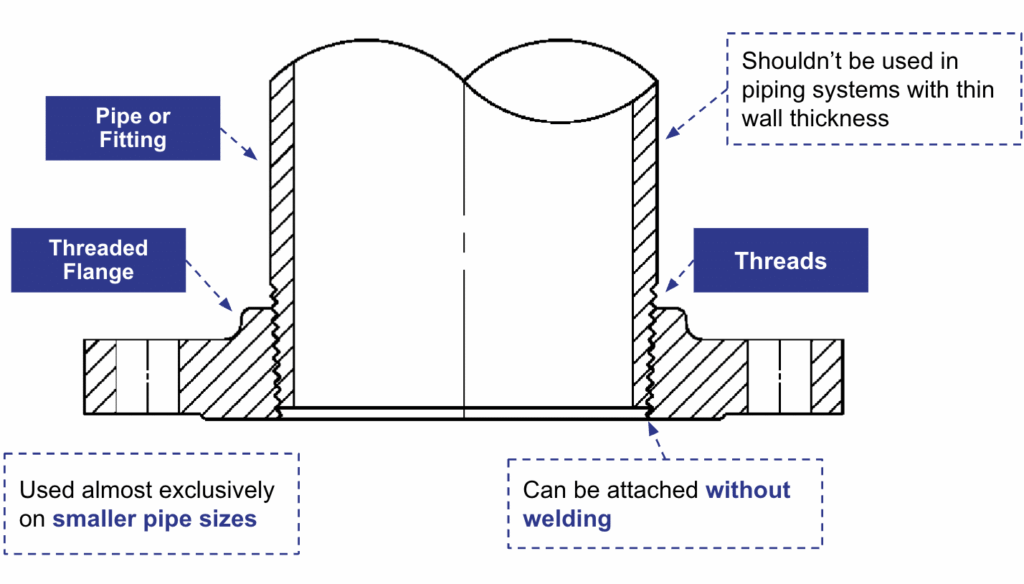
Selecting the right threaded flanges starts with understanding your operating environment, pipe size, pressure class, and material requirements. A screwed flange connects to a pipe mechanically through a tapered internal thread—no welding required. This design makes it the preferred choice for small-bore piping in hazardous locations, galvanized fire protection lines, and high-pressure hydraulic systems where heat from welding poses a safety or metallurgical risk. Matching the correct thread standard, pressure class, and facing type to your specific service conditions is the foundation of a sound selection decision.
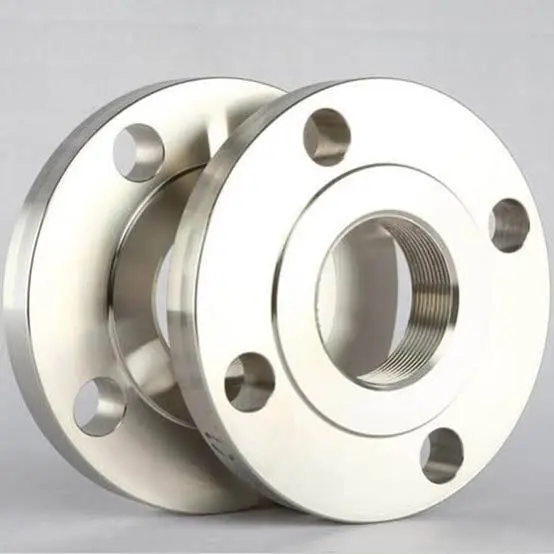
Understanding Threaded Flanges: Basic Concepts and Advantages
What Is a Threaded Flange?
A threaded flange, which is also known as a screwed flange, has a tapered thread machined into its bore. It doesn't join to the pipe by welding; instead, it screws onto a pipe with a matching external thread. We make these parts at JS FITTINGS according to ASME B16.5 and DIN/EN 1092-1 standards. The sizes we make range from ½" to 4", and the pressure classes go from 150 to 2500. Available facing options include Raised Face, Flat Face, and Ring Type Joint, depending on the pressure class and service requirements.
Where Are They Commonly Used?
In oil refineries, chemical plants, gas storage facilities, and galvanized fire suppression systems, threaded flanges are most frequently used. Because they don't need a hot work permit, EPC firms choose screwed flanges for small-bore instrument and valve connections in Zone 1 hazardous areas containing flammable gases. They are also used by NFPA-compliant fire protection systems to keep the zinc coating on galvanized pipe in good shape from end to end.
Core Advantages Over Other Connection Methods
The non-welded assembly method has a number of useful advantages that are important to procurement teams and field engineers. Here are the main reasons why screwed flanges are a good choice:
- No hot work required: Installations in active refineries, chemical depots, and gas plants proceed safely without open-flame welding, eliminating the risk of ignition in restricted zones.
- No Post-Weld Heat Treatment: Alloy and high-pressure systems often require time-consuming PWHT after welding. Threaded connections bypass this step entirely, keeping project schedules on track.
- Fast onsite assembly: Field crews can complete connections without certified welders or heavy welding equipment, cutting labor costs on small-bore piping jobs.
- Easy disassembly for maintenance: The pipe can be unscrewed for inspection, cleaning, or system modifications—a significant advantage in processes requiring frequent internal access.
- Coating preservation: Threading leaves galvanized or plastic-lined pipe surfaces intact, maintaining long-term corrosion resistance where welding would burn through the protective layer.
For galvanized or coated systems, cold mechanical threading avoids burn-through damage to protective linings, though exposed thread roots should be protected with an approved zinc-rich coating or sealant.
Technical Factors to Consider When Selecting Threaded Flanges
Match the Thread Standard to Your Market
The first mechanical choice is the thread standard. Under ASME B1.20.1, NPT is a commonly used U.S. pipe thread standard. For a carbon steel pipe threaded flange, you also need to confirm that the selected flange uses the correct thread standard for the piping system. An appropriate thread sealant may be required to reduce leakage through the threaded joint, depending on the service conditions. BSPT is another commonly used tapered pipe thread standard. It is specified in many British and Commonwealth applications, depending on the project requirements. When you mix thread standards on the same line, you create leak paths that can't be fixed with sealant. Before placing an order, you should always check the project specifications.
Choose the Right Material Grade
The choice of material has a direct effect on the service life and total cost of ownership. ASTM A105 carbon steel is commonly used for general industrial and utility applications where the service conditions are compatible with the material. ASTM A182 F304 or F316 stainless steel can handle fluids that are acidic or basic and temperatures that are normal. For applications requiring low-temperature carbon steel, ASTM A350 LF2 may be specified where the applicable design and material requirements are met. At JS FITTINGS, we use a spectroscopic analyzer for Positive Material Identification to make sure that every forging matches its certified grade before it ships.
Verify Pressure Class and Size Limits
Threaded flange applications must comply with the applicable ASME B31.3 requirements for threaded components, including minimum wall thickness, fluid service, material, and safeguarding requirements. For Class 600 and higher threaded flanges, ASME B16.5 also specifies requirements for the mating pipe, including Schedule 80 or heavier wall thickness. The design of threaded joints must account for thread strength, wall thickness, pressure, external loads, and service conditions. For certain hazardous fluid services above NPS 2, ASME B31.3 requires appropriate safeguarding measures.
Comparing Threaded Flanges with Other Types: Making an Informed Decision
Threaded vs. Weld Neck Flanges
Weld neck flanges are commonly used for cyclic service at high temperatures because the butt weld provides a gradual transition between the flange and pipe. ASME B31.3 places limitations on threaded connections for certain services involving severe thermal cycling or significant mechanical loads. Thermal expansion and external loads can increase the risk of leakage or joint degradation. The threaded type is faster and safer for small-bore lines that are used for static service at room temperature.
Threaded vs. Slip-On Flanges
Slip-on flanges are easy to make, but they still need to be heated for two fillet welds and basic fit-up. They come in bigger sizes than screwed flanges and can handle mild pressure. A screwed flange is the best option when welding isn't allowed or when the pipe has a protective coating. Slip-on flanges don't have the "no PWHT" benefit that makes screwed flanges a good choice for alloy pipes.
Threaded vs. Socket Weld Flanges
Small-bore pipes can also be used with socket weld flanges, which require a single fillet weld at the outer hub of the flange. They can be preferable to screwed flanges for some cyclic thermal services, subject to the applicable piping code and project requirements. However, both connection types require hot work. When welding isn't allowed on the job site because the plant is still running or because it is considered dangerous, the screwed flange can be a practical mechanical connection option where permitted by the project specifications.
Procurement Guide: How to Source Quality Threaded Flanges?
Evaluate Supplier Certifications and Quality Systems
A qualified threaded flange supplier should maintain a verifiable quality management system, such as ISO 9001, along with any applicable customer approvals or project-specific certifications.Major international energy operators, including ADNOC and PETROBRAS, have approved JS FITTINGS as a supplier.The company also has CE, ISO, and GOST-R certifications, supporting its ability to supply carbon steel pipe threaded flange products for industrial piping applications. These certifications demonstrate the supplier's quality management processes and provide evidence of compliance with applicable industrial requirements.
Inspect Thread Quality Before Acceptance
For any screwed flange, thread gaging is the most important quality control step. As per ASME B1.20.1, calibrated L1 plug gages must be used to verify the internal taper thread. Threads that are too tight lead to galling, and threads that are too loose lead to leaks. Inspect the threads for broken sections, burrs, or chatter marks that may indicate poor machining quality. JS FITTINGS uses high-tech cutting centers and does thread gaging on every production batch as a matter of course.
Consider Lead Time, Volume, and Custom Options
Teams in charge of buying things for multiple stages of a project need a threaded flange provider with a steady supply and flexible production capacity. Every month, JS FITTINGS ships more than 90 containers, and more than 95% of them arrive on time. In accordance with ASTM/ASME, DIN, JIS, and GOST standards, we can handle small-batch trial orders, OEM/ODM production, and custom specifications from DN15 to DN100 (½" to 4", and up to 6" for specialized low-pressure runs). Our foreign trade team answers questions within an hour, so your buying process doesn't have to wait longer than it needs to.
Installation Tips and Best Practices for Threaded Flanges
Surface Preparation and Thread Inspection Before Assembly
Before putting the parts together, check the pipe threads and the flange bore for damage, chips, or burrs. Clean the threads with air and a wire brush. Use an appropriate thread gauge to check the thread engagement. Spread the right thread sealant evenly on the male thread. This could be PTFE tape or an anaerobic paste that is rated for the service pressure and fluid type. Avoid the first one or two threads to keep dirt from getting into the pipe bore.
Correct Assembly and Torque Procedure
First, tighten the flange onto the pipe by hand. Then, use a strap wrench or pipe wrench to tighten it to the manufacturer's recommended torque. Do not use too much force to "gain" more thread engagement. Excessive torque can damage or deform the thread crests and roots, potentially creating a leakage path rather than improving the seal. After the threaded connection is properly assembled, align the flange faces and tighten the mating flange bolts using the specified bolting procedure and torque values, where applicable. Follow the project requirements and applicable guidance such as ASME PCC-1 for flange bolting.
Routine Maintenance and Inspection Schedule
After the system is commissioned, threaded flange connections should be inspected at intervals established by the applicable inspection program and service conditions. Weeping, corrosion at the thread roots, or any movement of the flange along the pipe should all be looked for. If the system goes through even small thermal cycles, the inspection frequency should be increased. Before putting something back together after taking it apart, make a note of the state of the threads. Before reuse, the thread condition should be verified with the applicable calibrated gage, and the joint should be confirmed to meet the project and applicable code requirements.
Conclusion
Before you place your order, make sure you know the thread standard, material grade, pressure class, and size limits of the screwed flange you want to use with your system. When used within their applicable design limits—such as small-bore service, moderate temperatures, and limited thermal cycling—threaded flanges can provide fast installation and easy maintenance where permitted by the applicable code and service conditions. Proper installation and periodic inspection can help maintain reliable threaded flange performance throughout the intended service life.
FAQ
1. Can threaded flanges handle high-temperature cyclic service?
Generally, no. ASME B31.3 discourages screwed connections where severe thermal cycles or bending stresses occur. Thermal expansion differentials can loosen thread engagement, leading to leakage. Socket weld or weld neck flanges are the correct choice for those conditions.
2. What is the typical size limit for threaded flanges?
Industry best practice limits screwed flanges to NPS 4 and below in general service. For Class 600 and above, NPS 2 is the practical upper limit because thread separation forces increase with diameter faster than thread strength can compensate.
3. When should I apply a seal weld?
Apply a seal weld when crevice corrosion risk is high or the fluid is particularly hazardous. Be aware that seal welding makes the joint permanent—the non-welding advantage is lost, and PWHT requirements may reappear depending on the material.
4. What is the difference between NPT and BSPT threads?
NPT threads follow ASME B1.20.1 and are the US standard. BSPT follows ISO 7-1 and is used in European and Commonwealth projects. They are not interchangeable. Using one on a mating piece threaded to the other standard will cause leakage regardless of sealant.
Partner with JS FITTINGS for Your Threaded Flange Supply
Since 1983, JS FITTINGS has been manufacturing industrial flanges. Our products are backed by decades of manufacturing experience. Our stock of threaded flanges includes Class 150 through 2500 sizes ½" to 4" and more, made from A105 carbon steel, A182 stainless steel, and low-temperature grades. Production is supported by an ISO 9001 quality management system, with applicable CE, GOST-R, PETROBRAS, and ADNOC certifications or approvals available for relevant products and projects. We manufacture threaded flanges for customers in more than 30 countries, supported by documented quality records and inspection procedures. We back up every package with full Mill Test Certificates, PMI testing records, and thread gaging records. Get a quote from our team right away by emailing admin@jsfittings.com.
References
1. ASME International. ASME B16.5: Pipe Flanges and Flanged Fittings. American Society of Mechanical Engineers, 2017.
2. ASME International. ASME B31.3: Process Piping Code. American Society of Mechanical Engineers, 2022.
3. ASME International. ASME B1.20.1: Pipe Threads, General Purpose (Inch). American Society of Mechanical Engineers, 2013.
4. ASTM International. ASTM A182/A182M: Standard Specification for Forged or Rolled Alloy and Stainless Steel Pipe Flanges. ASTM International, 2023.
5. European Committee for Standardization. EN 1092-1: Flanges and Their Joints — Circular Flanges for Pipes. CEN, 2018.
6. Nayyar, Mohinder L. Piping Handbook, 7th ed. McGraw-Hill, 2000.
Send Inquiry
You may like