
Threaded Flanges vs Weld Neck Flanges: Which Is Better?






2026-10-11 14:10:23
Choosing between threaded flanges and weld neck flanges depends on your project's specific requirements. Threaded Flanges excel in low-to-moderate pressure systems, hazardous environments where welding is restricted, and applications requiring quick assembly without hot work permits. Weld neck flanges, however, dominate high-pressure, high-temperature pipelines where structural integrity and fatigue resistance are non-negotiable. For EPC contractors managing oil and gas projects, weld neck flanges typically minimize long-term risk, while distributors serving smaller installers find threaded flanges offer faster inventory turnover and simplified installation for end users.
Introduction
When it comes to industrial piping systems, flanges are among the most important connection points that decide how reliable, safe, and efficient the system is. Choosing the right type of flange has a direct effect on project timelines, compliance, and the total cost of ownership for procurement workers who manage projects in oil and gas, chemical processing, water treatment, and infrastructure development. This article looks at two common types of flanges: threaded flanges (also called screwed flanges) and weld neck flanges. It compares their design features, performance capabilities, and buying options. Understanding these differences helps engineers, project managers, and procurement teams select flanges that match pressure levels, operating environments, installation constraints, and maintenance requirements. This guide gives B2B buyers useful information they can use to lower project risk while still meeting safety standards and staying within budget.
Understanding Threaded Flanges and Weld Neck Flanges
Design Characteristics of Threaded Flanges
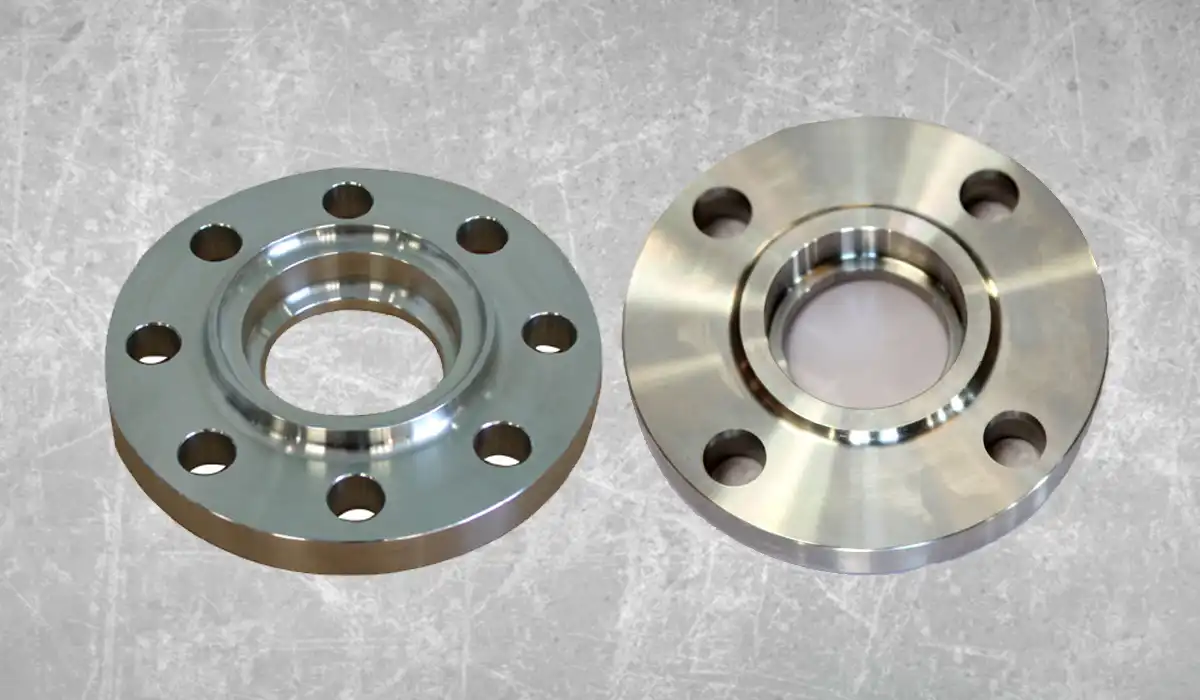
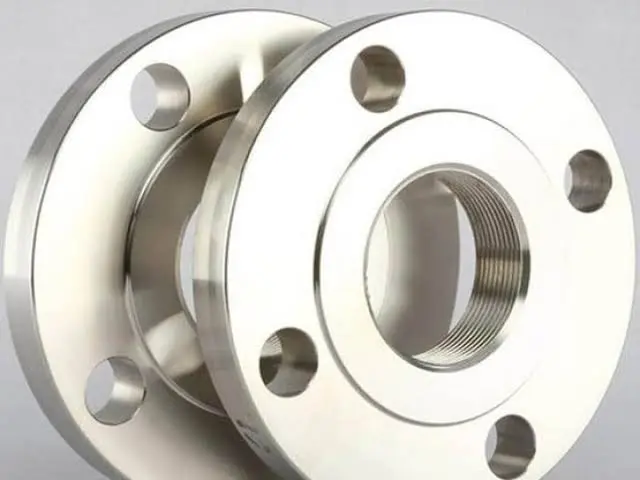
Threaded flanges have tapered threads on the inside that are made according to ASME B1.20.1 (NPT) or ISO 7-1 (BSPT) standards. These threads allow for mechanical assembly by screwing straight onto pipes that have threads on the outside. Because they do not require welding, this design makes them suitable for small-bore applications, usually between NPS 1/2" and NPS 4". Carbon steel (ASTM A105), stainless steel grades (ASTM A182 F304/F316), and alloy steel variants for specific environments are all used in manufacturing. The interference fit between the tapered pipe threads and flange threads helps form a mechanical seal. Thread sealant or PTFE tape is often added to improve leak resistance.
Structural Features of Weld Neck Flanges
Weld neck flanges have a long, tapered hub that slowly changes shape from the pipe's outside diameter to the flange ring. This is so that the butt welding can go all the way through to the pipe end. This arrangement is better at distributing stress and improving structural integrity. It works especially well in systems that are supposed to work under Class 600 to Class 2500 pressure levels, as described in ASME B16.5. The tapered hub design helps distribute stress at the weld transition, improving resistance to fatigue under temperature and pressure cycling. Forging is a common manufacturing method. It aligns the grain structure along stress lines, giving the material mechanical properties suitable for a wide range of temperatures, depending on the material grade, pressure class, and applicable design code. Weld neck flanges come in sizes ranging from NPS 1/2" to NPS 60", which can fit transmission pipes with a large diameter that are popular in oil and gas infrastructure.
Material Selection and Standards Compliance
International standards like ASME B16.5, ASME B16.47, DIN 2633, JIS B2220, and EN 1092-1 are followed by both types of flanges. This makes sure that the sizes are the same across global supply chains. Material approvals, like mill test certificates (MTCs), make sure that the chemical make-up and mechanical qualities are correct. This is very important for projects that need to meet NACE MR0175 standards for sour gas service or ASTM A350 LF2 standards for low-temperature uses at -45°C. Duplex stainless steel (ASTM A182 F51) or super duplex grades (F53) are better at resisting chloride stress corrosion cracking in corrosive environments. This means they last longer in chemical processing plants and offshore platforms.
Comparing Threaded Flanges and Weld Neck Flanges: Key Differences and Use Cases
Installation Methods and Labor Requirements
Installing a threaded flange only requires basic pipe-threading and hand tools, allowing assembly without specialized welders or hot work permits. This ease of installation can reduce labor costs compared with welded connections and is especially helpful during maintenance shutdowns that directly affect production. Usually, thread sealant is used, the connection is initially hand-tightened, and pipe tools are used to achieve the required thread engagement in accordance with the applicable thread standard.
Installing a weld neck flange requires skilled welders, preparing the pipe before welding by beveling it, making sure the joint fits correctly, following the welding procedure specifications (WPS), and inspecting the work after welding. According to ASME B31.3 or ASME B31.1 requirements, butt welds must undergo the applicable examination and inspection required for the specific service and piping category, which may include radiographic testing (RT) or ultrasonic testing (UT). Even though it takes more work, this method makes a permanent, high-integrity connection that is good for critical services where leakage would have bad effects.
Pressure and Temperature Performance
Under ASME B16.5, threaded flanges are standardized in pressure classes up to Class 2500 for small-bore sizes (NPS 2½ and smaller), but their operational suitability strictly depends on the temperature-pressure derating, fluid severity, and vibration profile. This is because the threaded connection is mechanical, and when temperatures change a lot, the differential thermal expansion between the pipe and flange can loosen the threaded engagement. ASME B31.3 places limitations on threaded joints based on service conditions, design requirements, and the applicable fluid service category.
Weld neck flanges cover the full spectrum of ASME pressure classes from Class 150 to Class 2500, with specialized API 6A wellhead flanges extending to 3,000 psi, 5,000 psi, and 10,000 psi for extreme upstream conditions. The butt-welded connection stays strong through thermal cycles because the weld fusion creates metallurgical continuity between the pipe and flange, stopping any differential movement. Because of this, weld-neck flanges are essential for high-pressure steam systems, hydrocarbon processing units that work above 400°C, and cryogenic services where temperature swings exceed 300°C.
Maintenance Considerations and Lifecycle Costs
Threaded flanges make it easier to take apart equipment for inspection or replacement because you only have to unthread it instead of cutting and rewelding. This is helpful in systems that need to change their configuration often or for temporary piping arrangements during plant expansions. However, threaded connections need to be checked for thread integrity, possible galling, and seal degradation over time because vibrations and changes in pressure weaken the mechanical seal.
Weld neck flanges make permanent connections that need to be cut in order to disassemble, which increases the complexity of maintenance and downtime. However, their structural strength reduces the need for unplanned maintenance, lowering lifecycle costs in critical applications where reliability is more important than initial installation costs. Projects that focus on total cost of ownership over 20–30 year operational periods usually choose weld neck flanges for main process lines and threaded flanges for auxiliary systems and instrumentation connections.
Which Flange Should You Choose? Decision Criteria for B2B Procurement
Pressure Class and System Criticality
Threaded flanges are suitable for low-pressure applications below Class 150, such as utility water systems, compressed air distribution, and low-pressure steam condensate return lines, where operating pressures remain below 20 bar. High-pressure pipelines exceeding Class 300 ratings, especially those operating above 150°C, require weld-neck flanges to maintain long-term seal integrity and structural safety.
Environmental and Safety Constraints
When you're in a Zone 1 or Division 1 area with flammable vapors, threaded flanges can be considered where welding is restricted because they eliminate the need for field welding, although the final connection type must still be selected according to the applicable safety, pressure, and service requirements. Fire protection systems that use galvanized pipes may use threaded or other approved mechanical connections to avoid damaging the zinc coating during installation, since field welding can damage the corrosion protection layer. On the other hand, weld neck flanges are best for seismic zones that need stronger structures because they resist bending moments better, keeping the joints together during ground motion events.
Cost Analysis and Lead Time Considerations
Due to simpler manufacturing processes, threaded flanges usually cost 15–25% less than equivalent weld neck flanges. Distributors who keep stock of standard sizes (NPS 1" through NPS 4" in Class 150/300) can often get better prices when they buy in bulk. Lead times for threaded flanges are usually 3–4 weeks for stock items and 6–8 weeks for non-standard materials or pressure classes.
Weld neck flanges, especially those with large diameters (NPS 24" and above) or unusual alloys, need 8–12 weeks to make because they are hard to forge and need to be heated properly. However, their longer service life and lower frequency of upkeep often make the higher initial investment worth it for projects that value dependability over initial capital spending. For procurement professionals evaluating long-term capital projects, lifecycle cost models must account for routine re-torquing, inspection intervals, and the operational risk of fugitive emissions.
Supplier Qualification and Quality Assurance
To choose good flange providers, you need to make sure they have ISO 9001 quality control systems, can track materials through MTCs that can be linked to heat numbers, and can get dimensional certification that meets ASME or DIN standards. Reliable makers keep third-party certifications, such as the Pressure Equipment Directive (PED) for European markets and GOST-R for projects in the Russian Federation. They also keep approved-vendor status with major companies like Saudi Aramco, ADNOC, and Petrobras. Each shipment should come with a dimensional inspection report that lists the bolt circle diameter, flange thickness, and thread specifications (for threaded flanges). For important uses, buyers should ask for samples to be evaluated, and functional plug gages and positive material identification (PMI) testing should be used to check the thread quality and material composition.
Advantages of Threaded Flanges Over Weld Neck Flanges and Vice Versa
Benefits of Threaded Flanges in Specific Applications
Getting rid of welding has a lot of benefits besides saving money. Threaded flanges let you connect to threaded pipe ends without welding in the field, which makes retrofit projects with existing infrastructure easier to do and lowers the cost of moving equipment. Galvanized fire suppression systems may use threaded or other approved mechanical connections to avoid damaging the zinc coating during installation. This keeps the connection points from rusting too soon. Threaded flanges are used on small-diameter instrument connections (usually NPS 1/2" to NPS 2") to make installing pressure gauges, temperature sensors, and flow meters easier. This means that technicians can do the installation without having to get certified to weld.
Threaded flanges can also be used for temporary pipe configurations during plant shutdowns, equipment commissioning, or hydrostatic testing campaigns when permanent connections are not needed. Their ability to be taken apart makes less waste than cutting out welded joints, which is in line with environmental goals for projects that focus on reusing materials and the circular economy.
Superior Performance of Weld Neck Flanges
The metallurgical connection between the pipe and flange in weld neck flanges gives them unmatched structural stability. This creates a uniform stress distribution that stops fatigue cracks under cyclic loading. This feature is very important in situations where there is vibration from reciprocating compressors, high-speed centrifugal pumps, or flow-induced vibration in gas lines. The tapered hub design improves resistance to external bending moments. This is particularly relevant for piping systems subject to thermal expansion, seismic forces, or equipment nozzle loads transmitted through rigid connections.
Weld neck flanges are generally preferred for demanding high-temperature services because butt-welded connections provide better resistance to thermal cycling and mechanical loads than many threaded connections. The Heat Affected Zone (HAZ) created during welding may require controlled post-weld heat treatment (PWHT) when required by the applicable material, thickness, service conditions, and ASME B31.3 requirements. This makes the material tough again and reduces any residual stresses that could cause cracks to spread during service. When working with hazardous or flammable fluids such as hydrogen, ammonia, or sour gas containing H₂S, weld neck flanges may be preferred where the applicable design code, service conditions, and leakage control requirements favor welded connections over threaded ones. Regulatory frameworks such as API 6A for wellhead equipment and ASME B31.3 for process piping impose specific requirements on pressure-boundary connections and fluid services. For Category M fluid service, ASME B31.3 places additional restrictions on threaded joints, so welded flange connections may be preferred where appropriate to minimize leakage risks.
Conclusion
When deciding between threaded flanges and weld neck flanges, you have to weigh the pressure needs, installation limitations, lifecycle costs, and safety priorities that are unique to each application. For low-pressure systems, hot work-restricted areas, and uses requiring regular disassembly, threaded flanges offer affordable, welding-free installation. Weld neck flanges offer better structural stability, resistance to leaks, and long-term dependability, which is very important for high-pressure, high-temperature applications where system failure can have very bad results. Pressure class analysis, environmental conditions, maintenance requirements, and supplier capabilities should all be taken into account when making purchasing choices. This will help improve performance while keeping total ownership costs low. Working with experienced manufacturers that offer a wide range of products, certifications that can be checked, and quick expert help makes the buying process easier and makes sure that foreign standards and project requirements are met.
FAQ
1. Can threaded flanges be used in high-pressure steam systems?
Threaded flanges are generally not the preferred choice for demanding high-pressure, high-temperature steam systems, where the applicable piping code, pressure-temperature rating, thermal cycling, and leakage requirements may favor welded connections. In steam service, the temperature changes over and over, which makes the pipe and flange expand and contract at different rates. This causes threaded connections to become loose over time and creates leak paths. The ASME B31.1 Power Piping Code places specific limitations on threaded connections based on the applicable design and service conditions, so the permitted pressure and temperature range must be verified against the current code requirements. Instead, weld neck or socket weld flanges should be specified. Threaded flanges may be fine for low-pressure steam uses below 10 bar as long as they are properly sealed and checked for tightness on a regular basis.
2. What materials are best for corrosive environments?
When a material is used in acidic conditions, it needs to be carefully chosen based on the type of corrosive agent, its quantity, and the temperature. Grades 316 and 316L of stainless steel (ASTM A182 F316L) can handle chloride environments, organic acids, and marine environments. Duplex stainless steel (F51, F55) is better at resisting chloride stress corrosion cracks and pitting, so it can be used in saltwater, brine, and sour gas with H₂S. Alloys like Inconel 625 and Hastelloy C-276 can handle harsh chemicals like concentrated sulfuric acid and hydrochloric acid, as well as high-temperature oxidizing environments that normal stainless steels can't.
3. How do I ensure compatibility when mixing threaded and weld neck flanges in the same system?
Different types of flanges can be used within the same piping system as long as each type of flange is right for the conditions it will be used in. Weld neck flanges can be used on main lines, while threaded flanges can connect instrument taps or extra lines that branch off from main headers. Make sure that all flange connections within pressure boundary zones have the same pressure class ratings, gasket compatibility, and bolt specifications. To keep bent loads from breaking threaded connections, transition points should keep the right amount of support. To avoid galvanic corrosion when different metals touch through bolting or seal surfaces, material compatibility must be checked.
Partner With JS FITTINGS for Your Flange Requirements
JS FITTINGS has been manufacturing Threaded Flanges since 1983 and has more than 40 years of experience in this field. We offer complete flange solutions designed to meet international standards such as ASME, DIN, JIS, and GOST. Our factory manufactures threaded flanges from DN15 to DN100 (½" to 4") and weld neck flanges from DN15 to DN1500 (½" to 60") across carbon steel, stainless steel, and alloy grades. We are certified by ISO 9001, CE, and GOST-R, with approved vendor status from major international energy operators like ADNOC and Petrobras. With more than 90 containers shipped every month, an annual capacity of 30,000 tons, and an on-time delivery rate of over 95%, we can support your project schedules with a reliable supply. Our technical team answers questions within an hour and can help you choose the right material, check the pressure rating, and come up with custom solutions for non-standard requirements. Get in touch with our purchasing experts at admin@jsfittings.com to talk about your threaded flange for sale needs and get detailed quotes that fit your project's schedule and quality standards.
References
1. ASME B16.5-2020. Pipe Flanges and Flanged Fittings: NPS 1/2 Through NPS 24 Metric/Inch Standard. American Society of Mechanical Engineers, 2020.
2. ASME B31.3-2022. Process Piping: ASME Code for Pressure Piping, B31. American Society of Mechanical Engineers, 2022.
3. Davis, J.R. Metals Handbook: Corrosion. ASM International, Materials Park, OH, 2000.
4. Becht, C. "Fatigue of Threaded Connections in Pressure Vessels and Piping." Journal of Pressure Vessel Technology, vol. 129, no. 4, 2007.
5. Nayyar, M.L. Piping Handbook, 8th Edition. McGraw-Hill Education, 2019.
6. API 6A-2019. Wellhead and Tree Equipment, 21st Edition. American Petroleum Institute, 2019.
Send Inquiry
You may like