
What Applications Are Best for Threaded Flanges?






2026-10-15 11:18:15
Threaded flanges are the go-to connection method for small-bore piping systems where welding is restricted, impractical, or simply not worth the cost. These screwed flanges feature an internal tapered thread—typically NPT or BSPT—that mates directly with an externally threaded pipe end, creating a mechanical seal without any heat input. At JS FITTINGS, we manufacture screwed flanges to ASME/ANSI B16.5 and DIN/EN 1092-1 standards, covering pressure classes from 150 through 2500. Their best applications include hazardous-area petrochemical piping, galvanized fire protection systems, compressed air networks, water treatment lines, and small-bore hydraulic control circuits.
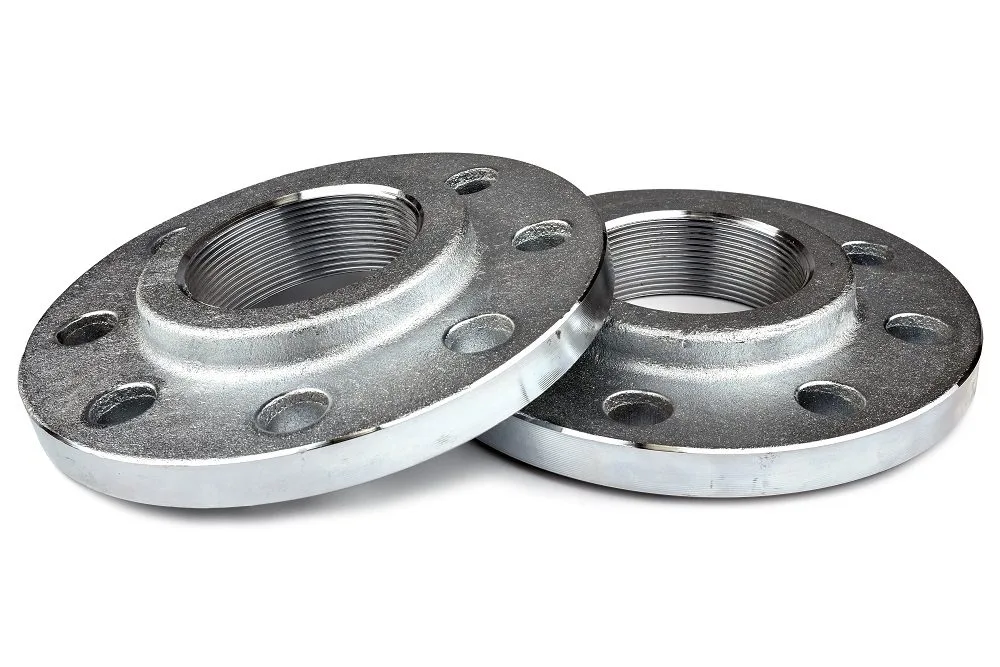
Understanding Threaded Flanges and Their Functionality
What Defines a Screwed Flange?
A threaded flange, which is also known as a screwed flange, has a tapered thread machined into its bore. It's easy to use—just spin it onto an end of a pipe that has an external threaded connection. The tapered thread engagement, together with an appropriate thread sealant, provides the required seal. There is no need for an arc, a heat source, or a qualified welder. These parts are made by JS FITTINGS from ASTM A105 carbon steel, ASTM A182 stainless and alloy steel, and ASTM A350 low-temperature carbon steel. They come in sizes ½" to 4" for normal use.
Thread Standards and Facing Options
The market is dominated by two common thread systems. US standard ASME B1.20.1 says that NPT thread is the way to go. It normally requires thread sealant to seal potential leakage paths between the thread flanks, roots, and crests. EU and Commonwealth markets often use the BSPT according to ISO 7-1. For high-pressure service, engineers can choose from Raised Face, Flat Face, and Ring Type Joint as facing choices. This gives engineers flexibility when selecting flange configurations for different process conditions.
Pressure Ratings and Size Scope
It is available in pressure classes such as 150, 300, 600, 900, 1500, and 2500, depending on the applicable standard and size. In practice, threaded flanges are most commonly used on smaller pipe sizes, while their suitability at higher pressure classes must be evaluated for the specific size, material, and service conditions. It's easy to see why: as the diameter of the pipe increases, so does the torque required to tighten tapered threads. Also, large-diameter threads can't safely stand up to the separation forces caused by internal pressure like a full-penetration butt weld can.
Key Applications Best Suited for Threaded Flanges
Hazardous-Area Petrochemical and Refinery Piping
In Zone 1 areas, like active gas plants, chemical depots, and refineries, open-flame welding needs complicated hot-work permits and, in some cases, the whole plant has to be shut down. Screwed flanges are widely specified by EPC contractors for small-bore instrument and utility lines because they eliminate open flames and ignition hazards during assembly. This can reduce the ignition hazards associated with hot work in areas containing flammable gases.
Galvanized Fire Protection Systems
When you weld galvanized steel pipe, the zinc layer that protects it from corrosion is burned off. This leaves bare steel spots that rust quickly and can block sprinkler nozzles. Using threaded connections, including class 150 and class 300 raised face (RF) threaded flanges, protects the zinc coating from the pipe to the flange, helping the system resist corrosion over time and remain in line with NFPA 13 sprinkler standards. This is one reason why threaded pipe and threaded fittings are commonly used in many commercial fire protection systems in the United States.
Water Treatment and HVAC Utility Lines
For low-pressure service lines, water treatment plants and HVAC machinery rooms use screwed flanges. Quick disassembly is important for these lines because workers can remove valves or strainers for cleaning and repair without cutting the pipe or grinding welds. This can reduce planned maintenance time and associated labor costs for facility managers and industrial end users.
Compressed Air and Instrument Air Networks
In factories and other process sites that use compressed air, the lines are often relatively small, operate near ambient temperature, and work at moderate pressures. In this case, threaded connections save money because they don't require any welding work. The mechanical thread joint can provide reliable service when the piping is properly designed, installed, and maintained and is not exposed to significant corrosion, vibration, or thermal cycling. This type of connection doesn't have the risk of fatigue that would make it unsuitable for high-cycle thermal service.
High-Pressure Hydraulic Control Lines
Small-bore forged flanges made of A105 or high-yield alloy work well with the pressure in Class 2500 hydraulic logic circuits that are operating at room temperature. The small diameter of the pipe limits the total force acting on the threads. This helps reduce leakage risk while avoiding welding-related issues associated with the heat-affected zone. This use shows that screwed flanges are not just low-pressure devices; their suitability is strongly influenced by pipe diameter and service conditions, not pressure class alone.
Across these five applications, screwed flanges are most suitable when welding is restricted or not cost-effective, pipe sizes are small, and regular disassembly is required for maintenance.
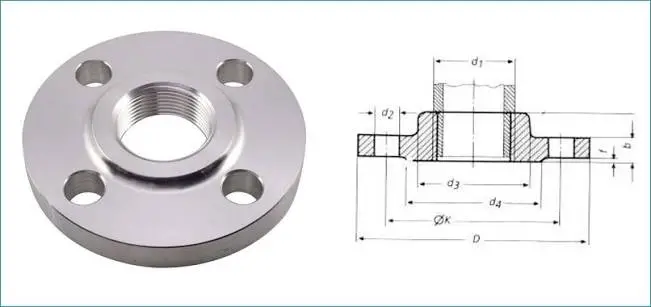
Comparing Threaded Flanges with Other Flange Types
Threaded vs. Weld Neck Flanges
Weld neck flanges distribute stress through a full-penetration butt weld. This makes them ideal for severe thermal cycling, heavy dynamic loads, and large-diameter, high-pressure transmission lines. Threaded connections should generally be avoided in services involving significant cyclic loading, crevice corrosion, or severe erosion, according to ASME B31.3. Thermal expansion, external loads, and other mechanical stresses must also be considered when designing threaded joints. If those things aren't true, a screwed joint is cheaper and easier to install.
Threaded vs. Slip-On Flanges
Slip-on flanges need two fillet welds, one on the inside and one on the outside. They also shouldn't be used in dangerous places without hot-work permission. They work well in places where they can be welded with bigger diameters and modest pressure. Screwed flanges give up some structural strength in exchange for being easy to install and able to work in no-weld zones, which is what makes them so useful in the situations mentioned above.
Threaded vs. Socket Weld Flanges
Socket weld flanges are another choice for small-bore pipe that doesn't need a butt weld, but they still need a fillet weld, which means a qualified welder, welding equipment, and maybe even post-weld heat treatment for alloy or stainless systems. Threaded flanges, by contrast, completely bypass post-weld heat treatment (PWHT), saving substantial time and labor on alloy piping systems where PWHT would otherwise disrupt construction schedules.
How to Select and Install Threaded Flanges for Optimal Performance?
Matching Materials and Thread Standards
Choose the joint material based on the coolant, the process fluid, and the amount of rust that can happen. ASTM A105 is for general carbon steel service, A182 F316L or F304L is for chemical service that is corrosive, and A350 LF2 is intended for low-temperature service, with the applicable minimum design temperature depending on the grade, thickness, impact-testing requirements, and service conditions. Before you order, make sure you know the thread type and that the dimensions meet ASME B16.5 standards.
Quality Control Checks That Matter
JS FITTINGS inspects each production batch of screwed flanges using calibrated ASME B1.20.1 L1 taper thread plug gages to verify accurate thread pitch, taper, and standoff distance. By looking at the threads, you can find any tears or burrs that are making leak paths. The exact grade of the material is confirmed by PMI spectral analysis. Every shipment should come with a valid Mill Test Certificate documenting the material grade, chemical composition, mechanical properties, and applicable heat treatment requirements; this should be a normal requirement for buying things.
Installation Best Practices
Remove any dirt from the pipe threads, use the right thread sealer, and tighten by hand before using a wrench. Over-torquing can induce excessive hoop stress in the flange hub, resulting in hub cracking or thread stripping. Do a hydrostatic or gas pressure test according to the system design rules after putting it all together. If the fluid is hazardous or leakage through the threaded joint must be prevented, a seal weld may be used around the joint. The seal weld is intended to prevent leakage and should not be considered to contribute to the mechanical strength of the joint. But keep in mind that this makes the joint permanent and takes away the benefit of being able to take it apart quickly.
Trusted Suppliers and Manufacturers of Threaded Flanges
Why Supplier Credentials Decide Project Outcomes?
When buying teams look for screwed flanges for EPC or government building projects, certifications are not just extra paperwork; they are required by the contract. Our quality management system is certified to ISO 9001, and applicable products can be supplied with CE and GOST-R compliance or certification where required. JS FITTINGS has also supplied products for major energy projects involving operators such as ADNOC and Petrobras. That list of approvals means that our quality management system has already been checked by some of the strictest energy companies in the world by a third party.
JS FITTINGS' Supply Capability
Every month, JS FITTINGS ships more than 90 containers, with an on-time delivery rate above 95% and a repeat-customer rate above 98%. The company also produces around 700 tons of flanges per month. We support ASTM/ASME, DIN, JIS, and GOST standards, take OEM orders, and offer sample production so that you can try us out before you commit to buying in bulk. Our client complaint rate stays below 0.5%, which shows how consistent trading and wholesalers need to be to protect their relationships with end users and their profit margins.
Conclusion
Screwed flanges are the best choice for small-bore pipes in places where welding isn't allowed, isn't practical, or is too expensive. This includes hazardous-area process lines, galvanized fire protection systems, water treatment utilities, compressed air networks, and hydraulic circuits that work at room temperature. These threaded flanges are easier to set up, don't need PWHT, and can be disassembled for maintenance. They should not be used in high-cycle thermal service or large-diameter high-pressure lines because their limits are also very clear. The best way to protect project funds, meet compliance requirements, and reduce long-term maintenance risk is to match the flange type to the actual service conditions.
FAQ
1. Can threaded flanges handle high-temperature cyclic service?
Generally, no. ASME B31.3 discourages their use where severe thermal cycles or significant bending stresses are present. Thermal expansion differences can loosen the threaded joint and cause leakage. Socket weld or weld neck flanges are generally more suitable for these conditions.
2. Why are screwed flanges typically limited to NPS 4 and below?
As pipe diameter increases, the torque required to tighten tapered threads rises sharply. Large diameters under pressure also generate separation forces that threads cannot reliably sustain compared to a full-penetration butt weld.
3. What is the difference between NPT and NPTF threads?
NPT threads require sealant because they leave a spiral leak path at the root and crest. NPTF threads deform on makeup to create metal-to-metal contact, theoretically eliminating sealant—though they are rarely specified in standard flange production.
4. When should a seal weld be applied to a threaded flange?
Apply a seal weld when the fluid is hazardous or highly penetrating, or when crevice corrosion is a concern. Be aware that seal welding makes the joint permanent, eliminating the quick-disassembly advantage.
Get a Quote from JS FITTINGS — Threaded Flange Supplier with 43 Years of Manufacturing Experience
Since 1983, JS FITTINGS has been making certified pipe flanges and shipping them to over 30 countries on time 95% of the time or more. We can help you within an hour, whether you need standard NPT screwed flanges in ASTM A105 or custom alloy grades to DIN/EN 1092-1. To get a price, look at our collection of certified products or place a test order; email our sales team at admin@jsfittings.com. Let us show you what a trustworthy company that makes threaded flanges can do for your next project.
References
1. ASME B16.5 – Pipe Flanges and Flanged Fittings: NPS 1/2 Through NPS 24, American Society of Mechanical Engineers, 2017.
2. ASME B31.3 – Process Piping, American Society of Mechanical Engineers, 2022.
3. ASME B1.20.1 – Pipe Threads, General Purpose (Inch), American Society of Mechanical Engineers, 2013.
4. Piping Handbook, 7th Edition, Mohinder L. Nayyar, McGraw-Hill, 2000.
5. NFPA 13 – Standard for the Installation of Sprinkler Systems, National Fire Protection Association, 2022.
6. Valve and Actuator Technology, 2nd Edition, Béla G. Lipták, CRC Press, 1995.
Send Inquiry
You may like