
What Is a 90 degree buttweld elbow Used For?






2026-10-09 11:26:27
If you work in industrial piping, you have almost certainly specified or installed a 90 degree buttweld elbow at some point. This fitting is one of the most frequently used components in any pipeline system, yet its selection criteria and application range are often misunderstood. This guide breaks down exactly what this fitting does, where it belongs, how it compares to alternatives, and what standards govern its procurement — so your next purchasing decision is grounded in facts, not guesswork.
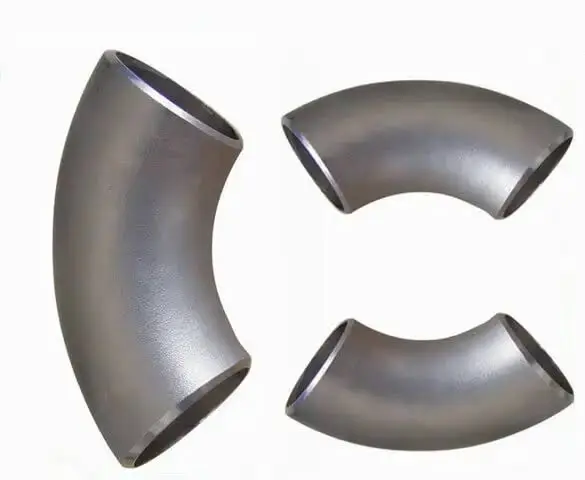
Understanding the 90 Degree Buttweld Elbow
A 90 degree buttweld elbow is a pipe fitting made from wrought steel that changes the flow of fluid at a right angle in a pipe system. Its beveled ends are welded directly to the mating pipe ends, creating a permanent, full-penetration, pressure-tight joint.Engineers choose this design for high-pressure and high-temperature service because, unlike threaded or socket weld fittings, it provides a permanent welded joint designed to meet the applicable piping system requirements.
What Makes It Different From Other Connection Types?
Threaded joints rely on mechanical contact, which is fine for low-pressure water lines but can cause leaks when temperatures change or when the piping system is subjected to vibration. Even though socket weld fittings are a step in the right direction, there is still a small gap between the fitting and the pipe, which could be a place where crevice corrosion starts. The butt weld joint takes away both flaws by joining the fitting and the pipe together into a single structure.
Material Options and Selection Logic
For process lines where carbon steel is suitable for the service conditions, carbon steel is a common choice. When corrosion resistance is important, like in chemical processing, food-grade lines, or marine settings, stainless steel grades like ASTM A403 WP304 or WP316 are chosen. Grades of alloy steel like ASTM A234 WP11 and WP22 are commonly used for high-temperature service in power plants. The medium being moved, the working pressure, and the temperature range all affect which material is best.
Long Radius vs. Short Radius
The centerline radius of a Long Radius elbow is 1.5 times the nominal pipe size, or NPS, which generally results in lower friction loss and is commonly used in process piping. Short Radius elbows have a centerline radius that is 1.0 times the NPS. This makes the bend tighter, which is good for tight spaces but also causes more pressure drop. When planning restrictions make LR elbows impossible to use, SR elbows are used instead.
Key Applications of 90 Degree Buttweld Elbows in Industry
In heavy industry, the 90-degree buttweld elbow is one of the most commonly used directional fittings. Because it can perform reliably in demanding service conditions, it is usually used when a right-angle direction change can't be avoided. The following fields depend on it the most.
These are the main industries where this fitting shows its worth:
- Oil & Gas Transmission Pipelines: Upstream and intermediate pipes often change their routes to get around obstacles in the ground. Butt-weld elbows can be designed for high internal pressures when the material, wall thickness, dimensions, and applicable design code are properly selected, as well as for external loads associated with underground installations.
- Superheated Steam Lines in Power Plants: Thermal growth and shrinkage happen over and over again in steam pipes. Properly designed and welded connections, such as a butt weld 90 degree elbow, can help reduce stress concentrations and provide good fatigue performance when the piping system is properly designed. Threaded connections can be more vulnerable to leakage or other joint-related problems when repeated temperature changes cause thermal expansion and contraction.
- Petrochemical Refineries: In petrochemical refineries, streams of corrosive hydrocarbons need smooth interior bores to reduce the accumulation of deposits and the risk of erosion and corrosion. When properly manufactured, the controlled forming process helps maintain a smooth and continuous internal surface around the bend radius.
- Water Treatment and HVAC Systems: Carbon steel buttweld elbows are used in municipal water systems and large HVAC networks because they are cost-effective and provide long service life in relatively non-corrosive water service.
- Government and Infrastructure Projects: Buttweld fittings are used in public utility networks, defense installations, and infrastructure projects to meet tender compliance requirements and keep maintenance costs as low as possible over the life of the project.
Comparing 90 Degree Buttweld Elbows to Alternatives
Making the right choice about the type of fitting has real cost and safety effects. The main differences are shown in the table below:
| Fitting Type | Pressure Rating | Installation Method | Best Use Case |
|---|---|---|---|
| 90° Buttweld Elbow | High | Full-penetration weld | Critical process lines |
| 45° Buttweld Elbow | High | Full-penetration weld | Gradual direction changes |
| Threaded Elbow | Low-Medium | Mechanical thread | Low-pressure utility lines |
| Socket Weld Elbow | Medium | Partial weld | Small-bore piping ≤ 2" |
When to Choose Buttweld Over Threaded or Socket Weld?
For small-diameter, low-pressure jobs, threaded and socket weld joints work well. According to ASME B31.3 process piping code, the butt-weld configuration is the usual choice for systems bigger than 2 inches in diameter or that work above Class 3000.
Seamless vs. Welded Elbows
For demanding high-pressure and high-temperature applications, seamless elbows may be specified when the applicable design requirements call for them. These elbows are formed from seamless pipe or tube and do not contain a longitudinal weld seam. For moderate-pressure utility service, welded elbows are a good value. In your project design, you need to specify which type is needed because they are not replaceable on important lines.
Carbon Steel vs. Stainless Steel
The price of carbon steel is much lower, and it can be used in most industrial process applications. Stainless steel is needed when there are requirements for hygiene, chloride corrosion, or oxidizing acids. It is not acceptable to switch one for the other without first consulting an engineer.
Technical Specifications and Standards
On a significant industrial project, every 90-degree butt-weld elbow used must meet accepted international standards. Here are some of the things that JS FITTINGS can supply:
- Material Standards: ASTM A234 for carbon steel, MSS SP-75 for high-yield steel, and ASTM A403 for stainless steel are the material standards.
- Dimensional Standards: ASME B16.9, DIN 2605 (EN 10253-2), or JIS B2312.
- Bevel Geometry: ASME B16.25
- Size Range: 1/2" to 48" NPS (DN15 to DN1200)
- Wall Thickness: SCH 10, SCH 40, SCH 80
- Surface Coatings: Black paint, varnish, epoxy coating, and galvanizing
One important dimensional check for a butt weld 90 degree elbow is the wall thickness at the extrados, which is the outer arc of the elbow bend. Our production process keeps extrados thinning within the tolerances set by ASME B16.9. This helps maintain the matching pipe's full pressure rating. Tight controls on center-to-end measurements (Dimension A) also ensure that there is no mismatch during spool pre-fabrication.
Quality assurance includes spectral analysis used to check the chemistry of the material, measurements taken according to ASME B16.9, and non-destructive testing such as ultrasound and hydraulic pressure tests used as needed. Every lot of our products is controlled by our ISO 9001 quality management system.
Procurement Insights: How to Source Quality 90 Degree Buttweld Elbows?
Price is one of the factors that can vary during procurement. Failures in joint integrity, project delays caused by materials that don't meet standards, or packages being turned down at customs all cost a lot more than the difference in price between a certified and an uncertified seller of the 90 degree buttweld elbow.
When evaluating a supplier, check for these qualifications:
- Certifications: ISO 9001, CE marking, GOST-R for Russian and CIS markets, and vendor approvals from major international energy corporations like ADNOC and Petrobras demonstrate reliable manufacturing quality.
- Manufacturing Transparency: Proven material tracking and the ability to do NDT in-house
- Dimensional Compliance: Third-party inspection reports confirming compliance with ASME B16.9, focusing on extrados wall thickness and center-to-face dimensions
- Customization Capability: Able to provide non-standard schedules, special alloys, or coatings chosen by the customer
- Delivery Reliability: Proven track record of on-time deliveries and enough inventory to handle big project orders
When working on EPC projects, procurement teams should make pre-shipment inspections and material test reports normal parts of the contracts, not extras that can be added at any time.
Conclusion
A 90 degree buttweld elbow is a pressure boundary component whose performance determines the safety of the system and how long it will last. Reliable performance depends on selecting the appropriate radius type, material grade, wall thickness, and applicable manufacturing standards. The safest way for EPC contractors, distributors, and industry end users to complete a project is to work with a maker who has the right certifications and can show consistent production.
FAQ
1. What is the difference between a buttweld elbow and a socket weld elbow?
A full-penetration circular weld is used at the pipe end of a buttweld elbow to make a joint that is as strong as the base pipe. A socket weld elbow receives the end of the pipe into its socket and is joined with an external fillet weld at the hub. When it comes to sizes and pressure classes, socket weld fittings are restricted. They also have a crevice gap that can cause corrosion in some media.
2. Can a 90-degree butt-weld elbow handle high-pressure steam service?
Yes. When made from the right metal grade, in a seamless way, and using a skilled welding process that follows ASME B31.1, these fittings are the usual choice for superheated steam lines in power plants all over the world.
3. How do I select the right wall schedule for my application?
The elbow schedule should generally correspond to the nominal wall thickness of the connecting pipe. If the schedules differ, an internal bore step may occur, potentially increasing turbulence and localized erosion. Based on the design pressure, temperature, and governing piping code, your piping design engineer should confirm the exact schedule (wall thickness) required.
4. What do LR and SR mean on a purchase order?
If the centerline radius is 1.5 × NPS, the radius is called "Long Radius." If the centerline radius is 1.0 × NPS, it is Short Radius. Always be clear about this—suppliers will use LR unless SR is specifically asked for.
Get a Quote From JS FITTINGS — Your Trusted 90 Degree Buttweld Elbow Supplier
Since 1983, JS FITTINGS has manufactured certified pipe fittings. We can produce more than 30,000 tons annually, with an on-time delivery and quality-control system designed for large project requirements. From 1/2" to 48", our 90 degree buttweld elbow products are available in accordance with applicable ASME B16.9, DIN, JIS, and GOST requirements. For technical help, MTR documentation, and low bulk prices, email our team at admin@jsfittings.com.
References
1. ASME International. ASME B16.9: Factory-Made Wrought Buttwelding Fittings. 2018.
2. ASTM International. ASTM A234: Standard Specification for Piping Fittings of Wrought Carbon Steel and Alloy Steel for Moderate and High Temperature Service. 2021.
3. ASME International. ASME B31.3: Process Piping Code. 2022.
4. ASME International. ASME B16.25: Buttwelding Ends. 2017.
5. Nayyar, M. L. Piping Handbook, 7th Edition. McGraw-Hill. 2000.
6. Becht, C. Process Piping: The Complete Guide to ASME B31.3, 4th Edition. ASME Press. 2019.
Send Inquiry
You may like