
When Should You Use a Blind Flange?






2026-10-28 11:02:54
You should use a blind flange when you need to permanently or temporarily seal the end of a pipe, isolate a section of piping during maintenance, or conduct hydrostatic pressure testing. A blind flange is a solid flange without a center bore, manufactured from materials and by processes permitted by the applicable flange standard, designed to block flow entirely while withstanding the applicable internal pressure. Unlike a welded cap, it can be unbolted and removed without cutting the pipe, making it the preferred choice whenever future access, system expansion, or periodic inspection is part of the project plan.
Understanding Blind Flanges: Definition, Types, and Functional Overview
What Exactly Is a Blind Flange?
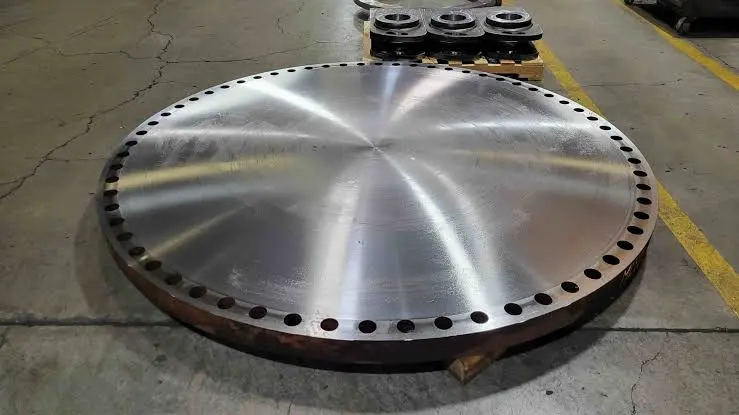
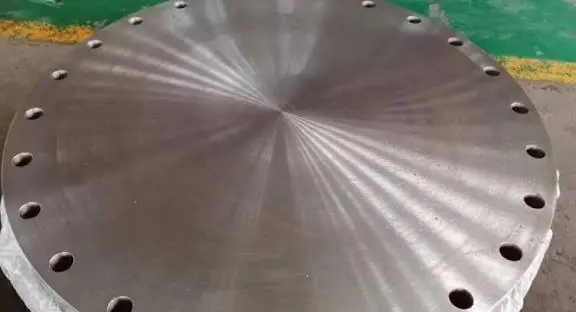
A Blind Flange is a solid disk with no hole in the middle that is used to seal off the end of a pipeline, pressure vessel nozzle, or valve. According to ASME B16.5 and ASME B16.47 standards, it takes on all of the internal pressure like a flat plate. The center and other regions of the flange are subject to pressure-induced bending and other stresses, so choosing the right materials, dimensions, and manufacturing process is such an important part of procurement.
Materials and Pressure Classes
Blind flanges are made of carbon steel (A105, A350 LF2), stainless steel (304, 316, 316L), and alloy steel (F11, F22, F91), each suited to different temperature ranges and corrosion conditions. Blind Flanges from JS FITTINGS are available in all ASME/ANSI pressure ranges, including Class 150, 300, 600, 900, 1500, and 2500. They are also available in European ratings from PN6 to PN100. The sizes range from NPS 1/2 to NPS 60, and they are made to meet the standards of ASME B16.5 (up to 24"), ASME B16.47 Series A & B (26" and up), MSS SP-44, DIN, and EN 1092-1.
Facing Options and Their Purpose
The covering surface you choose has a direct effect on how well the gasket works and how well it stops leaks. There are three common choices:
- Raised Face (RF): The most widely specified facing for general industrial piping; concentrates bolt load on a smaller gasket area for a tighter seal.
- Flat Face (FF): Used with low-pressure cast iron or non-metallic flanges where full-face gasket contact distributes load evenly to prevent flange cracking.
- Ring Type Joint (RTJ): Used for high-pressure and high-temperature services, as well as applications where a metal ring gasket and the specified RTJ configuration are required by the piping specification. RTJ facing is not automatically required for every Class 600 or higher application.
These three types of facings cover most industrial situations. Picking the wrong one leads to a lot of extra work in the field, which drives up project costs.
When and Why to Use a Blind Flange: Key Applications and Advantages
The Three Core Scenarios
Three situations commonly call for a pipe-end closure in municipal, offshore, and refinery applications. First, Blind Flanges separate busy process sections during planned repair shutdowns. This way, work further down the line can continue safely without lowering the system's pressure. Second, they provide a positive flanged termination on distribution headers where future branch expansions are planned, eliminating the substantial downtime and expense of cutting into live, lined, or insulated piping. Third, they can be used as pressure-retaining closures during hydraulic testing, where the applicable piping code determines the required test pressure. Under ASME B31.3, the hydrostatic test pressure is generally at least 1.5 times the design pressure, subject to the code's temperature and allowable-stress provisions; pneumatic testing uses different pressure requirements.
Advantages Over Alternative Closure Methods
A welded pipe cap costs less at first, but to remove it, you have to cut, grind, and re-weld it, which takes time and costs more than the difference in price during the first maintenance cycle. There is positive isolation between two flanges with a spectacle blind, but it makes the spool longer and needs two flange connections instead of one. A blind flange sits between these two options in terms of removability and installation requirements. It closes as well as a welding cap and opens as quickly as a spectacle blind without making the pipe longer.
Where Industry Uses Them Most
- Petrochemical turnarounds: RTJ-faced alloy steel blind flanges isolate hydrocracker units during sulfide-rich shutdowns, where gasket integrity is a direct safety requirement.
- Municipal water infrastructure: Galvanized or epoxy-coated carbon steel versions terminate large-diameter distribution headers, allowing municipalities to extend pipelines to new developments years later by simply unbolting the closure.
- Offshore subsea manifolds: Heavy-wall RTJ designs rated above 10,000 PSI serve as the primary environmental barrier on injection lines, meeting API 6A requirements.
Procurement Essentials: How to Choose and Source Blind Flanges
Matching Specifications to Operating Conditions
Start with three factors: the design pressure and temperature, the pipe material and schedule, and whether the medium is corrosive or erosive. Most utility steam and water services can be done with an A105 Blind Flange in Class 300 made of carbon steel. When used with hydrogen or acids, stainless steel or other metal grades are needed. NACE MR0175/ISO 15156 establishes material-selection and qualification requirements for H₂S-containing environments, including applicable restrictions on material properties and hardness. Getting this specification wrong during procurement can cost far more than spending an additional hour reviewing the project requirements.
Evaluating Supplier Certifications
ISO 9001 certification demonstrates that a supplier operates a quality management system that has been assessed against the requirements of ISO 9001. For critical projects, purchaser approvals and product-specific quality documentation should also be verified, including material traceability, dimensional inspection, and applicable non-destructive examination records. JS FITTINGS holds ISO-related and product conformity credentials stated by the manufacturer, including CE and GOST-R-related documentation, and its supplier qualifications should be verified against the specific purchaser and project requirements.
Managing Lead Times and Bulk Orders
Standard items in Classes 150 through 600 and common sizes may be available from stock, depending on the supplier's inventory. Items in higher pressure classes, such as Class 900 and above, usually have lead times of 4 to 8 weeks for forging. If you need to get raw materials quickly for a project, make sure they are available before you place your order. JS FITTINGS sends more than 90 crates every month, and more than 95% of them arrive on time. This directly lowers the risk of missing deadlines for time-sensitive projects.
Installation and Maintenance Best Practices for Blind Flanges
Pre-Installation Checks
Before you bolt up any flange closing, make sure you have enough light to see the gasket seating area. According to MSS SP-6, flange-facing finishes must meet the applicable surface-finish requirements, and significant surface damage should be evaluated for its effect on gasket sealing. Check the bolt grade and length against the flange rating. Joints that aren't torqued enough on Class 600 and above can contribute to leakage and fugitive-emission problems.
Torque Sequence and Leak Testing
Use a controlled cross-pattern torque sequence with multiple stages, following the applicable flange assembly procedure and the gasket manufacturer's recommendations to load the gasket evenly and avoid excessive stress buildup in one area. Once the required test pressure and procedure have been established, a hydrostatic test may be performed at the pressure specified by the applicable code. Under ASME B31.3, hydrostatic test pressure is generally not less than 1.5 times the design pressure, subject to the code's requirements; pneumatic testing has different pressure limits. The required holding time should follow the applicable code, project specification, and inspection procedure rather than a universal 30-minute rule. Write down the test results; for many EPC contracts, testing must be watched, and records must be signed before the job can be turned over.
Ongoing Maintenance and Storage
Check the flange edges and bolts for rust once a year in places that are exposed to corrosion or are outside. Before shipping, JS FITTINGS covers every Blind Flange in industrial black lacquer, yellow anti-rust oil, or hot-dip galvanizing. This makes the product last longer while it's being shipped by sea and stored outside. To keep seating areas safe from water and damage, store flanges face down on wooden dunnage and never on bare pavement.
Case Studies & Industry Examples: Successful Use of Blind Flanges
Refinery Turnaround in the Gulf Coast
The project team chose Inconel 625-clad RTJ Blind Flanges for the ends of the hydrocracker manifolds to be fixed during a 21-day turnaround at a Gulf Coast refinery. The exotic alloy layer stopped the hydrogen sulfide corrosion that had caused soft-gasket failures in the previous cycle. The project team reported a reduction in unplanned re-entry events during the turnaround.
Municipal Water Expansion in the Southwest
As part of the initial infrastructure build-out, a municipal water authority in Arizona put 36" carbon steel Blind Flanges with epoxy lining on four distribution header terminations. After seven years, two of the header terminations were unbolted and removed to allow the distribution system to be extended for new housing projects. The authority avoided cutting the existing 36-inch concrete-lined pipe while the expansion work was being performed.
Offshore Platform Decommissioning
Class 1500 RTJ Blind Flanges were used by an offshore operator to permanently shut down subsea injection lines on a North Sea platform while it was being partially decommissioned. The flanges provided a pressure-retaining barrier designed to meet the applicable HSE and DNV requirements. This saved money and time by not having to cut and cap subsea spools.
Conclusion
Three questions tell you when to use a Blind Flange: Does the line need to be shut against full system pressure? Does the plan allow for future entry without having to cut the pipe? Does the job require testing under pressure? If any of these are true, then a Blind Flange is the right choice. To keep the project on schedule and the piping system safe in the long term, it's important to choose the right material grade, pressure class, and facing type, as well as to buy from a certified supplier with clear quality records.
FAQ
1. What is the difference between a blind flange and a blank flange?
People often use both terms to mean the same thing. A "Blind Flange" is a bolted closure that meets the dimensions of ASME B16.5; a "blank" or "spade" is usually a flat separation plate that is put between two existing flanges inside the bolt circle. They are different physically and have different pressure ratings, but they do the same job of isolating.
2. Can a blind flange be modified for instruments?
Yes. Pressure gauges or thermowells can be installed using Tapped Blind Flanges, which are drilled and threaded at the center or off-center with NPT or BSP connections. But adding a hole changes the flange's stress distribution and may reduce its pressure-retaining capacity, so the modified design should be checked against the applicable design requirements before use.
3. When is RTJ facing required on a blind flange?
RTJ facing may be specified for high-pressure or high-temperature service and for applications where the piping specification calls for a metal ring gasket. It is not automatically required for every Class 600 and higher application or for all services above 400°C. The appropriate facing depends on the pressure class, temperature, medium, gasket system, and applicable piping specification. Under severe thermal transients, the metallic ring gasket maintains elastic spring-back and plastic sealing contact within the groove, whereas soft or spiral-wound gaskets may experience creep relaxation and fugitive leakage.
4. How do I verify a blind flange meets ASME standards?
Ask for the material test reports (MTRs), records of the measurements that were taken, and the manufacturer's mill certificate with a heat number that can be tracked. As part of their documented quality control system, ISO 9001-certified producers keep these records.
Get Certified Blind Flanges From JS FITTINGS — Inquire Today
For more than 40 years, JS FITTINGS has manufactured and exported high-integrity industrial flanges, supplying certified blind flanges to projects in more than 30 countries.We offer products with NPS 1/2 to NPS 60 ratings, applicable ASME pressure classes, and European PN ratings according to the relevant product standards. These products are all certified by CE, ISO, and GOST-R. Our team gets back to you within an hour, whether you need a standard stock item or a custom tapped Blind Flange for a certain instrumentation layout. To get a quote, email us at admin@jsfittings.com.
References
1. ASME B16.5: Pipe Flanges and Flanged Fittings, American Society of Mechanical Engineers, 2017.
2. ASME B31.3: Process Piping, American Society of Mechanical Engineers, 2022.
3. MSS SP-6: Standard Finishes for Contact Faces of Pipe Flanges and Connecting-End Flanges of Valves and Fittings, Manufacturers Standardization Society, 2012.
4. ASME B16.47: Large Diameter Steel Flanges, American Society of Mechanical Engineers, 2020.
5. NACE MR0175/ISO 15156: Petroleum and Natural Gas Industries — Materials for Use in H₂S-Containing Environments, NACE International, 2015.
6. API 6A: Specification for Wellhead and Christmas Tree Equipment, American Petroleum Institute, 2018.
Send Inquiry
You may like