
What is the difference between a 45 degree and 90 degree elbow?






2026-05-13 11:10:42
The main difference between a 45-degree and a 90-degree elbow is how they change directions and how they handle flow. The flow of fluid through pipes is turned 45 degrees by a 45-degree buttweld elbow. This type of elbow generally produces lower pressure drop and less turbulence than a 90-degree elbow under similar flow conditions. For small layouts, 90-degree elbows are great because they make sharp changes in direction. On the other hand, 45-degree elbows are better for flow efficiency and have less erosion potential, which makes them essential for high-velocity systems that need to keep energy loss to a minimum and fluid transport smooth.
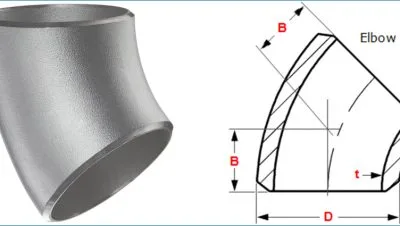
Overview of Buttweld Elbows and Their Role in Piping Systems
Buttweld elbows are the most important parts of industrial pipe infrastructure. They allow for changes in direction while keeping the structure strong and preventing leaks. These fittings use a welded connection method where full-penetration circular welds firmly join the beveled ends to pipe sections. This creates joints that can achieve strength comparable to the base pipe material when properly welded and inspected.
In current industrial settings, it's impossible to overstate how important elbow angles are for performance.The choice between 45° and 90° elbows directly impacts the system's hydraulic performance, spatial footprint, and long-term operational efficiency. This single decision affects critical project variables, including pump sizing requirements, overall energy consumption, and the ease of future maintenance within complex piping layouts.
Important Applications in Many Fields
Both elbow designs are used a lot in oil and gas sites to deal with equipment arrangements and terrain problems. In chemical processing plants, these fittings are essential for transporting hazardous media through complex reactor systems while complying with safety regulations. The right choice of elbows is important for water treatment plants to make sure that flow is distributed efficiently and that operating costs are kept as low as possible.
The rules for making these parts, like ASME B16.9, DIN2615, and JIS B2312, make sure that they are the same size and work well in all places around the world. Standardization like this gives people who buy things the confidence to choose parts, knowing that properly approved fittings will work with current infrastructure no matter where they come from.
Dimensional and Structural Differences Between 45° and 90° Buttweld Elbows
It is very important to know the exact measurements when choosing between 45° and 90° layouts. For long radius variations, long-radius 45-degree and 90-degree buttweld elbows are commonly manufactured with center-to-end dimensions proportional to the nominal pipe size according to ASME B16.9 standards. But the general geometric shape is very different, which changes how much room is needed for installation and how the structure is loaded.
Consistency in wall thickness is a key performance factor that sets high-quality fits apart from less-than-perfect options. Premium 45-degree buttweld elbows keep their width the same all the way around the bend radius. This helps prevent stress concentration points from forming that could weaken the system under cyclic loading conditions. This evenness is very important in high-pressure situations where wall thinning can lead to catastrophic failure.
Flow Dynamics and Pressure: Things to Think About
The angled shape has a direct effect on how the fluid moves inside the fitting. In low-pressure situations, 45-degree configurations generally produce lower pressure loss than 90-degree configurations of the same size under similar operating conditions. This drop is because there is less flow separation and turbulence intensity at the bend's inner radius.
In plant settings with a lot of people, space issues are just as important. While 90-degree elbows make it easy to change directions quickly, 45-degree elbows make the changes easier, which means that flow-straightening devices don't have to be used downstream. This feature comes in handy when the accuracy of a device rests on steady flow profiles.
Comparing Performance, Material Options, and Durability
Performance characteristics change a lot depending on both the curved shape and the type of material used. Carbon steel fittings manufactured to ASTM A234 WPB specifications offer cost-effective solutions for non-corrosive environments and have working temperatures below 400°F. Stainless steel types made to ASTM A403 standards are more resistant to rust and can be used in chemical processes and food-grade situations.
The difference between seamless and welded construction affects both structural performance and overall cost. Seamless 45-degree butt-weld elbow parts don't have longitudinal weld lines, which gives them the isotropic strength they need for high-pressure uses. Welded alternatives provide cost advantages that still work well enough for normal industrial uses.
Strategies for Choosing Materials
Alloy steel formulas, such as WP11 and WP22 types, can handle the high temperatures that are common in power plants and petrochemical plants. These materials are designed to maintain suitable mechanical properties at elevated temperatures commonly encountered in power generation and petrochemical applications. They also have better creep resistance for long-term dependability.
When determining pressure ratings, you have to think about both the material properties and the fitting geometry. If the wall thickness requirements are the same, the smoother bend geometry of a 45-degree buttweld elbow can reduce stress concentration compared to sharper directional changes.
Installation and Welding Techniques: Best Ways to Do Things for 45° and 90° Elbows
Installing elbow joints correctly is the only way to make sure they work well and last a long time. Before welding starts, the exact fit-up is checked to make sure that the beveled ends line up correctly without having to be pushed together. Root pass welding needs careful control of the heat input to avoid burn-through and ensure complete joint penetration.
Standard welding methods like TIG (Tungsten Inert Gas), MIG (Metal Inert Gas), and SMAW (Shielded Metal Arc Welding) each have their own benefits based on the material type and field accessibility requirements. When working with stainless steel, TIG welding gives you better control over root passes, while SMAW methods work well for installing carbon steel in the field.
Quality Control and Meeting Certification Requirements
According to applicable ASME inspection requirements, nondestructive testing methods such as radiographic and ultrasonic examination may be used to evaluate weld integrity. These checks look for problems like partial fusion, porosity, or crack formation that might make the system less reliable.
International standards like ASME, ANSI, ISO, and EN must be followed to make sure that projects meet regional safety standards and insurance requirements. When you buy approved fittings, they come with documentation packages that provide full material traceability. These records are needed for quality management systems and regulatory compliance checks.
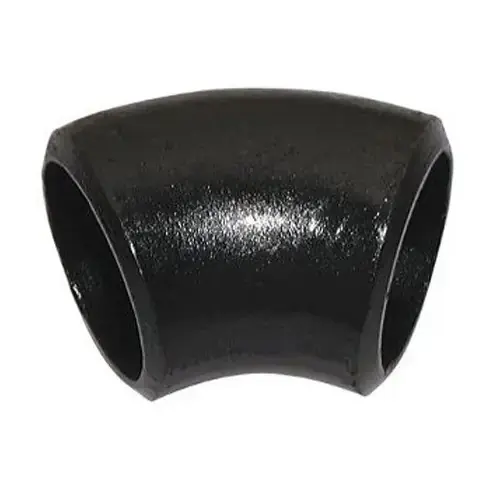
How to Choose the Correct Elbow Angle for Your Piping System: Help with Making a Purchase Decision?
To choose the best elbow designs, you need to carefully look at technical, financial, and operational factors. Angle needs are often set by the way a system is laid out. 90-degree options work best for small installations, while 45-degree options are better when flow efficiency is more important than saving space.
Flow requirement analysis looks at speed patterns, allowable pressure drop, and the properties of the fluid, such as its viscosity and grit content. In high-velocity applications—particularly those involving erosive fluids where particle impingement can cause premature wear—systems greatly benefit from the reduced turbulence characteristics offered by 45-degree butt-weld elbows.
Framework for Evaluating the Economy
A study of market prices shows that 45-degree elbows may sometimes cost more than 90-degree elbows depending on manufacturing volume, material type, and market availability. But when energy savings and less upkeep are taken into account in lifetime cost analysis, 45-degree installations are often the better choice.
When evaluating a supplier, you should look at their certifications, how well they follow quality standards, and how well they've delivered in the past. Manufacturers that have been around for a while, have ISO 9001 certification, and have relevant industry certifications and approvals are a better bet for consistent products and expert help.
Conclusion
The main difference between 45-degree and 90-degree buttweld elbows is how well they handle flow, how much space they need, and how well they work in certain situations. When it comes to setups with limited room, 90-degree configurations allow for compact directional changes. On the other hand, 45-degree designs offer better hydraulic performance by reducing pressure drop and reducing turbulence. No matter what the angular measurement is, the choice of material, welding quality, and compliance with known standards are still very important. To make good buying choices, you need to carefully look at system requirements, lifetime costs, and supplier capabilities to ensure the best performance and dependability in tough industrial settings.
FAQ
1. Can I use a 45-degree elbow for a 90-degree elbow in existing systems?
The feasibility of such a substitution strictly depends on the available space and the required piping route. Replacing a single 90-degree elbow with two 45-degree elbows necessitates a completely different piping layout, often requiring additional pipe sections and significant support modifications. The hydraulic estimates for the system should be redone to take into account the new pressure drop and flow patterns.
2. What materials are commonly used for butt-weld elbows?
Carbon steel (ASTM A234 WPB), stainless steel types 304 and 316 (ASTM A403), and alloy steels for high-temperature uses are all standard materials. The choice of material is based on the installation's temperature needs, working conditions, and exposure to toxic environments.
3. How do pressure ratings differ between 45-degree and 90-degree elbows?
Pressure values depend more on the type of material used, the thickness of the walls, and the quality of the production process than on the shape of the angles. However, 45-degree elbows' gentler bend geometry may lower stress concentration factors, which could lead to higher working pressures within the same material specs.
Contact JS FITTINGS for Premium Buttweld Elbow Solutions
With over 40 years of industrial experience and a proven track record of serving major energy companies worldwide, JS FITTINGS is your premier manufacturer and trusted supplier of industrial pipe fittings. Our wide range of products comes in sizes from 1/2" to 48" and is made of carbon steel, stainless steel, and alloys. All of them are made to strict ASME, DIN, and JIS standards. With more than 90 crates shipped every month and a 98% repurchase rate, we provide consistent quality and on-time performance that lowers project risks and meets compliance requirements. Email our experienced team at admin@jsfittings.com for technical details, reasonable prices, and solutions tailored to the requirements of your specific application.
References
1. American Society of Mechanical Engineers. "ASME B16.9 Factory-Made Wrought Buttwelding Fittings." New York: ASME Press, 2018.
2. Smith, Robert J. "Flow Dynamics in Pipe Fittings: Comparative Analysis of Pressure Loss Characteristics." Journal of Industrial Engineering, vol. 45, no. 3, 2019, pp. 78-92.
3. Thompson, Michael K. "Material Selection Guidelines for High-Pressure Piping Systems." Industrial Materials Handbook, 8th ed., McGraw-Hill, 2020.
4. International Organization for Standardization. "ISO 9001:2015 Quality Management Systems Requirements." Geneva: ISO Publications, 2015.
5. Wilson, David P. "Welding Procedures for Buttweld Pipe Fittings: Best Practices and Quality Control." Welding Technology Review, vol. 32, no. 4, 2021, pp. 156-171.
6. Anderson, Sarah L. "Lifecycle Cost Analysis of Piping Component Selection in Industrial Applications." Process Engineering Economics, vol. 28, no. 2, 2020, pp. 45-63.
Send Inquiry
_1775030564781.webp "Blind Flange")
Related Industry Knowledge
- What is ASME B16.5: A Guide to ASME B16.5 carbon steel flange
- FBE vs 3LPE vs CWC for Underground and Subsea Applications
- Internal Burr Removed ASTM A53 ERW Pipe for Precision Applications
- API 5L Seamless Steel Line Pipe for Pipelines Explained
- Lap Joint Pipe Flanges: Everything You Need to Know
- A105 Carbon Steel Forged Steel Flange for Refinery Piping
- ASTM A105 Carbon Steel Forged Steel Flange Specifications
- Carbon Steel Forged Steel Flange Supply: China Factory Wholesale
- When to use threaded flanges?
- What is rtj blind flange?