
How to Choose Carbon Steel Pipe for High-Pressure Applications Safely






2026-11-09 14:01:07
Selecting the proper carbon steel pipe for high-pressure use is one of the most important choices an engineer or procurement manager makes. Get it incorrectly, and the implications may range from expensive downtime to catastrophic disaster. The right pipe must fit your operational pressure, temperature range, fluid type, and appropriate code. This book takes an in-depth look at grade selection, pipe type comparisons, material trade-offs, procurement best practices, and maintenance procedures, providing EPC contractors, distributors, and industrial end users with a clear route to confident, code-compliant purchase choices.
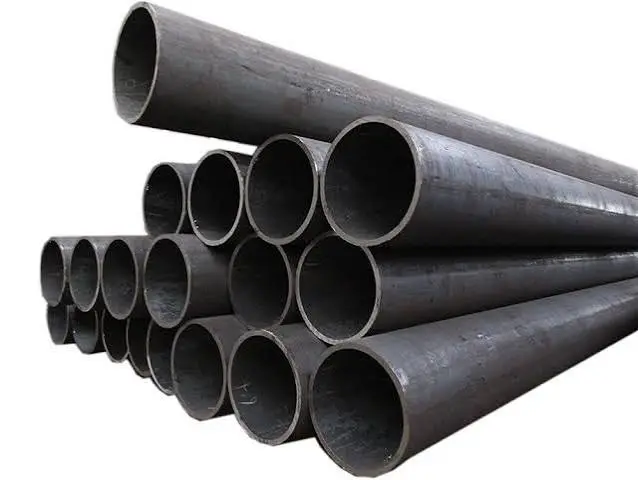
Understanding Carbon Steel Pipes for High-Pressure Applications
What Defines a High-Pressure Carbon Steel Pipe?
High-pressure carbon steel piping is manufactured from iron-carbon alloys with controlled carbon content (typically 0.15% to 0.30% for pressure grades). There is no better way to move high-pressure fluids in oil and gas, power generation, and heavy industry than this method, which is very strong for the price. For low-grade pipes, the tensile strength is 48 ksi. For high-grade pipes like API 5L X70 or X80, it's over 80 ksi. This lets the engineers choose from many ways to make the pipes work.
Key Standards and Grades You Need to Know
What you do after that depends on the grade you assign it. Here’s a list of the most typical requirements:
ASTM A106 Gr. B (Seamless): The definitive industry benchmark for high-temperature, high-pressure steam and process piping in refineries and power plants (Minimum Tensile Strength: 60 ksi / 415 MPa).
ASTM A53 Gr. A & B: Covers seamless, ERW-welded, and hot-dip galvanized pipe for general fluid service. When pressure ratings are important, Gr. B is preferable.
ASTM A333 Gr. 1, 6 (Seamless & Welded): Engineered specifically for low-temperature and cryogenic service, featuring mandatory Charpy V-Notch impact testing down to –50°F (–45°C).
API 5L / ISO 3183 Gr. B through X80 (Seamless, LSAW, SSAW, ERW). The governing standard for oil and gas pipeline systems. The higher X-grades have higher yield strength for long-distance, high-pressure transmission.
ASTM A179, A192: Seamless tubes for heat exchangers and boilers when wall homogeneity is necessary.
DIN 2440 / DIN 2444: German standard seamless and galvanized carbon steel pipe for medium weight screwed applications, commonly used in tenders throughout Europe and the Middle East.
CSA Z245: Canadian standard for seamless, ERW, and SAW pipe for oil and gas pipeline systems.
Seamless vs. Welded: Manufacturing Impact on Pressure Rating
Seamless (SMLS) pipe carries an ASME joint efficiency factor of E = 1.0 without longitudinal seams, making it the preferred choice for extreme pressure and thermal cycling. Modern ERW and LSAW welded pipes, manufactured from precision-rolled steel coils or plates, offer superior wall thickness uniformity and dimensional accuracy across outside diameters from ½" to 60" and wall thickness schedules from SCH 10 to SCH 160 (2 mm to 45 mm).
Critical Criteria for Selecting Carbon Steel Pipes Safely in High-Pressure Contexts
Match Grade to Operating Conditions
Before picking a pipe, you need to know the design pressure, working temperature, and the substance that will be moved. As high as 800°F (427°C), ASTM A106 Gr. B can be used all the time. When it's below -20°F, you need to use A333 types that are rated for notch toughness. Compliance with NACE MR0175/ISO 15156 adds another important level of qualification to sour-service pipelines that carry H₂S.
Corrosion Control and Coating Selection
Wet, acidic, or salty environments will corrode carbon steel. These are sources that will inform you what sort of finish to use:
3PE (Three-Layer Polyethylene): Commonly used for underground oil and gas pipelines; has fusion-bonded epoxy adhesive and a robust outer PE layer that guards against mechanical damage and moisture penetration.
FBE (Fusion Bonded Epoxy): For potable water and chemical service, FBE has high chemical resistance at moderate operating temperatures.
Zinc Coating (Hot-Dip Galvanizing): Conforms to ASTM A53 and DIN 2444, providing sacrificial cathodic protection for atmospheric and utility water systems.
Corrosion-Resistant Alloy (CRA) Clad / Lined Pipe: Engineered for highly aggressive, severe sour-service (H2S/CO2) environments where unlined carbon steel cannot survive.
Compliance with ASME, API, and International Standards
Each pipe in the US needs to meet either ASME B31.1 (Power Piping) or ASME B31.3 (Process Piping), depending on the type of pipe it is. The chemical makeup and mechanical test results of each heat of pipe must be backed up by a mill test report (MTR). If the project has to do with energy, the suppliers should also have credentials from well-known energy providers.
Comparing Carbon Steel Pipes with Other Materials for High-Pressure Systems
Carbon Steel vs. Stainless Steel
While stainless steel delivers superior corrosion resistance without protective coatings, it costs three to five times more per linear meter than carbon steel of equivalent size and pressure rating. Carbon steel provides comparable structural and pressure containment at a fraction of the initial capital cost. It may be utilized to convey large quantities of fluid in safe or non-corrosive locations. Due to the nature of the operation, it is not possible to prevent rust from forming on the interior or the exterior without costly maintenance. For this use, stainless steel is the ideal material.
Low-Carbon vs. High-Carbon Steel
It is simple to weld and form mild steel, which contains less than 0.30 percent carbon. This is why it’s the standard for structural piling ( ASTM A252) and ordinary plumbing. High-carbon varieties may be pulled to make them stronger, but they are not as durable and are difficult to weld unless heated beforehand. API 5L X52 or X65 and other medium carbon grades work well for high-pressure service pipe because of their strength and ease of field welding.
When to Consider Alloy or Plastic Alternatives
P11 and P22 are examples of chrome-molybdenum alloy steels that may endure longer than carbon steel grades in steam lines that are hot and under a lot of pressure. HDPE pipe is ideal for moving low-pressure water. But it cannot withstand the high pressures inside a refinery or a gas transmission line. “Always look at the pressure class, the temperature, and the chemistry of the fluid to make a choice.”
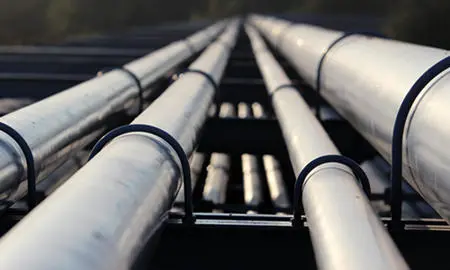
Practical Buying and Procurement Guide for Carbon Steel Pipes
Evaluating Supplier Credentials
A reputable carbon steel pipe vendor should be equipped with the current ISO 9001 certification, third-party inspection records, and MTRs indicating the progress of each heat. Most of the time, you require CE marking and ASME or API standards to bid on government and construction projects. Before ordering, check that the vendor can create the items you need in the size range and time period you require.
Price Factors and Lead Time Management
When evaluating landed costs, you need to look at freight, port fees, domestic distribution, and not only compare unit prices. Standard-grade pipe in popular schedules normally ships within two to four weeks when stock is available. But custom sizes or heavy-wall layouts might take four to eight weeks on the factory floor. Project blueprints are secure. Claims concerning wait times are locked in by contracts.
Documentation and Compliance Requirements
Each shipment is supplied with a comprehensive documentation dossier, including EN 10204 3.1 MTRs, commercial packing lists, factory hydrostatic test certificates, and dimensional inspection reports. If the pipe is API 5L, you need a piece of paper that states it’s up to the criteria of PSL1 or PSL2. The individuals who purchase welded pipe for pressure-boundary applications should additionally request weld process standards (WPS/PQR).
Installation and Maintenance Best Practices to Ensure Safety and Longevity
Site Preparation and Welding Protocols
There are a few things that have to be done before an arc may be created on high-pressure carbon steel pipe, such as cutting the pipe properly, ensuring sure the joints are within the limitations stipulated by ASME B16.25, and watching the start temperature. The welder must possess a valid ASME Section IX record. Most weld failures in process pipe systems are caused by unclean or improperly prepared joints.
Routine Inspection and Non-Destructive Testing
If you know corrosion is going to take place at pipe bends, tees, and injection sites, then you should expect to inspect the pipe thickness with ultrasonic waves on a frequent basis. The system is robust, as confirmed by X-ray (RT) checks of weld seams during system construction and by testing the system under water pressure at 1.5 times the design pressure before its use. Maintain inspection records in a single asset management system, and you will identify patterns and can move fast to reduce wall-thinning before it becomes too severe.
Emergency Response and Troubleshooting
Make a list of emergency procedures and train your maintenance people on how to recognize warning indicators such as unusual vibration, a loud pressure drop, or a bulge in one area. List all the additional components required, such as new pipe spools and repair clamps for critical service lines. When things go wrong with high-pressure systems, the only approach to prevent things from spiraling out of control and destroying the whole system is to act fast and correct them.
Conclusion
Choosing the proper carbon steel pipe for high-pressure applications is more than just choosing the cheapest pipe grade, type, and coating. And you need to make sure that the material attributes correspond to genuine operating situations. ASTM A106 Gr. B is the most used material for high-temperature operations, API 5L grades for long-distance transmission, and ASTM A333 for toughness at low temperatures. If you get the proper grade, install it properly, check it out, and get it from a reliable supplier, it will fulfill code requirements and perform well for a long time.
FAQ
1. What carbon steel pipe grade is best for high-pressure steam service?
ASTM A106 Gr. B seamless pipe is the standard specification for high-temperature, high-pressure steam service. It meets ASME B31.1 requirements and maintains adequate tensile and yield strength at continuous operating temperatures up to 750°F (399°C).
2. What is the pressure difference between seamless and ERW pipe?
Seamless pipe carries a joint efficiency factor of 1.0 under ASME codes, allowing it to hold higher calculated allowable stresses than ERW pipe, which carries E = 0.85 unless the seam is fully radiographed. For equivalent wall thickness, seamless pipe supports a higher maximum allowable working pressure (MAWP).
3. Do I need a protective coating for buried carbon steel pipe?
Yes. Uncoated carbon steel corrodes rapidly in soil, particularly in high-moisture or high-chloride environments. 3PE or FBE coating combined with cathodic protection is the standard system for buried oil and gas pipelines per NACE SP0169.
4. What does API 5L PSL1 vs. PSL2 mean?
Product Specification Level 1 (PSL1) defines basic chemical and mechanical requirements. PSL2 adds more stringent limits on carbon equivalent, CVN impact testing where required by the standard based on dimensions and specimen provisions, and additional non-destructive examination—required for sour-service or offshore pipelines.
5. When should I specify ASTM A333 instead of A106?
Specify ASTM A333 whenever design temperature drops below −20°F (−29°C). A333 grades are impact-tested per Charpy V-Notch criteria at sub-zero temperatures, ensuring the pipe does not become brittle in cryogenic or cold-climate applications.
Get the Right Carbon Steel Pipe from JS FITTINGS
For more than 40 years, JS FITTINGS' carbon steel pipe and fittings have been used in industrial and energy projects in over 30 countries. As an established international manufacturer and exporter of certified carbon steel pipe and piping components, We maintain ISO 9001, CE, and GOST-R certified quality systems, with approved vendor status from major international energy operators including ADNOC and Petrobras. We offer full MTR documentation, third-party inspection, and on-time delivery more than 95% of the time for every order. The fastest way to get a price is to email admin@jsfittings.com with your needs.
References
1. American Society of Mechanical Engineers (ASME). ASME B31.3: Process Piping Code. 2022.
2. American Petroleum Institute (API). API 5L: Specification for Line Pipe, 46th Edition. 2018.
3. ASTM International. ASTM A106/A106M: Standard Specification for Seamless Carbon Steel Pipe for High-Temperature Service. 2019.
4. NACE International. NACE SP0169: Control of External Corrosion on Underground or Submerged Metallic Piping Systems. 2013.
5. Nayyar, M. L. Piping Handbook, 7th Edition. McGraw-Hill. 2000.
6. Chattopadhyay, S. Pressure Vessels: Design and Practice. CRC Press. 2004.
Send Inquiry
You may like
Related Industry Knowledge
- What material is the SSAW carbon steel pipe made of?
- Industrial Buttweld Elbow Solutions for Power Plant Piping
- Buttweld Reducer Bevel End Preparation and Welding Guide
- Large Diameter LSAW Welded Pipe Manufacturer in China
- Industrial Steel Carbon Pipe Guide for High Performance Engineering
- Buttweld Reducer Pressure Ratings for Critical Service Lines
- Why Use a Concentric Buttweld Reducer in Vertical Lines?
- Long Radius Buttweld Elbow vs Short Radius Elbows: Which One to Use?
- What Facing Types Suit a Carbon Steel Forged Steel Flange?
- When to use threaded flanges?