
Industrial Steel Carbon Pipe Guide for High Performance Engineering






2026-07-27 10:38:50
Selecting the right industry Carbon steel pipe can determine whether your project meets deadlines, stays within budget, and operates safely for decades. This guide addresses the real concerns of procurement managers, project engineers, and industrial buyers: how to balance cost with performance, verify quality before shipment, and avoid costly downtime. With over 40 years navigating these challenges, we understand that pipe selection involves more than matching a specification sheet—it requires confidence in your supplier's ability to deliver consistent quality that protects your project's integrity.
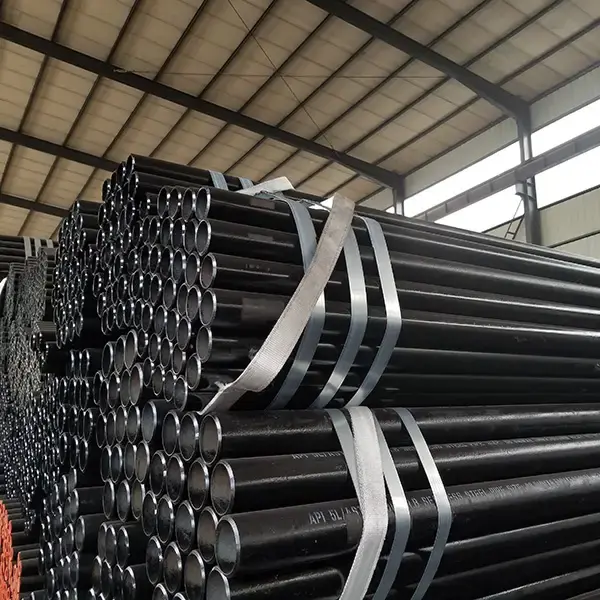
Understanding Carbon Steel Pipes: Grades, Types, and Specifications
What Defines Industry-Grade Carbon Steel Pipe?
Industrial carbon steel pipe consists primarily of iron and carbon, typically ranging from 0.05% to 2.1% carbon by weight, with manganese, silicon, and trace elements that improve mechanical properties.Unlike stainless steel, which gets its strength from chromium, carbon steel is strong because of its carbon content and how it is heated. It is the most cost-effective way to move high-pressure fluids, build structures, and install process pipes in oil pipelines, power plants, and building projects because of how it is made.
The production method has a big effect on how well things work. By piercing solid billets, seamless pipes are made that don't have any lengthwise weld gaps and are strong in all directions. Some types of welded pipes are ERW (Electric Resistance Welded), LSAW (Longitudinal Submerged Arc Welded), and SSAW (Spiral Submerged Arc Welded). They are made from steel plates or tubes and are then welded along the gaps. Each way is best for different situations depending on the diameter needed, the pressure grade, and the budget.
Critical Grades and Their Engineering Applications
- ASTM A106 Grade B remains the standard for seamless pipes in high-temperature work, with a tensile strength of over 60,000 psi and a yield strength of about 35,000 psi. This grade is important for boiler systems, superheated steam lines, and refinery process units because it keeps its shape at temperatures up to 750°F and doesn't let heat creep through. To avoid hot spots during welding, the specification limits the amount of sulfur and phosphorus that can be present.
- API 5L specifications control pipeline transportation systems in the oil and natural gas businesses. API 5L Grade B is for basic service, and X80 is for high-strength applications. Yield strengths range from 35,000 psi to 80,000 psi. Long-distance gearbox pipeline projects usually call for grades X52 to X70, which balance the ability to weld with the ability to handle changes in earth pressure and movement. These grades are available in seamless, ERW, LSAW, and SSAW configurations, depending on the nominal diameter and wall thickness requirements.
- ASTM A53 covers pipes for mechanical and pressure uses that are either seamless or bonded, available in Grades A and B. The specification lists both black (uncoated) and galvanized versions. The galvanised versions have a zinc coating that protects outdoor installations and water service. Grade B has a minimum tensile strength of 60,000 psi, which is higher than Grade A's 48,000 psi. This makes it better for structural and pressure-containing uses.
- ASTM A333 covers service at low temperatures, where regular carbon steel breaks easily. Grades 1 through 6 are made to work in progressively colder temperatures. Grade 6 has been tested at temperatures as low as -50°F. These grades are used in LNG terminals, natural gas processing plants in cold areas, and cryogenic uses because they keep their notch toughness and don't break easily when heated.
The table below outlines dimensional availability and coating options:
| Specification | Size Range | Wall Thickness | Common Coatings |
|---|---|---|---|
| ASTM A106/A53 | 1/2" to 24" | Sch 10 to Sch 160 | Black, Galvanized |
| API 5L | 2" to 60" | 2mm to 45mm | 3PE, FBE, Bare |
| ASTM A333 | 1/2" to 24" | Sch 10 to Sch 80 | Black, Epoxy |
Seamless vs. Welded: Manufacturing Trade-offs
Seamless pipes don't have a longitudinal weld seam, so stress is spread evenly around the outside. This makes them perfect for uses where there is a lot of pressure and any weak spot could cause them to break. However, industrial issues mean that seamless products can only be made in smaller sizes (usually less than 24 inches) and cost more per foot. Differences in wall thickness can reach ±12.5%, so they need to be carefully inspected for important uses.
Welded pipes are cheaper for projects with a large diameter. When steel plates are formed into LSAW pipes and welded using submerged arc methods, the pipes maintain high circularity and straightness, making them highly suitable for radiographic testing.
Our cold-expansion method makes sure that the outer lengths are exact, which makes field alignment easier during installation. Spirally welded from coiled steel, SSAW pipes are the most cost-effective way to move water and low-pressure gas in diameters bigger than 24 inches. We test all of our LSAW and SSAW welds with X-rays to make sure that the seam strength matches the properties of the base metal.
Industrial ERW pipes use high-frequency induction welding to produce a narrow heat-affected zone for sizes up to 24 inches, minimizing grain growth. The rules for making ERW are set by ASTM A134 and A135, which describe its mechanical qualities and inspection standards. These pipes work well in medium-pressure situations where the cost of seamless pipes is too high.
Performance Characteristics and Advantages for High-Pressure Engineering
Mechanical Properties That Matter
Tensile strength is the maximum force that a material can take before it breaks, ranging from 48,000 psi for ASTM A53 Grade A to over 80,000 psi for API 5L X70. The design of pressure vessels and the safety margins are based on the yield strength, which is the point at which permanent deformation starts. To figure out the allowable working pressure, engineers use the ASME B31.3 or B31.4 codes to find the yield strength, wall thickness, and design factors.
Toughness, measured through Charpy V-notch impact testing, quantifies a material's resistance to breaking into small pieces when it is shocked or when it is cold. Impact testing is required by API 5L PSL2 (Product Specification Level 2) to make sure the material is flexible. This keeps catastrophic failures from happening in sour gas service or the Arctic. Carbon equivalents (CE values) below 0.43% make sure that the metal can be welded, so field joints can be made without having to be heated up first, which slows down building.
Thermal conductivity around 50 W/(m·K) makes Industry Carbon steel pipes suitable for heat exchanges and condensers. ASTM A179 seamless tubes are used in boilers because they are cleaner and have tighter limits for size. This is important because efficient heat movement directly affects how efficiently power is generated. When ASTM A192 seamless tubes are used in high-pressure boilers, they go through extra tests to make sure they don't flatten or flare.
Quality Assurance Through Rigorous Testing
Every pipe section is put through hydrostatic testing, which uses water pressure 1.5 times the design rating to find leaks and make sure the structure is solid before it is shipped. This non-destructive proof test provides assurance that the pipes will perform reliably under design operating stresses.
Non-destructive testing (NDT) methods find problems inside and outside of a material without damaging it:
- Ultrasonic Testing (UT) sends high-frequency sound waves through pipe walls to find laminations, inclusions, and changes in thickness that are accurate to within 0.1 mm. Automated UT systems look at all the sides of the pipe and record data for good paperwork.
- Radiographic Testing (RT) uses X-rays or gamma rays to take pictures of weld seams and find holes, slag inclusions, signs of not fusing, and cracks. We do RT on all of our LSAW and SSAW welds, which meets the requirements of ASME Section V.
- Eddy Current Testing finds surface cracks and defects close to the surface in seamless pipes. It works especially well for finding stress corrosion cracks in material that has been used for a long time.
Through destructive study, mechanical testing verifies the claims made during design. Flattening tests make sure the pipe is flexible by squeezing it between parallel plates until the walls on opposite sides meet. Cracks in the base metal and weld zones are then checked for. Bending tests use controlled deformation to check the integrity of a weld while it is being installed in the field. Chemical analysis using optical emission spectrometry shows that the levels of carbon, manganese, phosphorus, and sulfur are within the acceptable range. Mill test certificates (MTC) in line with EN 10204 3.1 provide proof of this.
Corrosion Considerations and Protective Measures
When carbon steel is exposed to oxygen and water, it corrodes, turning into iron oxide that weakens the structure. Corrosion rates depend on the climate. Exposure to air causes 0.1 to 0.5 mm of loss every year, while soaking in seawater can cause more than 1 mm of loss every year. When engineers know these rates, they can set the right corrosion allowances and protection systems.
Three-layer polyethylene (3PE) coats cover underground pipes completely. They are made up of an epoxy primer, an adhesive copolymer, and a polyethylene topcoat. When sprayed as a thermosetting powder, fusion-bonded epoxy (FBE) coatings harden into long-lasting plates that can't be broken apart by cathodic disbondment. When you do hot-dip galvanizing, zinc layers are added that corrode on purpose to protect the steel underneath through electrical action.
Internal coatings and linings mitigate internal corrosion. In clad or lined configurations, corrosion-resistant alloys (CRA) are metallurgically or mechanically bonded to carbon steel substrates. This gives the structure strength and chemical resistance at a lower cost than solid alloy construction. Scale doesn't form on epoxy liners in water service, so flow capacity stays the same for decades.
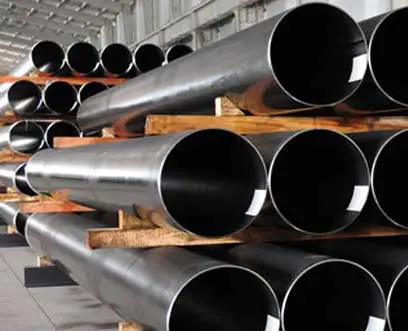
Comparing Carbon Steel Pipes with Other Materials for Procurement Decisions
Material Selection Based on Application Requirements
Stainless steel lines are more resistant to rust because they have chromium oxide films on their surfaces, eliminating external coating requirements in many situations. But the cost of the materials is three to five times higher than for industry carbon steel pipes, and special welding techniques make installation more expensive. Purchasing managers only ask for stainless steel when the rate of corrosion is higher than what the protective system can handle or when they are worried about product contamination and need inert surfaces.
The zinc layer on galvanized steel pipes protects them from rust in the atmosphere. This makes them last longer in plumbing, fire protection, and outdoor building projects. The galvanizing process limits the size of the pipe and the thickness of the wall. For hot-dip methods, the layer thickness is usually between 85 and 100 microns, according to ASTM A53. The weather affects how long a coating lasts. Zinc is used up faster in industrial areas than in rural ones.
Chromium, molybdenum, and vanadium are added to alloy steel pipes to make them stronger at high temperatures and less likely to rust. Grades like ASTM A335 P11 and P22 are used in warming tubes and steam systems in refineries that are hotter than the temperature limits for carbon steel. The cost of the material is between that of carbon steel and stainless steel, which makes sense when the conditions of use call for higher creep resistance.
Strength-to-Cost Analysis for Budget-Conscious Projects
Carbon steel is the strongest material for the money. When you compare 12-inch Schedule 40 pipes, carbon steel (ASTM A106 Grade B) costs around $800 per tonne, while 304 stainless steel costs more than $3,200 per tonne. At least 60,000 psi of tensile strength is met by both, but carbon steel is the better choice when coatings and cathodic protection can control corrosion.
Analysis of lifecycle costs shows more savings. Because carbon steel can be welded, it cuts down on the time needed for outdoor work and gets rid of the need to preheat, which slows down building. Having options from several sources makes prices more reasonable and keeps projects from being held up by a lack of materials. Carbon steel has well-established repair methods, and maintenance teams are trained in ways to keep downtime to a minimum.
SSAW pipes are a highly cost-effective welded pipe solution for transporting water in nominal diameters of 36 inches or larger. When pipes are made spirally from twisted steel, less plate waste and fewer manufacturing steps are needed than when pipes are made using LSAW. When requirements include 100% radiographic weld inspection, projects that need hundreds of kilometers of piping can save a lot of money without lowering the safety of the structure.
Conclusion
Technical requirements, financial constraints, and supplier dependability must all be balanced when purchasing industry carbon steel pipe. Knowing the differences between grades, like ASTM A106 for high-temperature work and API 5L for pipeline shipping, helps you choose the right material. Understanding the effects of the manufacturing method, like whether it's seamless for regularity or bonded for cost-effectiveness, helps match the product's abilities with what the application needs. Thorough quality checks using NDT and mechanical testing protect the integrity of the project, and thorough maintenance programs keep assets valuable for decades of use. Even though covering technology and manufacturing accuracy will get better in the future, carbon steel will still be the most popular material for industrial infrastructure because it is stronger and costs less.
FAQ
1. How do I verify pipe quality before shipment?
Ask for mill test papers that follow EN 10204 3.1 and list the chemical make-up and mechanical qualities of each heat. Ask for a third-party inspection (TPI) at the factory. Companies like SGS can do dimensional checks, visual inspections, and watch hydrostatic pressure and NDT tests based on your project's needs. Before payment is released, pre-shipment inspection records show that all the rules have been followed.
2. What coating system best protects buried pipelines?
Three-layer polyethylene (3PE) coats protect underground industry. Carbon steel pipes are best protected by mixing an epoxy primer that sticks, a copolymer layer in the middle, and a polyethylene topcoat that doesn't come off easily. For grounds that aren't as rough, fusion-bonded epoxy (FBE) is a cheaper option. Add cathodic protection systems to coatings, like sacrificial magnesium anodes or impressed current rectifiers, to keep things safe when the coatings wear off and get a service life of 30 years or more.
3. Can welded pipes be used instead of seamless pipes in high-pressure situations?
When made to API 5L PSL2 standards, modern LSAW pipes that have been fully inspected with X-rays are just as reliable as seamless pipes. Full-penetration joints are made by submerged arc welding, and leftover stresses are relieved by heat treatment after the welding process. But following the rules is important—ASME B31.3 says that soldered pipes can't be used in some high-pressure, high-temperature applications and must be constructed without any seams. Before making a substitution, check the relevant codes and talk about particular parameters with experienced engineers.
Partner with JS FITTINGS for Your Pipe Supply Needs
JS FITTINGS has been making things for over 40 years and can help you with your next project. They offer industry carbon steel pipe from 1/2" to 60" in diameter and in specifications from ASTM A53 and A106 to API 5L X70. Our 7,000-square-meter building is ISO 9001 certified, and we are an accepted seller to NIOC, ADNOC, and Petrobras, which proves that our quality systems work. More than 1,500 tonnes are made every month and sent in more than 90 containers to projects in over 30 countries, with over 95% of deliveries being made on time. We support ASTM, API, DIN, and JIS standards by giving mill test certificates, coordinating third-party inspections, and giving expert advice during the whole purchase process.
Our team responds to quote requests within one hour, whether you need seamless pipe for high-pressure boiler service or cost-effective SSAW for moving large amounts of water. You can talk about your needs with skilled technical staff at admin@jsfittings.com. They know the problems that EPC contractors, wholesalers, and industry end-users face. As a reliable maker of industry carbon steel pipes, we offer quality assurance, the ability to make changes, and reliable logistics that help keep projects on time and on budget.
References
1. American Society of Mechanical Engineers (2020). ASME B31.3: Process Piping Code. New York: ASME Press.
2. ASTM International (2021). ASTM A106/A106M: Standard Specification for Seamless Carbon Steel Pipe for High-Temperature Service. West Conshohocken: ASTM International.
3. American Petroleum Institute (2018). API Specification 5L: Specification for Line Pipe, 46th Edition. Washington, DC: API Publishing Services.
4. Xie, C., et al. (2019). "Comparative Study on Mechanical Properties of Seamless and Welded Carbon Steel Pipes." Journal of Materials Engineering and Performance, 28(5), 2847-2856.
5. Davis, J.R. (2006). Corrosion of Weldments. Materials Park: ASM International.
6. European Committee for Standardization (2013). EN 10204: Metallic Products — Types of Inspection Documents. Brussels: CEN.
Send Inquiry
You may like
Related Industry Knowledge
- ASTM A252 SSAW Carbon Steel Pipe Manufacturer for Foundation Piling
- Which Standard Governs Carbon Steel Forged Steel Flange Size?
- How to Inspect Buttweld Elbow Quality Before Installation?
- Choosing the Right Size Long Radius Buttweld Elbow for Your Project
- What is the material of A53 ERW Pipe?
- ASTM A53 ERW vs Seamless Pipe: Strength and Usage Comparison
- ANSI Pipe Flanges Dimensions and Selection Guide for 2026
- How Does a Buttweld Elbow Reduce Pressure Loss in Pipelines?
- Does ASME require hydrotesting for a blind flange?
- What is a blind flange?