
ANSI Pipe Flanges Dimensions and Selection Guide for 2026






2026-06-23 10:10:56
To choose the right ANSI pipe flanges, you need to know about the material requirements, pressure classifications, and size standards that have a direct effect on the safety of the project and its long-term performance. This complete guide covers the important measurements required by ASME B16.5 (½" to 24") and ASME B16.47 (26" to 60"), as well as pressure levels from 150 to 2500; material types such as ASTM A105 carbon steel and ASTM A182 stainless steel; and joint types such as raised face, flat face, and ring-type joint. Whether you're an EPC contractor in charge of multimillion-dollar energy infrastructure or a dealer keeping your goods competitive, choosing the right flanges the first time saves you money, makes sure you follow the rules, and stops unexpected downtime in tough industrial settings.
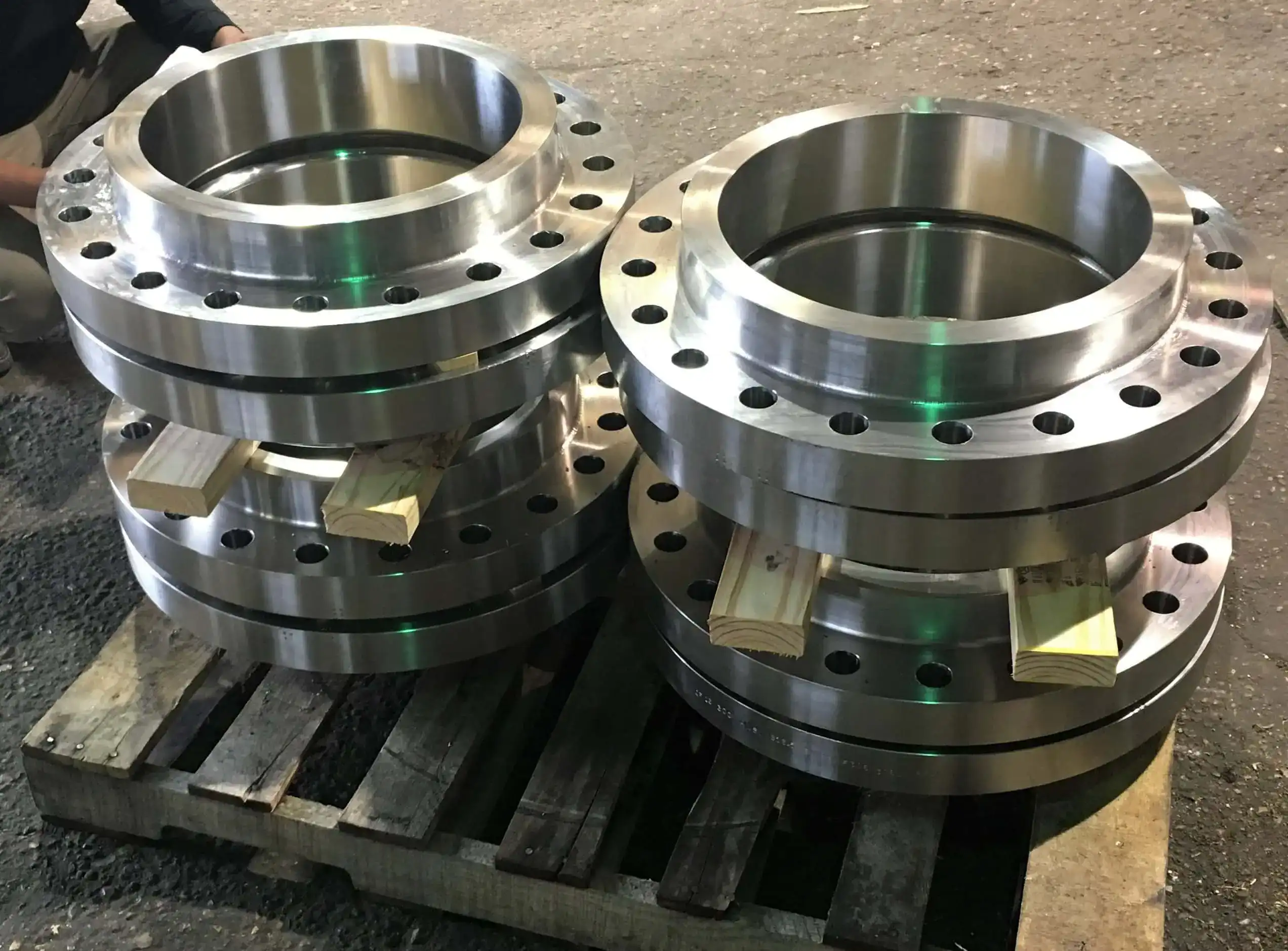
Understanding ANSI Flange Standards and Their Evolution
Standardized flange connections were first used in the American petroleum and chemical processing industries in the early 1900s, when disastrous pipeline failures forced engineers to come up with regular safety rules. What started out as ANSI B16.5 was later published under the ASME B16 standards framework, although the term "ANSI flange" remains widely used throughout the industry, and "ANSI flanges" are still widely used by professionals in the field in technical talks and purchase standards.
These rules are in place because piping systems in factories, offshore platforms, and city structures need to be completely predictable. If a Class 600 weld neck flange is made in South Korea and a Class 600 valve flange is made in Germany, they must fit together properly without any special cutting or adapter parts. Major EPC companies say that this interchangeability cuts project timelines by an average of 15 to 20 percent. At the same time, it lowers the costs of emergency purchases made during repair gaps.
ASME B16.5 covers the numbers that are most often asked for in world projects. The measurement charts show the bolt circle diameters, number of bolt holes, flange thickness, and hub dimensions for each standard pipe size and pressure class combo. No matter whether it is manufactured in North America or Asia, a 6-inch Class 300 flange typically has eight ¾-inch bolt holes and a bolt circle diameter of approximately 11.75 inches. Because of this, engineering firms can safely plan pipe layouts because they know that parts will line up when they are installed in the field.
ASME B16.47 has two different types for uses with sizes larger than 24 inches. Based on the older MSS SP-44 standard, Series A is built with stronger materials and fewer but larger bolts. Series B follows a lighter-weight design historically associated with the legacy API 605 standard. Because these series don't match up in terms of size, it's important to make sure that the right specifications are given during the bidding process for building projects.
Decoding Pressure Class Ratings and Temperature Relationships
A working pressure in pounds per square inch is not the same as a pressure class. These are the class names: 150, 300, 400, 600, 900, 1500, and 2500. People used to rate things this way, which said that a material's strength is related to its working temperature. When it's not cold, 285 psi is nothing for a Class 150 carbon steel flange. However, the allowable pressure decreases significantly as temperature increases and should be verified using the applicable ASME B16.5 pressure-temperature rating tables because the material's yield strength drops when it gets hot.
You can't incorrectly apply pressure ratings if you know this link between it and heat. When engineers design chemical plants operating at elevated temperatures (e.g., up to 750°F), they need to consult ASME B16.5 pressure-temperature tables. These tables show how the allowed pressure drops as the temperature rises. Class 300 flanges experience a substantial reduction in allowable pressure as temperature increases, and the exact rating should be confirmed using the ASME B16.5 pressure-temperature tables for ASTM A105 material.
High-pressure flanges—specifically Class 600, 900, and 1500—are manufactured using premium-grade materials and precision CNC machining to guarantee that critical seals remain completely intact under the harsh conditions typical of oil and gas operations.Offshore drilling usually needs Class 900 or Class 1500 flanges with Ring Type Joint facings for wellhead equipment that has to deal with sour gas that is under a lot of pressure and contains hydrogen sulfide. When work is being done to control the well and pressure goes up, the metal-to-metal seal of RTJ designs is better at stopping blowouts than soft gasket options.
For large-diameter transmission mains, Class 150 or Class 300 ANSI flanges are the definitive standard typically specified for government infrastructure projects and municipal water systems. For hydraulic service, these lower pressure classes work well, and the low cost of materials over miles of pipe keeps costs down. But engineers who build things have to think about water hammer effects and forces that quickly rise above normal working conditions. For their own safety, they often need the next level up in pressure.
Critical Dimensions That Determine System Compatibility
Bolt hole diameter represents one of the most frequently overlooked dimensional parameters during flange selection. ASME standards specify precise hole sizes that accommodate bolts while allowing assembly clearance. A Class 150 flange in 4-inch size requires ½-inch diameter bolts fitted through 5/8-inch holes. Attempting to substitute larger diameter bolts compromises the bolt circle stress distribution and may prevent proper gasket compression.
Flange thickness directly correlates with pressure containment capability and bending moment resistance, within the constraints defined by ASME standards. Forged steel flanges manufactured to ASME B16.5 Class 600 specifications feature substantially thicker flange profiles than their Class 150 equivalents of the same nominal size. This additional material mass prevents flange rotation under bolt load and maintains gasket contact pressure across the entire sealing surface. Local installers and small engineering firms must verify that piping support structures can accommodate the increased weight of higher-class flanges, particularly in elevated line runs where cumulative mass affects structural loading calculations.
The hub length and bore diameter of weld neck flanges create the butt-weld transition critical for high-integrity connections. Standard-wall weld-neck flanges are typically machined to match the corresponding pipe schedule bore (such as Schedule 40), while heavier-wall configurations may be matched to Schedule 80 or higher depending on specification requirements. Mismatching the hub bore to the pipe schedule creates internal crevices that promote turbulence, erosion, and potential failure initiation points in high-velocity services like steam headers or slurry transport lines.
Raised face height is typically 1/16 inch for Classes 150 and 300, while 1/4 inch is commonly used for higher classes and certain larger-size configurations. Raised face surfaces are typically machined to a roughness range of 125 to 500 microinches Ra (3.2 to 12.5 μm). Distributors and trading companies maintaining inventory for rapid delivery must stock flanges with appropriate facing types, as field machining to modify faces proves time-consuming and risks dimensional accuracy.
Material Selection Based on Service Environment
Carbon steel ASTM A105 dominates general industrial applications due to its favorable balance of strength, weldability, and cost-effectiveness. This material handles temperatures from -20°F to 650°F across hydrocarbon processing, compressed air systems, and steam distribution networks. The chemical composition limits sulfur and phosphorus content to prevent hot cracking during forge operations while maintaining sufficient carbon for structural strength.
Stainless steel variants, particularly ASTM A182 F304 and F316, provide essential corrosion resistance in chemical processing and marine environments. The chromium content creates a passive oxide layer that protects against atmospheric moisture, chloride attack, and many acidic compounds. ASTM A182 F316 grades incorporate molybdenum for enhanced resistance to pitting corrosion in brackish water and coastal installations. Offshore platforms and desalination plants specify these materials to achieve service life expectations of 20–30 years despite constant saltwater exposure.
Alloy steel grades F11 (1.25% chromium, 0.5% molybdenum) and F22 (2.25% chromium, 1% molybdenum) serve high-temperature applications in power generation and petrochemical cracking units. These materials maintain creep resistance and tensile strength at temperatures exceeding 900°F, where carbon steel would rapidly degrade. The alloy additions inhibit grain boundary sliding under sustained stress, preventing the gradual deformation that leads to leak paths in thermal cycling services.
Low-temperature carbon steel grades like ASTM A350 LF2 address brittle fracture concerns in arctic climates and cryogenic services. Standard A105 material exhibits reduced toughness below 20°F, risking catastrophic failure during cold snaps or emergency depressurization events. Arctic pipeline projects and LNG facilities specify impact-tested low-temperature materials for B16.5 forged steel flanges to maintain ductility at operating temperatures as low as -50°F.
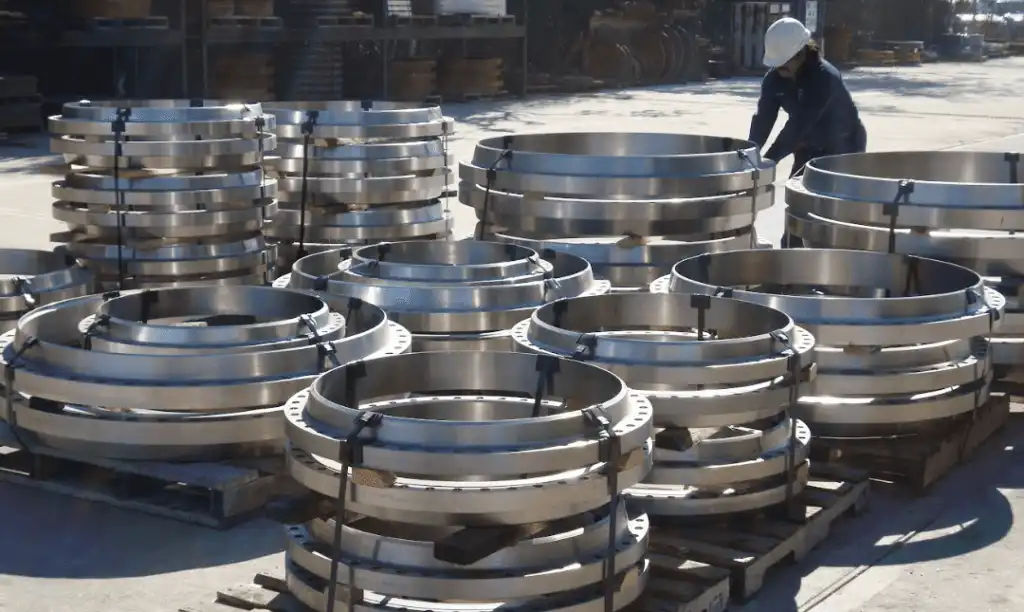
Facing Type Selection for Optimal Sealing Performance
Raised face configurations account for approximately 80% of industrial flange applications due to their versatility and proven reliability. The raised surface concentrates bolt load onto a smaller gasket area, increasing unit pressure for improved sealing. Standard compressed fiber gaskets, spiral-wound metal gaskets, and soft PTFE envelope gaskets all perform effectively with RF facing when properly compressed to manufacturer specifications.
Flat-face designs eliminate the raised surface, distributing gasket pressure across the entire flange face. Cast iron components and certain brittle materials cannot withstand the concentrated stresses of raised face bolting, making FF flanges mandatory when connecting to cast valve bodies or ductile iron pipe flanges in municipal water systems. The gasket extends to the bolt circle, requiring full-face gasket designs rather than ring gaskets used with raised faces.
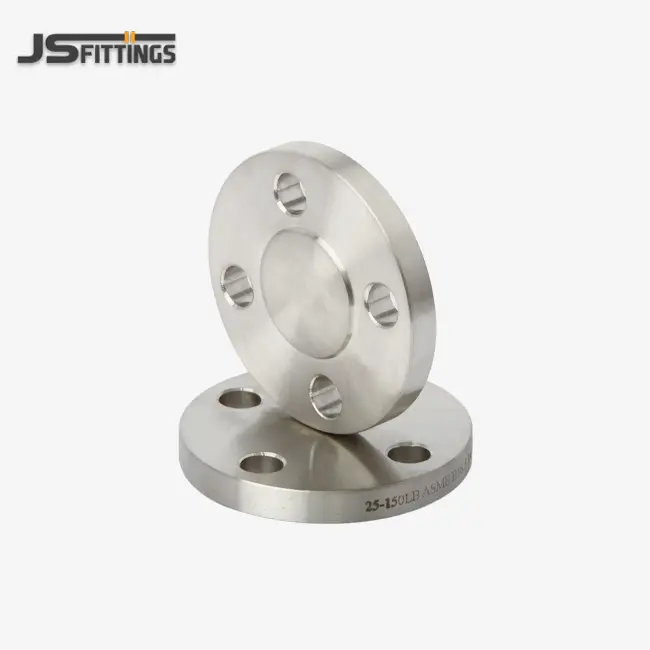
Ring-type joint configurations create metal-to-metal seals through precisely machined grooves that accept oval or octagonal cross-section metal rings. When bolts compress the assembly, the metal ring plastically deforms into both flange grooves, creating a high-integrity seal resistant to thermal cycling and vibration. RTJ flanges require careful handling to prevent groove damage, and installers must ensure grooves remain free of paint, rust, or debris that would prevent proper ring seating.
Tongue and groove facing, though less common, provides positive alignment during assembly and additional seal reliability in applications with thermal expansion or minor piping movement. The male tongue on one flange nests into the female groove on the mating flange, centralizing the gasket and preventing blow-out under internal pressure pulsation.
Dimensional Verification and Quality Control Requirements
Traceability documentation forms the foundation of flange quality assurance in critical service applications. Each forging must bear permanent markings identifying the manufacturer, material grade (heat number), pressure class, and nominal size. These stampings allow inspectors to verify that installed components match approved material specifications and enable metallurgical analysis if service failures occur years after installation.
Material test reports, commonly called mill test certificates or MTRs, document the chemical composition and mechanical properties of each production heat. Third-party inspection agencies verify that actual chemistry falls within ASTM specification limits and that tensile strength, yield strength, and elongation values meet minimum requirements. EPC contractors and government projects typically mandate MTR submission before shipment, and distributors serving these markets maintain comprehensive documentation for all inventory items.
Dimensional inspection reports confirm that critical measurements fall within ASME tolerance bands. Bolt circle diameter, bolt hole diameter, flange thickness, and overall diameter all carry specific tolerance ranges that ensure interchangeability without custom fitting. Reputable manufacturers employ coordinate measuring machines and optical comparators to verify dimensions on representative sample flanges from each production batch, with inspection records archived for customer review.
Hydrostatic testing may be specified for flange assemblies or critical piping systems to verify structural integrity under pressure. While not universally required for standard flanges, critical applications like nuclear power piping and high-pressure injection systems demand this verification. The flange assembly, complete with blind flanges or test caps, withstands test pressure for minimum hold times while inspectors examine for leakage or deformation.
Non-destructive examination techniques, including ultrasonic testing, magnetic particle inspection, and liquid penetrant examination, detect internal flaws or surface defects invisible to visual inspection. Specifying NDT requirements appropriate to service severity for High Pressure ANSI Flanges Class 600/900/1500 for Oil and Gas balances safety assurance against inspection costs.
Conclusion
Successful ANSI pipe flange selection balances dimensional accuracy, pressure-temperature ratings, material specifications, and facing configurations against project requirements and budget constraints. Understanding the distinctions between ASME B16.5 and B16.47 standards, properly applying pressure class ratings to actual service conditions, and verifying material traceability prevents costly mistakes that compromise safety and project timelines. Whether you're sourcing Class 150 carbon steel flanges for water infrastructure or high-pressure ANSI flanges Class 600/900/1500 for oil and gas drilling operations, partnering with qualified manufacturers who maintain rigorous quality systems and comprehensive testing protocols ensures reliable long-term performance across your industrial installations.
Why Leading Industrial Buyers Choose JS FITTINGS as Their Premier Flange Manufacturer
JS FITTINGS delivers the absolute dimensional precision, material integrity, and supply chain reliability that purchasing decision-makers demand across global EPC contractors, engineering firms, and industrial end users. Since 1983, our 40+ years of manufacturing excellence have translated directly into premium forged ANSI pipe flanges that strictly meet the most demanding international specifications, including ASME B16.5, ASME B16.47, and highly specialized customer requirements.
References
1. American Society of Mechanical Engineers. (2021). ASME B16.5: Pipe Flanges and Flanged Fittings NPS 1/2 Through NPS 24 Metric/Inch Standard. New York: ASME Press.
2. American Society of Mechanical Engineers. (2020). ASME B16.47: Large Diameter Steel Flanges NPS 26 Through NPS 60 Metric/Inch Standard. New York: ASME Press.
3. ASTM International. (2022). ASTM A105/A105M: Standard Specification for Carbon Steel Forgings for Piping Applications. West Conshohocken: ASTM International.
4. Becht, C. (2019). Process Piping: The Complete Guide to ASME B31.3. Fourth Edition. New York: ASME Press.
5. Nayyar, M.L. (2020). Piping Handbook. Eighth Edition. New York: McGraw-Hill Education.
6. Singh, R. (2018). Applied Welding Engineering: Processes, Codes, and Standards. Third Edition. Oxford: Butterworth-Heinemann.
Send Inquiry
_1775029549981.webp "Buttweld Tee")
Related Industry Knowledge
- Carbon Steel Buttweld Reducer Material Standards Explained
- Role of API 5L Seamless Steel Line Pipe in Marine Industries
- CRA Clad Pipe vs Mechanically Lined Pipe: Key Differences Explained
- Understanding the API 5L Seamless Steel Line Pipe Specification
- Carbon Steel Forged Steel Flange in Oil, Gas & Power Plants
- Lap Joint Pipe Flanges: How and When to Use Them
- Carbon Steel Forged Steel Flange Supply: China Factory Wholesale
- What is a threaded flange?
- What is a plate flange?
- How are stainless steel butt weld fittings measured?