
Role of API 5L Seamless Steel Line Pipe in Marine Industries






2026-07-07 10:21:04
When it comes to operating conditions, marine environments present some of the most severe operating conditions for pipelines. API 5L Seamless Steel Line Pipe is the main part of marine transportation systems. It has great structural stability because it doesn't have any longitudinal weld seams, which can be potential weak points in underwater service. These pipes are made to meet the standards of the American Petroleum Institute and ISO 3183. They don't fail at seams and have great corrosion resistance, pressure tolerance, and mechanical strength, all of which are important for offshore platforms, subsea risers, ballast water systems, and port infrastructure that is exposed to saltwater corrosion and dynamic stresses.
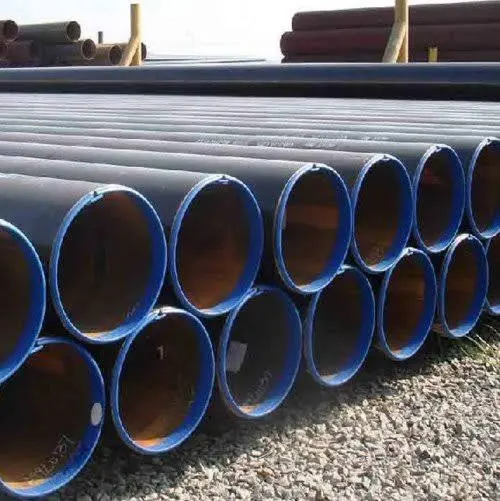
Understanding API 5L Seamless Steel Line Pipe in Marine Applications
What Makes API 5L Certification Critical for Marine Use?
API 5L approval makes sure that seamless steel pipes meet strict standards for their chemical makeup, mechanical properties, and size tolerances.
When procurement teams evaluate suppliers for large-scale marine projects, where consistent parts have a direct effect on safety and keeping operations going, this standardization becomes very important. The certification method makes sure that every batch of pipes goes through hydrostatic testing, ultrasonic inspection, and chemical analysis. This gets rid of any differences that could cause problems with underwater installs.
For marine jobs, you need materials that will work reliably in a wide range of temperatures, pressures, and sour or corrosive environments. When compared to PSL1, API 5L Product Specification Level 2 (PSL2) pipes have tighter limits on carbon equivalent and sulfur content. This makes them easier to weld and lowers the risk of hydrogen-induced cracking in underwater settings.
Common Grades for Harsh Saltwater Conditions
Based on pressure levels and the harshness of the environment, different marine uses need different types of materials:
- Grade B has balanced mechanical qualities and a specified minimum yield strength (SMYS) of 35,000 psi. It can be used in low-pressure ballast water and utility piping systems on vessels where cost is an issue, but dependability is a must.
- Grade X42 and X52 have yield strengths of 42,000 psi and 52,000 psi, respectively. This makes them perfect for use in marine gathering lines and export pipes that are exposed to saltwater, which is corrosive. The managed amounts of manganese and chromium in these types improve strength and corrosion performance when combined with appropriate coatings or corrosion control measures.
- Grade X60, X65, and X70 are high-strength choices for deepwater underwater risers and high-pressure transmission lines that move natural gas or crude oil from offshore platforms to facilities on land. With a specified minimum yield strength (SMYS) of 70,000 psi, Grade X70 allows for smaller wall designs that save money on materials while still keeping pressure integrity. This is an important factor to consider for projects that need to balance performance with budget constraints.
Manufacturing Process Advantages for Marine Durability
To make a uniform product, solid round billets are heated to exact temperatures, and then rotary piercing or extrusion is used to shape them into hollow tubes. This eliminates the heat-affected zone that exists in welded pipes. In chloride-rich seawater, this zone makes the pipes more likely to crack from stress corrosion.
Normalizing and tempering are two types of heat treatment that smooth out the grain structure. This makes the material more impact-resistant, which can be seen in Charpy V-Notch tests done at temperatures as low as -20°C. This is especially important for pipes that work in cold water, where brittle cracks could cause catastrophic breakdowns. During production, controlled cooling rates make sure that the pipe wall has the same mechanical qualities all the way through. This gets rid of any weak spots that could form under cyclic loading from wave action or vessel motion.
Benefits of Using API 5L Seamless Steel Line Pipe in Marine Industries
Superior Corrosion Resistance in Saltwater Environments
Electrochemical processes that take advantage of surface flaws and metal irregularities speed up the breakdown of materials in saltwater. The API 5L seamless steel line pipe design gets rid of lengthwise weld beads, which are where crevice corrosion usually starts, and the regular grain structure stops pitting corrosion better than welded options.
By choosing the right materials within the API 5L standard, buying teams can choose chemicals that work best for marine service. Low amounts of phosphorus and sulfur (below 0.015%) stop the material from becoming weak, and adding molybdenum can make it more resistant to stress corrosion cracks caused by chloride. When seamless pipes are protected with coatings like fusion-bonded epoxy (FBE) or three-layer polyethylene (3PE), they can last more than 30 years in harsh underwater circumstances.
Elimination of Weld Seam Vulnerabilities
In welded alternatives, the longitudinal weld seam makes a break in the material where its qualities are different from those of the parent pipe body. When marine pipeline networks are subjected to cyclic pressure loading, which can be caused by pump operation, changes in tides, or changes in the process, these gaps are more likely to start fatigue cracks.
When you use seamless pipes, this weakness is gone, and the stress is spread evenly around the pipe's outside. This is especially useful for underwater risers that connect wellheads on the bottom to mobile production platforms, because dynamic positioning systems make them bend all the time. Not having weld-related stress concentrators lowers the chance of failure and increases the time between inspections, which lowers the total cost of ownership.
Mechanical Robustness Under Dynamic Marine Stresses
Marine pipes have to deal with difficult loading situations that don't happen very often on land-based systems. Vibrations caused by waves, thermal cycles from changes in process temperature, and pressure surges from emergency shutdowns all put stress on materials in many directions, so they need to be very tough.
Because seamless lines have consistent mechanical qualities, they will work as expected in these situations. Tough production controls make sure that tensile strengths always go above and beyond the bare requirements. Elongation values exceeding 20% ensure that the material will behave in a ductile way instead of breaking easily. Charpy testing at service temperatures proves the material's impact toughness. This means it can absorb energy during shock loading without breaking, which is very important for preventing offshore pipeline systems from failing in a chain reaction.
Lifecycle Value Comparison with Welded Alternatives
When you look at the total cost of ownership, seamless pipes clearly have more benefits, even though they cost more to buy at first. It lasts longer, so it doesn't need to be replaced as often, and it doesn't need as much upkeep, so it costs less to move offshore vessels, which can cost more than $100,000 per day for specialized pipelay and inspection assets.
Welded lines need to have their weld seams inspected using ultrasonic testing. If any problems are found, they need to be fixed or replaced. Because weld quality is uncertain, there is a risk in the project that needs to be managed by the buying team. This risk needs to be covered by emergency funds or insurance costs. Without this uncertainty, seamless pipes make it easier to predict costs and stick to a plan, which is important for meeting project goals and avoiding liquidated damages.
Choosing the Right API 5L Seamless Steel Line Pipe for Marine Procurement
Compliance with International Marine Standards
Marine projects often use more than one standard that overlaps, based on the rules and requirements of the owner. When used in coastal environments, API 5L Seamless Steel Line Pipe often needs to meet extra standards set by classification societies such as DNV-GL, Lloyd's Register, or the American Bureau of Shipping. These groups require extra testing.
It is important for procurement specs to clearly state the requirements for PSL2 and list any other tests that need to be done, like NACE MR0175 compliance for sour service settings with hydrogen sulfide. To keep customs clearance and project acceptance from taking too long, it's important to be clear about what paperwork is needed. This includes mill test records, material tracking, and third-party inspection certificates.
Selecting Grade, Diameter, and Wall Thickness
To choose the right material, you must first understand the design pressure, the fluid qualities, and the weather conditions. The Barlow formula, which connects hoop stress to pressure, diameter, and wall thickness, is used to decide on the right size. Safety factors take into account things like corrosion limit and production errors.
The diameter you choose from the range of 1/2" to 26" varies depending on the flow rate you need and the pressure drop you can handle. In multi-phase flow applications, which are popular in offshore production, larger diameters slow down the flow and prevent erosion. Smaller diameters, on the other hand, make it easier to handle and place on ships with limited room.
Wall thickness choices of API 5L seamless carbon steel line pipe from Schedule 10 to Schedule 160 let you find the best balance between the cost of the material and the pressure grade. Thicker walls protect against corrosion, which extends the service life, but they also make the building heavier, so it needs bigger support structures. Teams in charge of buying things have to weigh these things against practical needs and spending limits.
Importance of OEM-Certified Manufacturers
Getting materials from makers with quality systems that have been tested and industry certifications lowers project risk by a large amount. ISO 9001 certification shows that the supplier manages quality in a planned way, and approvals from big energy companies like Petrobras, NIOC, or ADNOC show that the supplier has completed difficult marine projects.
JS FITTINGS has been manufacturing high-pressure piping components for more than 40 years and has a full range of quality control methods, such as spectral analysis, ultrasonic testing tools, and hydrostatic testing facilities. The fact that the company is an accepted vendor for several national oil companies shows that it can regularly meet the strict needs of marine projects.
Logistics Considerations for Global Marine Projects
For marine projects, it's common to buy goods from other countries and have them sent to offshore areas around the world. Knowing the difference between words like FOB (Free on Board) and CIF (Cost, Insurance, and Freight) affects the buyer's and seller's cash flow and how risk is shared.
Depending on the grade, amount, and testing needs, the lead time for making seamless pipes is usually between 30 and 45 days. Prices per tonne go down with bulk sales because of economies of scale, but you need to think about the costs of keeping goods and storing them at a port. Expert sellers organize customs paperwork like material reports and certificates of origin, which speeds up clearance processes that would otherwise cause project schedules to slip.
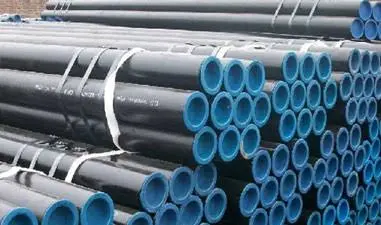
Case Studies: Application of API 5L Seamless Steel Line Pipe in Marine Projects
Offshore Oil and Gas Pipeline Installations
A new deepwater project in the Gulf of Mexico needed 12-inch Grade X65 API 5L seamless steel line pipe for underwater risers that connected seafloor manifolds to a floating production center that was 4,500 feet below the surface. The seamless design got rid of worries about the stability of the lengthwise weld when the tank moved, and the current caused vibrations.
The project required compliance with NACE MR0175 because the fluids that were made contained hydrogen sulfide. Charpy impact tests at -20°C confirmed that the material would be tough at the temperatures at which it would be used. The installation went smoothly with no weld-related rejects, and the consistent dimensional limits of the seamless pipes cut down on fit-up time during offshore welding operations, which saved the company about USD 2.3 million in vessel day rates.
Marine Port Infrastructure and Ballast Systems
As part of a project to expand a container port in Singapore, Grade B seamless pipes with a width of 4 to 10 inches were used to replace marine piping systems on offshore transport vessels.The internal surface was free of rust, so there were no worries about contamination that could affect ballast water treatment systems. The smooth construction also made it reliable for the 25-year design life, so it didn't need to be replaced.
The smooth internal bore cut the amount of energy needed for pumping by about 8% compared to the replaced welded pipes, which had internal rust tubercles that blocked flow. Over the life of the system, these energy savings will lead to big savings in running costs, and the lower emissions will also help the environment.
Shipbuilding Applications: Fuel Lines and Critical Systems
A factory that builds LNG ships asked for Grade X52 seamless pipes to be used in systems designed for liquefied natural gas service at cryogenic temperatures (around -162°C). The seamless construction got rid of worries about the weld zone being brittle at very low temperatures, and Charpy tests showed that the impact hardness was good across the temperature range.
The uniform mechanical properties of seamless line pipes made stress analysis easier and made it possible to find the best way to route pipes in engine rooms that were already very small. Because there were no longitudinal welds, there were fewer inspections needed during building and regulatory surveys. This sped up delivery times and kept fines from being charged for being late.
Conclusion
For tough naval uses, API 5L seamless steel line pipe is the only choice because it is reliable, doesn't rust, and works well mechanically. Getting rid of longitudinal weld seams gets rid of common ways for things to fail and makes the structure more resistant to wear and pressure under dynamic loads. The right choice of material, taking into account grade, size requirements, and the qualifications of the seller, guarantees a good project result while keeping lifecycle costs low. Real-life uses in shipbuilding, offshore oil and gas production, and port infrastructure show how useful and adaptable seamless pipes are in a range of naval settings.
FAQ
1. What distinguishes API 5L seamless pipes from welded pipes in marine applications?
When API 5L seamless steel line pipes are used, there is no lengthwise weld seam, which is the weaker part of welded pipes. This means that the part isn't vulnerable to corrosion at the seams, fatigue cracking, or failure due to high pressure. These are all big benefits in marine settings where changing loads, rust from saltwater, and high pressures make service conditions tough. The uniform grain structure in seamless pipe walls gives them similar mechanical properties and reliable performance when temperature changes and mechanical force is applied.
2. How do I select the appropriate grade for my marine project?
The choice of grade is based on the design pressure, the properties of the fluid, and the factors in the surroundings. Lower grades, like B and X42, are good for moderate-pressure uses, like grounding systems and extra pipes. Grades X52 through X65 are used for export pipes and ocean gathering lines that need to be stronger and less likely to rust. High-strength grades X65 and X70 work best for deepwater undersea risers and high-pressure transmission lines, where lowering the wall thickness saves money on materials while keeping the pressure purity. Talking to skilled sources like JS FITTINGS will make sure that the materials you choose meet the needs of the project and the rules.
3. What quality certifications should I require from suppliers?
As a minimum, reliable providers keep their ISO 9001 quality control certification. For marine projects, it is common to need mill test records that list the chemical makeup, mechanical qualities, and size tolerances for each pipe heat. Third-party inspection papers from well-known organizations prove that the requirements are met. Approvals from big energy companies like Petrobras, NIOC, and ADNOC show that the company can meet the high standards for naval projects. When hydrogen sulfide is present in bad service settings, NACE MR0175 must be followed.
Partner with JS FITTINGS for Reliable Marine Pipeline Solutions
Choosing the right API 5L Seamless Steel Line Pipe provider has a direct effect on the success of the project and the efficiency of operations. JS FITTINGS has been making parts for naval and offshore uses around the world for more than 40 years. Our wide range of products includes Grade B to X70, with widths from 1/2" to 26" and wall thicknesses from Schedule 10 to Schedule 160, so we can meet the needs of a wide range of projects.
Our quality control system is ISO 9001-certified, which means that products always work the same way. We also have certifications from Petrobras, NIOC, and ADNOC, which show that we can meet the strictest standards for marine projects. We ship more than 90 containers every month, and we deliver on time more than 95% of the time. This gives buying teams the supply stability they need to stick to tight project plans.
Our experienced international trade team answers questions within an hour and can help with choosing materials, figuring out price (FOB or CIF), and coordinating logistics, which makes global buying easier. If you need standard specs or unique solutions, JS FITTINGS has the quality, service, and support you need to make sure your marine project succeeds. Email our team at admin@jsfittings.com to talk about your needs for seamless steel line pipe with a reliable maker and provider who cares about the success of your project.
References
1. American Petroleum Institute. (2018). Specification for Line Pipe. API Specification 5L, 46th Edition. Washington, DC: API Publishing Services.
2. International Organization for Standardization. (2019). Petroleum and Natural Gas Industries—Steel Pipe for Pipeline Transportation Systems. ISO 3183:2019. Geneva: ISO.
3. Det Norske Veritas. (2021). Submarine Pipeline Systems. DNV-ST-F101 Standard. Oslo: DNV GL AS.
4. NACE International. (2015). Petroleum and Natural Gas Industries—Materials for Use in H2S-Containing Environments in Oil and Gas Production. NACE MR0175/ISO 15156. Houston: NACE International.
5. Mohitpour, M., Golshan, H., & Murray, A. (2007). Pipeline Design and Construction: A Practical Approach. Third Edition. New York: ASME Press.
6. Palmer, A. C., & King, R. A. (2008). Subsea Pipeline Engineering. Second Edition. Tulsa: PennWell Corporation.
Send Inquiry

Related Industry Knowledge
- How to Order Custom Steel Flange
- How Is a Buttweld Bend Tested to ASME Standards?
- ASTM A234 WPB Buttweld Tee Material Properties Overview
- What is the service life of an ASME B16.5 carbon steel flange?
- Getting to Know ASTM A53 ERW Pipe: Characteristics & Uses
- Carbon Steel Forged Steel Flange: Class 150 to 2500 Guide
- What is rtj blind flange?
- How to weld carbon steel pipe?
- What specification is the carbon steel black pipe?
- What is a plate flange used for?