
Carbon Steel Forged Steel Flange: Class 150 to 2500 Guide






2026-05-26 10:37:56
Understanding the specifications for carbon steel forged steel flange is very important when your project requires complete reliability under high loads. These engineered components, which range from Class 150 for medium-pressure municipal systems to Class 2500 for heavy industrial duty, are essential for preventing leaks in piping systems. This detailed guide explains pressure rates, material grades, and different use cases. It helps buying teams choose the right flange design for industrial projects that meet safety requirements and have the lowest total cost of ownership.
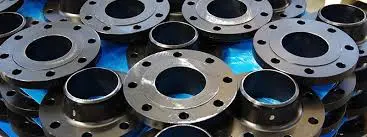
What Makes Carbon Steel Forged Flanges Essential for High-Pressure Systems?
A cast flange is different from a forged steel flange in more ways than one. The main difference is how safe the system is. Forged flanges made of carbon steel go through controlled heat compression, which changes the structure of the molecular grains into dense, directed flow patterns. This change in the metal's structure gets rid of the tiny holes and gas pockets that are common in casting methods.
It is widely accepted that forged flanges are better at withstanding bolt load stress and heat shock. The fine grain boundary structure helps prevent crack propagation, even when the pressure changes quickly, which can happen in steam injection systems or hydraulic fracturing. When heat is applied to welded plate structures, it alters properties in the heat-affected zone, which may reduce uniform mechanical performance. A forged flange body, on the other hand, has regular material qualities that make sure it will work as expected under repeated loads.
Another important benefit is that materials can be tracked. Reputable companies like JS Fittings keep detailed records of each forged flange that connects it to its original heat batch, chemical makeup analysis, and mechanical testing results. This chain of custody meets the strict audit standards of API, NACE, and foreign petroleum authorities. This is important proof for third-party checks or investigations into accidents.
The smooth surface that is achieved by carefully milling forged blanks makes it possible for gaskets to fit well. Serrations on raised face flanges that are controlled by a CNC machine make uniform compression patterns that help control gasket compression and sealing performance over time. This focus on the shape of the joining surfaces directly leads to lower fugitive emissions and fewer repair visits for volatile organic compound services.
Understanding ASME B16.5 Pressure Class Ratings
The ASME pressure class system sets uniform limits for temperature and pressure that help people all over the world buy things and build tools. The maximum allowable pressure at a given temperature is indicated by the class number: 150, 300, 600, 900, 1500, and 2500. On the other hand, these numbers don't show real rates of pressure. They are reference points on a pressure-temperature rating curve that varies with temperature.
When there is low pressure, like in cooling water lines, drainage systems, and the nozzles on air storage tanks, class 150 flanges are most often used. Costs are kept low by their relatively thin cross-sections and wide bolt spacing, but they are typically suitable for moderate pressures, depending on temperature as defined by ASME pressure-temperature ratings. Parts from Class 150 are often used in food preparation and water treatment plants because they are stable and don't cost too much.
As you move up to Class 300, you can use chemical feed lines, natural gas transport pipes, and steam systems with modest pressure. The structure is stiffer because the bolt circles are smaller and the lip is larger. This stops bends caused by heat expansion. Class 300 is useful in many fields, such as handling oil, drugs, and paper. That's why wholesalers who work with fabrication shops in the area keep a lot of it on hand.
Heavy-duty hydrogen processing units, ammonia synthesis loops, and critical subsea wellhead equipment are prime examples of demanding applications that rely heavily on Class 600 and Class 900 forged carbon steel flanges. When you tighten the nuts, you need to be very careful because these parts have thick walls. With too much torque, the bolt threads or flange face bends. For too little torque, gaps appear that let the bolt come loose. More and more, engineering firms want hydraulic tensioning tools instead of hand wrenches to make sure that the stress on the seal is the same across the bolt pattern.
Class 1500 and 2500 flanges made of carbon steel or forged steel are used in certain cases where failure would have bad results, which is why they cost more. Supercritical steam engines, ultra-high-pressure injection systems, and deep-water drilling pipes are all places where very high pressures are used. It is very important to pick the right materials, heat treat them, and test them without breaking them. When testing extreme-duty flanges, they usually have to be done in front of a client agent. They also come with longer material certifications that include Charpy impact values at temperatures below zero.
Common Forged Flange Types and Their Strategic Applications
Weld neck flanges establish the gold standard for structural integrity in permanent piping systems. The gradual taper transitioning from pipe wall to flange hub creates a stress-resistant profile that distributes loads evenly. Finite element analysis consistently demonstrates that weld neck configurations minimize stress concentration factors—the primary cause of fatigue cracking in vibrating equipment connections. Refineries specify weld neck flanges almost exclusively for hydrocarbon services above 400°F or pressures exceeding 600 psi.
Slip-on flanges offer installation advantages in non-critical, low-pressure applications. The ability to slide the flange over the pipe exterior before welding reduces fit-up time during field assembly. Maintenance teams appreciate this design when retrofitting existing systems where precise pipe length measurements prove difficult. However, the double fillet weld requirement and discontinuous stress path make slip-on flanges unsuitable for cyclic thermal service or systems handling erosive slurries.
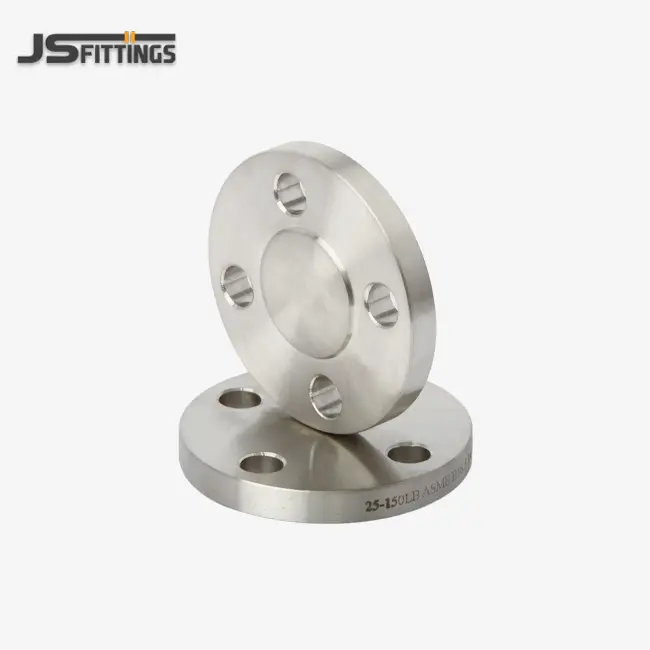
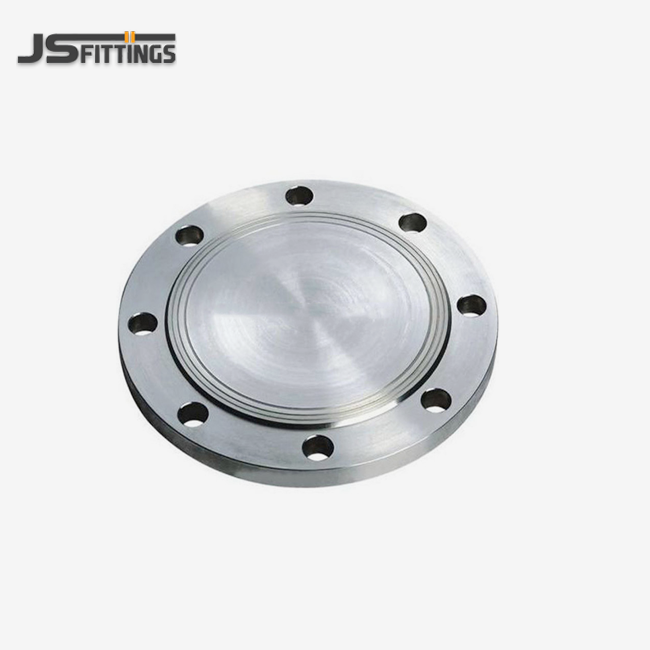
Blind flanges serve as the workhorse solution for pipeline termination and pressure testing access. During turnaround maintenance, operations teams frequently install temporary blind flanges to isolate equipment while maintaining system pressure elsewhere. The solid construction withstands full system pressure, though specifications should account for the bending moment induced by internal pressure acting on the blind area. Larger diameter blind flanges often require gusset reinforcement or increased thickness to prevent dishing.
Socket weld and threaded flanges address small-bore, high-pressure instrumentation connections where weld neck configurations become impractical. The socket weld design provides positive alignment and a small internal gap that accommodates expansion without imposing stress on the weld root. Threaded flanges eliminate welding entirely, though their use remains restricted to non-shock services due to the stress concentration at thread roots. Seal welding of threaded flanges adds secondary leak protection for hazardous fluid services.
Lap joint flanges combined with stub ends create a cost-effective solution for systems requiring frequent disassembly or corrosion-resistant materials. The loose-ring flange rotates freely, allowing bolt hole alignment without disturbing the welded stub-end connection. This configuration proves economical when expensive alloys like Hastelloy or Monel are required only at the wetted surface, while carbon steel flanges handle the mechanical bolt loads. Chemical processing plants extensively deploy lap joint assemblies in corrosive acid and caustic services.
Material Selection and Grade Specifications
ASTM A105 carbon steel dominates forged flange production for ambient and moderate-temperature services. This normalized carbon steel grade offers excellent weldability, machinability, and cost-effectiveness for pressures up to the limits of Class 600. Material certificates confirming carbon equivalency below 0.40 generally support good weldability, though preheat requirements still depend on thickness, ambient conditions, and applicable welding procedures.
When operating temperatures exceed 800°F, upgrading to alloy steel grades—such as ASTM A182 F11, F22, or F91—becomes mandatory for ASME-compliant steel flanges. These chromium-molybdenum alloys effectively resist creep deformation and maintain superior tensile strength at elevated temperatures where standard carbon steel would suffer metallurgical degradation. Consequently, power generation projects exclusively specify these high-temperature alloy steel flanges throughout superheater and reheater circuits, where metal temperatures routinely reach 1000°F.
Low-temperature service below -20°F demands impact-tested materials to prevent brittle fracture. ASTM A350 LF2 carbon steel undergoes Charpy V-notch testing at the design minimum temperature to verify adequate toughness. Cryogenic LNG facilities and refrigerated ammonia storage installations require these specialized materials despite their cost premium. Failure to specify impact-tested flanges in cold service has resulted in catastrophic brittle fractures during winter operations.
Sour service environments containing hydrogen sulfide necessitate compliance with NACE MR0175 material restrictions. Standard carbon steels above 22 HRC hardness become susceptible to sulfide stress cracking in wet H₂S conditions. Procurement specifications for upstream oil and gas production must explicitly call out NACE compliance, requiring material hardness surveys and occasionally calcium treatment to control inclusion morphology.
Corrosion allowances represent another material consideration often overlooked until inspection reveals excessive wall loss. Rather than specifying thicker standard flanges, engineers can opt for corrosion-resistant alloy overlays or solid stainless steel construction. The life-cycle cost analysis should compare replacement intervals for carbon steel against the initial premium for duplex stainless or nickel alloy flanges that may last the facility's operational lifetime.
Dimensional Standards and Global Compatibility
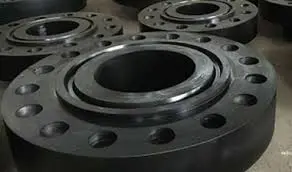
ASME B16.5 establishes drilling templates, flange thickness, and hub profiles for sizes NPS 1/2 through NPS 24. The standard defines two series of facings—raised face for use with standard gaskets and ring-type joint for metal ring gaskets in severe-duty applications. Bolt hole quantities and diameters increase with pressure class to maintain adequate clamping force across larger gasket contact areas.
ASME B16.47 extends standardization into large-diameter flanges from NPS 26 to NPS 60. Series A flanges maintain bolt circle dimensions compatible with discontinued MSS SP-44 specifications, while Series B follows API 605 dimensional criteria. This dual-series approach creates procurement confusion, as Series A and Series B flanges of the same nominal size are not interchangeable. Engineering drawings must explicitly specify which series applies to avoid costly field mismatches.
European installations follow EN 1092-1 dimensional standards with PN pressure ratings rather than ASME classes. PN16 approximates Class 150, while PN40 roughly correlates to Class 300. However, direct substitution between ASME and EN flanges risks bolt pattern misalignment or inadequate pressure ratings. International projects should standardize on one system or explicitly detail transition points with custom drilling patterns.
Japanese JIS B2220 standards govern flanges in Asian markets with dimensional variations that preclude interchangeability with ASME designs. JIS 10K flanges superficially resemble Class 150 but feature different bolt hole spacing and flange thickness. Distributors supplying multinational projects maintain separate inventory systems to prevent mixing incompatible standards—a lesson learned through expensive field rework incidents.
Russian GOST standards persist in Eastern European and Central Asian markets despite increasing adoption of international codes. GOST flanges employ metric dimensions and unique pressure designations that require careful conversion when sourcing from global suppliers. JS Fittings maintains GOST certification and manufacturing capabilities, eliminating the integration challenges that arise when attempting to adapt ASME components to GOST piping systems.
Quality Assurance and Testing Requirements
Material test reports representing each manufacturing heat provide the foundation of flange quality documentation. Mill certificates confirm chemical composition meets specification limits and that tensile testing demonstrates adequate strength and ductility. Procurement teams should verify that MTRs reference the actual heat numbers stamped on supplied flanges rather than generic typical properties.
Comprehensive dimensional inspection reports are essential to validate that the finished steel flanges strictly conform to all ASME tolerances and approved engineering drawings.Critical parameters include flange facing flatness, bolt hole spacing accuracy, and hub bore concentricity. Out-of-tolerance conditions discovered during field assembly generate project delays and finger-pointing between suppliers and contractors. Third-party inspection agencies like SGS or Bureau Veritas provide independent verification that builds confidence for first-time supplier relationships.
Non-destructive examination detects internal flaws invisible to dimensional inspection. Liquid penetrant testing reveals surface-breaking cracks around weld preps or machined features. Magnetic particle inspection identifies subsurface discontinuities in ferromagnetic materials. Ultrasonic testing maps internal soundness throughout the flange body, particularly critical for large Class 1500 and 2500 forgings where internal defects could prove catastrophic.
Positive material identification using handheld XRF analyzers has become standard practice at fabrication sites and during receiving inspection. PMI verification prevents mix-ups between carbon and alloy steel grades that appear identical but possess vastly different high-temperature capabilities. A single misidentified F11 alloy flange installed in a carbon steel system creates a weak link that will fail prematurely under creep conditions.
Hydrostatic testing is generally performed on assembled piping systems rather than individual flange components. Test pressures typically reach 1.5 times the design pressure, held for specified durations while inspectors examine for leakage or visible distortion. Pneumatic testing with compressed air substitutes for hydro testing when systems cannot tolerate internal water, though the stored energy in compressed gas makes pneumatic tests inherently more hazardous.
Installation Best Practices and Common Pitfalls
Flange facing preparation significantly influences gasket performance and joint longevity. Surface finish roughness must match gasket manufacturer recommendations—too smooth and soft gaskets lack grip, too rough and they suffer abrasion. Removing mill scale, rust, and old gasket residue with wire brushes or gentle grinding prevents contamination that creates leak paths. Never use excessive grinding that removes the serration peaks engineered into raised face finishes.
Gasket selection must account for fluid compatibility, temperature extremes, and pressure cycling. Spiral-wound gaskets with inner rings suit high-pressure hydrocarbon service, while compressed fiber sheets suffice for low-pressure water systems. Ring-type joint gaskets—either oval or octagonal cross-section—provide metal-to-metal sealing typically used for Class 600 and above in severe-duty applications where soft gaskets would extrude.
Bolt tensioning methodology determines whether the carefully engineered flange joint achieves its sealing potential. The cross-pattern tightening sequence—starting at bolt holes adjacent to cardinal points and spiraling outward—distributes load evenly and prevents gasket crushing in localized zones. Using calibrated torque wrenches or hydraulic tensioners ensures each bolt achieves the target stress rather than relying on the installer’s feel.
Flange alignment within acceptable parallelism tolerances prevents uneven gasket compression and bolt bending stress. Misalignment exceeding 1/16 inch across the flange diameter induces significant bending moments that reduce bolt fatigue life. Pipe supports located too far from flange connections allow thermal expansion forces to impose deflection. Installing temporary alignment pins through bolt holes during initial fit-up helps maintain positioning while the first bolts are tightened.
Temperature monitoring during initial system startup verifies that actual operating conditions match design assumptions. Unexpected temperature excursions can alter the pressure-temperature rating or cause differential thermal expansion between flanges of dissimilar materials. Infrared thermography provides non-contact temperature mapping that identifies hot spots indicating internal flow disturbances or external insulation deficiencies.
Conclusion
Understanding carbon steel forged flange specifications is essential for ensuring reliable, high-integrity piping systems under extreme pressures and temperatures. From material grades and ASME pressure classes to dimensional standards and quality testing, every decision impacts long-term performance and total cost of ownership. Partnering with an experienced supplier like JS Fittings—with full traceability, global standard compliance, and rigorous inspection protocols—mitigates project risks and prevents costly field failures. Prioritizing proper material selection, non-destructive examination, and correct installation practices ultimately delivers safer, longer-lasting industrial connections while building confidence between procurement teams and first-time suppliers.
Why Procurement Teams Trust JS Fittings as Their Carbon Steel Forged Flange Supplier?
JS FITTINGS brings over four decades of unparalleled forging expertise to every forged carbon steel flange we ship, completely eliminating supply chain guesswork for EPC contractors facing aggressive project timelines.Our ISO 9001 certified manufacturing system produces flanges across the complete Class 150 to 2500 spectrum, with material traceability and testing documentation that satisfies the most demanding international audits. Whether your specification calls for ASME, DIN, or GOST standards, our engineering team responds to inquiries within one hour and ships container-ready flanges, maintaining above 95% on-time delivery. Contact admin@jsfittings.com to discuss your project requirements with a technical specialist who understands the difference between procurement risk and true quality assurance.
References
1. American Society of Mechanical Engineers. (2021). ASME B16.5: Pipe Flanges and Flanged Fittings NPS 1/2 Through NPS 24 Metric/Inch Standard. New York: ASME Press.
2. Becht, C. (2018). Process Piping: The Complete Guide to ASME B31.3 (Fourth Edition). New York: ASME Press.
3. Ellenberger, J. P. (2016). Piping and Pipeline Calculations Manual: Construction, Design Fabrication and Examination (Second Edition). Oxford: Butterworth-Heinemann.
4. Kannappan, S. (2019). Introduction to Pipe Stress Analysis (Revised Edition). Hoboken: John Wiley & Sons.
5. Parisher, R. A., & Rhea, R. A. (2020). Pipe Drafting and Design (Fourth Edition). Cambridge: Gulf Professional Publishing.
6. Smith, P. R., & Zappe, R. W. (2017). Valve Selection Handbook: Engineering Fundamentals for Selecting the Right Valve Design for Every Industrial Flow Application (Fifth Edition). Oxford: Gulf Professional Publishing.
Send Inquiry
_1775030564781.webp "Blind Flange")
Related Industry Knowledge
- How to Order Custom Steel Flange
- ASTM A234 WPB Buttweld Tee Material Properties Overview
- What is the service life of an ASME B16.5 carbon steel flange?
- Buttweld Tee vs Socket Weld Tee for High-Pressure Piping
- What are ANSI Pipe Flanges, And How Does it work?
- Carbon Steel Forged Steel Flange Supply: China Factory Wholesale
- How Does a Buttweld Elbow Reduce Pressure Loss in Pipelines?
- What is a blind flange used for?
- What is a threaded flange?
- How to weld carbon steel pipe?