
What is a blind flange used for?






2026-05-25 11:13:22
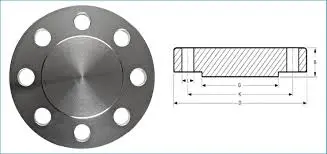
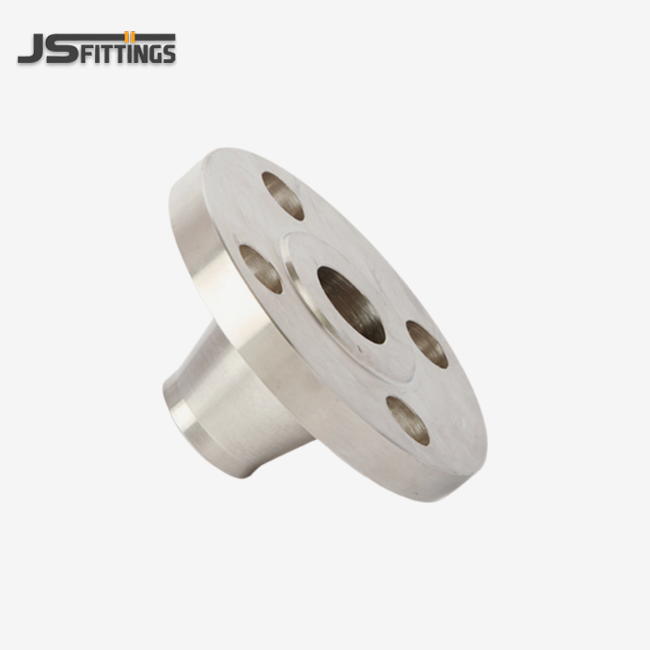
When you're managing a complex industrial piping network, you need components that offer both security and flexibility, such as a blind flange. A blind flange serves as a solid steel disk without a center bore, designed specifically to seal the end of a pipeline, pressure vessel opening, or valve connection. Its primary purpose includes isolating sections of piping systems for maintenance, conducting hydrostatic pressure testing, and creating termination points that can be easily reopened for future system expansion. Unlike permanent welded caps, this flange type provides a removable barrier that withstands extreme internal pressure while allowing quick access to the pipeline interior whenever inspection or modification becomes necessary. In my three decades of working with piping infrastructure across refineries, chemical plants, and offshore installations, I've seen how choosing the right sealing component can mean the difference between smooth operations and costly downtime. Let me walk you through everything you need to know about these critical pipe fittings.
Understanding the Core Purpose of Pipeline Termination Components
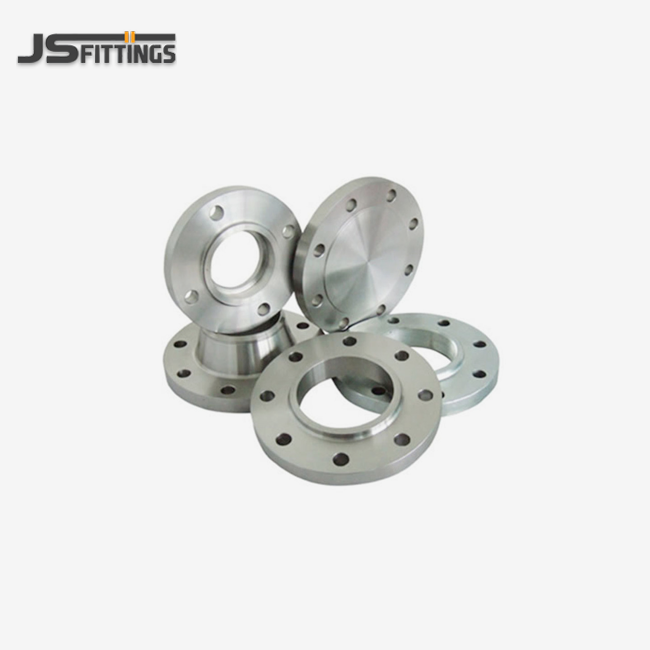
The blind flange stands apart from other flange types because it acts as a complete blockage rather than a connection point. While weld neck or slip-on flanges join two pipe sections, this solid disk creates what engineers call a "dead end" in the system. What makes this component particularly valuable is its dual nature. It provides secure sealing when needed, yet remains easily removable. During my years consulting for EPC contractors across the Middle East and Latin America, I've noticed that many project managers underestimate how much time and budget this flexibility saves during system commissioning and maintenance phases. The pressure containment capability deserves special attention. Because the flange cover must resist the full force of internal pressure without any center opening to distribute stress, it experiences significant bending moments at its center. This mechanical reality demands superior material quality and precise manufacturing standards that we maintain at our facility in Hebei.
Four Critical Applications That Solve Real Industrial Challenges
Temporary System Isolation During Maintenance Operations
When maintenance crews need to work on pumps, heat exchangers, or valve assemblies, they require absolute certainty that no fluid will enter the work zone. Installing a flange cap at strategic points creates a physical barrier that protects workers and equipment. During a recent project with a petrochemical facility in Saudi Arabia, the maintenance team needed to replace corroded piping sections while keeping adjacent units operational. By installing blind plates at isolation points, they completed the work without shutting down the entire production line. This approach saved the client approximately $200,000 in lost production time. The process involves draining the isolated section, breaking the flange joint, removing the standard flange, and bolting the solid disk in its place with appropriate gasket material. The flange bolt pattern must align perfectly—something our CNC machining process guarantees every time.
Hydrostatic Pressure Testing of New Pipeline Networks
Before any piping system enters service, engineers must verify its integrity through rigorous hydrostatic pressure testing, typically utilizing high-pressure blind flanges.This procedure involves filling the pipeline with water and pressurizing it to 1.5 times its design pressure rating. Blind flanges create the necessary test boundaries. Without them, you cannot build up pressure in an open-ended system. I remember supervising a pressure test for a natural gas distribution network in Kazakhstan, where we used Class 600 flange covers conforming to ASME B16.5 standards. The system held approximately 1,500 PSI for four hours without any pressure drop, confirming zero leaks throughout the entire network. The testing protocol requires careful attention to flange dimensions and gasket selection. A raised face finish with spiral wound gaskets typically provides the best sealing performance for high-pressure scenarios.
Pressure Vessel Access Ports and Inspection Openings
Reactors, separators, and storage tanks require periodic internal inspection to monitor corrosion, check for deposits, or verify internal component condition. Blind plates bolted to nozzle flanges provide sealable access points that inspection teams can open and close repeatedly. The ASME Boiler and Pressure Vessel Code mandates specific inspection intervals depending on the service. I've worked with pharmaceutical manufacturers who need to open vessels quarterly for cleaning validation. Using high-quality stainless steel flange assemblies with sanitary finishes ensures they can perform these frequent openings without damaging sealing surfaces. Carbon steel flange options work well for less demanding applications, though proper anti-corrosion coating extends service life significantly. Our hot-dip galvanizing process provides superior protection compared to standard paint systems.
Emergency Isolation During System Failures
When pipeline failures occur, rapid isolation limits damage and enables faster recovery. Pre-installed flange joints adjacent to critical equipment allow maintenance teams to quickly install blind plates and restore partial system operation. I consulted on a cooling water system serving a power generation facility in Turkey where a pipe failure threatened to flood the turbine building. Because the system design included flange connections near the failure point, the maintenance crew isolated the damaged section within 30 minutes using spare blind flanges kept in their stores. The plant maintained 70% generating capacity while repairs proceeded. This emergency response capability justifies the additional cost of flanged connections versus welded systems. The business continuity value far exceeds the material price difference.
Technical Standards That Guarantee Performance and Safety
Blind flange dimensions follow strict international standards that ensure compatibility across manufacturers and applications. The ASME B16.5 specification governs sizes up to 24 inches, defining everything from bolt hole spacing to minimum thickness requirements. For larger diameters, ASME B16.47 Series A and Series B provide two alternative designs. Series A flanges offer lighter weight and cost savings, while Series B flanges match the bolt circle dimensions of B16.5 flanges, simplifying inventory management. European markets typically specify EN 1092-1 standards with pressure-temperature ratings designated as PN6 through PN100. Our manufacturing facility maintains tooling for both ASME and EN standards, allowing us to supply projects regardless of their engineering basis. Material selection depends on service conditions. Carbon steel grades like ASTM A105 handle most general applications economically. Stainless steel alloys—particularly 304L and 316L—resist corrosive environments in chemical processing and marine applications. Alloy steels containing chromium and molybdenum serve high-temperature applications where carbon steel loses strength.
The flange standards specify minimum material properties, but experienced manufacturers like JS FITTINGS exceed these requirements. Our forging process refines the grain structure, producing components with superior impact resistance and fatigue life compared to cast alternatives. Flange thickness calculations account for internal pressure, bolt loading, and gasket seating stress. The formulas in ASME Section VIII determine the minimum required thickness, but we often supply slightly heavier sections to provide additional safety margin and longer service life. Facing finishes significantly impact sealing performance. The raised face configuration—featuring a 1/16 inch or 1/4 inch raised rim—concentrates gasket pressure over a smaller area, improving seal reliability. The serrated concentric finish with 0.002-0.003 inch depth grooves provides optimal gasket grip for most applications. Ring-type joint facings serve extreme pressure conditions common in wellhead equipment and offshore platforms. The precision-machined groove accommodates a metal ring gasket that plastically deforms under bolt load, creating a metal-to-metal seal capable of containing pressures exceeding 10,000 PSI.
Why Material Quality and Manufacturing Precision Matter
I've investigated numerous flange failures throughout my career. The root cause almost always traces to either substandard material or poor machining practices. The lowest-priced components rarely prove economical when you account for replacement costs, system downtime, and potential safety incidents. Our manufacturing process begins with certified raw materials traceable to mill test reports. Spectroscopy analysis verifies chemical composition before machining begins. This incoming inspection prevents non-conforming material from entering our production flow. The forging operation shapes heated steel billets under controlled pressure, aligning the grain structure for maximum strength. This process produces superior mechanical properties compared to casting or plate cutting methods that some competitors employ to reduce costs. We manufacture all our blind flanges in absolute compliance with the ASME B16.5 standard. Following the forging process, rigorous heat treatment is applied to relieve internal stresses and optimize material hardness.The specific temperature cycles depend on material grade and service requirements. Normalizing improves grain structure uniformity, while quenching and tempering develop higher strength levels for demanding applications.
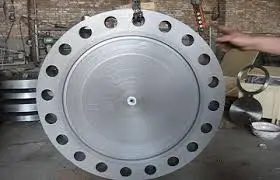
Machining operations utilize CNC equipment to maintain dimensional tolerances within 0.01 inches. This precision ensures that bolt holes align properly with mating flanges and that sealing surfaces achieve the specified finish. Hand-finishing techniques cannot match this consistency across production volumes. Non-destructive testing detects internal defects invisible to visual inspection. Ultrasonic examination identifies laminations, inclusions, or voids that could initiate cracks under cyclic loading. Magnetic particle inspection reveals surface-breaking defects. These quality control measures catch potential failures before components reach customer facilities. Surface protection extends service life significantly. Our standard black oxide coating provides basic corrosion resistance suitable for indoor applications. Yellow anti-rust oil offers enhanced protection during shipping and storage. Hot-dip galvanizing creates a metallurgical bond that protects even if the coating sustains minor damage during handling.
Installation Best Practices That Ensure Long-Term Reliability
Proper installation determines whether a flange joint performs as designed or becomes a chronic leak point. The process seems straightforward, but it contains several critical details that inexperienced installers often overlook. Surface preparation comes before anything else. Both flange faces must be clean, smooth, and free from corrosion, old gasket material, or installation debris. A wire brush removes loose scale, while a scraper cleans any adhered material. Some maintenance procedures specify solvent cleaning to eliminate oils that could contaminate new gaskets. Gasket selection matches the service conditions. Compressed non-asbestos fiber sheets work well for low-pressure water and air systems. Spiral wound gaskets with graphite or PTFE filler handle higher pressures and temperatures. Metal ring gaskets serve extreme conditions. Using an incompatible gasket guarantees eventual failure regardless of flange quality. Gasket installation requires centering within the flange face. An off-center gasket creates uneven compression and potential bypass leakage paths. Some gaskets include centering rings that simplify alignment, though careful visual verification remains essential.
Bolt installation follows a specific pattern rather than tightening the bolts sequentially around the circle. The star pattern approach—moving across the diameter to the opposite bolt—distributes compression forces evenly. Tightening adjacent bolts sequentially distorts the flange and creates uneven gasket loading. Torque application proceeds in multiple passes. The initial pass brings all bolts to approximately 30% of final torque, ensuring even gasket contact. Subsequent passes increase to 60%, then 100%. This gradual approach allows gasket material to flow into surface irregularities while preventing distortion. Torque specifications depend on bolt size, material, and lubrication condition. Published charts provide guidance, though many experienced maintenance teams develop site-specific procedures based on their gasket preferences and historical leak performance. Hot bolting—tightening under pressure or elevated temperature conditions—requires special procedures and training. The technique allows gasket replacement without a complete system shutdown but carries significant safety risks if performed incorrectly. We recommend this only when necessary and with proper safety equipment.
Comparing Options: When Blind Flanges Outperform Alternatives
Several methods can seal pipeline terminations, each with specific advantages and limitations. Understanding these trade-offs helps engineers select the optimal approach for each application. Welded caps provide permanent seals at the lowest initial cost. A steel disk welded directly to the pipe end creates a robust barrier without gasket leak paths. However, this permanence becomes a disadvantage when future access proves necessary. Cutting out a welded cap and later replacing it consumes significant labor hours and introduces weld quality concerns. Threaded plugs are typically used for small-bore connections up to approximately 2 inches. Installation speed and low cost make them attractive for instrument connections and drain points. The mechanical connection limits their pressure capability, and thread damage during removal complicates reinstallation. I generally recommend threaded closures only for low-pressure auxiliary connections rather than main process lines.
Spectacle blinds consist of a solid blind plate and a spacer ring mounted on a rotating assembly. This design allows quick switching between flow and isolation positions without removing bolts. The configuration works well for systems requiring frequent isolation, though the spacer ring adds cost, and the assembly requires additional clearance space that compact installations cannot accommodate. Blind flanges balance flexibility, reliability, and cost effectiveness. The removable design supports maintenance access and future modifications. The bolted assembly achieves pressure ratings equal to permanent welded connections when properly installed. Material and manufacturing costs remain reasonable, particularly for standard sizes using established specifications.
The Business Case: How Proper Components Reduce Total Cost of Ownership
Procurement decisions often focus on initial purchase price, overlooking the lifecycle costs that ultimately determine profitability. A blind flange represents a tiny fraction of total project expenditure, yet its quality impacts operational expenses for decades. Leak remediation consumes substantial maintenance resources. A single weeping flange joint requires monitoring, eventually demands repair, and meanwhile may cause corrosion damage to surrounding equipment and insulation. The maintenance crew spends hours planning the repair, obtaining materials, scheduling downtime, and performing the work. The associated costs easily exceed ten times the price difference between premium and economy-grade components. Unplanned shutdowns destroy profitability. When a critical flange joint fails, the entire system may require emergency shutdown until repairs are completed. For production facilities generating thousands of dollars per hour, even brief interruptions eliminate months of savings from cheaper components. Ultimately, proactive maintenance and the upfront investment in premium, high-quality components will always cost significantly less than responding to a catastrophic failure.
Regulatory compliance carries both direct and indirect costs. Emission leaks trigger fines, remediation requirements, and increased regulatory scrutiny. Environmental permits may face suspension until corrective actions prove effective. The reputational damage affects community relations and may complicate future expansion approvals. Safety incidents create enormous financial and human costs. While catastrophic failures remain rare, they devastate companies through injury claims, regulatory penalties, facility damage, and business interruption. Using certified components from established manufacturers provides critical protection against these low-probability but high-consequence events. Inventory complexity increases procurement and storage costs. Standardizing on established specifications like ASME B16.5 allows for maintaining reasonable spare parts inventories without excessive capital tied up in rarely-used items. Conversely, using non-standard or poorly-documented components forces either carrying extensive spares or accepting long lead times when replacements become necessary.
Conclusion
Blind flanges solve critical challenges in pipeline systems by providing reliable, removable seals that balance pressure containment with accessibility. Whether isolating maintenance zones, enabling pressure testing, or creating future expansion points, these components deliver value far exceeding their modest cost. Quality manufacturing—proper materials, precision machining, and thorough testing—determines whether your flanges perform flawlessly or become chronic maintenance problems. Selecting experienced suppliers who understand both technical requirements and business pressures positions your projects for success while controlling lifecycle costs and minimizing operational risks.
FAQ
1. What pressure ratings do blind flanges support?
Blind flanges accommodate the full range of industrial pressure requirements through different class ratings. ASME B16.5 defines seven standard classes: 150, 300, 600, 900, 1500, and 2500. These numbers represent pressure-temperature ratings that vary with material and temperature. A Class 150 carbon steel flange typically handles around 285 PSI at 100°F but only 75 PSI at 800°F as material strength decreases with temperature. Higher classes use progressively thicker material to contain greater pressures. Our manufacturing capabilities cover all standard classes plus custom designs for unique applications.
2. Can I reuse blind flanges after removal?
Reusing these components depends on their condition after service. The flange itself typically withstands multiple installation cycles if properly handled during removal and storage. Inspect sealing surfaces carefully for scratches, corrosion, or distortion that compromise gasket sealing. Minor surface damage may respond to careful refinishing, though deep gouges require replacement. The flange bolts and gaskets always require replacement—never reuse these consumable components. Bolt threads suffer damage during installation and removal, while gaskets lose their sealing characteristics after compression. Attempting to save a few dollars on these items risks expensive leak repairs later.
3. How do I determine the correct blind flange dimensions for my project?
Matching flange dimensions to your piping system requires knowing three parameters: nominal pipe size, pressure class, and manufacturing standard. The nominal pipe size matches your pipeline diameter, typically ranging from 1/2 inch through 60 inches. The pressure class must meet or exceed your system design pressure at operating temperature. The manufacturing standard—ASME B16.5, B16.47, or EN 1092-1—determines specific dimensions. Your piping specification documents normally define all three parameters. When replacing existing flanges, measure the bolt circle diameter and count bolt holes to verify the class rating if documentation is unavailable. Our technical team helps customers verify specifications before ordering to prevent costly mistakes.
4. What material should I choose for different applications?
Carbon steel, like ASTM A105, serves general-purpose applications with temperatures below 800°F and non-corrosive fluids. The material offers excellent strength at a reasonable cost, making it the default choice for hydrocarbon processing, water systems, and compressed air. Stainless steel grades become necessary when corrosion resistance matters—chemical processing, food and beverage applications, and marine environments. Type 316 stainless steel contains molybdenum that improves resistance to chlorides and acids compared to Type 304. Alloy steels containing chromium and molybdenum handle high-temperature applications like steam systems and petrochemical units where carbon steel loses strength. Exotic alloys, including Inconel, Monel, and Hastelloy, serve extremely corrosive environments with specialized requirements. Share your service conditions with our technical team so we can identify the optimal material for your specific needs.
Partner With JS FITTINGS for Superior Blind Flange Solutions
Finding a reliable blind flange manufacturer who understands your project pressures makes all the difference between smooth execution and costly complications. At JS FITTINGS, we've supplied critical piping components to EPC contractors, industrial end users, and government infrastructure projects across 30 countries since 1983. Our manufacturing facility maintains rigorous quality standards—ISO 9001, CE, and GOST-R certifications—while serving as approved suppliers to NIOC, ADNOC, and Petrobras. We ship over 90 containers monthly with a 95% on-time delivery record and maintain ready inventory covering sizes from 1/2 inch through 60 inches. Our technical team responds to inquiries within one hour, providing engineering support that helps you select optimal specifications for your application. Contact our team at admin@jsfittings.com to discuss your requirements and discover how our four decades of experience can support your project success.
References
1. American Society of Mechanical Engineers. (2020). ASME B16.5: Pipe Flanges and Flanged Fittings NPS 1/2 Through NPS 24 Metric/Inch Standard. New York: ASME Press.
2. American Society of Mechanical Engineers. (2021). ASME B16.47: Large Diameter Steel Flanges NPS 26 Through NPS 60 Metric/Inch Standard. New York: ASME Press.
3. Becht, C. (2018). Process Piping: The Complete Guide to ASME B31.3 (4th ed.). New York: ASME Press.
4. European Committee for Standardization. (2019). EN 1092-1: Flanges and Their Joints - Circular Flanges for Pipes, Valves, Fittings and Accessories, PN Designated - Part 1: Steel Flanges. Brussels: CEN.
5. Nayyar, M. L. (2019). Piping Handbook (8th ed.). New York: McGraw-Hill Education.
6. Singh, A. K. (2017). Piping and Pipeline Engineering: Design, Construction, Maintenance, Integrity, and Repair. Boca Raton: CRC Press.
Send Inquiry
_1775030564781.webp "Blind Flange")
Related Industry Knowledge
- ASTM A105 Weld Neck Flange: Complete Guide
- Buttweld Elbow Dimensions Guide for ASTM A234 WPB Fittings
- ANSI Pipe Flanges Dimensions and Selection Guide for 2026
- CRA Clad Pipe vs Mechanically Lined Pipe: Key Differences Explained
- Slip-On Flanges: Types, Uses, and Installation Guide
- What is a threaded flange?
- What is the temperature to weld carbon steel pipe?
- Do blind flanges require hydrotesting?
- What specification is the carbon steel black pipe?
- What is a blind flange?