
CRA Clad Pipe vs Mechanically Lined Pipe: Key Differences Explained






2026-06-17 13:10:29
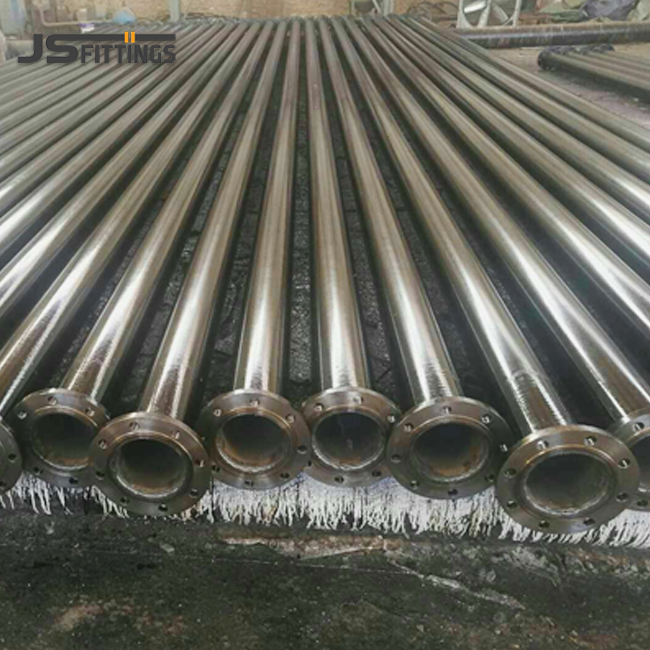
When selecting piping solutions for corrosive or extreme-temperature environments, understanding the fundamental distinction between CRA clad pipe and mechanically lined pipe becomes crucial for project success. A CRA clad pipe features a metallurgically bonded corrosion-resistant alloy layer fused to a carbon steel base, offering superior integrity under thermal cycling and pressure fluctuations. Mechanically lined pipe, conversely, uses a mechanically fitted or hydraulically expanded liner inserted inside carbon steel, relying on mechanical interference rather than molecular bonding. This core manufacturing difference affects bond strength, installation complexity, lifecycle cost, and suitability across demanding applications.

Understanding CRA Clad Pipe Technology
The cladding process creates a permanent metallurgical bond between the carbon steel substrate and the corrosion-resistant alloy layer through methods like hot rolling, explosive bonding, or weld overlay. This metallurgical fusion ensures the two materials behave as a unified structure under operational stresses.
Three defining characteristics of clad pipe manufacturing:
- Metallurgical Bond Integrity—Shear strength is verified according to applicable standards and project requirements, providing resistance against delamination during bending or thermal cycling.
- Uniform Clad Thickness—Precision control maintains the specified CRA layer thickness across the entire pipe length, with thickness selected according to corrosion requirements and service conditions.
- Cost-Efficient Construction—Combines carbon steel strength with alloy corrosion protection, often providing significant cost advantages compared with solid alloy pipe.
JS Fittings employs advanced hot-roll bonding and weld overlay techniques for CRA clad pipe production, ensuring consistent quality across DN15 to DN2000 specifications. Our spectral analyzers verify the chemical composition of both base and clad layers, while ultrasonic testing confirms bond integrity in accordance with API 5LD requirements.
The carbon steel base provides structural strength and pressure containment, while the CRA layer—commonly Alloy 625, 825, or 316L stainless steel—delivers corrosion resistance against H₂S, CO₂, chlorides, and acidic media. This dual-layer approach optimizes material cost without compromising performance in sour service oilfields, offshore platforms, and chemical processing plants.
If you need piping for high-pressure sour gas applications with temperature fluctuations, metallurgically bonded clad pipe offers superior reliability compared to mechanically retained liners that may loosen during thermal expansion cycles.
Mechanically Lined Pipe Construction Methods
Mechanically lined pipe inserts a corrosion-resistant tube inside a carbon steel carrier pipe through hydraulic expansion or tight-fit installation. The liner contacts the outer pipe through mechanical interference, without molecular bonding between surfaces.
Two primary installation methods:
- Hydraulic Expansion Lining – A slightly undersized alloy tube gets hydraulically pressed against the carbon steel inner diameter, creating friction-based contact.
- Tight-Fit Assembly – Pre-sized liners are inserted with precise dimensional tolerances to maintain an interference fit
This construction approach allows field assembly and easier inspection of the liner before installation. The gap or contact between layers, however, introduces potential failure points under severe operational conditions.
The liner material—typically 316L stainless steel, Alloy 825, or other specialized alloys—provides the corrosion barrier, while the carbon steel outer pipe handles structural loads. This separation of functions works adequately in stable-temperature, moderate-pressure applications.
If you need lower upfront investment for non-critical service lines, mechanically lined pipe may suit projects where operational conditions remain relatively stable and thermal cycling is minimal.
Testing protocols for lined pipe and CRA clad pipe focus on liner integrity, dimensional accuracy of the interference fit, and leak detection between layers. Yet these inspection methods cannot verify long-term bonding strength since no metallurgical bond exists.
Four Core Differences Between Clad and Lined Pipe
Bond Strength and Structural Integrity
CRA clad pipe achieves molecular-level bonding through diffusion processes during manufacturing. Shear tests on our clad products demonstrate bond strength exceeding 150 MPa, with qualified performance demonstrated through pressure cycling and thermal cycling tests according to applicable project requirements.
Mechanically lined pipe relies on friction and mechanical interference. This contact pressure can diminish due to:
- Differential thermal expansion between dissimilar metals
- Vibration-induced loosening in high-flow applications
- Pressure surge effects that momentarily separate the liner from the carrier pipe
Tested bond performance comparison:
- Clad pipe shear strength: 140-180 MPa (metallurgical bond)
- Lined pipe retention depends on mechanical interference design, dimensional tolerances, and operating conditions rather than a fixed bond strength value.
- Clad pipe thermal cycle performance: Maintains 100% bond integrity indefinitely across extreme temperature fluctuations.
- Lined pipe thermal cycle risk: Liner loosening after 2,000-5,000 cycles in severe conditions
The metallurgical cladding process at JS FITTINGS includes post-bond heat treatment to optimize the transition zone microstructure and reduce residual stresses that could compromise long-term integrity. Our GOST-R and PETROBRAS certifications validate this manufacturing excellence across international standards.
If you need piping systems subjected to frequent startups, shutdowns, or temperature swings, the permanent bond of clad pipe eliminates risks associated with liner movement or separation.
Installation Complexity and Field Welding
Welding CRA clad pipe requires specialized procedures to prevent dilution of the corrosion-resistant layer and maintain bond integrity at joints. Qualified welders use butter-layering techniques—applying compatible filler metals to the clad layer before completing the joint weld.
The process involves:
- Grinding back the clad layer at the weld prep areas
- Applying weld overlay butter to exposed carbon steel
- Completing the structural weld with low-hydrogen electrodes
- Final corrosion-resistant weld pass matching clad material composition
Despite this complexity, the resulting joint maintains full corrosion protection with structural strength matching the parent pipe. JS FITTINGS provides detailed welding procedure specifications (WPS) and can supply pre-fabricated spools to minimize field welding requirements.
Mechanically lined pipe presents different challenges during installation:
- Liner ends require careful alignment to prevent gap formation.
- Special joint designs accommodate liner expansion and contraction
- Backup rings or mechanical couplings add cost and potential leak paths.
- Field inspection becomes more critical to verify liner positioning
- The absence of metallurgical bonding at joints creates potential weak points where corrosive media might penetrate between liner and carrier pipe, especially if gasket compression or mechanical seal integrity degrades over time.
If you need simplified logistics and reduced specialized labor requirements, clad pipe welding—though technical—creates homogeneous joints without additional mechanical components that require ongoing maintenance.
Corrosion Protection Performance
The continuous metallurgical bond in CRA clad pipe ensures complete coverage without gaps where crevice corrosion might initiate. Our ultrasonic testing maps 100% of the clad layer thickness, verifying uniform protection across bends, welds, and straight sections.
Rigorous test data from severe H₂S sour service applications explicitly demonstrate:
- Absolute resistance to Sulfide Stress Cracking (SSC) and Hydrogen-Induced Cracking (HIC) when using properly specified alloy claddings (e.g., Inconel 625)
- Near-zero corrosion rates (< 0.05 mm/year) in highly aggressive, chloride-rich sour gas environments
- Maintained 100% bond integrity and seal effectiveness through 15,000 severe pressure cycles (5-15 MPa) with concurrent high-concentration H₂S exposure.
Mechanically lined pipe creates potential crevices between the liner and the carrier pipe where stagnant fluids can concentrate corrosive species. Even minor gaps allow the following:
- Crevice corrosion is attacking both the liner backside and the carrier pipe interior
- Stress corrosion cracking if tensile stresses combine with a corrosive environment
- Under-deposit corrosion if process fluids seep behind liner sections
If you need corrosion protection designed for long-term service in aggressive media, the gap-free construction of metallurgically bonded clad pipe eliminates hidden corrosion risks that compromise lined pipe over extended operation.

Lifecycle Cost Analysis
Initial procurement costs favor mechanically lined pipe—typically 15-25% lower than equivalent CRA clad line pipe specifications. This price advantage attracts budget-conscious projects during procurement phases.
Total cost of ownership, however, reveals a different economic picture:
Clad pipe lifecycle advantages:
- Minimal maintenance requirements across a 20-30-year service life
- Lower inspection costs due to proven bond integrity
- Reduced unplanned shutdown risk and associated production losses
- Simplified replacement logistics without specialized liner components
- Higher salvage value due to recoverable alloy content
Lined pipe ongoing costs:
- Periodic internal inspection to verify liner condition (every 3-5 years)
- Potential liner replacement after 10-15 years in thermal cycling service
- Risk of carrier pipe corrosion if liner integrity fails
- Production downtime for maintenance access and inspection
Lifecycle cost analyses of offshore sour service pipelines have shown that clad pipe can provide economic advantages over mechanically lined alternatives by reducing maintenance and failure risks.
If you need to minimize lifecycle cost and maximize operational reliability for critical process lines, the proven durability of CRA-clad pipe delivers superior economic value beyond simple upfront price comparison.
Application Suitability for Different Service Conditions
Extreme Temperature Environments
When ASTM A333 Grade 6 or other suitable low-temperature carbon steel grades are selected as the backing material, CRA-clad pipe can maintain impact toughness for cryogenic applications. Charpy V-notch testing is performed according to applicable specifications to verify impact toughness requirements for low-temperature applications.
The metallurgical bond remains stable across temperature extremes—from cryogenic LNG applications to 400°C steam service in chemical plants. This thermal stability prevents delamination that might occur with differential expansion in mechanically retained systems.
Mechanically lined pipe performs adequately in moderate temperature ranges (10°C to 120°C) where thermal expansion differences remain manageable. Beyond these limits, the interference fit may loosen or over-tighten, compromising liner integrity.
If you need piping for cryogenic service, high-temperature chemical processing, or thermal cycling applications, clad pipe construction eliminates temperature-related liner movement risks.
Sour Service and H₂S Environments
Oilfield production systems handling sour environments containing H₂S require materials selected according to NACE MR0175/ISO 15156 requirements. JS FITTINGS produces CRA-clad pipe with Alloy 625 or 825 cladding that meets NACE MR0175/ISO 15156 requirements, preventing catastrophic failures in sour service.
The continuous clad layer, verified through appropriate inspection methods, provides a corrosion-resistant barrier that reduces the risk of H₂S contact with the carbon steel base. Our manufacturing process includes solution annealing of the clad layer to optimize corrosion resistance and mechanical properties.
Mechanically lined pipe introduces risk at the liner-carrier interface. Even minor gaps allow H2S-laden fluids to contact carbon steel, potentially causing hydrogen-induced cracking or sulfide stress cracking that propagates undetected until catastrophic failure occurs.
National oil companies and major operators may specify metallurgically bonded clad pipe for selected critical sour service applications based on this superior integrity. JS FITTINGS maintains a qualified supplier status with these organizations through demonstrated performance in demanding environments.
If you need compliant solutions for sour service meeting NACE standards and minimizing safety risks, CRA clad pipe with certified material traceability provides the confidence required for hazardous fluid handling.
High-Pressure Cycling Applications
Offshore platforms, hydraulic systems, and intermittent process operations subject piping to repeated pressure fluctuations. Our clad pipe endures >10,000 pressure cycles between 0 and 85% of rated working pressure without bond degradation, validated through hydrostatic cycling tests.
The monolithic structure created by metallurgical bonding responds uniformly to pressure changes, eliminating fatigue concerns at the bond interface.The carbon steel base material robustly handles structural loads, while the metallurgically bonded clad layer maintains its protective function cycle after cycle, a standard of excellence guaranteed by a certified API 5LD CRA clad line pipe manufacturer.
Mechanically lined pipe experiences micro-movements at the liner-carrier interface during each pressure change. These repetitive displacements can lead to:
- Fretting wear between contact surfaces
- Work-hardening and eventual cracking of the liner material
- Progressive loosening of the interference fit
If you need piping systems for cyclic operations, batch processing, or applications with frequent startups and shutdowns, the fatigue resistance of metallurgically bonded construction ensures sustained reliability.
Conclusion
The choice between CRA-clad pipe and mechanically lined pipe hinges on service conditions, lifecycle expectations, and total cost considerations rather than merely upfront price. Metallurgically bonded clad pipe delivers proven reliability in extreme temperatures, sour service, high-pressure cycling, and other demanding applications where liner retention cannot be assured. The permanent bond eliminates delamination risks, simplifies joint welding, and provides gap-free corrosion protection, justifying higher initial investment through reduced lifecycle costs. Mechanically lined alternatives may suit moderate service conditions with stable temperatures and pressures where budget constraints prioritize initial capital expenditure. Rigorous evaluation of operational requirements, failure consequences, and long-term economics guides optimal technology selection for each unique application.
Partner With a Trusted CRA Clad Pipe Manufacturer
Selecting the right piping solution represents just the beginning—partnering with a reliable supplier ensures your project succeeds from procurement through decades of operational service. JS FITTINGS combines manufacturing excellence, international certifications, and responsive customer service to support your project requirements. Our engineering team assists with material selection, specification development, and technical challenges unique to your application. Contact admin@jsfittings.com to discuss your CRA clad pipe requirements with experienced professionals who understand the critical balance between performance, compliance, and cost-effectiveness in demanding industrial environments.
References
1. American Petroleum Institute. (2019). API Specification 5LD: Specification for CRA Clad or Lined Steel Pipe (4th ed.). Washington, DC: American Petroleum Institute.
2. Det Norske Veritas. (2021). DNV-ST-F101: Submarine Pipeline Systems. Høvik, Norway: DNV.
3. NACE International. (2015). NACE MR0175/ISO 15156: Petroleum and Natural Gas Industries—Materials for Use in H₂S-Containing Environments in Oil and Gas Production. Houston, TX: NACE International.
4. Bai, Y., & Bai, Q. (2014). Subsea Pipelines and Risers. Oxford: Elsevier.
5. Kotecki, D. J. (2013). “Welding Metallurgy and Weldability of Stainless Steels and Nickel-Based Alloys.” ASM Handbook, Volume 6A: Welding Fundamentals and Processes. Materials Park, OH: ASM International.
6. Song, F., Jiang, Z., Li, X., & Zhang, Y. (2017). “Manufacturing Processes and Performance Evaluation of Corrosion Resistant Alloy Clad Steel Pipes.” Journal of Materials Processing Technology, 242, 1–12.
Send Inquiry
Related Industry Knowledge
- Long Radius Buttweld Elbow vs Short Radius Elbows: Which One to Use?
- ASTM A312 vs A358: Choosing the Right Stainless Steel Pipe Standard
- How Are Carbon Steel Forged Steel Flanges Heat Treated?
- What Is The Difference Between Different Grades Of API 5L Seamless Steel Line Pipe In Performance?
- Understanding the API 5L Seamless Steel Line Pipe Specification
- Slip-On Flanges: Types, Uses, and Installation Guide
- ASTM A105 Carbon Steel Forged Steel Flange Specifications
- Carbon Steel vs Stainless Steel Buttweld Bend: Which to Use?
- Buttweld Tee Manufacturing Guide: Seamless or Welded?
- Do blind flanges require hydrotesting?