
Slip-On Flanges: Types, Uses, and Installation Guide






2026-06-15 10:55:41
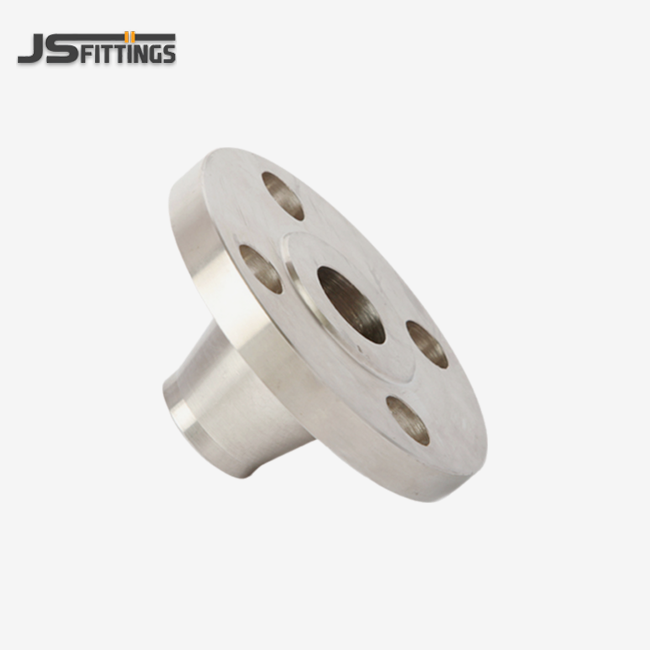
A steel slip-on flange is a flexible pipe connection part that is made to slide easily over the outside diameter of the pipe and then be held in place with two fillet welds. For low- to medium-pressure pipe systems, this design makes fitting easier, cuts down on installation time, and provides cost-effective performance. Slip-on flanges are a reliable way to seal pipes in water treatment plants, chemical processing units, and industrial cooling networks. They are used when project budgets and tight plans require realistic engineering solutions that don't lower safety standards.
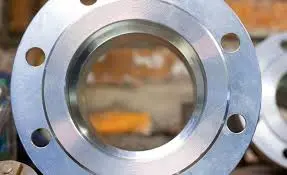
Understanding the Design and Functionality of Steel Slip-On Flanges
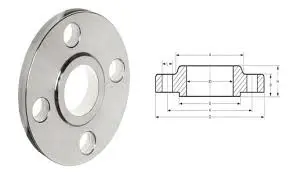
The form of the hole in a steel slip-on flange is what sets it apart from other types of flanges. The inside diameter of this flange is a little bigger than the outside diameter of the pipe. This makes it easy for workers to move along the pipe's line while it's being put together. Welders typically apply fillet welds between the flange and pipe, with the welding arrangement determined by applicable piping codes, design requirements, and service conditions. One joins the flange hub to the outside of the pipe, and the other joins the flange hole to the end face of the pipe.
When you double-weld in this way, you make a strong mechanical link that works for systems that are stable. The small hub height makes the overall size smaller. This makes these flanges very useful in small installation areas where there isn't much room to find the right parts.
What the plate is made of is very important to how well it works. ASTM A105 carbon steel is commonly used for ambient and moderate-temperature pressure piping applications, while ASTM A350 LF2 grades are designed for low-temperature services requiring improved impact toughness. The ones made of stainless steel are used in places where rust is a problem and chemical safety is very important. Tests for positive material identification are used to carefully look at each grade of material and make sure that its chemical makeup meets the standards.
As a part of the making process, shaping methods are often used to make the grain structure more stable. Compared with cast alternatives, forged flanges generally provide improved mechanical properties, dimensional consistency, and reliability for pressure-containing applications when manufactured according to applicable standards. Once the metal has been forged, it is machined to make sure that the sizes are exactly right so that the bolt holes line up and the seal fits properly.
Classification and Pressure Rating Standards
Standardised flange types are needed because industrial pipe systems work in a range of pressure and temperature situations.A standardized pressure rating system makes it significantly easier for engineers to select the appropriate slip-on flange for the job.
According to ASME B16.5:
- Class 150 flanges are the least expensive way to connect low-pressure water systems, HVAC systems, and storage tanks that are open to the air. At room temperature, Class 150 flanges have pressure ratings that depend on the flange material group, with typical carbon steel ratings around 285 psi under ASME B16.5 pressure-temperature tables.
- Class 300 designs are used for applications with moderate-to-high pressure, such as moderate-pressure steam lines, compressed air networks, and light petroleum processing units. At room temperature, Class 300 flange pressure ratings depend on material classification, with carbon steel flanges commonly rated around 740 psi according to ASME B16.5 pressure-temperature tables.
- Classes 600, 900, and 1500 are higher classes that meet the needs of specific industries. These scores are often given in places where safety can't be compromised, like petrochemical factories, high-pressure gas transport systems, and power plants.
Standards in Europe:
- PN-rated flanges for metric pipe systems are defined by EN 1092-1 standards. PN10 and PN16 flanges are most often used in building services and water treatment. The PN25 and PN40 types can be used for industrial process pipes where European design codes set the rules for the project.
- The measurements of the steel slip-on plate are very accurate in terms of geometry. Standard requirements must be met for bolt circle sizes, hole counts, face finishes, and hub lengths. ASME B16.5 provides dimensional requirements for various flange types, including slip-on flanges, covering NPS 1/2 through NPS 24 across multiple pressure classes.
The choices of faces on steel slip-on flanges have a big effect on how well the seal works. Most general uses are good for Raised Face designs, which typically feature a raised sealing surface of 1/16 inch for Class 150 and Class 300 flanges and higher dimensions for higher pressure classes, concentrate gasket compression forces to improve sealing performance. Flat-face versions get rid of stress points on pipe materials that are easily broken, like cast iron. Ring-type joint facings can handle high or low temperatures and pressures thanks to metal-to-metal binding devices.
Material Selection and Corrosion Protection Strategies
Carbon steel is still the most common type of steel used because it is cheap and useful. The steel slip-on plate is only good for as long as the steel it's made of. It needs to be fixed every so often.
There are covers on most carbon steel plates that keep them safe while they are being kept. You can use paints, anti-rust oils, or coatings like black phosphate. The air doesn't let these clothes rust while they're being moved or stored. But they need to be made up first before they can be worn all the time.
To stop rust for longer, we need to do it in better ways. Zinc is added during hot-dip galvanising to protect the base metal, even if the covering has holes in it. Because the surface is always wet in the ocean, outside, and in chemical work areas, this method works well there.
Another way to stay safe is to cover yourself with epoxy. Things that are acidic can't get through two-part epoxy mixes that chemically stick to clean steel surfaces. Colour-coding helps you find things in a system faster, and it's safer to be able to tell the difference between process lines.
Stainless steel slip-on flanges generally require less maintenance in many corrosive environments because their passive oxide layer provides corrosion resistance. However, proper material selection and inspection remain necessary for aggressive acidic or chloride-containing services. Grades 304 and 316 of chromium and nickel metals naturally protect themselves from chemical attack by creating oxide layers that are not active. At first, stainless steel costs more than carbon steel. However, when you add up the costs of repairs and replacements, stainless steel often has a lower total cost of ownership.
When it gets too hot, carbon steel plates lose their power, so alloy steel flanges are used instead in high-temperature applications because chromium-molybdenum alloys maintain better mechanical strength and creep resistance than carbon steel at elevated temperatures.
Comparative Analysis: Slip-On Versus Weld Neck Configurations
Project engineers frequently evaluate the steel slip-on flange vs. weld-neck flange decision based on multiple criteria. Each design offers distinct advantages depending on application parameters.
Installation Complexity:
Slip-on designs simplify field installation significantly. The ability to rotate the flange after positioning allows installers to align bolt holes with mating equipment without precise angular measurement. Weld neck flanges require exact bevel alignment and cannot rotate once tack-welded, demanding greater precision during fit-up procedures.
Welding Requirements:
The double fillet weld configuration on slip-on flanges requires two separate welding passes but involves straightforward fillet techniques familiar to most welders. Weld neck flanges utilise single-groove butt welds that demand certified welders and more rigorous weld procedure specifications.
Structural Performance:
Weld neck flanges distribute stress more uniformly through their tapered hub design, making them superior choices for cyclic loading, thermal shock conditions, and high-pressure applications. The stress concentration at fillet weld roots in slip-on designs limits their suitability for severe service conditions.
Economic Considerations:
Material costs favour slip-on flanges—less forging material and simpler machining operations reduce manufacturing expenses. Pipe preparation costs also decrease since the precise squaring of pipe ends becomes less critical. These savings accumulate significantly across large-scale projects involving hundreds of flange connections.
Inspection and Testing:
Due to the inherent geometric limitations of fillet welds on slip-on flanges, radiographic examination (RT) is generally less effective for detecting internal flaws. Consequently, magnetic particle testing (MT) or liquid penetrant testing (PT) is highly preferred for reliably identifying surface and near-surface defects.Weld neck butt welds accommodate full radiographic inspection, providing greater quality assurance for critical systems.
Installation Procedures and Best Practices
Proper steel slip-on flange installation techniques directly influence joint integrity and service life. Following systematic procedures minimises installation defects and ensures compliance with piping codes.
Preparation Phase:
Surface preparation begins with removing mill scale, rust, and contaminants from both pipe and flange surfaces within the weld zone. Wire brushing or grinding creates a clean metal substrate essential for quality welds. Inspectors verify the pipe diameter falls within acceptable tolerance ranges—oversized pipe prevents flange placement, while undersized pipe creates excessive gaps.
Positioning and Alignment:
- Contractors slide the flange onto the pipe end, Contractors slide the flange onto the pipe end, positioning the pipe so that it is properly aligned within the flange bore while maintaining the required projection or setback from the flange face according to welding procedures and applicable standards. Standard practice positions the pipe approximately 1/16 to 1/8 inch back from the flange face. This clearance prevents damage to the sealing surface during internal welding operations and accommodates thermal expansion during service.
- Bolt hole alignment follows next. Installers rotate the flange until the holes align with the mating equipment or adjacent flanges. Temporary clamps or fixtures maintain alignment during welding. Verifying perpendicularity prevents angular misalignment that generates uneven gasket compression and potential leak paths.
Welding Operations:
- The internal and external fillet welds are completed according to the approved welding procedure, which defines the sequence, heat input, and inspection requirements. Welders maintain consistent travel speed and heat input to prevent distortion. After completing the internal weld and allowing cooling, the external fillet weld connects the flange hub to the pipe outer surface.
- Weld profiles must achieve specified leg dimensions without undercutting or excessive convexity. Incomplete fusion at weld roots represents the most common defect mode—proper electrode manipulation and adequate heat input prevent this failure mechanism.
Post-Weld Inspection:
- Visual examination identifies surface discontinuities, weld profile irregularities, and obvious defects. Magnetic particle inspection detects subsurface flaws in ferromagnetic materials. Dye penetrant testing reveals surface-breaking defects in non-magnetic stainless steel variants.
- Dimensional verification confirms flange face runout remains within tolerance limits—excessive warpage prevents uniform gasket compression. Bolt hole spacing and diameter checks ensure fastener compatibility.
Application Scenarios Across Industrial Sectors
The steel slip-on flange applications span numerous industries where reliable pipe connections balance performance requirements against budget constraints.
Water and Wastewater Treatment:
Municipal water distribution networks extensively utilise Class 150 slip-on flanges for pump connections, valve installations, and process equipment interfaces. The low-pressure operating conditions and non-aggressive fluid characteristics make these flanges ideal. Treatment facilities appreciate the installation efficiency during plant expansions and equipment replacements.
Chemical Processing:
Process industries employ corrosion-resistant slip-on flanges for non-critical transfer lines handling moderately aggressive chemicals. Stainless steel variants connect reactor vessels, storage tanks, and filtration equipment where frequent disassembly for cleaning and maintenance justifies the removable connection approach.
HVAC and Building Services:
Commercial and industrial building systems rely on Class 150 flanges for chilled water circulation, heating loops, and condenser water piping. The compact design suits mechanical rooms where space optimisation drives component selection. Installation speed reduces labour costs during new construction and retrofit projects.
Petroleum and Gas Distribution:
Low-pressure gathering lines, tank farm piping, and general utility systems within refineries and terminals heavily incorporate Class 150 and Class 300 slip-on flanges wherever operating conditions permit.While high-pressure process units require weld-neck configurations, peripheral systems benefit from the economic advantages slip-on designs provide.
Power Generation:
Auxiliary systems in power plants—cooling water circuits, fuel oil transfer lines, and compressed air distribution—commonly specify these flanges. The ability to accommodate thermal expansion in non-critical systems while maintaining leak-tight service supports plant reliability objectives.
Industrial Manufacturing:
Factories across the automotive, textile, food processing, and metal fabrication sectors utilise slip-on flanges throughout utility and process systems. Compressed air networks, hydraulic circuits, and cooling systems benefit from quick installation and straightforward maintenance procedures.
Conclusion
Steel slip-on flanges deliver practical engineering solutions where installation efficiency, cost management, and reliable performance converge. Understanding the nuances of pressure ratings, material selection, installation techniques, and application suitability empowers decision-makers to specify components that optimise total project value. As piping systems grow more complex and project schedules compress, the straightforward installation characteristics and proven service record of slip-on flanges continue securing their position across diverse industrial applications. Partnering with experienced manufacturers who maintain rigorous quality standards ensures these critical components perform reliably throughout their intended service life.
Partner with a Trusted Steel Slip On Flange Manufacturer
Bringing over 40 years of manufacturing excellence to your critical piping projects, JS FITTINGS is a premier global supplier delivering precision-engineered steel slip-on flanges that strictly comply with all major international standards, including ASME, DIN, and GOST specifications.Our integrated quality systems—from material traceability through final inspection—ensure every flange arrives ready for critical service. Whether you're an EPC contractor facing tight project deadlines, a distributor building reliable inventory, or an industrial end-user minimising downtime risk, our technical team provides solutions tailored to your specific requirements. Contact our specialists at admin@jsfittings.com to discuss your flange requirements and experience the supply chain reliability that keeps projects on schedule.
References
1. American Society of Mechanical Engineers. (2020). ASME B16.5: Pipe Flanges and Flanged Fittings: NPS 1/2 Through NPS 24 Metric/Inch Standard. New York: ASME Press.
2. Becht, C. (2018). Process Piping: The Complete Guide to ASME B31.3 (Fourth Edition). New York: ASME Press.
3. Nayyar, M. L. (2000). Piping Handbook (7th Edition). New York: McGraw-Hill Professional.
4. Singh, R. K. & Solanki, V. S. (2017). Industrial Piping and Equipment Estimation Manual. Cambridge: Gulf Professional Publishing.
5. Smith, P. R., & Zappe, R. W. (2004). Valve Selection Handbook: Engineering Fundamentals for Selecting the Right Valve Design for Every Industrial Flow Application (5th Edition). Oxford: Gulf Professional Publishing.
6. European Committee for Standardization. (2018). EN 1092-1: Flanges and Their Joints - Circular Flanges for Pipes, Valves, Fittings and Accessories, PN Designated - Part 1: Steel Flanges. Brussels: CEN Publishing.
Send Inquiry
_1775030564781.webp "Blind Flange")
Related Industry Knowledge
- What is the service life of an ASME B16.5 carbon steel flange?
- What Facing Types Suit a Carbon Steel Forged Steel Flange?
- CRA Clad Pipe vs Mechanically Lined Pipe: Key Differences Explained
- What is A312 stainless steel pipe? Everything You Need to Know
- Collaborative Art of Lap Joint Pipe Flange and Stub End
- Why Engineers Choose Buttweld Bend Over Mitered Bends?
- How to Select the Right Buttweld Bend Radius (3D–20D)
- Butt Weld Pipe Reducer Applications in Oil and Gas Systems
- Do blind flanges require hydrotesting?
- Is a 90 or 45 degree elbow better for drain?