
Why Engineers Choose Buttweld Bend Over Mitered Bends?






2026-06-10 11:12:18
Because they provide better structural stability, increased pressure resistance, and improved flow dynamics, engineers prefer buttweld bends over mitred bends. Because buttweld bends have a smooth, continuous curvature and fewer weld joints, there is less turbulence and pressure loss. This makes them perfect for high-pressure uses in power plants, oil and gas pipes, and factories. Buttweld bends are made through precise induction bending or cold forming, as opposed to mitred bends, which are made by cutting and welding together several pipe pieces at right angles. This way of making pipes generally preserves a more continuous grain flow than mitred fabrication, cuts down on the number of weld joints, and greatly lowers the chance of leaks or failures. Because of these benefits, upkeep costs go down, service life increases, and the product can be manufactured in accordance with standards such as ASME B16.49 and API 5L.
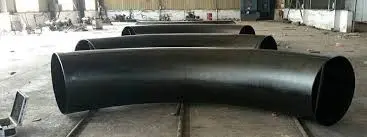
Understanding Butt-Weld Bends and Mitred Bends
Understanding the basic differences between these two types of bends and how they are made is the first step in choosing the right pipe part.
Defining Buttweld Bends
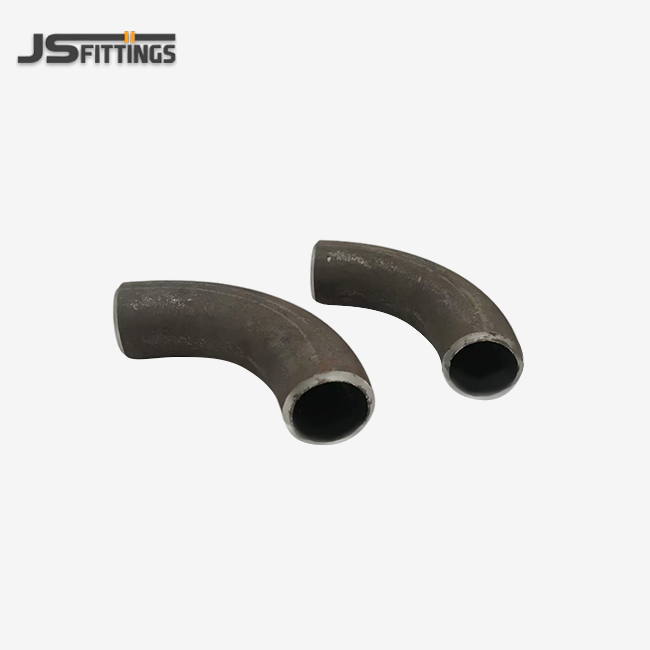
A buttweld bend is a special kind of pipe part that is made by carefully bending metal. If the turning radius is more than twice the diameter of the pipe (2D), the fitting is called a pipe bend instead of an elbow. 3D, 5D, 6D, and 8D bends are all common designs. The bigger radius makes flow changes smoother and lowers noise inside the flow. Our production process follows the rules set by ASME B16.49 and MSS-SP-75. This makes sure that the parts are the right size and will work well in a variety of situations.
Using API 5L line pipe grades (B, X42, X52, X60, X65, X70, X80 PSL1 & PSL2) and ASTM material specifications (A234 WPB, WPC, WP1, WP5, WP9, WP11, WP22, WP91, A403 304/304L, 316/316L), we make bends out of carbon steel, alloy steel, and stainless steel. Sizes range from 1/2" to 60" (DN15 to DN1500) and wall thicknesses from SCH 10 to SCH 160, so they can be easily adapted to meet the needs of any job.
Understanding Mitred Bends
To make mitred bends, straight pieces of pipe are cut at precise angles and then welded together to change the direction of the turn. This way of making things adds more than one weld seam to the bend zone, which could make it weaker when pressure and temperature changes happen. At first glance, mitred bends may seem like a good deal, but their higher upkeep needs and lower pressure ratings often mean that the total cost of ownership is higher over the span of the project.
Material Standards and Certifications
The choice of material has a direct effect on efficiency, durability, and resistance to rust. Different types of pipeline steel, like API 5L X42 through X80, have different yield values to handle different pressure classes. Materials with a high yield, like the ASTM A860 WPHY series, and low-temperature service grades, like ASTM A420 WPL6, make it easier to do work in tough conditions. Options that don't rust, like ASTM A403 WP304/L, WP316/L, and Duplex 2205, last a long time in harsh environments and remote uses.
Spectral scanners are used to check the chemical makeup of all materials, and ultrasound testing is used to make sure that the wall thickness is the same all the way through. These quality control steps make sure that foreign standards and client requirements are met. This lowers the risk of the project and helps meet safety goals.
Why Buttwelded Bends Outperform Mitred Bends: Technical and Practical Advantages?
Knowing why buttweld bends are better from a technical point of view helps buying teams make smart choices that balance initial costs with long-term dependability.
Structural Integrity and Pressure Resistance
An induction-bent pipe has a continuous grain structure that keeps the mechanical properties the same all the way around the bend radius. This is very different from mitred bends, which have many weld joints that break up the material's substructure and create stress points. Sometimes, when the temperature and pressure change, these weld gaps can crack from stress.
By starting with heavy-schedule pipe, our controlled bending process stops the wall from thinning out on the outer curve (extrados). During induction bending, precise control of temperature and speed makes sure that the remaining wall thickness is greater than the minimum design requirements set out in ASME B31.3 and ASME B31.8. This method gives uniform pressure rates without lowering the margins of safety.
Enhanced Fluid Dynamics and Piggability
Long-radius bends (3D, 5D, and bigger) make smooth interior flow lines that keep the pressure drop and turbulence to a minimum. In Long-distance transmission pipelines, where even small pressure drops add up to a lot, this is very important. The smooth curve also lets smart pigs that are used for cleaning and inspecting inside go through without any problems. With their sudden changes in angle and internal weld beads, mitred bends often make it hard for pigs to move or damage equipment.
Our bends have standard bevelling and transition taper cutting that meet ASME B16.25 standards. This makes sure that they fit in perfectly with nearby pipe sections. This piggability promise backs up planned repair and increases the useful life of infrastructure.
Reduced Installation Time and Lower Maintenance
Fewer weld points directly lead to faster installation in the field and fewer inspections being needed. Multiple mitred segments can be replaced by a single buttweld bend, which can cut the time needed to weld by up to 60% on complicated pipe routes. Radiographic testing after installation centres on fewer important welds, which speeds up the project's commissioning schedules.
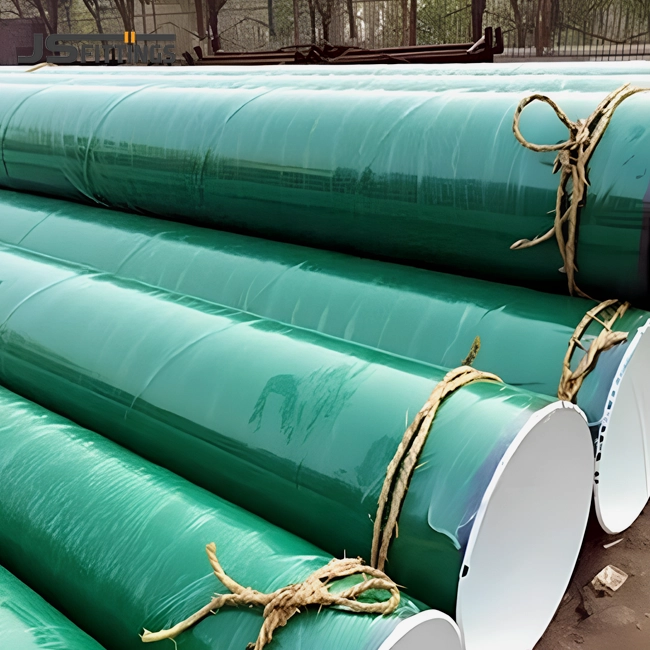
The continuous structure stops rust from starting in weld heat-affected zones, which lowers maintenance costs by a large amount. Coating methods like 3LPE, FBE, and internal liquid epoxy cover the whole bend surface evenly, so there are no coating gaps like there are at mitred weld joints.
Post-Bend Heat Treatment Assurance
When you do induction bending, you create localised heating that can alter the microstructure of the steel. We use calibrated ovens for post-bend heat treatment (normalising or quenching and tempering) to get rid of any leftover stress and restore the material's toughness and mechanical properties. Hardness testing shows that there are no weak spots that could break when hit or loaded in cycles. This step of heat processing is often skipped when making mitred bends, but it is very important for high-yield steel types that are working close to their design limits.
Comparing Buttweld Bends to Other Piping Elbow Types
When making a purchase choice, it's helpful to know how buttweld bends stack up against other elbow designs in terms of performance and application suitability.
Long Radius vs. Short Radius Elbows
Standard elbows are identified by how curved they are in relation to the width of the pipe. Short-radius elbows (1D) make it possible to make tight 90-degree turns in setups with limited room, but they cause a lot of pressure drop. It's not as good as 3D or 5D bends when it comes to hydraulic efficiency, but long-radius elbows (1.5D) do improve flow characteristics compared with short-radius elbows.
In a 12-inch duct moving crude oil at six metres per second, a 1.5D elbow and a 5D bend are side by side. The longer bend can significantly reduce pressure drop. This energy savings adds up over the length of the pipeline, lowering running costs in a way that can be measured.
Socket Weld and Threaded Connections
For small-bore jobs where welding isn't possible or where system pressures are low, socket weld and threaded joints are good options. These ways of connecting create cracks and threads that harmful fluids can get stuck in and make upkeep harder. Buttweld connections get rid of these worries because they use full-penetration welds that can be checked with X-rays, giving you more faith in their leak-tightness.
Seamless vs. Welded Construction
Seamless bends are commonly available from 1/2" through 24" and are more reliable in important applications where the stability of the weld line is at risk. For big-diameter transmission lines, LSAW or SSAW pipe bends (up to 60" diameter) are a cost-effective option as long as the seams are placed correctly during bending to keep the structure's integrity. As part of our quality control process, we make sure that lengthwise seam welds stay along the neutral line when the piece is bent. This keeps the weld zone from being under too much stress.
Material-Specific Performance Trade-offs
For mild working conditions, carbon steel grades balance cost and performance. Alloy steels, on the other hand, can handle higher temperatures and higher pressures. Corrosion problems can be solved with stainless steel and duplex types in sour service, chemical processing, and naval settings. The purchasing teams need to compare the costs of materials to the costs that come up over the course of their life, such as the number of inspections, coatings, and replacements that need to be done.Depending on the applicable design codes and operating conditions, explicitly specifying materials like ASTM A234 WPB for carbon steel or ASTM A403 WP316L for stainless steel ensures the optimal performance and longevity of your piping system.
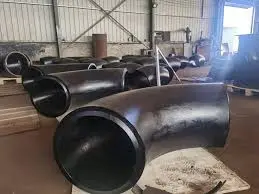
Procurement Considerations for Buttweld Bends in Global B2B Markets
To make sure the project goes well, strategic buying of buttweld pipe bends needs to pay attention to the skills, certifications, and procedures of the suppliers.
Supplier Certifications and Manufacturing Capabilities
Checking the manufacturer's certifications saves you from using low-quality products and making mistakes. ISO 9001 quality management systems, relevant quality certifications and project-specific approvals, and third-party approvals from classification groups or state authorities are all necessary certifications. Manufacturers that are approved by big oil companies like NIOC, ADNOC, and Petrobras have shown that they can meet strict technical and business requirements.
When looking for suppliers for big projects, production ability is important. Manufacturers whose monthly output is more than 800 tonnes can keep up with tight building plans without lowering the quality of their products. Spectral analysers, ultrasound thickness gauges, and magnetic particle screening systems are some of the high-tech testing tools that are used to make sure that products always meet standards.
Lead Times and Logistics Planning
Standard radius bends (3D and 5D) in popular sizes can usually be shipped within two weeks from stock. Custom designs, on the other hand, take four to eight weeks to make, depending on how complicated they are. Teams in charge of buying things should ask for specific production schedules and keep extra supplies on hand in case something goes wrong on the key path.
Shipping arrangements for turns with a large diameter need special care. Bends with a width of more than 48 inches may need special crating and their own container. Coordinating with makers who know how to export, including how to get the right paperwork through customs and follow the rules for importing into the target country, can help avoid delays that cost a lot of money.
Customisation vs. Standard Products
The fastest wait times and lowest unit prices are for standard bends made to ASME B16.9 dimensions. When isometric models are used to make custom bends, they can be made to fit specific routeing problems and avoid the risks of field fabrication. When you're thinking about customising, you should weigh the pros and cons of higher unit costs versus lower field installation costs. A special compound-angle bend that costs twenty per cent more might save three days of welding and inspection in the field, which would explain the extra cost by cutting down on time.
Our engineering team looks at isometric sketches and suggests the best bend designs that are both easy to make and quick to install. This way of working together often finds ways to standardise parts without changing the purpose of the design.
Building Long-Term Supply Partnerships
Building ties with dependable makers makes buying things easier for many projects. Preferred seller deals can make sure that capacity is allocated during times of high demand and speed up the approval process for technical issues. Price cuts and priority ordering for output are often possible when you commit to a certain amount of work.
Evaluate potential manufacturing partners based on critical metrics such as customer repurchase rates (ours exceed 98%), on-time delivery performance (we consistently maintain over 95%), and their technical responsiveness to inquiries. Suppliers who have been making things for decades can improve processes and ensure quality in a way that younger companies can't.
Conclusion
It is clear that buttweld bends are better than mitred bends in terms of both technology and cost. They are the best choice for important piping uses because they are more structurally stable, improve flow efficiency, and require less upkeep. Partnering with experienced manufacturers who follow strict quality standards, have the right certifications, and offer quick expert help is key to successful procurement. Engineers and procurement workers can make decisions that reduce project risk and maximise lifetime costs when they know about material specifications, manufacturing methods, and best practices for installation. These well-thought-out choices help keep processes safe and reliable in tough industrial settings.
FAQ
1. What Makes Buttweld Bends Better Than Mitred Bends for High-Pressure Applications?
Buttweld bends keep the grain structure constant without having to use multiple weld joints, which is what happens in mitred designs and causes stress to build up in certain places. The seamless design is better at handling pressure cycling, and controlled production methods make sure that the wall thickness meets code standards all the way around the bend.
2. How Do Bending Radii Affect Pipeline Performance?
Larger-radius bends (5D, 8D) significantly reduce turbulence and pressure drop compared to normal 1.5D elbows. This is very important for long-distance transmissions where energy loss builds up. Larger curves can also accommodate pipeline inspection tools, which helps with preventative maintenance plans that make infrastructure last longer.
3. What Certifications Should Buyers Verify When Sourcing Bends?
Some important licenses are ISO 9001 quality systems, material test results that confirm the chemical and mechanical properties, and approvals from groups that use the product or classification societies. Manufacturers that are approved by big energy companies have shown that they can meet strict technical requirements.
Partner with JS FITTINGS for Reliable Buttweld Bend Solutions
JS FITTINGS makes precise pipe bends that have been tested and proven to work in a wide range of difficult industrial settings for over forty years. We can make seamless and welded parts with diameters from 1/2" to 60" and unique radii up to 20D. We can also make angles that match your isometric models. Our methods are ISO 9001-certified, we use cutting-edge NDT tools, and we have certifications from NIOC, ADNOC, and Petrobras to make sure we keep quality high. We ship more than ninety crates every month, deliver on time more than more than 95% of the time, and repurchase rates close to ninety-eight per cent of the time. This supply stability keeps your projects on schedule.Contact our expert engineering team at admin@jsfittings.com to discuss your specific project requirements. As a premier manufacturer of industrial buttweld bends, we offer highly competitive pricing, dedicated technical support, and diverse coating options to protect your infrastructure investment for decades to come.
References
1. American Society of Mechanical Engineers. (2018). ASME B16.49: Factory-Made Wrought Steel Buttwelding Induction Bends for Transportation and Distribution Systems. New York: ASME Press.
2. Manufacturers Standardization Society. (2019). MSS SP-75: Specification for High Test Wrought Welding Fittings. Vienna, VA: MSS Publications.
3. American Petroleum Institute. (2020). API 5L: Specification for Line Pipe, 46th Edition. Washington, DC: API Publishing Services.
4. ASTM International. (2021). ASTM A234/A234M: Standard Specification for Piping Fittings of Wrought Carbon Steel and Alloy Steel for Moderate and High Temperature Service. West Conshohocken, PA: ASTM International.
5. Thompson, R. & Martinez, J. (2017). Pipeline Engineering and Construction: Practical Approach in Project Execution. Houston: Gulf Professional Publishing.
6. Liu, H. (2016). Pipeline Engineering: Design, Failure Analysis and Risk Management in the Oil and Gas Industry. Beijing: China Petroleum Industry Press.
Send Inquiry

Related Industry Knowledge
- ASTM A312 vs A358: Choosing the Right Stainless Steel Pipe Standard
- Buttweld Elbow Dimensions Guide for ASTM A234 WPB Fittings
- What is an API 5L Seamless Steel Line Pipe?
- How to Select a Buttweld Reducer for Process Piping?
- What is seamless carbon steel pipe used for?
- Buttweld Tee Manufacturing Guide: Seamless or Welded?
- What is a threaded flange?
- How to bolt to flanges with threaded holes?
- How thick is standard wall pipe on carbon steel?
- What is the difference between a 45 degree and 90 degree elbow?