
Buttweld Tee Manufacturing Guide: Seamless or Welded?






2026-05-26 10:27:15
Whether you choose seamless or welded pipe tees will have a big impact on the performance, safety, and cost of your job. When made through hot extrusion or forging, seamless buttweld tees offer the best structural stability and resistance to pressure, making them ideal for high-pressure applications requiring high reliability and precision. Welded buttweld tees, which are made from rolled plate or formed pipe pieces, are cheaper and come in bigger sizes. By knowing these differences in manufacturing, procurement professionals can choose fittings that meet business needs, legal requirements, and cost goals while reducing project risk.
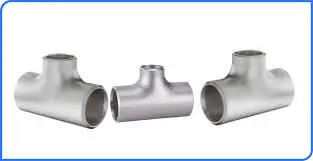
Understanding Buttweld Tee Basics: Definition, Types, and Specifications
What Defines a Pipe Tee Fitting
A pipe tee is a T-shaped fitting that splits flow at a right angle in industrial piping systems. These fittings are different from threaded or socket connections because their ends are cut, usually at a 37.5-degree angle, so they can be fully welded. This way of welding makes joins that are as strong as or stronger than the parent pipe. This eliminates potential leak paths commonly found in mechanical connections. These fittings are used for lasting, high-integrity links in fields ranging from refining oil to making medicines. Welders can achieve full fusion with the help of the beveled preparation, which spreads stress equally across the joint instead of gathering it at the connection points.
Functional Categories and Material Options
We make two working versions to fit a range of pipe designs. Equal buttweld tees keep the width of all three holes the same, which makes it easier to distribute flow in symmetrical systems. Reducing buttweld tees have a smaller branch exit, which lets you make changes without buying extra reducer fittings. The choice of material has a direct effect on service life and fitness for use:
- Carbon Steel Variants: ASTM A234 WPB is still the standard for general service up to approximately 800°F because it is easy to weld and has good mechanical qualities. MSS-SP-75 grades WPHY 52, 60, and 65 offer better performance without the high cost of exotic alloys in challenging uses that need higher yield strength. These materials go through controlled heat treatment steps in our factories, which ensures that the grain structure and mechanical qualities stay the same.
- Stainless Steel Solutions: ASTM A403 WP316L is very resistant to corrosion in places that are acidic or chloride-rich, which is important for chemical processes and offshore platforms. The low-carbon version stops sensitization while welding, so it keeps its resistance to intergranular rust. For high-temperature use above 800°F, the WP321 and WP347 types have supporting elements that stop carbide precipitation, which helps maintain long-term durability.
- Alloy Steel for Extreme Conditions: Chrome-Moly types WP11 and WP22 are used in industrial and power generation processes that go up to 1100°F. This range is even wider with WP91 material, which maintains its creep strength in both superheater and reformer systems. It is important for Arctic pipes and cryogenic processes that low-temperature grade A420 WPL6 keeps its ductility down to -50°F.
Dimensional Standards and Pressure Classifications
Manufacturing follows ASME B16.9, EN 10253-2, and DIN 2615 norms, which ensure that the products can be used anywhere in the world. Welded fabrication goes up to 72" diameter (DN1800), while seamless production goes from 1/2" to 24" nominal sizes (DN15 to DN600). Wall thickness ranges from Schedule 10S for low-pressure distribution to XXS for severe service conditions. The crotch radius, which is where the branch meets the run, follows strict dimensional tolerances to keep flow efficient and prevent stress concentration. Our quality protocols check center-to-end dimensions within ±1mm for sizes under 6", ensuring field alignment without expensive fit-up delays.
Seamless vs Welded Buttweld Tee: Key Comparisons for Optimal Procurement
Manufacturing Process Distinctions
For seamless production to start, solid billets must be heated to the appropriate temperature for hot forming or extrusion. The buttweld tee form is made by controlled metal flow through dies, which is done by hydraulic presses. This method gets rid of lengthwise seams, making the grain structure constant throughout the fitting. When you cold-draw smaller sizes, you can get tighter specs on the dimensions and a better finish on the surface. Not having any weld gaps means there are no weak spots, which is especially helpful in situations where wear resistance is important, like cyclic pressure uses.
Performance and Integrity Analysis
When it comes to holding pressure, a seamless structure is clearly better. Based on estimates from ASME B31.3, the homogeneous frame can handle higher internal pressures compared to equivalent welded fittings than similar schedule-welded fittings. This gap is very important in header systems, manifold units, and other places with a lot of stress where safety must not be compromised. It's possible to predict how the stress will be distributed during temperature cycles and vibration because the wall thickness is always the same and doesn't change because of the weld.
Cost Dynamics and Procurement Considerations
Because they cost more to make and use, seamless fits are more expensive for sizes smaller than 16". The process of forming needs a lot of energy and special tools, which is represented in the unit price. Thinner wall plans, on the other hand, can make up for higher allowed stresses and fewer inspections that are needed. Welded buttweld tees are a cost-effective way to fix problems with large-bore pipes, transport networks, and situations where pressures are modest. Lead times for normal seamless inventory are usually between 4 and 6 weeks, while lead times for special welded fabrication are between 6 and 10 weeks. Before choosing either type, you should look at the working conditions against these criteria: seamless construction is best for high-pressure service above 1500 psi, corrosive environments that need uniform metal structure, and important jobs where failure would have serious effects. For lower-pressure systems below 900 psi, large-diameter pipes where seamless supply is limited, and projects that put initial capital cost over lifetime costs, welded butt-weld tees are the right choice. Our engineering team helps with stress analysis and choosing materials so that choices about what to buy are in line with what the service actually needs.
Installation and Compliance: Guidelines for Pipe Tee Integration
Welding Procedures and Site Challenges
According to ASME B16.25 standards, the right way to put something together starts with preparing the pointed end. Our CNC beveling machines make consistent 37.5-degree angles with a 1/16" root face, which lets welders get full penetration on the first pass. This accuracy helps field crews because a consistent fit-up cuts down on tack weld rework and waste. Welding procedure specifications should include the preheat requirements for chrome-moly alloys, which are usually 300–400°F, depending on the thickness of the material and the temperature of the room. Misalignment that causes high-low conditions at the joint is a common installation problem. Our hard-stamped dimension markings let fabricators check center-to-end measurements before final placement, catching errors early. For thick-wall applications above Schedule 80, controlled heat input and interpass temperature limits stop hydrogen cracking. For P-Numbers 4 and 5 materials, Post-Weld Heat Treatment (PWHT) becomes strictly mandatory to relieve residual stresses that would otherwise severely weaken the long-term structural integrity of the tee joint.
Nondestructive Testing and Quality Verification
We use thorough NDT methods that are in line with ASME Section V standards. Liquid penetrant testing checks beveled surfaces and finished welds for surface-breaking flaws that can't be seen with the naked eye. Radiographic testing, which is performed on welded tee seams as required, finds internal flaws like porosity, lack of fusion, or slag inclusions. Ultrasonic examination, which uses calibrated probes to find flaws below the surface, is an alternative for thick materials where radiography isn't possible. Before shipping, hydrostatic testing makes sure that the pressure integrity is correct. We pressurize assemblies to 1.5 times their design pressure for at least 30 minutes, watching for leaks or changes in size. This verification method, which is performed on sample lots, makes sure that the manufacturing process is consistent. Our traceability system connects each fitting's heat number to mill test reports, chemical analysis, and mechanical testing data. If the project requirements call for material certification, we provide full documentation chains from the steel mill to the final inspection.
Maintenance Strategies for Extended Service Life
When piping systems are in corrosive service, they should have annual ultrasonic thickness surveys to find wall loss before it reaches the minimum safe dimensions. A visual inspection can find external corrosion, coating degradation, or mechanical damage that needs to be fixed. Welded tees significantly reduce maintenance overhead compared to flanged connections, as they eliminate the need for gasket replacement and bolt re-torquing. Once properly installed, a welded joint provides permanent, maintenance-free reliability unless system modifications are required. The right support spacing keeps tee connections from being under too much stress. Branch outlets should have their own support positioned close to the junction to keep the run pipe from being momentarily loaded. Thermal expansion must be handled by expansion loops or flexible joints to stop the cyclic stress that causes fatigue cracking. Our engineering resources include stress analysis services for complicated pipe layouts to make sure that support placement evenly distributes load and extends the life of the system.
Making the Right Procurement Decision: Choosing Your Pipe Tee Supplier
Critical Evaluation Criteria
Verification of certifications is the first step in evaluating a supplier. For example, ISO 9001 quality management systems show that they can control processes, and ISO 14001 environmental certification shows that they make products in a responsible way. For some export destinations, material-specific approvals like GOST-R for Russian markets or Petrobras certification for Brazilian projects are required. We have current certifications from NIOC (National Iranian Oil Company) and ADNOC (Abu Dhabi National Oil Company), which show that we can meet the strict requirements of national oil companies. Qualified suppliers are different from traders because they have the manufacturing capacity and technical skills to make sure quality is maintained at every stage of production. Our 7,000-square-meter manufacturing complex handles everything from raw materials to final inspection under one management, which eliminates the quality gaps that often happen in outsourced production chains. Each month, we ship more than 90 containers full of buttweld tees and other fittings, which shows that our scale is sufficient for large EPC projects.
Global Sourcing Strategies
Location affects lead times and logistics costs, but product quality is more important than location. Well-known Chinese companies like JS FITTINGS have been exporting to over 30 countries for 40 years, offering competitive prices while meeting international standards. Our on-time delivery rate of over 95% and customer complaint rate of less than 0.5% show that we are operationally reliable, which is important for sticking to project schedules. The 98% repurchase rate among existing clients confirms that we consistently deliver high quality. For projects that don't fit into our standard catalog, we can make buttweld tees from DN15 to DN2000 with extra features like longer tails, heavy wall crotch reinforcement, or exotic material overlays. Our engineering support includes dimensional drawings, material selection advice, and suggestions on how to weld. For distributors and stockists, our flexible order quantities—from sample production to 50+ container bulk shipments—accommodate a range of inventory strategies without minimum order penalties.
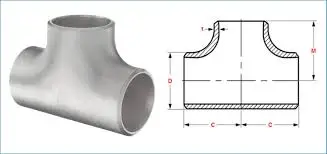
Advantages of Pipe Tee Fittings: Seamless and Welded Insights
Mechanical Strength and Leak Prevention
When you properly execute butt welds, they get rid of the spiral leak paths that come with threaded connections. This is important for toxic or flammable services where even small amounts of seepage can be dangerous. Tensile testing confirms that the joint strength matches the properties of the base material—failure occurs in the pipe body rather than the weld when it's done right. This strength equivalence lets engineers figure out system stress using pipe properties alone, which makes code compliance calculations easier. When pressure is cycled, seamless buttweld tees are more resistant to fatigue because they have a homogeneous grain structure that doesn't have any weld heat-affected zones. Welded versions, on the other hand, need extra care when they're welded because stress risers are caused by incomplete fusion or porosity, which shortens their fatigue life. Our normalized heat treatment process refines the grain structure in welded products, making their fatigue performance much better than when they were welded.
Adaptability and Lifecycle Economics
When compared to other ways of branching pipes, buttweld tee fittings are smaller and more efficient. One tee replaces multiple elbow-and-flange combinations, which cuts down on installation work, support needs, and possible leak points. The smooth internal contour also reduces pressure drop and erosion compared to threaded tees with abrupt flow direction changes. This efficiency means lower pumping costs over decades of use, which is especially important in high-flow applications like cooling water systems or process transfer lines. Environmental responsibility is becoming more and more important in purchasing decisions. Our manufacturing processes include waste heat recovery and recycling programs, which lower the carbon footprint per ton of product. Material selection guidance helps clients choose the right grades, so they don't waste alloying elements by specifying too many grades. Stainless steel's ability to be recycled and long service life support long-term infrastructure development, which is in line with corporate environmental goals, while still meeting performance standards.
Conclusion
When choosing between seamless and welded buttweld tees, you have to weigh performance needs against project costs and delivery times. Seamless construction offers better pressure capacity and metallurgical uniformity for critical applications, while welded fabrication offers cost-effective solutions for large diameters and moderate service conditions. Successful procurement goes beyond choosing a product; it also includes checking the qualifications of suppliers, making sure they are certified, and making sure quality standards are met. An investment in properly specified, manufactured, and installed fittings will last for decades, lowering lifecycle costs by reducing maintenance needs and preventing costly failures.
FAQ
1. When should I specify seamless instead of welded tees?
If you need high-pressure systems above 1500 psi, harsh cyclic service, or corrosive environments where weld seams are weak, you need seamless buttweld tees. Applications that need maximum fatigue resistance, like compressor piping or pulsating flow systems, benefit from the homogeneous structure. If you're on a tight budget or need larger sizes than 24", welded construction is usually the best option.
2. How do material grades affect long-term performance?
Carbon steel types are commonly used for general industrial applications within moderate temperature ranges and are very cost-effective. When chemicals are toxic, processes need to be very clean, or temperatures are above 800°F, stainless steel is needed. Chrome-moly metals are used to make electricity at high temperatures and in industrial processes where creep resistance is important. Low-temperature grades stay flexible in cold or Arctic temperatures. Matching the right material to the right service conditions stops buttweld tees from breaking down too soon and gets the best lifetime costs.
3. Can fittings be customized for unique specifications?
Manufacturers who can make a lot of different things can meet unique needs like non-standard sizes, special material grades, heavy wall strengthening, and longer tangent lengths. Custom buttweld tee orders need precise specs, proof of the materials used, and often approval of a sample before the full production run. Lead times are 2 to 4 weeks longer than for normal goods, and the minimum order quantity depends on how complicated the product is.
Partner with JS FITTINGS for Your Pipe Tee Requirements
JS FITTINGS has been manufacturing buttweld tees for 43 years and can support your piping projects with your pipe projects by offering a wide range of products and providing engineering support that is tailored to your specific needs. We offer seamless buttweld tees from 1/2" to 24" and welded fabrication up to 72" diameter that meet ASME, DIN, and EN standards.
To accommodate diverse piping designs, we manufacture two primary configurations. Equal buttweld tees maintain an identical diameter across all three openings, facilitating uniform flow distribution in symmetrical systems.
Our 95% on-time delivery rate and 98% customer retention rate show that we are operationally reliable, which protects your project schedules. Email our engineering team at admin@jsfittings.com for technical advice, help choosing materials, or quotes on standard and custom buttweld tee needs.
References
1. American Society of Mechanical Engineers. "ASME B16.9-2018: Factory-Made Wrought Buttwelding Fittings." New York: ASME Press, 2018.
2. American Society of Mechanical Engineers. "ASME B31.3-2020: Process Piping." New York: ASME Press, 2020.
3. Boyer, Howard E. "Atlas of Stress-Strain Curves, 2nd Edition." Materials Park, OH: ASM International, 2002.
4. European Committee for Standardization. "EN 10253-2:2007: Butt-welding Pipe Fittings - Part 2: Non-alloy and Ferritic Alloy Steels with Specific Inspection Requirements." Brussels: CEN, 2007.
5. Nayyar, Mohinder L. "Piping Handbook, 8th Edition." New York: McGraw-Hill Education, 2016.
6. Peckner, Donald and Bernstein, I.M. "Handbook of Stainless Steels." New York: McGraw-Hill, 1977.
Send Inquiry
_1775030068227.webp "ASTM A105 Weld Neck Flange")
Related Industry Knowledge
- ASTM A105 Weld Neck Flange: Complete Guide
- ASTM A263/A264 Standard for Corrosion-Resistant CRA Clad Pipe
- How long does FBE Coated Steel Pipe last?
- Key Considerations With ANSI Pipe Flanges
- API 5L Seamless Steel Line Pipe for Pipelines Explained
- Buttweld Elbow vs Socket Weld Elbow: Key Differences Explained
- Sch 40 Buttweld Reducer vs Sch 80 Pressure Performance
- Carbon Steel Concentric Buttweld Reducer Buying Guide
- Why Is Long Radius Buttweld Elbow Preferred in Oil & Gas?
- What specification is the carbon steel black pipe?