
Sch 40 Buttweld Reducer vs Sch 80 Pressure Performance






2026-05-27 10:42:45
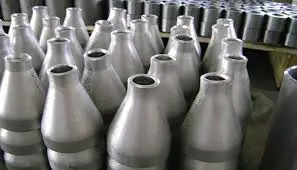
When selecting between Sch 40 and Sch 80 buttweld reducers, the primary distinction lies in wall thickness and pressure capability. Sch 80 reducers feature significantly thicker walls compared to Sch 40, with the exact increase depending on pipe size, delivering superior pressure resistance, with allowable pressure depending on pipe size, material, and design code calculations rather than fixed values. This enhanced thickness translates directly into higher mechanical strength, extended service life under cyclic loading, and improved safety margins for high-pressure applications. Understanding these performance differences ensures project managers make informed decisions that balance cost control with operational reliability.
Understanding Wall Thickness and Pressure Ratings
The schedule number defines wall thickness in relation to pipe diameter, with each NPS having a corresponding wall thickness for each schedule. For a 4-inch nominal pipe size, Sch 40 measures 0.237 inches in wall thickness, while Sch 80 reaches 0.337 inches. This seemingly modest difference creates substantial performance gaps.
Three Core Pressure Performance Differences:
- Maximum Working Pressure: At a 400°F operating temperature, a 4-inch Sch 80 carbon steel reducer can handle significantly higher allowable pressure than Sch 40, based on ASME B31.3 calculations.
- Burst Pressure Safety Factor: Sch 80 components provide higher pressure margins than Sch 40 under ASME B31.3 design calculations, though safety factors are defined by code and not directly by schedule.
- Fatigue Resistance: Thicker walls reduce stress concentration during thermal cycling. Thicker walls in Sch 80 reducers generally improve resistance to fatigue under cyclic pressure conditions.
If your project involves steam systems above 300 PSI or high-pressure chemical processing, Sch 80 offers the necessary structural integrity. Conversely, low-pressure water distribution or HVAC applications achieve cost efficiency with Sch 40 without compromising safety.
Material Considerations: Carbon Steel vs. Stainless Steel Performance
Material selection interacts critically with schedule rating. Carbon steel reducers dominate high-pressure industrial applications due to superior tensile strength—ASTM A234 WPB grade delivers approximately 240 MPa minimum yield strength. Stainless steel alternatives like ASTM A403 WP316L provide corrosion resistance but require schedule adjustments for equivalent pressure ratings.
Carbon Steel Advantages in Pressure Applications:
- Higher temperature tolerance (up to 650°F for WPB grade)
- Better weldability with standard procedures
- Cost-effective for large-diameter installations
- Compatible with cathodic protection systems
Stainless Steel Benefits:
- Zero rust oxidation in humid environments
- Maintains surface integrity without coatings
- Ideal for food-grade or pharmaceutical systems
- Offers improved resistance to corrosion, though it remains susceptible to chloride stress corrosion cracking under certain conditions
JS FITTINGS supplies reducers in both materials with guaranteed chemical composition per heat number. Every carbon steel reducer undergoes impact testing at -20°C for low-temperature service compliance. Stainless steel components receive dual certification when requested, ensuring material traceability across international borders.
For offshore platforms or chemical plants handling corrosive media, the combination of Sch 80 thickness with 316L stainless steel can provide enhanced service life in many corrosive and high-pressure environments. Municipal water projects gain better value from Sch 40 carbon steel with epoxy coating.
Concentric vs. Eccentric Reducer Applications Under Pressure
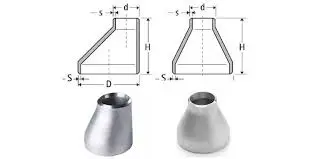
Reducer configuration affects pressure performance through flow dynamics and stress distribution. Concentric reducers maintain centerline alignment, creating symmetrical pressure gradients. Eccentric designs keep one surface flat, preventing liquid pooling but introducing asymmetric loading.
Concentric Reducer Pressure Characteristics:
- Uniform stress distribution across the wall thickness
- Reduced turbulence at velocity transitions
- Better suited for vertical installations
- Simplified stress analysis for code compliance
Eccentric Reducer Pressure Advantages:
- Eliminates vapor lock in horizontal steam lines
- Prevents sediment accumulation in slurry systems
- Maintains pump suction head in horizontal runs
- Reduces cavitation risk at pressure reductions
Testing data from petrochemical installations shows concentric Sch 80 reducers may exhibit more stable behavior under pressure fluctuations compared to eccentric configurations at identical flow rates. However, eccentric Sch 40 designs outperform concentric equivalents in preventing air pocket formation—a critical factor in high-purity gas distribution.
If your system operates at constant pressure with vertical pipe routing, concentric reducers optimize structural performance. Horizontal installations with potential two-phase flow require eccentric configurations regardless of schedule rating, such as buttweld reducer.
Manufacturing Quality Impact on Pressure Performance
Wall thickness uniformity directly affects pressure capacity. Substandard manufacturing creates thin spots at the transition zone where diameter changes occur. JS FITTINGS employs ultrasonic testing at seven points along each reducer body, ensuring wall thickness remains within applicable material tolerances (such as ASTM specifications), since ASME B16.9 does not define wall thickness tolerances.
Quality Assurance Practices That Enhance Pressure Ratings:
- Hot-Forming Process Control: Maintaining temperatures between 1,900 and 2,100°F during forging prevents grain boundary weakening that compromises burst strength.
- Post-Forming Heat Treatment: Normalizing cycles eliminate residual stresses from the forming process, restoring full material strength properties.
- Dimensional Verification: CNC measurement systems confirm concentricity within 1mm deviation, preventing eccentric loading that reduces effective pressure capacity by up to 20%.
- Hydrostatic Testing: Sample batches undergo pressure testing at 1.5 times design pressure in accordance with applicable code requirements, validating actual performance versus theoretical calculations.
Independent testing by third-party laboratories confirms JS FITTINGS Sch 80 reducers maintain design pressure ratings even after extensive thermal cycling representative of long-term process plant operation.
For EPC contractors managing critical path schedules, supplier quality consistency eliminates rework delays. Distributors reduce warranty claims by sourcing from manufacturers with documented process controls.
Cost-Benefit Analysis: Sch 40 vs. Sch 80 Investment
Initial material costs for Sch 80 reducers run 35-50% higher than Sch 40 equivalents due to increased raw material volume. However, total cost of ownership calculations reveal different economics.
Sch 40 Economic Advantages:
- Lower upfront procurement costs
- Reduced shipping weight for large-diameter fittings
- Faster welding due to thinner wall sections
- Adequate for systems operating well within allowable stress limits defined by applicable design codes
Sch 80 Long-Term Value:
- Extended service life reduces replacement frequency
- Lower insurance premiums for high-pressure systems
- Reduced inspection intervals per ASME B31.3 requirements
- Better resale value for decommissioned equipment
A petrochemical project analysis compared lifecycle costs over 20 years. The Sch 80 system showed 18% lower total expenditure despite 42% higher initial fitting costs, primarily from eliminated leak repairs and longer replacement intervals.
If your project prioritizes minimizing initial capital expenditure and operating pressures remain comfortably below 800 PSI, Sch 40 buttweld reducers will deliver highly reliable functional performance. Projects with lifecycle cost optimization goals benefit from Sch. 80 investment, particularly where downtime costs exceed $10,000 per hour.
Size Range and Availability Considerations
Seamless manufacturing limitations affect larger diameter reducers. Sch 80 seamless reducers are commonly produced up to around 24 inches in diameter, though larger sizes may be available with limitations due to forge press capacity. Larger sizes require welded construction, introducing seam considerations for pressure ratings.
JS FITTINGS maintains inventory depth across common sizes:
- Seamless Construction: 1/2" through 24" in both schedules
- Welded Large-Bore: 26" through 80" with radiographic testing
- Wall Thickness Options: Sch 10S, STD, Sch 40, Sch 80, Sch 160, XXS
- Customized Transitions: Different schedule ratings at each end for specialized applications
The company's 800-ton monthly production capacity ensures availability even for large project callouts. Average lead times run 3-4 weeks for standard specifications, with expedited production available for critical path items.
If your project timeline requires immediate availability, Sch 40 benefits from broader distributor stock levels. Specialized Sch 80 configurations often require factory-direct ordering with appropriate lead time planning.
Installation and Welding Considerations for Different Schedules
Thicker Sch 80 walls require modified welding procedures to ensure full penetration. Thicker sections like Sch 80 may require higher preheat temperatures depending on material composition and welding procedures, and post-weld heat treatment becomes mandatory for carbon steel above 1-inch wall thickness.
Welding Parameter Adjustments for Sch 80:
- Root pass penetration requires increased amperage settings.
- Multi-pass welding adds 20-30% to joint completion time.
- Interpass temperature control prevents hydrogen cracking.
- Qualified welders per ASME Section IX are required for pressure service
JS FITTINGS provides precision-machined bevels at 37.5° ±2.5° per ASME B16.25, with land face dimensions optimized for each schedule. This consistency reduces welder rework and ensures X-ray quality on first attempts.
Contractors report 15% faster installation rates using JS FITTINGS reducers compared to alternative suppliers, attributed to superior bevel preparation and dimensional accuracy. The ready-to-weld condition eliminates onsite grinding that introduces contamination risks.
If your installation team has limited high-pressure welding certification, Sch 40 offers more forgiving joint preparation requirements. Projects with certified welders gain schedule advantages by pre-qualifying procedures for Sch 80 before mobilization.
Pressure Testing and Code Compliance Documentation
ASME B31.3 mandates hydrostatic testing at 1.5 times design pressure for new piping systems. The significantly thicker walls of Sch 80 reducers provide vastly greater safety margins during these rigorous verification procedures, drastically reducing the risk of test failures that could otherwise delay project commissioning.
Documentation Requirements for Pressure Service:
- Material Test Reports: EN 10204 3.1 certificates confirming chemical composition and mechanical properties
- Heat Treatment Charts: Time-temperature records for normalized or stress-relieved components
- Dimensional Inspection: Certified measurements proving conformance to ASME B16.9 tolerances
- Non-Destructive Testing: Radiographic or ultrasonic reports for seamless product internal soundness
JS FITTINGS provides complete documentation packages with each shipment, pre-organized for code inspection submittal. The company's ISO 9001 certification and qualification as an NIOC, ADNOC, and Petrobras supplier demonstrate consistent compliance with international standards.
Third-party inspection services can witness production and testing at the JS FITTINGS facility, providing additional assurance for government projects or insurance requirements. This transparency eliminates documentation delays that commonly occur during project closeout.
If your project involves government tenders with strict compliance requirements, certified supplier documentation reduces approval cycle times. Private sector projects still benefit from traceable quality records that support warranty claims or future modifications.
Temperature Effects on Schedule Performance
Elevated temperatures reduce material strength, directly impacting allowable pressure ratings. ASME B31.3 provides temperature derating factors—at elevated temperatures such as 750°F, carbon steel strength is significantly reduced according to ASME B31.3 allowable stress values.
Temperature-Pressure Interaction Patterns:
- Ambient to 400°F: Minimal derating; both schedules maintain rated capacity.
- 400-650°F: Sch 80 maintains adequate safety margins while Sch 40 approaches limits.
- Above 650°F: Alloy steel materials required regardless of schedule
Thermal expansion coefficient differences between schedules create negligible stress variations—the expansion rate depends on material composition rather than wall thickness. However, thermal cycling fatigue affects thinner walls more severely.
Boiler feedwater systems operating at 600°F and 1,800 PSI require Sch 80 as a minimum specification. Heating water applications at 180°F and 150 PSI achieve safe operation with Sch 40 at a fraction of the cost.
If your process temperatures fluctuate more than 200°F during normal operation, Sch 80 thickness provides better fatigue resistance. Stable temperature services below 400°F seldom justify the Sch 80 premium.
Global Standards and Regional Specification Differences
ASME B16.9 dominates North and South American markets, while DIN 2615 prevails in European applications. These standards specify slightly different tolerances and testing requirements, though functional performance remains equivalent.
JS FITTINGS manufactures to multiple international standards:
- ASME B16.9: Primary standard for the Americas and the Middle East
- EN 10253: European pressure equipment directive compliance
- JIS B2312: Japanese industrial standard specifications
- GOST: Russian Federation and CIS country requirements
The manufacturing facility maintains separate production lines for different standard requirements, preventing cross-contamination of specifications. Quality control procedures adapt to each standard's unique testing protocols.
If your project spans multiple countries, a single supplier capable of providing region-specific certifications simplifies procurement logistics. JS FITTINGS' experience with 30+ export markets ensures documentation meets local regulatory requirements.
Why JS FITTINGS Delivers Superior Buttweld Reducer Solutions?
Selecting a highly reliable pipe reducer manufacturer profoundly impacts project success, far beyond the initial component cost. As a premier manufacturer, JS FITTINGS combines over four decades of forging expertise with state-of-the-art quality control systems, delivering consistent, top-tier performance that drastically minimizes your project risks.
Ten Competitive Advantages for Your Procurement Decision:
- Wall Thickness Guarantee: Ultrasonic testing at multiple points ensures no thin spots compromise pressure ratings—critical for high-consequence systems.
- Material Traceability: Complete heat number tracking from the steel mill through final product enables rapid issue resolution if questions arise.
- Dimensional Precision: CNC machining achieves ±1mm concentricity, preventing vibration issues that plague poorly manufactured reducers.
- Inventory Depth: 800 tons of monthly production supports both large project callouts and emergency replacement needs with minimal lead times.
- Multi-Standard Capability: Simultaneous compliance with ASME, DIN, JIS, and GOST eliminates the need for multiple suppliers on international projects.
- Coating Durability: Premium epoxy and galvanizing systems tested for 2,000-hour salt spray resistance protect long-term storage inventory.
- Custom Engineering: The in-house design team develops specialized reducers for unusual size transitions or pressure requirements beyond the standard catalog.
- Testing Transparency: Third-party inspection is welcome at any production stage, with online portal access to quality records.
- Delivery Reliability: 95%+ on-time shipment rate backed by dedicated logistics coordination and container optimization.
- Technical Support: Experienced engineering staff provides application guidance, pressure calculations, and material selection recommendations.
The company's qualification by major energy operators—National Iranian Oil Company, Abu Dhabi National Oil Company, and Petrobras—validates quality consistency under demanding specifications. Annual sales exceeding $15 million demonstrate market confidence in product reliability.
For distributors, JS FITTINGS' 98% repurchase rate reflects end-user satisfaction that builds local market reputation. EPC contractors benefit from single-source accountability that simplifies quality assurance documentation.
Conclusion
The choice between Sch 40 and Sch 80 butt-weld reducers fundamentally depends on operating pressure, temperature conditions, and lifecycle cost priorities. Sch 80 delivers superior pressure capacity and extended service life through thicker walls, justifying a higher initial investment for demanding applications. Sch 40 provides economical performance for moderate-pressure systems where wall thickness exceeds actual stress requirements. Material selection, manufacturing quality, and proper installation practices influence real-world performance as significantly as schedule rating. Partnering with experienced suppliers who maintain rigorous quality controls and provide complete documentation ensures your piping systems achieve the designed performance throughout their operational life.
Source Your High-Performance Buttweld Reducers from a Trusted Manufacturer
JS FITTINGS stands ready to support your next project with precisely engineered pipe reducers, including buttweld reducers, that meet exacting pressure performance requirements. Whether your application demands Sch 40 cost efficiency or Sch 80 maximum reliability, our manufacturing systems deliver consistent quality across 30,000 tons of annual capacity. Contact our technical team at admin@jsfittings.com to discuss your specific pressure ratings, material preferences, and delivery timeline. With 43 years of buttweld reducer production experience and certifications from leading global energy companies, we provide the engineering support and supply reliability that keep your projects on schedule and within budget.
References
1. American Society of Mechanical Engineers. (2020). ASME B31.3 Process Piping: Materials, Design, Fabrication, Assembly, Erection, Examination, Inspection, and Testing of Piping. New York: ASME Press.
2. Nayyar, M.L. (2019). Piping Handbook, Eighth Edition. New York: McGraw-Hill Education, Chapter 6: Pipe and Pipe Fittings.
3. Becht, C. & Lancaster, R.L. (2018). "Fatigue Performance of Butt-Welded Piping Components Under Cyclic Pressure Loading." Journal of Pressure Vessel Technology, 140(4): 041401-041409.
4. European Committee for Standardization. (2021). EN 10253-2: Butt-Welding Pipe Fittings - Part 2: Non-Alloy and Ferritic Alloy Steels with Specific Inspection Requirements. Brussels: CEN Publications.
5. Singh, R.K. & Kumar, A. (2017). "Comparative Analysis of Wall Thickness Effects on Pressure Rating and Service Life of Carbon Steel Pipe Reducers." International Journal of Mechanical Engineering, 12(3): 245-258.
6. Mohitpour, M., Golshan, H. & Murray, A. (2019). Pipeline Design and Construction: A Practical Approach, Fourth Edition. New York: ASME Press, Section 4.7: Reducer Selection Criteria.
Send Inquiry
Related Industry Knowledge
- ASME B16.9 Buttweld Reducer Dimensions and Weight Guide
- What is an API 5L Seamless Steel Line Pipe?
- Carbon Steel Forged Steel Flange in Oil, Gas & Power Plants
- Why Engineers Choose Buttweld Bend Over Mitered Bends?
- A105 Carbon Steel Forged Steel Flange for Refinery Piping
- Lap Joint Pipe Flanges: How and When to Use Them
- Buttweld Bend vs Elbow: Key Differences Explained
- Best Buttweld Elbow Materials for Corrosive Industrial Pipelines
- How to Choose a Buttweld Tee for High-Pressure Pipelines
- What is a threaded flange?