
A105 Carbon Steel Forged Steel Flange for Refinery Piping






2026-06-08 15:10:38
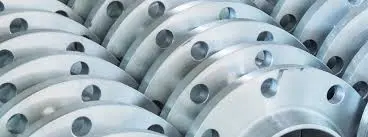
When plant managers have problems with pipelines or projects taking too long to finish, the problem is often caused by one part that wasn't looked at properly: the flange link. A105 carbon steel forged steel flange assemblies serve as critical connections between pipes, valves, pumps, and other equipment in industrial piping systems. Unlike cast alternatives, these forged parts go through high-pressure mechanical processing that refines their internal grain structure. This gives them better mechanical qualities that are needed to survive pressure spikes and extreme temperature cycles without cracking or breaking early.
Understanding A105 Carbon Steel Forged Steel Flanges
What Makes A105 Material Ideal for Refinery Service?
ASTM A105 carbon steel is the standard specification for forged piping components used in ambient and moderately elevated temperature services. This material standard guarantees a stable chemical make-up, with no more than 0.35% carbon, up to 1.05% manganese, and controlled amounts of phosphorus and sulphur. This means that the material will always be able to be welded and work mechanically, even when the temperature changes.
For many refinery services operating at temperatures up to approximately 650°F (343°C), A105 offers an excellent balance of strength, ductility, and cost-effectiveness, although the actual allowable temperature depends on applicable design codes and service conditions. The minimum specified yield strength of 36 ksi (248 MPa) of the material ensures that the flange body doesn't deform when the bolt is preloaded, and its elongation qualities let it expand and contract in a controlled way during thermal cycles. We make our A105 parts to go above and beyond these basic standards. Before production starts, we check each heat lot with spectral analysis.
Flange Types and Their Specific Refinery Applications
Our manufacturing range includes all types of forged flange designs that are designed to meet specific refining needs:
- Weld Neck (WN) flanges are most common on high-pressure, important service lines like those that serve catalytic crackers, crude distillation units, and high-temperature steam heads. The tapered hub design makes the stress transfer from the pipe to the flange steadier. This keeps stress from building up in one place, which can lead to fatigue cracks.
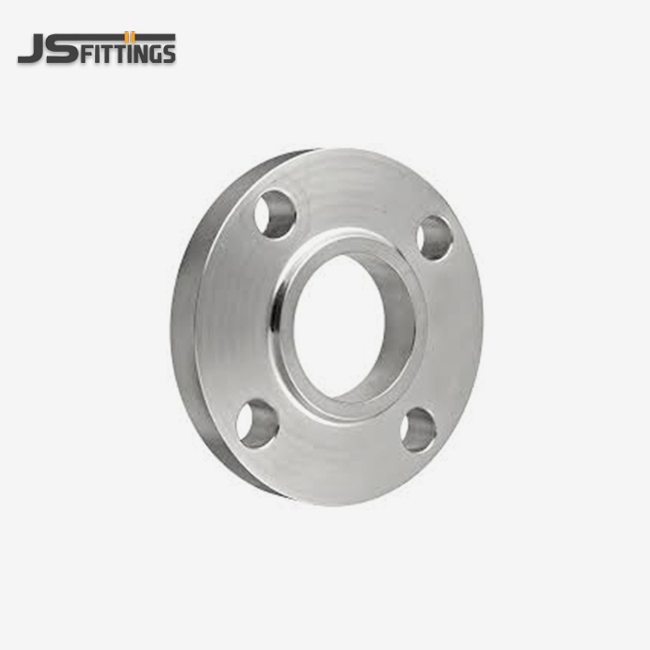
- Slip-On (SO) flanges give you more fitting options in low-pressure situations like cooling water return lines and links to storage tanks that are open to the air. The slip-on design allows adjustments to be made during field fit-up, which cuts down on the time needed for quick projects. We make these parts with controlled bore sizes that work with standard pipe plans and keep the right fillet weld shape.
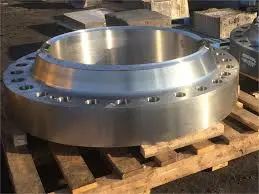
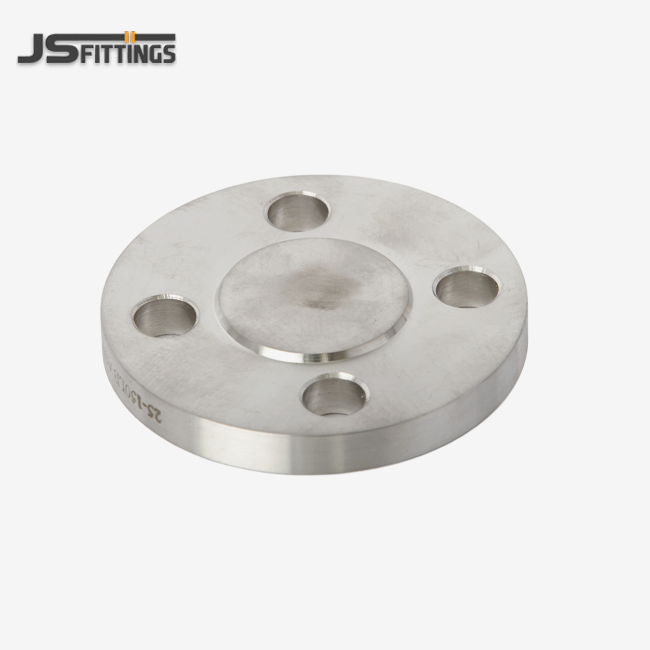
- Blind (BL) flanges are used to terminate or isolate piping systems in refineries, either permanently or temporarily. Maintenance teams depend on these solid disc parts to separate equipment during turnarounds, make pressure testing of new installs easier, and provide future points of connection for growing the process. Our blind flanges are manufactured in accordance with applicable ASME dimensional standards and pressure-class requirements. This makes sure that they can handle the full system pressure without deflection.
- Socket Weld (SW) and Threaded (TH) configurations are used for high-pressure instrumentation and sampling lines with small bores, where standard butt-welding can't be done because of a lack of room. These designs get rid of the need to curve the pipes while keeping the pressure integrity in sizes NPS 2 and smaller.
Lap Joint (LJ) flanges paired with stub ends let you quickly take systems apart for cleaning or inspection. This is a cost-effective way to fix problems with catalyst injection points, analyser sampling loops, and filter housings.
Manufacturing Standards That Define Quality
For global refinery projects, JS Fittings makes sure that our work meets a number of international standards. ASME/ANSI B16.5 sets the sizes for flanges from ½" to 24" in pressure classes from 150 to 2500. This makes sure that sizes can be used anywhere in the world. Larger-diameter flanges are manufactured according to ASME B16.47 Series A (MSS SP-44) or Series B (API 605) standards. This allows the manufacture of large-diameter flanges in sizes ranging from NPS 26 through NPS 60, depending on the applicable pressure class. For European projects, we make flanges to DIN/EN 1092-1 metric standards, keeping the same forged quality in PN-rated pressure designations.
Coordinate measuring machines check every dimension, including bolt hole spacing, flange thickness, hub profile, and facing finish. This accuracy is important when your installation crews are working to tight deadlines; our flanges fit perfectly with existing equipment, so you won't have to do the expensive rework that comes with using cheap parts.
Key Benefits and Performance Advantages for Refinery Piping
Superior Strength Through Refined Grain Structure
When our hydraulic presses put thousands of tonnes of force on heated A105 billets, they fill in the gaps inside the material and line up the metal grains along the shape of the flange profile. This refined structure gets rid of the air gaps and holes that are common in cast products, which can cause cracks to form when they are loaded and unloaded over and over again.
Starting up pressure ramps, temperature changes, and vibrations from rotating equipment all put stress on refinery pipes all the time. Our forged flanges have demonstrated high fatigue resistance under controlled testing conditions, supporting long-term service reliability when properly applied,contributing to long-term service reliability when properly applied. The dense microstructure also makes them more impact resistant, which is important when the flanges need to handle shock loads from emergency valve closures or pressure relief events.
Precision Machining for Leak-Free Sealing
We have heavily invested in advanced CNC machining centers for our forged carbon steel flanges because optimal gasket sealing performance relies entirely on maintaining exceptionally tight surface tolerances. Our raised face flanges are finished with phonographic grooves providing a surface finish of approximately 125 micro-inch Ra. This makes the perfect surface texture for soft gasket compression. The controlled roughness lets spiral wound or PTFE gaskets seat evenly across the entire flange face, stopping the leak paths that form when gaskets bridge over machining irregularities.
For sour gas service, Ring Type Joint (RTJ) flanges made of carbon steel or forged steel have their groove geometry fine-tuned even more. The narrow tolerance band (typically within ±0.005" on groove diameter and depth) makes sure that the metal ring gasket fits correctly, creating the bubble-tight seal needed to contain hydrogen sulphide. Our Middle Eastern refining customers have reported excellent sealing performance on RTJ connections when proper installation and gasket selection practices are followed.
Dimensional Accuracy That Reduces Installation Costs
Misaligned bolt holes are one of the most annoying problems that can happen in the field during refining, building and turnarounds. When the circles of two flange bolts don't match, teams waste hours trying to make the connections work, and they often have to use field drilling, which weakens the structure. We keep the placement of bolt holes within ±1.5 mm on standard sizes to make sure that every flange fits perfectly with ASME-approved equipment.
This correctness includes the width of the flange and the extension of the face. For the gasket to contract properly, the bolt stress must be just right. To do this, the flange's flexibility and the bolt's length must be carefully calculated. With our thickness limits of ±0.8mm, engineers can safely use standard bolting methods without having to make any changes in the field. Your repair teams will be able to finish jobs faster and for less money if every link lines up correctly the first time.
Corrosion Protection for Long-Term Reliability
Our finishing processes address carbon steel's primary weakness, which is air rust during storage and shipping by sea. A high-grade industrial black lacquer finish is included as standard protection, which protects against the elements for 12 to 18 months when stored outside. Export crates going to wet areas get a better yellow oil treatment or hot-dip galvanising, which protects them for 24 months or more.
This surface preparation makes sure that the flanges arrive at the job site ready to be installed right away, saving you the cost of sanding and recoating that is often needed when parts are kept incorrectly. The protective layers also keep rust from getting on the precision sealing surfaces, which is important for keeping the exact measurements we machine into each piece.
Comparing A105 Carbon Steel Forged Flanges with Other Flange Types
Forged vs. Cast: Structural Integrity Under Pressure
The main difference between forged and cast steel flanges is how the metal is shaped. In casting, molten metal is poured into moulds. As the metal cools and shrinks, it forms a random grain structure and microporosity. When the flange goes through pressure cycling or thermal shock, these tiny holes focus stress and make it easier for cracks to spread.
Forging is a process that uses machines to work on solid steel, which refines the grain structure and gets rid of any flaws inside. When we test our made goods with ultrasound, we can't find any flaws bigger than 0.8 mm, in line with AWWA standard flanges. This is in contrast to most cast parts, which have flaws bigger than 3 mm. This difference in quality means that the forged A105 flanges last much longer—our field experience indicates that forged flanges generally provide significantly longer service life than cast alternatives under comparable operating conditions.
When the pressure number goes above Class 600, the benefit of the mechanical property becomes very important. Cast flanges in these higher classes are more likely to break because the hub cracks near the weld transition zone. Based on comparison testing data, the directional grain flow in our forged goods makes these stress concentration points stronger by design. This significantly reduces the likelihood of fatigue-related failures compared with cast alternatives.
A105 Carbon Steel vs. Alloy and Stainless Steel Options
The choice of material strikes a mix between cost, resistance to rust, and temperature range. Forged flanges made of A105 carbon steel work very well in most refining tasks, like processing hydrocarbons, running steam systems, treating water, and distributing fuel gas. They also cost about a third less than stainless steel options.
Stainless metals (A182 F304/F316) are only needed when process fluids have a lot of salt in them or when the temperature at work is higher than 650°F, which is the limit for A105. The chromium in stainless steel keeps it from oxidising and rusting, but this benefit comes at a high cost and makes welding more difficult. Alloy steels (A182 F5/F9) are used in high-temperature hydrogen service and sour gas service where carbon steel doesn't work well enough, but full stainless qualities aren't needed.
Based on a cost study of common uses in refineries, A105 flanges are suitable for a large proportion of refinery piping connections where corrosion and temperature requirements remain within their service limits. By choosing the right materials and only using high-quality metals when the process calls for them, the total cost of a project's flanges can be cut by 40 to 50 per cent without affecting their safety or durability.
Weld Neck vs. Slip-On: Mechanical Performance Trade-offs
To choose between WN and SO flange types, you need to look at how the stress is distributed and how the product needs to be installed. With Weld Neck flanges, pipe loads are moved through the curved hub and into the flange ring. This spreads the stress over a bigger cross-section. This design is better at resisting wear and can handle higher pressures—usually, Class 900 and above need WN construction.
Slip-On flanges put most of the stress on the fillet welds, which means they can only be used in critical service classes 300 and lower. Because they are easier to place and take less time to weld, SO flanges are a good choice for large-diameter low-pressure systems where the mechanical loss doesn't affect safety.
Our expert engineering team can assist you in selecting the optimal flange type for each critical application by performing comprehensive stress analyses. This technical advice service has helped procurement teams save a lot of money by keeping them from over-specifying (using pricey WN flanges when cheaper SO types will do) and making sure that important connections have enough safety factors.
Conclusion
Choosing the right flange source affects the success of a refining project in many ways, including the cost of the parts up front, how well they are installed, how reliable they are in use, and how much they cost to maintain over their lifetime. There are clear benefits in all of these areas for A105 carbon steel forged steel flanges from JS Fittings, and they provide measurable advantages across each of these factors. Our 43 years of manufacturing experience, comprehensive international certifications, and proven supply performance with major energy companies provide the assurance procurement teams need when specifying critical piping components. The combination of superior forged quality, precision machining, complete traceability, and responsive technical support positions us as your trusted partner for refinery piping solutions.
FAQ
1. What pressure classes are available for A105 forged flanges?
Forged A105 carbon steel flanges are made in all pressure ranges under ASME B16.5: Class 150, 300, 600, 900, 1500, and 2500 for sizes ½" to 24". Larger diameter flanges (26" to 60") are made according to ASME B16.47 standards for the right pressure classes for their size. Based on DIN/EN 1092-1, PN6 through PN64 flanges are used on European metric projects. Our engineering team helps you choose the right pressure class based on the design of your system and the safety factor needs.
2. Can A105 carbon steel flanges handle corrosive refinery environments?
A105 carbon steel works well in most industrial hydrocarbon services, steam systems, and utility uses where the temperature of the process stays below 650°F, and the rate of corrosion stays within normal limits. Conditions that are very acidic, like high-sulphur crude, sour water stripping, or high-chloride cooling water, may call for better materials, like stainless steel. Our metallurgists help you choose the right materials based on the chemistry of your process. This helps you get the best mix between cost and corrosion protection.
3. How can I be sure that a provider meets high standards around the world?
Reputable suppliers should provide verifiable certifications, such as ISO 9001 quality management registration, material mill test results that can be linked to raw material heats, and records of measurement inspections. JS Fittings has supplied products to projects serving major energy companies and international markets, which means that the company has to go through strict facility checks and product tests to keep its approvals. Third-party review is welcome at any point in the production process, and our complaint rate stays below 0.5%, which shows that our quality is stable and meets the strictest procurement requirements.
Partner with a trusted carbon steel forged steel flange manufacturer.
JS Fittings stands ready to support your next refinery project with engineered flange solutions backed by four decades of manufacturing excellence. As a qualified supplier to major energy companies worldwide, we deliver A105 carbon steel forged flanges that meet the rigorous demands of refinery service while optimising your total project costs. Our engineering team provides technical consultation to ensure optimal flange selection, while our production capacity—exceeding 700 tonnes monthly with 90+ container shipments—guarantees reliable supply even for large-scale projects.
We offer comprehensive customisation from DN15 to DN2000, competitive bulk pricing with volume discounts, and complete quality documentation, including certified MTRs and third-party inspection reports. Our 95%+ on-time delivery performance and 98% customer repurchase rate reflect the supply reliability procurement managers demand. Contact our experienced international trade team at admin@jsfittings.com to discuss your specific project requirements and receive a detailed, highly competitive quotation for premium forged carbon steel flanges.
References
1. American Society of Mechanical Engineers. ASME B16.5-2020: Pipe Flanges and Flanged Fittings NPS 1/2 Through NPS 24 Metric/Inch Standard. New York: ASME Press, 2020.
2. ASTM International. ASTM A105/A105M-21: Standard Specification for Carbon Steel Forgings for Piping Applications. West Conshohocken: ASTM International, 2021.
3. Becht, Charles IV. "Process Piping: The Complete Guide to ASME B31.3." Fourth Edition. New York: ASME Press, 2018.
4. Ellenberger, J. Paul and Chuse, Robert. "Pressure Vessels: The ASME Code Simplified." Ninth Edition. New York: McGraw-Hill Education, 2013.
5. Nayyar, Mohinder L. "Piping Handbook." Eighth Edition. New York: McGraw-Hill Education, 2019.
6. Parisher, Roy A. and Rhea, Robert A. "Pipe Drafting and Design." Third Edition. Waltham: Gulf Professional Publishing, 2012.
Send Inquiry
Related Industry Knowledge
- Custom Heavy Duty Forged Steel Flanges for High-Pressure Systems
- How Are Carbon Steel Forged Steel Flanges Heat Treated?
- How thick is the FBE Coated Steel Pipe?
- Slip-On Flange Uses and Applications
- Lap Joint Pipe Flanges: Everything You Need to Know
- What is carbon steel pipe made of?
- Carbon Steel Buttweld Reducer for High-Pressure Pipelines
- Industrial Buttweld Reducer Selection for Refinery Projects
- What is carbon steel pipe used for?
- How to bolt to flanges with threaded holes?