
Carbon Steel Buttweld Reducer for High-Pressure Pipelines






2026-06-03 10:32:51
A buttweld reducer is a must-have for high-pressure pipeline systems that need to make safe width changes. These fittings make it easy to connect pipes of different sizes, and they keep their structural integrity even in harsh situations. Carbon steel types are very strong and don't break easily under pressure. This makes them the best choice for places like oil factories, petrochemical plants, and power plants where system problems aren't an option. Knowing their specs, how they're used, and how to buy them can help you keep project risks to a minimum while still making sure of compliance and safety at work.
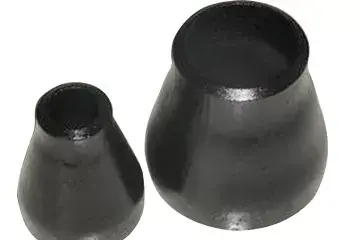
Understanding Carbon Steel Buttweld Reducers
A buttweld reducer is an important connection point where the width of the pipeline changes. These fittings are firmly welded into place, unlike threaded or flanged ones. This makes the joint as strong as the parent line. When mechanical links are used in high-pressure settings, this design gets rid of the possible leak routes and stress concentration places that cause problems.
What Makes Buttweld Reducers Essential for High-Pressure Systems?
One of the main benefits is how well these joints distribute pressure. When fluids move from bigger to smaller pipe sizes, the flow speed goes up, and turbulence can form. If you build the reducer correctly, it will handle this change easily, stopping erosion, vibration, and early wear. In contrast to threaded connections, where stress builds up at the thread bases, the butt-welded joint spreads stress evenly around the whole circle. With this superior stress-distributing design, carbon steel reducers manufactured from robust materials like ASTM A234 WPB safely accommodate the massive forces present in high-pressure systems. Provided the correct wall thickness (Schedule) is calculated in accordance with applicable design codes, these fittings are widely trusted in critical applications ranging from supercritical steam lines to the high-pressure transport of liquid hydrocarbons.
Concentric vs. Eccentric Configurations
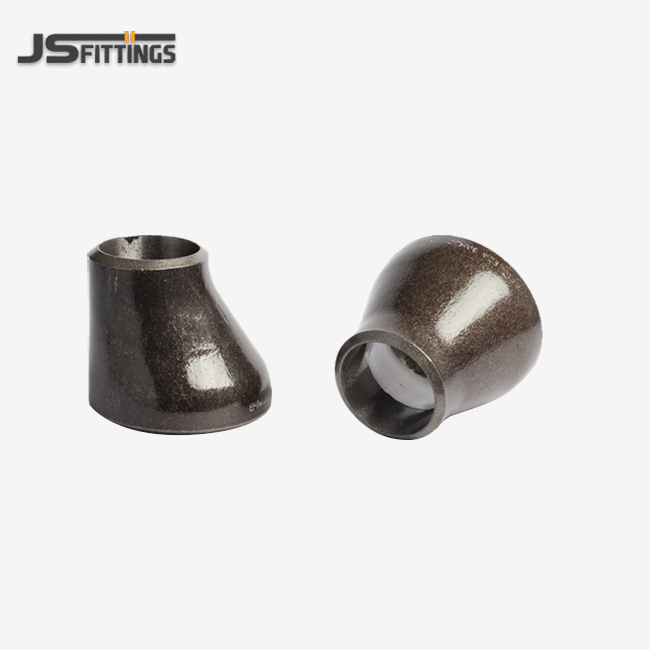
Two different shapes solve different problems with pipelines. Concentric reducers keep the centerlines of both pipe ends straight and the cone slope even on all sides. This style works well for steep pipeline runs and situations where even flow spread is most important. Noise and shaking are kept to a minimum in high-velocity gas services by the balanced reduction.
When you shift the centerlines of an eccentric reduction, you get one flat side. This shape fixes some problems with how things work in horizontal setups. When put in pump flow lines with the flat side facing up, they stop air pockets from forming, which can damage the impeller and cause cavitation. On the other hand, installing it flat-side-down provides full drainage in systems that need to be emptied regularly or where buildup of condensation could cause rust. When you pick the wrong setup, operations become less efficient, which shortens the life of the equipment and raises the cost of upkeep.
Material Standards and Pressure Ratings
The types of carbon steel have a direct effect on how well they work in high and low temperatures and pressures. ASTM A234 WPB is widely used for moderate-temperature applications and provides a cost-effective combination of strength, weldability, and availability. The allowable service temperature depends on applicable design codes and pressure-temperature ratings. Higher-yield grades, such as MSS-SP-75 WPHY 52, 60, or 65, are commonly specified for transmission pipeline applications where higher strength and reduced wall thickness are desirable.
Dimensional limits and quality standards are set by manufacturing standards. ASME B16.9 lists schedules for wall thickness from SCH 10S to XXS. Each schedule corresponds to a different pressure number. A 6-inch SCH 80 reducer can handle a lot more pressure than a SCH 40 reducer made of the same material. In Europe, EN 10253 and DIN 2616 are the same thing, and MSS-SP-75 is for high-yield uses. By understanding these standards, you can avoid making costly mistakes when writing specifications for purchases.
Dimensional and Technical Considerations for High-Pressure Applications
The most common ways for piping systems to fail can be avoided with proper size and design. The correctness of the dimensions has an impact on the quality of the welding, the flow, and the long-term dependability.
Critical Measurements and Tolerances
Performance and suitability are based on three measures.
- Outside diameter must exactly match the specs of the pipe next to it; even small differences make it hard to line up during welding.
- Wall thickness must be the same as or greater than the thicker of the two pipes being connected. If it is not thick enough at the changeover point, there will be a weak spot that is likely to break when the pressure changes.
- End-to-end length affects the cone angle and, by extension, the roughness of the flow. Reducers that are too short cause sudden changes in velocity that speed up erosion.
For sizes less than 24 inches, ASME B16.9 allows certain tolerances. For example, the outside diameter can be within ±1%, and the wall thickness can be within -12.5%, but it can't be less than the minimum needed for the pressure number. At JS FITTINGS, we use acoustic tests at several locations along the reducer body to make sure that the wall thickness is correct. This is especially important at the small end, where the forming process could cause the wall to thin too much.
Compliance Requirements and Certifications
Following the rules keeps you from being sued and makes sure operations are safe, including the use of a butt weld reducer. The ASME B31.3 Process Piping Code requires Mill Test Certificates that meet EN 10204 3.1 standards to be used to track materials. These papers check the chemical make-up and mechanical features (like tensile strength, yield strength, and extension) of every type of steel that is handled.
Inspections by a third party confirm the quality of the making. Radiographic testing (RT) finds problems inside welded-seam reducers, while hydrostatic testing or other project-specified pressure tests may be used to verify pressure integrity where required. Positive Material Identification (PMI) with XRF analyzers checks that the alloy makeup is correct before installation. This is a very important step to take to avoid the catastrophic breakdowns that happen when the wrong materials are put into high-pressure service.
Installation Best Practices
Even reducers that were made perfectly will not work if they are not placed correctly. The quality of the weld depends on how well the bevel is prepared. JS FITTINGS machines bevels to 37.5° ±2.5° with land faces between 1/16" and 1/8", which makes the shape needed for full-penetration welding. Getting rid of mill scale and other contaminants from the bevel sides stops porosity and slag inclusions that weaken the joint.
A lot of contractors don't understand how important alignment tolerances are. Misalignment of the centerlines that is more than 1/8" causes uneven stress distribution and possible leak paths. Tack welding at three evenly spaced points keeps the alignment during root pass welding. The amount of preheat needed depends on the carbon equivalent of the material and the temperature outside. For example, Preheat requirements depend on factors such as material thickness, carbon equivalent, ambient temperature, and the qualified welding procedure specification (WPS). Preheating may be required in cold conditions to reduce the risk of hydrogen-assisted cracking.
Comparing Buttweld Reducers: Making the Right Material and Type Choice
Not every buttweld reducer works in every situation because the performance and cost-effectiveness are affected by the material, how it is made, and the type of link.
Carbon Steel vs. Stainless Steel Trade-offs
Carbon steel generally provides an excellent combination of strength, toughness, and cost-effectiveness for many pressure-service applications. The relative strength compared with stainless steel depends on the specific material grade selected. ASTM A234 WPB has a tensile strength of about 60,000 psi and is very easy to weld. The main problem with carbon steel is that it corrodes easily, so it needs protective coatings like epoxy or galvanizing in corrosive environments or breaks down more quickly.
Stainless steel grades like ASTM A403 WP316 don't rust without coatings, but they cost three to five times more. This is because they have more nickel and chromium, which act as a passivate in oxidizing environments. Pressure ratings depend on allowable stress values, design temperature, and code calculations. Wall thickness requirements should be determined based on the applicable design code rather than material type alone. The choice depends on the fluid chemistry, temperature, and total cost of ownership calculations that take into account how often maintenance and replacements will be needed.
Seamless vs. Welded Construction
The way something is made affects how strong it is. Seamless reducers, which are made from solid pipe or extruded billets, don't have any longitudinal seams and have a uniform grain structure. This gives them the highest level of reliability in critical applications. Seamless reducers are commonly used in smaller and medium-sized piping systems, although maximum available sizes vary by manufacturer.
Forming welded reducers from steel plate and longitudinally welding them together allows for larger sizes up to 80" x 72" at a lower cost. The longitudinal seam needs to be inspected with X-rays according to ASME standards, and normalizing the material through heat treatment relieves forming stresses and restores its properties. For most high-pressure applications under 24", seamless construction is better value because it lowers inspection costs and improves reliability.
Connection Type Comparisons
When used in high-pressure situations, buttweld joints work better than other options. Threaded reducers are generally less preferred for high-pressure and critical-service applications because threaded connections can introduce stress concentrations and increase the potential for leakage under cyclic loading conditions. Even though socket weld joints are easy to line up, they have cracks that let corrosive fluids in and lower the pressure ratings. While flanged reducers allow for disassembly, they are significantly heavier, more expensive, and introduce potential leak paths if the gasket seal fails. In stark contrast, the fully fused buttweld design inherently maintains absolute structural integrity and leak-proof performance under extreme high-pressure conditions.
Buttweld joints are permanent, so they don't need to be maintained as gaskets do. They also have the smallest fitting area. This makes the system lighter and lowers the number of pipes that need to be supported. Even though it takes more work at first, this lowers the overall cost of installation.
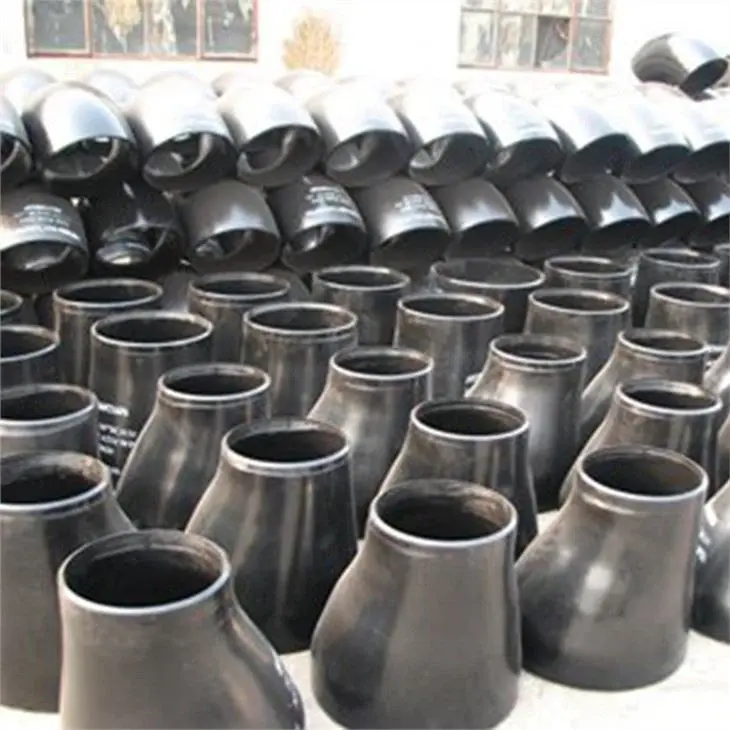
Procurement Guide for Carbon Steel Buttweld Reducers
Strategic buying strikes a mix between quality, safety, and cost to help projects succeed and keep costs down.
Identifying Qualified Suppliers
Reputable makers show that their products are always of high quality by showing certifications and a history of performance. ISO 9001 approval means that quality management systems have been written down, and API 5L monograms show that key pipeline components can do their job. To become an approved seller for big energy companies like NIOC, ADNOC, or Petrobras, you have to show that your manufacturing methods and quality controls have been successfully audited.
JS FITTINGS keeps these skills up to date by constantly buying inspection tools and training staff. Our advanced spectral scanners verify the exact chemical composition of every production lot, while digital radiography rigorously inspects for any internal discontinuities along the longitudinal seams of our welded reducers.This infrastructure serves the strict documentation needs of government projects and EPC companies.
Understanding Pricing Variables
Unit prices are affected by several things. The quality of the material is the most important factor. Standard ASTM A234 WPB is much cheaper than high-yield or low-temperature grades. A 24" x 12" reducer costs more than four times as much as a 6" x 3" unit because of the amount of material needed and the need for special making tools.
The schedule of wall thickness has a huge effect on price—SCH 160 has twice as much material as SCH 40 for the same width. Surface treatments like galvanizing and epoxy paint raise the base price by 15 to 30 percent but are necessary to protect against rust. Above 50 pieces, volume savings become significant, and ordering in bulk could lower unit costs by 20 to 35 percent.
Lead Time and Delivery Optimization
Standard sizes in popular materials (ASTM A234 WPB, SCH 40/80, and circular) usually ship within two to three weeks from reputable sources who keep stock on hand. Lead times are extended to 6 to 8 weeks for custom specs like non-standard shapes, rare materials, or special testing needs. Project delays can be avoided by planning purchases around these dates.
By maintaining extensive inventories of popular size and schedule combinations, and consistently shipping over 90 containers of pipe fittings monthly, JS FITTINGS can execute rapid deliveries even during peak demand periods.Our on-time delivery rate is higher than 95%, thanks to partnerships with foreign freight forwarders who know how to handle industrial pipe components.
When Custom Fabrication Adds Value?
Catalog sizes that are standard don't solve all design problems. Custom reducers can work with walls that aren't the same width, which isn't possible with standard reducers because they would mess up the flow or need more work. In certain flow situations, non-standard cone angles reduce turbulence. Extra-large sizes that are outside of the normal ranges help with special building projects.
We offer technical help to figure out if custom fabrication really adds value or if stock parts that are changed in the field are a better deal. Our CNC machining skills allow us to make unique bevels and bore changes that make sure the pipes fit correctly with each other, which cuts down on installation time and welding mistakes.
Conclusion
When choosing carbon steel reducers for high-pressure pipes, you need to pay attention to the grade of the steel, the accuracy of the measurements, the quality of the making, and the needs of the application. There are differences between circular and eccentric configurations, seamless and welded construction, and different wall thickness schedules that have a direct effect on the safety and efficiency of the system. Working with qualified providers who have strict quality controls, provide full paperwork, and know how to deal with problems that are unique to their business will make sure that your procurement supports the success of the project instead of adding risks. Properly chosen parts have long-term benefits that far outweigh any extra costs they may have at first. These benefits include less upkeep, longer service life, and no unplanned downtime.
FAQ
1. What wall thickness schedule should I specify for my pressure rating?
The choice of wall thickness is based on the design pressure, temperature, and the formulas needed for the code according to ASME B31.3. In general, SCH 40 can handle forces up to 1,500 psi at normal temperatures. SCH 80 can handle 2,500 psi, and SCH 160 or XXS is needed above 3,500 psi. To find the bare minimum suitable schedule, your pressure engineering study needs to take temperature de-rating, corrosion limit, and mill tolerance into account. Engineering help is available from JS FITTINGS to make sure that your figures match up with real-world working conditions.
2. How do I verify material authenticity before installation?
Ask for Mill Test Certificates (MTC) that meet EN 10204 3.1 standards. These show the results of chemical analysis and mechanical tests that can be linked to specific heat numbers. Use handheld XRF testers for Positive Material Identification (PMI) testing on the job site. This non-destructive test checks the makeup of the alloy in seconds and finds any mistakes in the supply chain before welding starts. Make sure that the heat numbers on the parts match the numbers on the MTC paperwork.
3. Can carbon steel reducers handle corrosive process fluids?
How well carbon steel resists rust relies on the corrosive agent, its concentration, the temperature, and how long it is exposed to the steel. It works well with dry gases, fuels, and a lot of water solutions that aren't acidic. In slightly corrosive settings, protective coverings like fusion-bonded epoxy and galvanizing make things last longer. For oxidizing services that are strongly acidic, contain chloride, or happen at high temperatures, stainless steel or special metals are needed instead. If you don't know what the working conditions are, look at corrosion engineering sources or try a coupon.
Contact JS FITTINGS – Your Trusted Buttweld Reducer Supplier
JS FITTINGS manufactures the precision-engineered carbon steel buttweld reducers your high-pressure piping systems demand. With over 40 years of manufacturing excellence and approved vendor status with major international energy corporations, we deeply understand the zero-tolerance requirements of critical pipeline projects. Our quality control system makes sure that every buttweld reducer meets the standards for size, material, and paperwork that facility owners and EPC workers expect. We keep a ready supply of standard setups on hand and can also make things to order for specific needs. Throughout the buying process, we'll be there to help you with engineering issues. Email our team at admin@jsfittings.com to talk about your special application needs and get thorough technical proposals that solve the problems that only your project has.
References
1. American Society of Mechanical Engineers. (2020). ASME B16.9: Factory-Made Wrought Buttwelding Fittings. New York: ASME Press.
2. American Society of Mechanical Engineers. (2018). ASME B31.3: Process Piping Code. New York: ASME Press.
3. ASTM International. (2021). ASTM A234/A234M: Standard Specification for Piping Fittings of Wrought Carbon Steel and Alloy Steel for Moderate and High Temperature Service. West Conshohocken: ASTM International.
4. Manufacturers Standardization Society. (2019). MSS SP-75: Specification for High Test Wrought Welding Fittings. Vienna: MSS.
5. Mohitpour, M., Golshan, H., & Murray, A. (2007). Pipeline Design and Construction: A Practical Approach (3rd ed.). New York: ASME Press.
6. Nayyar, M. L. (2019). Piping Handbook (8th ed.). New York: McGraw-Hill Education.
Send Inquiry
Related Industry Knowledge
- How Is a Buttweld Bend Tested to ASME Standards?
- Choosing the Right Size Long Radius Buttweld Elbow for Your Project
- What Is a Buttweld Bend? Types, Radius & Standards
- How thick is the FBE Coated Steel Pipe?
- ANSI Pipe Flanges Dimensions and Selection Guide for 2026
- Slip-On Flanges: Types, Uses, and Installation Guide
- Lap Joint Pipe Flanges: Everything You Need to Know
- What is carbon steel pipe made of?
- Buttweld Elbow vs Socket Weld Elbow: Key Differences Explained
- Does ASME require hydrotesting for a blind flange?