
Buttweld Elbow vs Socket Weld Elbow: Key Differences Explained






2026-05-28 10:19:19
When choosing between buttweld and socket weld elbows, project success depends on understanding their core differences. A buttweld elbow connects by directly welding the pipe ends flush together, offering superior strength for high-pressure systems. Socket weld elbows feature a recessed socket that accepts the pipe, creating a mechanical shoulder before welding. For large-diameter pipelines operating above 600 psi or temperatures exceeding 300°C, buttweld elbows provide better structural integrity and flow characteristics. This guide clarifies which buttweld elbow option minimizes project risk while meeting safety compliance and deadline requirements.
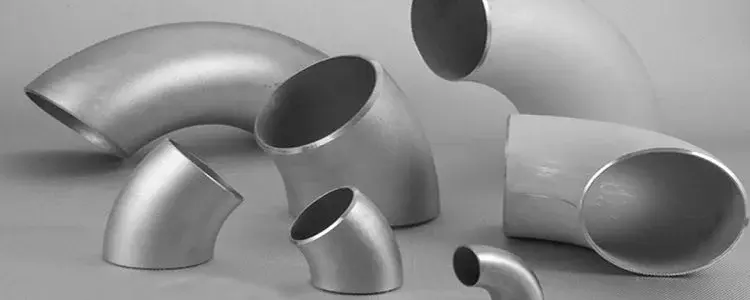
Understanding Buttweld Elbow Construction and Applications
A buttweld elbow fitting changes pipe direction through seamless connection technology. The manufacturing process involves hot pressing or forging steel billets into precise curvature. Wall thickness remains uniform throughout the elbow body, particularly at the back radius, where stress concentrations occur.
Three core construction advantages:
- Full penetration welding eliminates weak points in the joint
- Smooth internal surface prevents turbulence and pressure drop
- No internal crevices reduces corrosion risk and contamination
The connection method requires beveling both the pipe end and elbow end to 37.5° angles per ASME B16.25 specifications. This preparation enables complete fusion during welding. Radiographic testing confirms that the weld quality reaches 100% joint efficiency.
Industrial applications demanding buttweld elbows include:
- Oil and gas transmission pipelines (API 5L compliance)
- Petrochemical reactor systems handling corrosive fluids
- Power generation steam lines operating at 540°C
- Offshore platform piping exposed to cyclic loading
- Pharmaceutical clean-room installations requiring a sanitary finish
If your project involves line sizes above 2 inches or operating pressures exceeding 400 psi, buttweld elbows deliver necessary reliability. The welded joint withstands vibration, thermal expansion, and pressure surges without leaking. Manufacturing precision matters significantly. At JS FITTINGS, advanced CNC machining controls the bevel angle tolerance to ±1°. This consistency reduces field welding time by 30% compared to manually prepared fittings. Our hot-mandrel forming process maintains wall thickness variation below 12.5% of the nominal specification.
Socket Weld Elbow Design Characteristics
Socket weld elbows serve different operational requirements. The design incorporates a machined recess that accepts the pipe's outer diameter. A small gap (typically 1.6mm) remains between the pipe end and the socket bottom before welding.
Key design features include:
- Mechanical alignment simplifies installation positioning
- A fillet weld connection requires less skilled labor
- Compact joint length suits congested piping layouts
The socket depth typically measures 1.5 times the pipe wall thickness plus 3mm. This geometry creates a physical stop for the pipe during assembly. Welders apply fillet welds around the socket-pipe junction without needing backing rings or consumable inserts.
Common applications for socket weld elbows:
- Small-bore instrumentation lines (½" to 2" diameter)
- Low-pressure utility systems below 300 psi
- Chemical injection points require frequent maintenance
- Control panel pneumatic circuits
- Laboratory sample collection networks
Testing data and industry practice indicate that socket weld joints have lower fatigue resistance and potential stress concentration compared to buttweld connections, although they are often treated as having comparable static strength in design codes. The fillet weld penetrates only the pipe's outer surface, not through the full wall thickness. If your facility operates process lines under 2 inches with pressures below 300 psi, socket-weld elbows offer faster installation. The pre-aligned socket reduces fitting time by approximately 40% versus butt welding procedures. Socket weld fittings are generally not suitable for effective radiographic inspection due to joint geometry. The overlapping metal from the socket obscures X-ray clarity. Visual examination, liquid penetrant testing, have become the primary quality verification methods.
Performance Comparison: Pressure and Temperature Limits
Operating parameter capabilities differ substantially between connection types. Standardized testing provides quantifiable performance data.
Pressure capacity analysis:
Properly specified buttweld elbows can handle maximum system pressures calculated using the Barlow formula (P = 2St/D). When correctly designed and rigorously inspected, the full-penetration welded joint achieves 100% joint efficiency, meaning the full strength of the pipe is seamlessly maintained throughout the connection.Field tests demonstrate that buttweld 90-degree elbows withstand pressures up to ANSI Class 2500 (6170 psi at 38°C). Socket weld designs experience stress concentration at the fillet weld toe. The incomplete penetration limits joint efficiency to 60% of base pipe strength. ASME B16.11 defines socket weld fittings in pressure classes such as Class 3000 and Class 6000, which are based on pipe schedule ratings rather than fixed pressure values, with allowable pressure depending on temperature and material.
Temperature performance data:
Carbon steel buttweld elbows maintain structural integrity to 538°C per ASTM A234 WPB specifications. The uniform metallurgical structure resists creep deformation under sustained thermal loading. Alloy steel grades like ASTM A234 WP91 extend service temperatures to 620°C for supercritical steam applications. Socket weld connections show thermal fatigue sensitivity above 400°C. The differential expansion between the socket and the pipe creates cyclic stress at the fillet weld root. Crack initiation occurs after 50,000-100,000 thermal cycles in high-temperature service.
The smooth, continuous internal bore of a buttweld elbow effectively prevents the severe turbulence that causes erosion. In stark contrast, the internal steps inherent in socket weld designs create problematic vortex zones where solids can quickly accumulate.Slurry services experience 3-5 times faster wear rates with socket weld connections. If your system specifications require compliance with ASME B31.3 severe cyclic conditions (CC-1 or CC-2), buttweld construction becomes mandatory. The full-penetration weld eliminates crack initiation sites that develop at socket weld stress concentrations.
Installation Requirements and Cost Implications
Field installation procedures directly impact project timelines and labor budgets. Each connection method demands specific skills and equipment.
Buttweld elbow installation process:
- Cut pipe to exact length using orbital cutting equipment (±1mm tolerance)
- Machine bevel angles to 37.5° with 1.6mm root face
- Align fit-up using external clamps, maintaining 1.6mm root gap
- Tack weld at four-quadrant positions
- Complete root pass using GTAW (TIG) welding process
- Fill and cap passes with SMAW or GMAW methods
- Perform non-destructive testing (radiography or ultrasonic)
Total installation time for a 6-inch buttweld elbow 90 degree: 2.5-3 hours with qualified welders. Material costs range $45-$120 per fitting, depending on grade and schedule, with bulk orders available through butt weld elbow wholesale in china.
Socket weld elbow installation process:
- Cut the pipe square without bevel preparation
- Clean the pipe end and the socket bore
- Insert the pipe until bottomed in the socket
- Withdraw the pipe 1.6 mm to create an expansion gap
- Tack weld at two positions
- Complete fillet weld around the socket circumference
- Visual and liquid penetrant examination
Installation time for 1-inch socket-weld elbow: 25-35 minutes. Material costs range $8-$25 per fitting.
Economic analysis for project decision-makers:
A typical chemical plant installation includes 1,200 pipe connections. Comparing 2-inch line options:
- Buttweld approach: 1,200 fittings × $65 = $78,000 materials; 3,600 labor hours × $85/hour = $306,000; NDT costs $24,000; Total: $408,000
- Socket weld approach: 1,200 fittings × $18 = $21,600 materials; 600 labor hours × $75/hour = $45,000; PT testing $6,000; Total: $72,600
The $335,400 cost difference favors socket weld for low-pressure applications. However, lifecycle considerations change the calculation.
Maintenance and reliability factors:
Socket weld connections in corrosive service develop crevice corrosion at the internal gap. Inspection reports from refinery units show socket weld failure rates 4-6 times higher than buttweld connections after 10 years of operation. Replacement costs include:
- System shutdown: $150,000-$500,000 per day lost production
- Emergency repair labor: $15,000-$35,000 per incident
- Replacement materials: $5,000-$12,000 per repair
If your project priorities dictate minimizing lifecycle costs and drastically reducing maintenance risks, opting for buttweld elbows—whether in carbon steel, stainless steel, or alloy—demonstrates a vastly superior Total Cost of Ownership (TCO). The higher initial investment recovers through extended service life and reduced failure probability. Government infrastructure projects requiring a 30-year design life specify buttweld construction. The full-penetration weld eliminates hidden corrosion paths that compromise socket weld integrity.
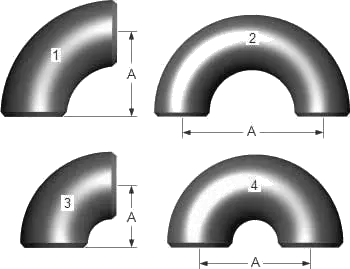
Material Selection and Quality Standards
Material grades and manufacturing standards determine long-term performance. Procurement specifications must address composition, mechanical properties, and testing requirements.
Carbon steel buttweld elbow material specifications:
- Carbon: 0.30% maximum (weldability optimization)
- Manganese: 0.29-1.06% (strength enhancement)
- Phosphorus: 0.035% maximum (ductility preservation)
- Sulfur: 0.040% maximum (hot working quality)
- Silicon: 0.10% minimum (deoxidation control)
Mechanical properties meet minimum requirements:
- Tensile strength: 415 MPa (60,000 psi)
- Yield strength: 240 MPa (35,000 psi)
- Elongation: 30% in 2 inches
- Hardness: 179 HB maximum
Stainless steel buttweld elbow specifications:
- Chromium: 16-18% (passivation film formation)
- Nickel: 10-14% (austenite stabilization)
- Molybdenum: 2-3% (pitting resistance enhancement)
- Carbon: 0.03% maximum in 316L grade (weld decay prevention)
Corrosion resistance testing per ASTM G48 Method A shows 316L stainless maintains integrity in 6% ferric chloride solution for 72 hours without pitting.
Alloy steel specifications for high-temperature service:
ASTM A234 WP11 (1.25Cr-0.5Mo) serves hydrocarbon processing applications up to 593°C. The chromium addition improves oxidation resistance while molybdenum enhances creep strength. Stress rupture testing confirms 35 MPa stress capability at 538°C for 100,000 hours.
ASTM A234 WP91 (9Cr-1Mo-V) supports ultra-supercritical power generation. The modified composition delivers:
- Operating temperature: 620°C maximum
- Creep rupture strength: 90 MPa at 600°C for 100,000 hours
- Oxidation resistance: 50% better than standard chrome-moly grades
Quality control procedures at JS FITTINGS:
Raw material verification starts with a mill test certificate review. Our spectral analyzer confirms composition matches the ordered grade within tolerance bands. Typical analysis takes 90 seconds per sample.
Dimensional inspection uses coordinate measuring machines (CMM) with 0.01mm resolution. We verify:
- Outside diameter: ±1% tolerance
- Wall thickness: -12.5%/+15% per ASME B16.9
- Center-to-end dimensions: ±1.6mm for sizes 2" and smaller; ±3.2mm for larger sizes
- Bevel angle: 37.5° ±2.5°
Non-destructive testing procedures include:
- Ultrasonic testing (UT) per ASTM A388 detects internal laminations or inclusions above 1.6mm
- Magnetic particle inspection (MPI) per ASTM E709 reveals surface cracks down to 0.1mm
- Liquid penetrant testing (PT) per ASTM E165 identifies surface-breaking defects on non-magnetic materials
- Radiographic examination (RT) per ASTM E94 provides permanent weld quality records
Positive material identification (PMI) using X-ray fluorescence analyzers verifies grade accuracy before shipment. This final check prevents material mix-ups that cause catastrophic field failures. If your procurement requires certified material traceability to original steel mill heat numbers, JS FITTINGS provides comprehensive 3.1 Mill Test Certificates per EN 10204. Each document includes chemical analysis, mechanical test results, heat treatment records, and dimensional verification data.
Code Compliance and Industry Standards
Engineering specifications reference multiple standards governing butt-welded elbow dimensions, materials, and testing. Understanding code requirements prevents costly redesign or rejection.
Primary dimensional standards:
- Center-to-end dimensions for all elbow degrees
- Wall thickness schedules from SCH 10S through XXS
- Tolerances for diameter, thickness, and length
- Bevel preparation requirements
MSS-SP-43 covers wrought stainless steel buttweld fittings, providing alternate dimensions for some configurations. The specification includes additional restrictions on surface finish and cleanliness for sanitary applications.EN 10253 governs European markets with four parts addressing different material categories. Part 2 applies to non-alloy and ferritic alloy steels, while Part 4 covers austenitic stainless grades.
Material and manufacturing standards:
- Heat treatment procedures (normalizing, quenching, tempering)
- Mechanical property minimums for each grade
- Permissible composition ranges
- Required quality testing frequency
ASTM A403 addresses wrought austenitic stainless steel fittings with similar structural requirements adapted for corrosion-resistant alloys.
Pressure design code integration:
ASME B31.3 Process Piping places restrictions on the use of socket weld and threaded joints in:
- Category M Fluid Service
- Severe cyclic conditions
- High-pressure systems
ASME B31.1 Power Piping generally favors buttweld construction for larger diameter and higher-pressure steam systems, while placing limitations on the use of socket weld and threaded joints.
Testing and inspection requirements:
- Test pressure: 1.5 times maximum allowable working pressure
- Hold time: minimum 60 seconds for visual examination
- Acceptance criteria: zero leakage permitted
ASME Section V describes non-destructive examination methods. Common applications include:
- Ultrasonic examination per Article 5 for volumetric inspection
- Radiographic examination per Article 2 for weld quality verification
- Magnetic particle examination per Article 7 for surface crack detection
- Liquid penetrant examination per Article 6 for non-magnetic materials
GOST standards govern Russian and CIS markets. GOST 17375 specifies steel buttweld fittings with dimensional variations from ASME standards. JS FITTINGS maintains GOST-R certification, enabling direct supply to regional projects. DIN 2605 remains referenced in legacy European projects despite EN standard adoption. The dimensional differences require careful specification review to prevent compatibility issues. JIS B2313 applies to Japanese industrial installations. The standard employs different schedule designations requiring conversion when sourcing from international suppliers.If your project specifications reference multiple national standards, supplier capability to manufacture to exact code requirements prevents delivery delays. JS FITTINGS maintains production flexibility supporting ASME, GOST, EN, DIN, JIS, and SABS standards simultaneously.
Flow Dynamics and System Efficiency
Internal geometry affects fluid behavior significantly. The connection method creates different flow resistance patterns, impacting pump sizing and energy consumption.
Hydraulic performance comparison:
Buttweld elbow pipe connections maintain a constant internal diameter throughout the joint. The smooth transition produces minimal turbulence. Computational fluid dynamics (CFD) modeling shows:
- Pressure drop coefficient (K): approximately 0.3 for long-radius buttweld elbows
- Reynolds number independence above Re = 10,000
- Flow separation is limited to the outer radius region covering a 15° arc
- Energy loss: 0.3 velocity heads for standard radius bends
Socket weld installations create sudden area changes at the pipe-socket junction. The internal step measures approximately 2-3mm, depending on tolerance stack-up. Flow testing reveals:
- Pressure drop coefficient (K): typically higher for socket weld configurations due to internal geometry
- Turbulence generation at the internal shoulder
- Recirculation zones accumulating solids or gas bubbles
- Energy loss: 0.38 velocity heads (27% increase)
Erosion resistance analysis:
- Buttweld 45 degree elbows in alumina slurry service (20% solids at 3 m/s): wall thickness loss 0.8mm/year
- Socket weld elbows under identical conditions: wall thickness loss 2.4mm/year (3× faster)
The internal step in socket weld designs creates a stagnation point where particles impact perpendicular to the surface. This geometry accelerates material removal through repeated impacts.
Cleaning and maintenance implications:
- Harbor bacterial growth in sanitary systems
- Crystallize supersaturated solutions, causing blockages
- Corrode through concentration cell mechanisms
- Contaminate subsequent product batches
Buttweld elbow manufacturing standards emphasize smooth internal surfaces. JS FITTINGS stainless steel fittings achieve Ra 0.8μm surface finish through specialized grinding and electropolishing. This finish enables:
- Clean-in-place (CIP) effectiveness meeting 3-A Sanitary Standards
- Steam sterilization without residue accumulation
- FDA compliance for direct food contact applications
System design optimization:
Engineers calculating pressure drop for complex piping networks must account for fitting resistance. A typical process plant includes 150-300 elbows per major system. The cumulative effect becomes significant:
Example calculation for 200 meters of 6-inch piping with 40 elbows, flowing 400 m³/hour water:
- Straight pipe friction: 12.5 kPa
- Buttweld elbow resistance: 40 × 0.30 × (v²/2g) × ρ = 8.4 kPa
- Socket weld elbow resistance: 40 × 0.36 × (v²/2g) × ρ = 10.1 kPa
The 1.7 kPa additional resistance requires:
- Pump motor increase: 0.85 kW, higher power consumption
- Annual energy cost: $620 extra at $0.10/kWh (8,000 operating hours)
- 20-year lifecycle energy waste: $12,400
If your facility operates continuous processes with high flow rates, selecting buttweld elbow fittings reduces pumping costs while improving process reliability. The energy savings often offset the higher initial fitting investment within 3-5 years.
Conclusion
Buttweld elbows deliver superior performance through full-penetration welding that maintains 100% joint efficiency under demanding conditions. The smooth internal bore minimizes pressure drop while eliminating corrosion-prone crevices. Applications involving high pressure, elevated temperature, or long design life justify the higher initial investment through reduced maintenance costs and extended service reliability. Socket weld alternatives suit small-diameter, low-pressure installations where installation speed outweighs lifecycle considerations. Successful project outcomes depend on matching connection technology to actual operating requirements rather than defaulting to the lowest first cost. Quality manufacturing, proper material selection, and code-compliant installation practices ensure piping system integrity throughout decades of industrial service.
Ready to Specify Reliable Buttweld Elbows for Your Next Project?
JS FITTINGS serves as your premier manufacturer and trusted supplier of industrial piping components. We combine over 40 years of profound manufacturing expertise with highly responsive technical support to ensure your project's complete success. Our production capacity exceeds 800 tons monthly, ensuring consistent availability for both large-scale EPC projects and urgent maintenance requirements. With ASME, GOST, EN, and JIS standard compliance, we eliminate specification compatibility concerns across international markets. Our 98% customer repurchase rate reflects the quality consistency that procurement managers depend on for minimizing project risk. Contact our engineering team at admin@jsfittings.com to receive detailed specifications, pressure rating calculations, and competitive quotations within 24 hours.
References
1. American Society of Mechanical Engineers. "Factory-Made Wrought Buttwelding Fittings - ASME B16.9." ASME Standards Committee, 2018 Edition.
2. Nayyar, Mohinder L. "Piping Handbook, Seventh Edition." McGraw-Hill Professional, Chapter on Pipe Fittings and Connections, 2000.
3. American Petroleum Institute. "Specification for Line Pipe - API 5L, 46th Edition." API Publishing Services, 2018.
4. Singh, Karan. "Welding Technology and Design of Pressure Vessels and Piping Components." Journal of Pressure Vessel Technology, Vol. 142, Issue 3, 2020.
5. European Committee for Standardization. "Butt-welding Pipe Fittings - EN 10253 Parts 1-4." CEN Technical Committee, 2016 Edition.
6. Becht IV Engineering Company. "Fitness-for-Service Evaluation of Piping Components: A Comparative Study of Buttweld and Socket Weld Joint Performance." Technical Research Report Series, 2019.
Send Inquiry
_1775030068227.webp "ASTM A105 Weld Neck Flange")
Related Industry Knowledge
- How to Order Custom Steel Flange
- Custom Heavy Duty Forged Steel Flanges for High-Pressure Systems
- Benefits of Using A312 stainless steel pipe In Various Industries
- What are ANSI Pipe Flanges, And How Does it work?
- Slip-On Flanges: Types, Uses, and Installation Guide
- Carbon Steel Forged Steel Flange in Oil, Gas & Power Plants
- ASTM A105 Carbon Steel Forged Steel Flange Specifications
- Buttweld Bend vs Elbow: Key Differences Explained
- Seamless vs Welded Buttweld Tee: Which Performs Better?
- What is the difference between a 45 degree and 90 degree elbow?