
Seamless vs Welded Buttweld Tee: Which Performs Better?






2026-05-22 09:23:44
The simple answer is that both seamless and welded buttweld tees work well as long as they are properly matched to the needs of the application. Because they don't have any weld seams, seamless tees work well in critical service situations, high-pressure buttweld tees, and high temperatures. For large-diameter pipes and low-pressure uses where keeping costs down is important, welded tees are a cost-effective option. The "better" choice relies on the pressure rating, temperature range, pipe size, and lifecycle cost of your project. There is no one type that is always better than the other.
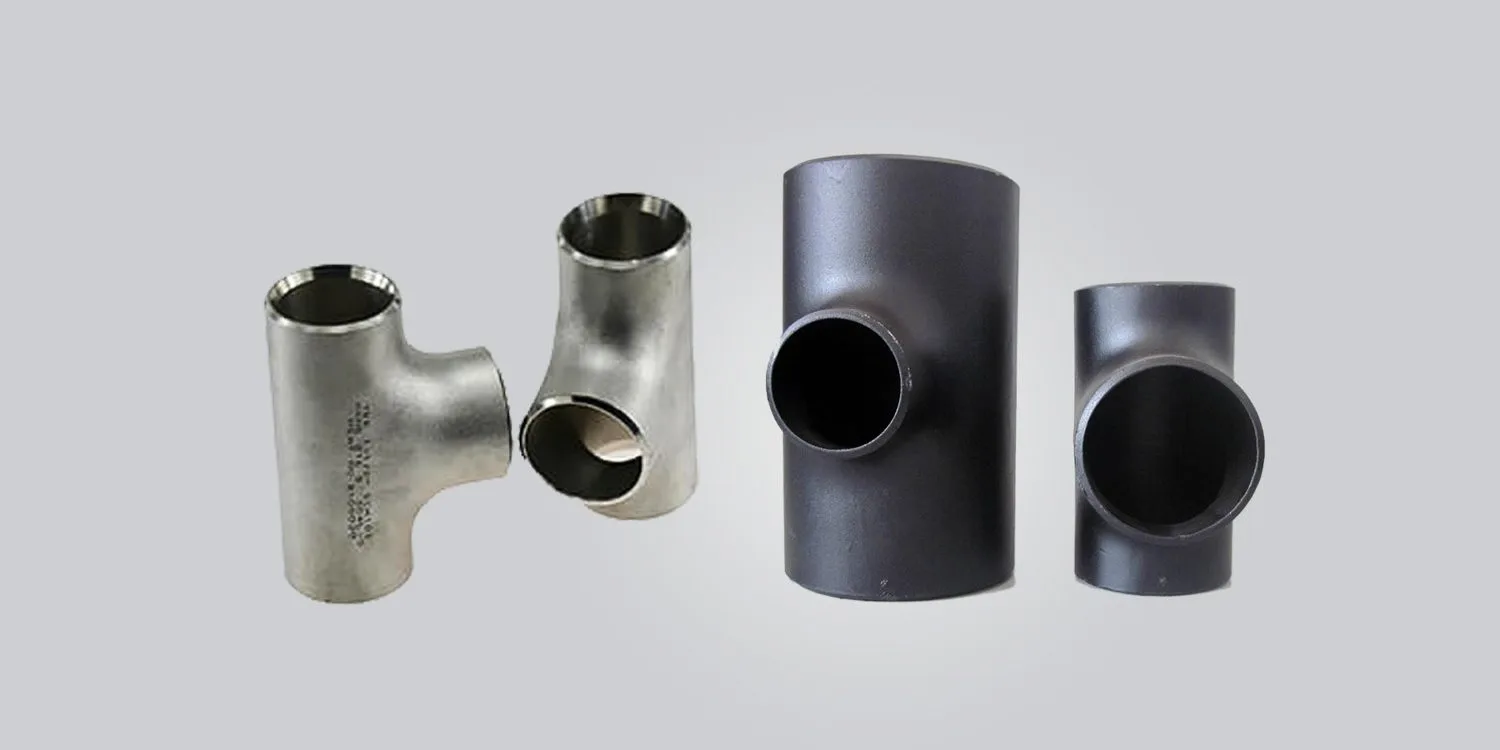
Understanding the Core Manufacturing Differences
The main difference between seamless and welded butt-weld pipe tee fittings is how they are made, which has a direct effect on their structural integrity and performance. Seamless tees are made from solid steel billets using hot forming, cold drawing, or forging techniques. The raw material is heated to the right temperature for forging, and hydraulic tools or special dies are used to shape it. This method gets rid of any lengthwise weld seams, making the fitting's metal structure uniform all the way through. The grain flow stays smooth, which is especially helpful at the crotch area, which is where most of the stress is in any tee shape. Welded tees, on the other hand, start as flat steel plates that are rolled into shape and joined using high-quality longitudinal welding methods. When the size is bigger than 24 inches, this method of production is not only the cheapest, but it's also often the only one that works. Modern automatic and submerged arc welding methods have greatly improved the quality of welds, but the heat-affected zone along the seam makes the microstructure different from the base metal.
Three core manufacturing differences that affect performance:
- Structural uniformity – Seamless tees maintain consistent metallurgical properties throughout, while welded versions contain a distinct weld zone with slightly different hardness and grain structure
- Size availability – Seamless production economically caps at approximately 24 inches, whereas welded fabrication extends to 72 inches and beyond
- Production timeline – Welded tees typically require additional heat treatment cycles to normalize the weld zone, potentially extending lead times for specialized alloy materials
The crotch thickness in buttweld tee fittings deserves particular attention regardless of manufacturing method. During forming operations, material naturally thins at the branch intersection. Quality manufacturers compensate by starting with thicker raw materials or employing reinforcement techniques to maintain adequate wall thickness at this critical junction, conforming to ASME B16.9 minimum requirements with appropriate safety margins.
Pressure Rating and Temperature Performance Comparison
The choice between seamless vs welded buttweld tee fittings depends on the operating factors. Pressure class, temperature extremes, and cyclic loading patterns are all part of the decision matrix. Seamless butt-weld tee fittings work better in situations with constant high pressure. Since there are no horizontal welds, there are no weak spots where stress from pressure can build up. Manufacturers of pressure vessels have shown that when made from the right metal grades, seamless fittings can maintain structural integrity at very high pressures when properly designed according to applicable codes. This benefit is very important when working with hydrocarbons, high-temperature steam systems, and supercritical service conditions. Extreme temperatures show how different materials behave. When the temperature drops below -50°F, the heat-affected zone in welded fittings may become less tough if the right low-temperature steel types, such as ASTM A420 WPL6, are not used with controlled heat treatment. This risk can be mitigated in both seamless and welded fittings when appropriate low-temperature materials and heat treatments are applied. On the other hand, when temperatures rise to around 1000°F in power plants or petrochemical reforming units, creep resistance is very important. This is where chrome-moly seamless tees (ASTM A234 WP11, WP22, WP91) work better because of their consistent grain structure.
If you need fittings for these conditions, seamless is often preferred in critical services requiring enhanced traceability and reliability:
- Steam header systems operating above 850°F and 1500 psi
- Cryogenic LNG service below -100°F
- Offshore platforms requiring Category M fluid service per ASME B31.3
- Nuclear auxiliaries demanding enhanced traceability
If you need fittings for these conditions, welded is more suitable:
- Large-diameter cooling water systems (36-inch and above)
- Low-pressure drainage or venting applications under 300 psi
- Budget-constrained infrastructure projects with controlled service parameters
- Non-critical utility piping where dimensional tolerance is less stringent
Fatigue resistance under cyclic loading presents another consideration. Piping systems experiencing thermal cycling, vibration, or pressure fluctuations benefit from seamless construction. The weld seam in fabricated tees, despite meeting code requirements, represents a metallurgical discontinuity where fatigue cracks can initiate after extended service cycles—particularly relevant in reciprocating compressor discharge lines or steam systems with frequent startups.
Material Grade Options and Corrosion Resistance
The choice of material and the way it is made affect both the long-term dependability and the total cost of ownership. Across the entire range of industrial alloys, both seamless and welded butt-weld tee configurations are available, though lead times and prices change a great deal. For general industrial use, carbon steel is the main material. Standard uses for ASTM A234 WPB grade range from -20°F to 650°F. Seamless carbon steel tees in sizes 2 to 12 are kept in stock by manufacturers, and delivery is measured in days. Large diameter welded carbon steel tees take longer to make but save a lot of money—a 36-inch welded tee is usually 40–60% cheaper than a seamless version when it's available. For the toughest high-temperature jobs, alloy steel types with chromium and molybdenum are the best choice. Power plants that use biomass or fossil fuels must use WP11 (1.25Cr-0.5Mo) and WP22 (2.25Cr-1Mo) for their superheater and reheater circuits that work at 950 to 1050°F. For modern supercritical boilers to work, they need WP91 (9Cr-1Mo) seamless tees that are designed for long-term service at elevated temperatures, typically up to around 1050–1100°F depending on design conditions of service. Welded forms of these rare alloys need complicated post-weld heat treatment and pricey consumables, which often cancel out the lower cost at the start.
Material selection guide based on service conditions:
- General water/air service under 400°F – Carbon steel WPB, either seamless or welded, based on size and budget
- Corrosive chemicals or sanitary service – Stainless steel 316L, seamless preferred for sizes under 6 inches
- High-temperature steam 650-900°F – Carbon steel WPC or low-alloy WP11, seamless, strongly seamless vs welded buttweld tee recommended
- Cryogenic LNG or ethylene – austenitic stainless steels are typically used for very low temperatures, while ASTM A420 WPL6 is suitable for moderate low-temperature service, seamless, mandatory for critical service
- Supercritical power generation – Advanced alloys WP91/WP92, seamless exclusively due to creep properties
Cost Analysis: Initial Investment vs Lifecycle Value
Budget constraints often influence purchasing decisions, but the total cost of ownership includes more than just the price of the item itself. It also includes how well it is installed, how often it needs to be maintained, and how reliable it is over many years of use. For bigger sizes, welded butt-weld tee fittings are certainly more cost-effective at first. A welded 24-inch Schedule 40 carbon steel t-shirt usually costs 55–65% less than a seamless one of the same size. This difference gets bigger as the width gets bigger. For example, a welded 48-inch tee might cost less than half as much as a seamless 48-inch tee of the same size. This economic benefit comes from the fact that rolling and welding plate stock is a more efficient way to make things than forging solid billets. The cost of installation should be taken into account as well. Welders can be sure that high-quality fittings can achieve precise beveling through machining, helping improve fit-up and reduce welding defects. This level of precision cuts down on weld flaws, grinding, and rework, and it speeds up the building process. Welded tees, especially lower-cost ones, may have greater dimensional variation that needs to be fixed in the field. When EPC companies are in charge of labour-intensive projects with tight deadlines, the extra money they pay for seamless fittings can pay for itself many times over in lower installation hours and quality control costs.
Lifecycle cost considerations that favor seamless construction:
- Reduced inspection frequency in critical service due to enhanced reliability
- Lower probability of premature failure and associated production downtime
- Extended service life in corrosive or erosive environments
- Simplified recertification for pressure systems under jurisdiction inspection
Lifecycle cost considerations that favor welded construction:
- Substantial initial capital savings on large-diameter low-pressure systems
- Adequate performance in non-critical utility applications
- Easy replacement availability for standard configurations
- Acceptable risk profile when failure consequences remain minimal
Small and medium engineering firms controlling project budgets should evaluate risk tolerance alongside cost. A seamless tee costing $200 more than a welded equivalent represents negligible expense in a million-dollar installation, yet provides measurable risk reduction. Conversely, municipal water treatment plants operating at 150 psi achieve no practical benefit from seamless premium costs—welded fittings deliver decades of reliable service at these benign conditions.
Standards Compliance and Quality Assurance
Compliance with regulations and quality certification are what set reputable makers apart from suppliers of goods. Internationally recognised standards must be followed when making both seamless and welded butt-weld t-shirts, but testing methods and needs for keeping track of them are different. For North American markets, ASME B16.9 sets the production standards, pressure-temperature ratings, and size tolerances for wrought steel butt-welding fittings that are made in a factory. This standard sets the minimum wall thickness, beveling angles, and allowable dimensional variations. It doesn't make a difference between seamless and welded construction; both must meet the same standards for the end product.
Material traceability represents a critical quality element. Premium suppliers provide mill test certificates (MTCs) documenting chemical composition and mechanical properties traced to the original steel heat number. This documentation chain proves essential for:
- Owner-operator asset management systems tracking installed equipment
- Insurance underwriter requirements for process safety management
- Government inspector approval for regulated pressure vessels
- Welding procedure qualification referencing base metal properties
For important uses, non-destructive testing methods get stronger. inspection requirements depend on project specifications, applicable codes, and service criticality rather than size alone. Welded tees may undergo radiographic or ultrasonic examination depending on code requirements and project specifications of the longitudinal seam using radiographic or ultrasonic testing to ensure weld integrity. For high-pressure alloy steel uses, 100% radiography may be needed, no matter how it was made, along with liquid penetrant testing to find flaws on the surface and positive material identification to prove the alloy's composition.
Heat treatment certification documents thermal processing cycles, restoring mechanical properties after cold or hot forming. This becomes particularly important for alloy steels, where controlled heating and cooling rates determine microstructure and performance characteristics. Certificates should detail:
- Furnace temperature calibration data
- Actual time-temperature profile during treatment
- Post-treatment hardness testing results
- Lot identification linking treatment to specific production batches
Distributors and stockists building trust with end-users should partner with certified suppliers, maintaining documented quality management systems. ISO 9001 certification provides baseline assurance of process control and continuous improvement. Industry-specific certifications from PETROBRAS, NIOC, ADNOC, or other major energy operators demonstrate the capability to meet the enhanced requirements of sophisticated buyers.
JS FITTINGS Buttweld Tee Manufacturing Excellence
Our production capabilities and quality advantages include:
- Precision crotch reinforcement technology – Proprietary forming processes maintain 15-20% additional wall thickness at tee branch intersections, exceeding ASME B16.9 minimum requirements and extending service life in high-stress applications
- Complete size range coverage – Seamless production from 1/2" through 24" and welded fabrication from 24" through 72" eliminates procurement complexity across mixed-size projects
- Advanced heat treatment facilities – Computer-controlled normalizing, quenching, and tempering furnaces process batches up to 50 tons with documented temperature uniformity ±10°F, ensuring consistent mechanical properties throughout each production lot
- Multi-standard compliance – Simultaneous certification to ASME, EN, DIN, GOST, JIS, and SABS standards allows single-source procurement for multinational projects without specification conflicts
- Premium alloy expertise – Four decades of experience processing exotic materials, including Inconel, Hastelloy, titanium, buttweld tee, and duplex stainless steel for specialized applications beyond commodity carbon steel
- 100% traceability protocol – Hard-stamped heat numbers, laser-etched dimensional markings, and color-coded paint systems enable instant field verification linking every fitting to original mill certificates and production records
- Automated beveling precision – CNC machining centers produce Land width, bevel angle, and root face dimensions within ±0.5mm tolerance, dramatically reducing field fit-up time and weld defect rates
- Comprehensive NDT capabilities – In-house radiographic, ultrasonic, magnetic particle, and liquid penetrant testing with certified Level II inspectors eliminates third-party delays and ensures quality before shipment
- Rapid response inventory – 800+ tons of finished goods, including seamless carbon and stainless steel tees in popular sizes, supports emergency procurement with same-week shipping
- Technical support team – Metallurgical engineers and certified welding inspectors provide application consulting, helping buyers optimize material selection and avoid over-specification costs
- Flexible customization – Special configurations including unequal branch angles, extra-heavy walls for erosive service, and non-standard material combinations manufactured with 2-3 week lead times
- Global logistics network – Established relationships with freight forwarders and customs brokers in 30+ countries, streamlining international shipping with container load optimization, reducing per-unit transportation costs
- Quality failure rate under 0.5% – Statistical process control and multi-stage inspection gates achieve industry-leading customer satisfaction with 98%+ repurchase rates among repeat clients
- Competitive pricing structure – Direct manufacturer pricing eliminates distributor markups while maintaining premium quality standards, delivering 15-25% cost advantages versus European suppliers
- Technical documentation – Complete dimensional drawings, material certificates, heat treatment reports, and NDT records provided in digital format for owner-operator asset management systems
Selecting the Right Buttweld Tee for Your Project
Decision frameworks should align technical requirements with economic realities and risk tolerance. A systematic evaluation process prevents both over-specification waste and inadequate performance failures.
Application evaluation checklist:
- Maximum operating pressure and temperature – Compare against material grade capabilities with appropriate safety factors per applicable code
- Pipe size and wall schedule – Determine if seamless manufacturing covers the required dimensions economically
- Fluid characteristics – Assess corrosive, erosive, or toxic properties influencing material selection and reliability requirements
- Criticality classification – Define consequences of fitting failure on safety, environment, and production continuity
- Inspection accessibility – Consider the difficulty and cost of in-service examination when evaluating initial quality premiums
- Budget constraints – Balance lifecycle cost optimization against capital expenditure limitations
No matter how much more it costs, government infrastructure projects and industrial end-users that run regulated facilities should prioritise seamless construction for key service lines. When system availability directly affects mission success or public safety, the higher price is worth it because of the improved traceability, proven dependability, and lower maintenance burden. To keep project risk to a minimum, EPC workers should ask for seamless tees for process systems and welded fittings for utility circuits. This tiered strategy improves the overall economics of the project without hurting performance in the most important areas. Value engineering substitutions that move risk from the supplier to the contractor are not possible when the specs are clear. Distributors who keep a wide range of products in stock for different customers should keep seamless carbon steel tees in sizes 2 to 12 inches on hand, which will meet 80% of general industrial demand. When customers are okay with longer procurement processes for large-diameter goods, welded inventory makes sense. 304L and 316L grade stainless steel seamless tees are great ways to set your business apart and make good profits. Installers and small engineering firms in the area should buy from suppliers that can use more than one way of production instead of suppliers that only do one. This allows the project to go smoothly even if changes to the design or the specifications mean that different configurations need to be made in the middle of building.
Conclusion
There is no clear winner in the debate between seamless and welded; performance depends on how well the manufacturing characteristics match the needs of the application. When uniform metallurgy and higher dependability are important, seamless buttweld tee fittings are worth the extra cost. They work best in critical service, high-pressure, and extreme-temperature environments. Welded tees are a cheap way to solve problems with big diameters and low pressure. If you choose the right materials and make them well, they will last for decades. Instead of using old ideas about how things are made, it's important to look at things like pressure class, temperature range, pipe size, fluid properties, and lifecycle costs when putting together a project. Working with experienced suppliers who can do production, full testing, and technical help is the best way to get the best performance and keep project costs low.
Partner with a Trusted Buttweld Tee Manufacturer
Hebei Jinsheng Pipe Fittings Manufacturing Co., Ltd. brings 43 years of specialized experience serving EPC contractors, distributors, engineering firms, government projects, and industrial end-users worldwide. Our dual production capabilities in seamless and welded buttweld tee fittings eliminate sourcing complexity, while our technical team helps match the optimal manufacturing method to your exact application requirements.With monthly shipments exceeding 90 containers, 95%+ on-time delivery performance, and certified supplier status for major energy operators including PETROBRAS, NIOC, and ADNOC, we combine manufacturing excellence with supply chain reliability. Contact our engineering team at admin@jsfittings.com for application-specific recommendations, complete material certifications, and competitive quotations on premium seamless or welded buttweld tees ranging from DN15 through DN1800.
References
1. American Society of Mechanical Engineers. "Factory-Made Wrought Buttwelding Fittings: Dimensional Tolerances and Manufacturing Requirements." ASME B16.9 Standard, 2018 Edition.
2. Boyer, Howard E. "Atlas of Stress-Strain Curves for Ferrous Alloys at Elevated Temperatures." ASM International Metals Handbook, Volume 3: Properties and Selection of Metals, 2007.
3. European Committee for Standardization. "Butt-Welding Pipe Fittings: Wrought Carbon and Alloy Steels with Specific Inspection Requirements." EN 10253-2 Technical Specification, 2017.
4. Mohitpour, M., Golshan, H., and Murray, A. "Pipeline Design and Construction: A Practical Approach, Third Edition." American Society of Civil Engineers Press, 2007, Chapter 12: Piping Components and Fittings.
5. Nayyar, Mohinder L. "Piping Handbook, Seventh Edition." McGraw-Hill Professional Publishing, 2000, Section B3: Butt-Welding Fittings Manufacturing and Applications.
6. Thielsch, Helmut. "Defects and Failures in Pressure Vessels and Piping: Revised Edition." Robert E. Krieger Publishing Company, 1977, Chapter 8: Failures at Branch Connections and Tees.
Send Inquiry
_1775030564781.webp "Blind Flange")
Related Industry Knowledge
- Choosing the Right Size Long Radius Buttweld Elbow for Your Project
- Buttweld Bend Dimensions: LR, SR & Custom Radius Guide
- CRA Clad Line Pipe for Subsea and Offshore Pipelines
- How long does FBE Coated Steel Pipe last?
- What are ANSI Pipe Flanges, And How Does it work?
- Buttweld Tee Pressure Ratings Explained for Industrial Piping
- Why Is Long Radius Buttweld Elbow Preferred in Oil & Gas?
- Do flanges with threaded holes take stud bolts?
- How thick is standard wall pipe on carbon steel?
- What causes porosity in carbon steel pipe welding?