
Buttweld Tee Pressure Ratings Explained for Industrial Piping






2026-06-09 09:43:50
When building efficient industrial piping systems, it's important to know the pressure values for buttweld fittings. A buttweld tee is a T-shaped pipe fitting with beveled sides that is made for lasting buttweld connections in high-pressure situations in the chemical processing, power generation, pharmaceutical, and oil and gas industries. Pressure numbers tell you how much pressure these fittings can safely handle at certain temperatures. They are based on the material grade, wall thickness (schedule), and the quality of the manufacturing. Choosing the right pressure class keeps systems from failing in terrible ways, makes sure they follow the rules, and lowers the total cost of ownership. This guide shows how pressure ratings work, which specs are the most important, and how to confidently buy things that keep project costs and operational safety in mind.
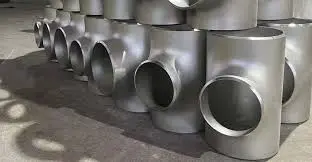
Understanding Buttweld Tee Pressure Ratings
Pressure numbers tell you how much pressure a pipe or part of a pipe can safely handle under controlled circumstances. These grades are based on standards that are known all over the world. They help engineers and purchasing managers correctly describe parts in global supply chains.
What Defines a Pressure Rating?
Pressure numbers tell you how much pressure an internal part can take at certain temperatures before it breaks. These ratings are influenced by standards such as ASME B16.9, ASME B31.3, and applicable material specifications, which relate material properties, wall thickness, and temperature factors. The grade is not just a number; it's a curve of warmth and pressure. Because steel weakens at high temperatures, a joint that can handle 1500 psi at 100°F might not be able to handle 1200 psi at 400°F. The ASME pressure-temperature tables take this relationship into account, which makes sure that safety gaps stay the same throughout the entire working range. If you understand this process, you can avoid under-specification, which can cause leaks, and over-specification, which can make project costs go up for no reason.
Key Standards Governing Pressure Ratings
There are several rules that say how much pressure-welded pipe joints can handle. ASME B16.9 specifies the dimensions, tolerances, markings, and testing requirements for factory-made wrought buttwelding fittings, including buttweld tees. ASME B16.5 lists the flange pressure classes (150#, 300#, 600#, 900#, 1500#, and 2500#), which affect the choice of fitting when connecting to a flanged connection in a roundabout way. European markets are covered by EN 10253-2, and German engineering projects are covered by DIN 2615. API standards are used for upstream oil and gas uses, which need special materials and tests for sour service and hydrogen embrittlement. Making sure that your details are in line with the right standard helps with third-party inspections, makes sure that everything works together, and meets the requirements for government building projects that are put out to bid.
Factors Influencing Pressure Capacity
Pressure capacity is directly related to the make-up of the material. ASTM A234 WPB carbon steel is widely used in moderate-temperature services within the limits specified by applicable design codes, and ASTM A420 WPL6 is designed for low-temperature service and is impact-tested at -50°F (-46°C). Grades of stainless steel like ASTM A403 WP316L don't rust in harsh chemical conditions, so they can be used at high pressures for a long time without breaking down. Chrome-moly metals (ASTM A234 WP11, WP22, and WP91) can handle steam lines in power plants that are hotter than 1000°F. The pressure capacity generally increases as wall thickness increases, although the relationship is governed by piping design equations rather than a simple linear correlation. It's also important how the product is made. Buttweld tees made from solid pipe blanks don't have longitudinal join lines, so they can handle more pressure than buttweld tees made from plate stock that are soldered. The most stress is concentrated in the crotch area, which is where the branch hits the run. The best makers make this area stronger during the making process so that the structure stays strong even when loads and pressures rise.
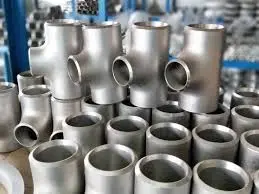
Key Types and Specifications of Buttweld Tees Related to Pressure Ratings
Different buttweld tee configurations meet the needs of different systems. Finding the right type for your needs will ensure the best results and lowest costs.
Equal Tee vs. Reducing Tee
All three openings on an equal buttweld tee have the same diameter, which keeps the flow rate and pressure spread constant. This arrangement makes hydraulic estimates easier and reduces the amount of turbulent flow at the branch joint. Reducing buttweld tees have a smaller branch exit that lets you connect directly to equipment further downstream that has a smaller diameter without having to use separate reducer fittings. Using reducing buttweld tees makes installation easier and cuts down on the number of joints, but they change the flow rate, which changes how the pressure drop is calculated. In larger piping systems, the branch outlet pressure rating must match the specified pipe schedule. For example, on a 6" x 4" reducing tee, the 4-inch branch must strictly meet the pressure class requirements for that smaller schedule thickness. To avoid costly sizing mistakes and installation delays, reducing buttweld tees must be explicitly specified in procurement documents using the standard format (e.g., 6" × 6" × 4").
Material-Specific Pressure Capacities
For moderate-pressure uses up to Class 600 and temps below 400°F, carbon steel buttweld tees (ASTM A234 WPB/WPC) are the most common choice. Because they are cheap and easy to weld, they are usually used for water distribution, HVAC systems, and general industry service. ASTM A403 WP304/L and WP316/L stainless steel buttweld tees keep their pressure integrity in acidic conditions where carbon steel would quickly lose its wall thickness. The "L" types have a low carbon content, which keeps the metal from becoming sensitive during welding and keeps its resistance to rust in the heat-affected zone. Alloy steel buttweld tees (ASTM A234 WP11, WP22, and WP91) are designed for high-temperature power generation, where long-term pressure grade is based on creep resistance. When heated above 900°F, these materials keep their tensile strength, which stops them from slowly deforming under constant internal pressure. ASTM A420 WPL6 low-temperature carbon steel doesn't break easily in Arctic pipes and LNG facilities, staying flexible when regular carbon steel would break when hit. When choosing a material, it's important to think about both the design pressure and the full range of temperatures that the system will be exposed to at starting, during operation, during shutdown, and in an emergency.
Size and Schedule Correlation with Pressure Ratings
The pressure capacity goes up as the wall gets thicker and down as the width gets smaller. A 2-inch SCH 80 buttweld tee can handle a lot more pressure than a 2-inch SCH 40 buttweld tee made of the same material. This is because the stronger wall can better handle hoop stress. To keep the same pressure class, schedule thickness must go up at the same rate as width. Required wall thickness depends on design pressure, temperature, material properties, and applicable code calculations. Larger diameters generally require thicker walls to achieve the same pressure rating. Because of this connection, large-diameter buttweld tees for high-pressure pipelines cost more than other types. JS FITTINGS sells welded buttweld tees from 24" to 72" (DN600 to DN1800) and seamless buttweld tees from 1/2" to 24" (DN15 to DN600). They have schedules from SCH 10S to SCH 160 and XXS. Seamless fittings are commonly manufactured up to certain sizes depending on manufacturer's capability, while larger fittings are often produced using welded construction for economic and practical reasons. Welded large-diameter buttweld tees may undergo 100% radiographic testing (RT) when specified by project or customer requirements to make sure the weld is strong and that they meet the same pressure values as seamless versions, even though they have a lengthwise split.
Comparing Buttweld Tee Pressure Ratings with Other Fitting Types
There are pros and cons to each joining method when it comes to pressure and placement. Knowing these differences helps make system design better.
Butt Weld vs. Socket Weld and Threaded Tees
Buttweld tees can handle the most pressure because the full-penetration circular weld makes a link that is as strong as the parent pipe. The beveled ends (usually 37.5 degrees according to ASME B16.25) let the wall width fuse completely, so there are no stress collection points. Socket weld tees typically use fillet welds that do not penetrate the full wall thickness. This makes a natural weak spot that can fail from wear in places with cyclic loads or high vibration, like compressor discharge lines. Threaded tees rely on mechanical thread engagement rather than welded metal fusion to create the pressure-containing joint. Threads raise stress, and the thinner wall at the thread roots limits the amount of pressure that can be applied. Vibration and temperature changes can also cause threaded connections to slowly open, which raises the risk of leaking over time. Buttweld fittings need skilled welders and post-weld heat treatment (PWHT) on thick-wall high-alloy materials. They make permanent links that won't leak and are good for vital services where failure would have serious effects.
Seamless vs. Welded Buttweld Tees
Seamless buttweld tees are manufactured from seamless pipes through specialized cold-forming or hot-extrusion processes.The production method makes a continuous grain structure with no longitudinal seams. This gives the product the best mechanical qualities and the ability to withstand the most pressure. These buttweld tees may undergo ultrasonic testing (UT) when required by applicable specifications or customer requirements to make sure they are sound inside. Plate stock is rolled and welded along the run and branch to make welded buttweld tees. Modern welding methods make parts that are very strong, but the weld seam could be a weak spot. Welded buttweld tees are commonly inspected using radiographic testing (RT) and/or liquid penetrant testing (PT) according to project requirements to find any flaws, holes, or missing fusion inside. Even after a lot of testing, smooth buttweld tees are still the best choice for Class 900 and higher uses that can't risk safety. Welded buttweld tees are cheaper than seamless ones for large-diameter, moderate-pressure uses where seamless choices are too expensive or not available at all. For large-diameter high-pressure pipelines where seamless supply is severely limited, JS FITTINGS utilizes advanced welding procedures and conducts 100% NDT (Non-Destructive Testing) on welded buttweld tees to ensure they strictly meet high-pressure rating standards. These heavily inspected welded tees serve as a highly reliable and economical alternative when seamless products are unavailable or prohibitively expensive.
Conclusion
Choosing the right pressure number for buttweld fittings is a very important choice that impacts the safety of the system, compliance with regulations, and the overall cost of ownership. Procurement managers and engineers can safely choose parts when they know how material grades, wall schedules, manufacturing methods, and installation practices affect pressure capacity. Depending on size, pressure class, and price, seamless and welded buttweld tees have different benefits. Certifications that are very strict, the ability to track materials, and non-destructive testing all make sure that fits will work reliably in tough situations. The engineered pressure rating stays intact and early breakdowns are avoided by using the right fitting methods, such as qualified welding and post-weld heat treatment. By following the tips in this piece, you can keep project risks to a minimum, meet schedules, and make sure that the system will work reliably for a long time.
FAQ
1. How do I determine the correct pressure class for a chemical plant application?
Use your process data sheets to find the highest working pressure and temperature. To get the design pressure, add a safety factor, which is usually between 10 and 25%. Check this number against the ASME B16.5 tables for your material grade's pressure-temperature range. Choose stainless steel or another corrosion-resistant alloy if the service is acidic. Make sure that the work is done according to area rules and customer requirements. If you're not sure what to do, talk to an expert pipe engineer or call JS FITTINGS for help.
2. Can I mix pressure ratings within a reducing tee?
Each exit of a reducing buttweld tee needs to be able to handle the pressure that is needed for that width and schedule. The run keeps the same rating, but the shortened branch exit may have a different rating because its schedule thickness is less. Make sure that the system design pressure is met by both parts. Schedules that don't match up can lead to weak spots. In procurement papers, you should always be clear about the full sizes and plans.
3. Are stainless steel tees always better for high-pressure environments?
Compared to equivalent-schedule carbon steel, stainless steel is better at resisting rust, but it doesn't always have a bigger pressure capacity at room temperature. Stainless stays structurally sound longer at high temperatures or in acidic media, which is why it costs more. Carbon steel works great in moderate-temperature, non-corrosive situations where keeping costs low is very important. Instead of always using stainless steel for high-pressure jobs, choosing the right material should take into account things like pressure, temperature, rust, and price.
Partner with JS FITTINGS for Reliable Buttweld Tee Solutions
JS FITTINGS has been making high-quality buttweld fittings for over 40 years, working with EPC builders, distributors, and industry end-users all over the world. Our seamless and welded buttweld tees come in sizes up to XXS and run from 1/2" to 72". They are made to meet the standards set by ASME/ANSI B16.9, EN 10253-2, and DIN 2615. To make sure that every part meets your strictest pressure rating needs, it goes through strict NDT procedures, a full heat treatment, and a tracking marking. We make certified buttweld tees and are a qualified provider to big energy companies like NIOC, ADNOC, and Petrobras. We offer steady quality, on-time shipments, and full expert support. Email us at admin@jsfittings.com to talk about the details of your project, get material approvals, or get a full quote that fits your pressure rating needs.
References
1. ASME B16.9-2018: Factory-Made Wrought Buttwelding Fittings, American Society of Mechanical Engineers, New York, 2018.
2. ASME B31.3-2020: Process Piping, American Society of Mechanical Engineers, New York, 2020.
3. Chuse, Robert and Eber, Siauw M., Pressure Vessels: The ASME Code Simplified, McGraw-Hill Education, Ninth Edition, 2016.
4. Nayyar, Mohinder L., Piping Handbook, McGraw-Hill Education, Eighth Edition, 2019.
5. Steel Pipe Fittings: Materials, Manufacturing, and Pressure Rating Standards, American Petroleum Institute Technical Report, Houston, 2021.
6. European Standard EN 10253-2:2007: Butt-welding Pipe Fittings – Part 2: Non-Alloy and Ferritic Alloy Steels with Specific Inspection Requirements, European Committee for Standardization, Brussels, 2007.
Send Inquiry
_1775030564781.webp "Blind Flange")
Related Industry Knowledge
- All About ASTM A105 weld neck flange
- What is the service life of an ASME B16.5 carbon steel flange?
- Long Radius Buttweld Elbow For Erosion-Corrosion Environment
- CRA Clad Pipe vs Mechanically Lined Pipe: Key Differences Explained
- Internal Burr Removed ASTM A53 ERW Pipe for Precision Applications
- Lap Joint Pipe Flanges: Everything You Need to Know
- ASME B16.9 Buttweld Tee Dimensions and Weight Guide
- Carbon Steel Concentric Buttweld Reducer Buying Guide
- Industrial Buttweld Reducer Selection for Refinery Projects
- How to bolt to flanges with threaded holes?