
Internal Burr Removed ASTM A53 ERW Pipe for Precision Applications






2026-06-12 11:23:28
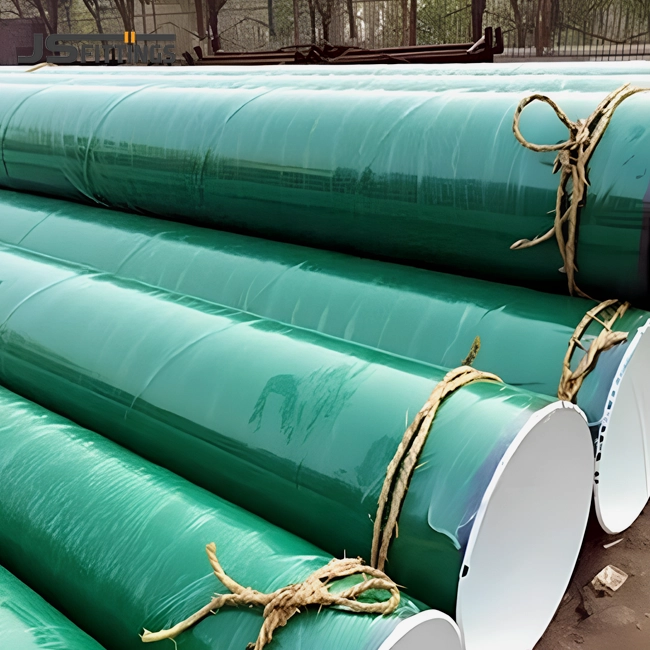
When your project needs accurate measurements and reliable performance, internally-burr-removed A53 ERW pipe gives you what you need without the higher cost of smooth options. Over the past 43 years, JS FITTINGS has improved its production process to make sure that every pipe meets the high standards of EPC builders, distributors, and industry end users who can't afford downtime or safety incidents. Our ERW pipes go through a lot of internal deburring to get rid of any weld irregularities. This makes sure that the flow paths are smooth and the wall integrity is uniform, which is important for projects with a lot at stake.

Understanding ASTM A53 ERW Pipe and Internal Burr Removal
Electric-resistance-welded pipes are the main part of many industrial systems in the US, from water networks for cities to services for factories. The process starts with high-quality steel strips that are shaped into tubes and joined together lengthwise using high-frequency induction technology. This method makes a strong metallic bond along the seam, but the welding process makes internal burrs, which are small protrusions or rough edges inside the pipe where the metal cools and hardens.
Even though these internal burrs may not seem important, they cause a lot of problems in precision uses. In hydraulic systems, burrs stop smooth flow and make pressure changes happen at different times. In gas transfer lines, they can become places where rusting starts. We've seen projects get behind schedule because workers found too many burrs during pre-assembly checks, which led to expensive repairs and time delays.
Why Does Internal Burr Removal Matter?
Standard ERW pipe can be turned into precision-grade material that can be used in harsh settings by deburring the inside. Specialised tools are used in the process to get rid of weld protrusions while keeping the limits for size. At our factory, we use automatic deburring systems that are built right into the production line. This way, we can be sure that the results will be the same for all pipe lengths, from DN15 to DN600.
The deburring process does more than just make the inside surface smooth. It gets rid of places where stress builds up, and cracks could spread when the load is changed. When working with gritty slurries or fluids that are full of particles, burr-free spaces keep material from building up, which slows down flow and raises the cost of pumping. Turbulence is lessened in gas transport systems, which saves energy over long pipeline runs that can be seen.
Manufacturing Process Details
Our ERW pipes are made from carefully chosen carbon steel that meets the chemical composition requirements of ASTM A53, with controlled levels of carbon, manganese, sulphur, and phosphorus to ensure weldability and mechanical performance. As the steel strip goes through forming rolls, the rolls slowly make it into a tube, making sure that the sides are perfectly straight for welding.
High-frequency induction welding creates heat over 2,500°F at the point of contact, which makes a forged joint without the need for filling material. Right after the bond, the seam goes through controlled heat treatment to make the area that was exposed to the heat less rigid. This online heat treatment method helps ensure that the weld area achieves mechanical properties comparable to those of the base metal. This is a key quality that sets luxury ERW pipe apart from economy types.
Key Specifications and Performance Metrics of ASTM A53 ERW Pipe for Precision Applications
People who work in procurement need hard facts to decide if A53 ERW pipe meets the needs of their project. The ASTM A53 standard lists two grades. Grade B is the standard in the industry for structural and pressure uses because it has better mechanical qualities.
Mechanical Properties That Drive Performance
The minimum yield strength for Grade B material in A53 ERW pipe is 35,000 psi, and the minimum tensile strength is 60,000 psi. This gives enough safety limits for medium-pressure uses up to 300 psi in normal utility service. The minimum elongation standard of 23% makes sure that the material is flexible enough to be bent and connected at the flange without breaking. No matter if you choose Schedule 40, Schedule 80, or unique wall thicknesses, these qualities will stay the same.
Impact strength is especially important in cold climate sites where brittle fractures can be dangerous. Charpy testing isn't required by ASTM A53 for normal temperatures, but our quality system includes extra impact testing for projects that will be exposed to low temperatures. This proactive method has kept things from going wrong in the field for projects ranging from Alaskan pipelines to cooling plants that work below freezing.
Pressure Ratings and Service Limitations
The maximum pressure that ERW pipes can handle is based on their wall thickness, width, service temperature, and how well the joints work. When working at room temperature, schedule 40 pipe with a 4-inch diameter can usually handle working pressures of around 1,000 psi as long as the right safety factors are used. According to the Barlow formula, allowed pressure drops proportionally as the width or wall thickness goes up or down.
Knowing these limits keeps you from over-specificating, which can be expensive, or under-specificating, which can be risky. We often help our customers figure out pressure ratings by taking into account things like surge pressure, thermal expansion, and corrosion limits, which have a big effect on long-term safety. Our expert team has helped with hundreds of projects where proper pressure rating analysis stopped either huge costs from upgrades that weren't needed or serious failures from not meeting the requirements.
Quality Control Throughout Production
At JS FITTINGS, we test every length of pipe by fully submerging it in water and applying pressures higher than what is needed for service. Before the pipe leaves our plant, this test finds any tiny leaks in the base material or weld line. Eddy current testing doesn't damage the weld; it looks along the whole length of it to find flaws below the surface that can't be seen.
Dimensional checks are done at several stages of production. During forming, our laser measurement tools keep an eye on the outer diameter and wall thickness at all times, making changes automatically when tolerances change. As part of the final check, measurements are taken and written down on mill test papers that are sent with every shipment. Our rejection rate has stayed below 0.5% for millions of feet of pipe shipped around the world, thanks to this thorough method.
Comparative Analysis: ASTM A53 ERW Pipe vs Alternative Pipes for Precision Applications
To choose the best pipe specification, you need to know how the performance, cost, and supply are affected by different production methods and standards. When people talk about buying things, the comparison between ERW and seamless pipes comes up a lot, but other things should also be taken into account.
ERW vs Seamless Manufacturing Economics
To make seamless pipes, solid steel billets have to be pierced and then dragged over mandrels, which takes a lot of energy and special tools. Because of this, seamless pipe costs 20–40% more than ERW pipe that meets the same requirements. The price difference gets even bigger for larger sizes, which makes making smooth parts harder and harder.
We've looked at cost structures for a lot of different clients and have always found that selecting seamless pipe when ERW pipe will do loses money that could be used to pay for more safety features or wider coverage. The important question is whether your application really needs seamless building or whether you are defining it because that's what you're used to or because you don't know how to use current ERW features.
ASTM A53 vs ASTM A106 Application Boundaries
ASTM A106 only covers seamless pipe intended for high-temperature service, including steam systems and pressure applications. The standard calls for more tests and tighter controls over the chemicals. For many general industrial services, properly manufactured A53 pipe can provide performance comparable to A106 pipe when high-temperature service requirements are not involved.
This distinction is critical because inexperienced suppliers sometimes attempt to substitute standards without consulting engineering teams. Substituting A53 for A106 in high-temperature applications can severely compromise system safety, while unnecessarily specifying A106 when A53 would suffice drives up project costs significantly.We keep clear records of the boundaries of our specifications and won't make any substitutions without the technical approval of the customer. This policy has kept us from having to make expensive changes in the field and has avoided possible legal issues.
API 5L Pipeline Specification Overlap
API 5L is a standard for line pipe used to transport oil, natural gas, water, and other fluids in pipeline transportation systems. It has similar requirements to ASTM A53 but adds more tests for impact toughness and tighter chemistry limits. Top-tier manufacturers often dual-certify their ERW steel pipes to meet both ASTM A53 Gr.B and API 5L Gr.B specifications simultaneously, providing procurement teams with maximum sourcing flexibility.When rust protection and weldability are the most important factors, API 5L Grade B works just as well as ASTM A53 Grade B in gathering line uses.
Availability and lead times are affected by where they are made. In the United States, domestic mills keep a lot of A53 in stock for the building and MEP markets. On the other hand, API 5L is usually only made when a specific project buys it. Our warehouse keeps both standards in common sizes, so we can deliver quickly, no matter which standard your requirements call for.

Advantages of Using Internal Burr-Removed ASTM A53 ERW Pipes in B2B Procurement
Smart buying strategies look at the total cost of ownership instead of just the price of the item being bought. Removing internal burrs has measured benefits that outweigh the small extra cost compared to normal ERW pipe throughout the lifecycle of the project.
Enhanced Safety in Critical Applications
Burr-free spaces get rid of places where failure could start in high-consequence systems. Even small flaws inside natural gas distribution networks can trap water and speed up rusting in certain areas. Over years of use, these areas of rust weaken the pipe wall until it leaks or breaks. By getting rid of these risk factors, internal deburring increases the safe service life and lowers the number of inspections needed.
Another safety-critical area where internal smoothness is important is fire protection systems. When the system is turned on, burrs can come loose and block spray heads or deluge jets at the worst possible time. We've provided deburred pipe for hospital fire systems, data centres, and chemical plants where the higher standard is needed to make sure the system works well in an emergency.
Improved Flow Efficiency and Reduced Operating Costs
Hydraulic experts know that internal roughness raises the amount of friction lost and the amount of energy needed to move. If a 1,000-foot water main runs all the time, the difference in energy costs between regular pipe and deburred pipe can be thousands of dollars a year. Over the course of 30 years, these operational saves are much greater than the difference in the original cost.
In addition to using less energy, smooth surfaces in slurry and process pipes mean less upkeep is needed. When deburred pipe is used in catalyst transfer lines and reactor feed systems, chemical plants say they need to shut down less often for cleaning reasons. In tailings and concentrate transport uses, where abrasive wear is most common at surface imperfections, mining processes go longer between replacing pipes.
Streamlined Installation and Assembly
Contractors like how uniform internal measurements make installing fittings and valves easier. Burrs can make it hard for gaskets to sit properly, which can lead to leaks that waste time during commissioning while joints are being fixed and remade. Installers can properly make up threaded connections with pipe that has been checked to have smooth bores. This keeps expensive fittings from galling or cross-threading.
When automated orbital welding is employed, the complete removal of internal burrs is essential. It ensures that internal purge dams and backing rings fit perfectly flush against the pipe wall, facilitating flawless root pass welding during installation.When you save time on hundreds of joints in a normal industrial project, you save money on labour and get the job done faster, which is both very important in markets where skilled welders charge high hourly rates.
Conclusion
An internally burr-removed A53 ERW pipe is the best combination of performance, cost, and dependability for high-precision industry uses all over the US. Advanced manufacturing technology, strict quality control, and thorough deburring processes work together to produce pipe that meets your safety requirements while staying within your project budget. As the need for infrastructure keeps growing, it's more useful than ever to work with experienced providers who know both the technical details and the practical needs of the field. JS FITTINGS brings 43 years of experience making things, tried-and-true quality processes, and quick customer service to every job we work on.
FAQ
1. What distinguishes ASTM A53 ERW pipe from seamless pipe?
To make ERW pipe, flat steel strips are bent into tubes and joined lengthwise using electric resistance technology. To make a seamless pipe, solid billets are pierced. Both can be manufactured to meet ASTM A53 mechanical and pressure-service requirements. ERW pipe often provides tighter dimensional tolerances and is cheaper, but seamless pipe has the same qualities in all directions because it doesn't have a weld seam.
2. Can ERW pipe handle high-pressure gas applications safely?
Grade B ERW pipe can be used for gas service at pressures that are based on estimates of the wall thickness and diameter according to ASME B31 piping rules. For the weld joint to be as strong as the parent metal, it needs to go through the right heat treatment. Getting rid of internal burrs makes things even safer by getting rid of possible rust start points. For pressures higher than 300 psi, a technical study is usually needed to make sure that the wall thickness and joint efficiency factors are correct.
3. How does internal burr removal affect pipe performance?
Getting rid of internal burrs stops flow turbulence, lowers pressure drop, and keeps particles from getting stuck, which could lead to rust in one area. Smooth internal surfaces make fitting installation easier by making sure the seal seats properly and preventing damage to the threaded connection. In situations where system dependability and operating efficiency are important, the small cost increase is worth it because of the performance gains.
Partner with JS FITTINGS for a reliable A53 ERW pipe supply.
Purchasing managers looking for a reliable A53 ERW pipe manufacturer can benefit from the way we handle quality, delivery, and expert help as a whole. JS Fittings has modern production facilities that cover 7,000 square metres. These facilities are equipped with high-frequency induction welding systems and automatic deburring tools that make sure that the inside of every pipe length is the same level of smoothness. Every month, we ship more than 90 containers to customers all over the world, and we keep our on-time delivery rate above 95% and our customer repurchase rate above 98%.
We have certificates from CE, ISO, and GOST-R, and we are authorised to supply Petrobras, NIOC, and ADNOC. This shows that we can handle mission-critical tasks. Our expert team can quickly provide you with quotes, mill test certificates, and all the paperwork you need to track your order of standard Schedule 40 pipe in common sizes or special sizes from DN15 to DN600. Get in touch with admin@jsfittings.com to talk about your unique needs and get expert advice that is made for your application. During business hours, our tech team replies within an hour. This helps you make decisions that reduce project risk and keep costs low.
References
1. ASTM International. (2023). ASTM A53/A53M-23 Standard Specification for Pipe, Steel, Black and Hot-Dipped, Zinc-Coated, Welded and Seamless. West Conshohocken, PA: ASTM International.
2. American Society of Mechanical Engineers. (2022). ASME B31.3 Process Piping: Design, Materials, Fabrication, Erection, Examination, and Testing of Piping Systems. New York: ASME Press.
3. Harvey, J.F. (2020). Theory and Design of Pressure Vessels (3rd Edition). New York: Van Nostrand Reinhold Engineering Publishers.
4. Mohitpour, M., Golshan, H., & Murray, A. (2021). Pipeline Design and Construction: A Practical Approach (4th Edition). New York: American Society of Civil Engineers.
5. Smith, P.R. & Zappe, R.W. (2019). Valve Selection Handbook: Engineering Fundamentals for Selecting the Right Valve Design for Every Industrial Flow Application (6th Edition). Oxford: Butterworth-Heinemann.
6. Thompson, S.W. & Krauss, G. (2018). Microstructures and Mechanical Properties of ERW Pipe Steels. Materials Science and Engineering Reports, Volume 42, pp. 187-232.
Send Inquiry
Related Industry Knowledge
- How to Inspect Buttweld Elbow Quality Before Installation?
- What is the material of A53 ERW Pipe?
- How long does A53 ERW Pipe last?
- API 5L Seamless Steel Line Pipe for Pipelines Explained
- Carbon Steel vs Stainless Steel Buttweld Bend: Which to Use?
- Why Is Long Radius Buttweld Elbow Preferred in Oil & Gas?
- What are butt weld fittings?
- Do blind flanges require hydrotesting?
- How are stainless steel butt weld fittings measured?
- What is a plate flange used for?