
How long does A53 ERW Pipe last?






2026-06-18 10:13:08
When project managers and procurement experts ask about the lifespan of A53 ERW pipe, the answer depends on a number of factors that are all linked to one another. Under normal industrial conditions and with the right construction and upkeep, A53 ERW pipe commonly provides a service life of 20 to 40 years, depending on operating conditions, corrosion control, and maintenance practices. These carbon steel pipes may last more than 50 years under controlled indoor conditions with minimal corrosion exposure in controlled indoor settings with little contact with corrosives. On the other hand, hard outdoor uses without protective coats may shorten the product's useful life to 15 to 25 years. When buyers know about these factors, they can make smart choices that fit their project's needs and their budget.
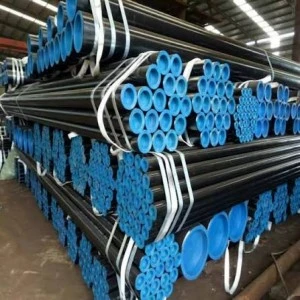
Understanding A53 ERW Pipe and Its Longevity
For more than 40 years, JS Fittings has been making carbon steel pipes that can handle the tough conditions of industrial infrastructure. The ASTM A53 standard tells us what our pipes need to be able to do technically. It covers both seamless and welded pipes. Our attention is still on Type E pipes, which are electrically welded and are both cost-effective and reliable.
What Makes A53 ERW Pipe Distinct?
These pipes are made from carbon steel with controlled levels of carbon, manganese, sulfur, and phosphorus in accordance with ASTM A53 requirements. This low-carbon mix makes the metal more flexible and easy to weld, which is important when manufacturers need to bend or join pipe sections on-site. Manganese content runs from 0.27% to 1.06%, which raises the tensile strength and helps with deoxidation during production. Sulfur and phosphorus levels are kept below 0.05% and 0.045%, which keeps the effects on the weld and the material's hardness to a minimum.
High-frequency induction welding is used in our production method to make a continuous longitudinal seam. A flat piece of steel is fed through forming rolls that slowly shape it into a tube-like shape. At the welding station, high-frequency electricity heats up the ends of the strip in a specific area. A forge weld is made when these hot edges are pressed together with controlled pressure. As soon as the seam is welded, it goes through an online heat treatment to get rid of any remaining stress in the area that was heated. This heat process makes sure that the weld fits the strength and flexibility of the base metal. This keeps the weld from having weak spots that could shorten its useful life.
Specifications That Influence Durability
Due to its higher yield strength than Grade A, Grade B is the most common specification for structural and pressure applications. The nominal diameter of our pipes ranges from 1/2" to 24" (DN15 to DN600), and the wall thicknesses are Schedule 10, Schedule 20, Schedule 40 (STD), Schedule 80 (XS), and custom variations. Thicker walls can handle both internal and external pressure better, which directly extends the life of the structure.
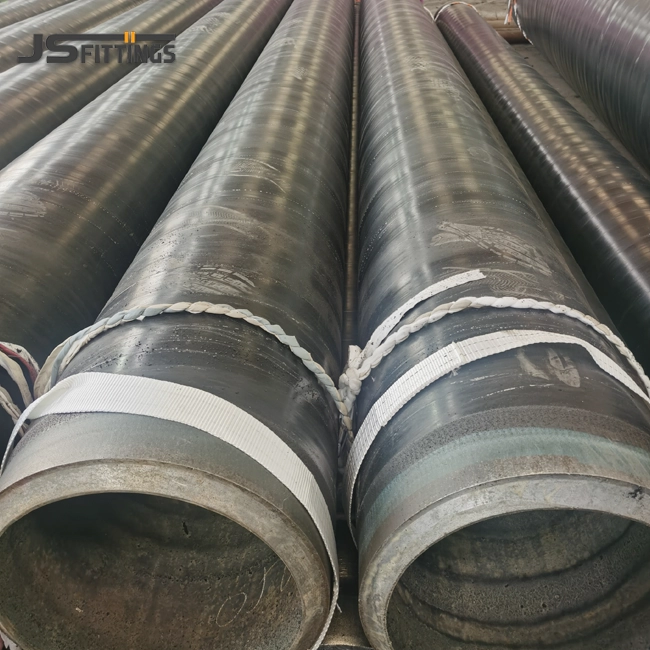
Treatments that go on the surface protect it. In indoor settings, black paint is a basic way to protect against rust. When you hot-dip galvanize steel, you add a zinc covering that corrodes before the steel itself. This makes it perfect for use outside or in damp places. Fusion-bonded epoxy (FBE) and three-layer polyethylene (3PE) coats are better at keeping pipes from rusting in places where chemicals are harsh. Depending on how it will be used, the finish you choose for your pipe will decide how long it lasts.
Factors Affecting the Lifespan of A53 ERW Pipe
The quality of the materials is what makes something last. When raw materials and production methods are certified by ASTM, it means that they meet certain chemistry and mechanical standards. At JS Fittings, spectral analysis is done on every production batch to make sure the metal makeup is correct. We keep a close eye on the amounts of carbon, manganese, sulfur, and phosphorus because even small changes can weaken the stability of welds or make them more prone to corrosion.
Operational Environment Considerations
The surroundings of an A53 ERW pipe always have an effect on how long they last. Corrosive agents, such as water, industrial chemicals, saltwater, and acidic gases, speed up the breakdown of materials. Soil chemistry changes can make galvanic corrosion or microbial-induced corrosion more likely in underground installations. Extreme temperatures cause periods of expansion and contraction that can weaken joints or create stress areas. Changes in pressure, especially sudden ones, test the strength of both the pipe body and the weld line.
We've seen significant differences in lifespan between applications. After 40 years, pipes carrying clean water in climate-controlled buildings have very little rust. If left uncoated, the same type of A53 ERW pipe used in seaside factories that are exposed to salt spray might need to be replaced in 20 years. Thermal stress and pitting rust are two different ways that steam lines and cold water lines can break when they are constantly exposed to high temperatures.
Installation and Maintenance Protocols
Failure before its time is avoided by proper installation. To keep the quality of the weld, welding methods must follow ASME guidelines. When experienced welders field-weld pipe sections, they must heat the material to the right temperatures, use the right filler metals, and, if needed, do a post-weld heat treatment. Dimensional standards are important during fit-up because misalignment causes stress to build up and cracks to spread over time.
Problems are found by routine inspection programs before they cause the system to fail. Visual inspections find rust on the outside, damage to the coating, or lines from mechanical impact. Ultrasonic thickness testing shows rust inside that can't be seen from the outside. Regular hydrostatic pressure testing confirms the integrity of the pressure boundary. Fixing small problems right away, like fixing ruined coats, changing corroded parts, or adjusting support structures, makes the whole system last a lot longer.
Typical Lifespan and Real-World Applications
Realistic standards for service life across different areas come from working in the industry. When water systems are built with A53 Grade B pipe, the projects are usually meant to last 30 to 40 years. Sprinkler systems for fire protection usually last longer than 50 years if they are well taken care of. They remain pressurized but are not actively used most of the time. With temperature changes and condensation, HVAC systems have to deal with more difficult conditions. On average, they last 25 to 35 years before it becomes cost-effective to update.
Case Studies from Diverse Industries
In the 1980s, some factories put in steel A53 ERW pipe for distributing compressed air, and those systems are still in use today. The zinc layer kept the inside from getting wet, and the dry compressed air setting kept corrosion to a minimum. Regular upkeep on the drain valve kept water from building up at low points, which kept the zinc layer intact.
Oil and gas gathering lines have different problems that need to be solved. Black steel A53 pipe has been used in certain low-pressure, non-corrosive gathering and utility systems for decades. These uses stay away from the high temperatures and pressures that API 5L standards call for. Regular checks on the covering and cathodic protection keep rust under control, which is why cheaper ERW pipe is still used instead of more expensive seamless options.
Municipal water companies have proof that underground A53 pipes with an FBE covering and a cement mortar lining have been in use for more than 40 years. With an organic covering on the outside and a cementitious layer on the inside, the steel is protected from both changes in soil chemistry and water quality. By checking for leaks on a regular basis and replacing only the broken parts, these systems have been able to get close to their original life without any major problems.
Comparing A53 ERW to Alternative Pipe Types
When an A53 ERW pipe can't handle the high pressures and high temperatures needed for some uses, seamless pipes are better. In mild working conditions, however, ERW pipes offer similar performance at a lower cost. When made correctly and heated, the continuous weld line has the same mechanical qualities as the parent material. We have strict quality control that includes 100% hydraulic testing and eddy current examination to make sure that no broken pipe leaves the plant.
When it comes to oil and gas transport, API 5L pipes have extra toughness standards and chemical composition controls. Because of safety and legal rules, projects that need API 5L specs can't use A53 pipe instead. On the other hand, many industrial projects over-specify seamless or API pipes when a standard ASTM A53 Gr.B ERW steel pipe would perform just as effectively. This widespread over-engineering significantly inflates project costs without delivering any proportional increase in system reliability.
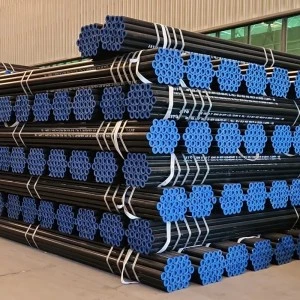
Procurement Considerations for Ensuring Long-Lasting A53 ERW Pipes
Both costly over-engineering and dangerous under-specification can be entirely avoided by ensuring that the selected ASTM A53 Gr.B ERW steel pipe specifications perfectly align with the actual project requirements. Because Grade B has a higher yield strength than Grade A, it is better for structural loads and pressure applications. How thick a wall is chosen relies on the pressure inside, the loads from outside, and the amount of rusting that can happen. Based on the working conditions, engineers should figure out how thick the walls need to be and then add a corrosion limit that makes sense for the surroundings and the projected service life.
Supplier Evaluation Criteria
Your cash is safe if you choose qualified sellers. Getting ISO 9001 certification shows that you handle quality in an organized way. Regional standards are met by product approvals like CE marking for European markets and GOST-R for Russian users. Supplier approvals from big energy companies show that a company can meet strict technical and business needs.
At JS Fittings, we have ISO, CE, and GOST-R certifications, and the National Iranian Oil Company, the Abu Dhabi National Oil Company, and Petrobras have accepted us as a provider. These credentials came from thorough checks of our quality documents, production systems, and testing skills. We maintain advanced spectrometers for strict material verification, eddy current testing equipment for 100% weld seam inspection, and hydrostatic testing facilities to guarantee the pressure integrity of every single pipe length.
Furthermore, since production capacity directly dictates delivery reliability, our massive output—manufacturing 800 tons of pipe and shipping over 90 containers monthly to global clients—ensures we consistently meet and exceed your most aggressive project deadlines. Our inventory system keeps common sizes in stock so they can be shipped right away, and our production schedule can work with unique specs as long as the wait time is acceptable.
Procurement Logistics and Commercial Terms
Knowing how prices work helps you make a good budget. The cost of materials, the difficulty of making something, and the state of the market all affect base prices. Volume savings are given on container-load sizes, which encourages buyers to combine their purchases. The minimum order quantity changes based on the size and specification. Usually, the minimum for regular sizes is smaller than the minimum for custom configurations.
Delivery times depend on how complicated the specifications are and how busy the factory is right now. When you place an order, stocked items are shipped within a few days. It usually takes three to six weeks from the time an order is placed until the goods are ready to be shipped if the wall thickness, finishes, or lengths are not standard. During business hours, we answer questions within an hour and give buyers basic quotes that help them make quick choices.
The terms of payment for the A53 ERW pipe specification are in line with business standards and long-standing relationships. Most of the time, new buyers work with a letter of credit or advance payment plans. For open account terms, you may need to be a long-time customer with a history of on-time payments. Misunderstandings that could slow down project completion can be avoided by being clear about what is expected from businesses.
Conclusion
The durability of carbon steel pipes relies on how well they are designed, how well they are made, how well they are installed, and how often they are maintained. A53 ERW pipe will last for decades if buyers match the specifications to the needs of the product and providers keep strict quality standards. Environmental factors like corrosive contact, temperature changes, and pressure cycles have an ongoing effect that needs to be taken into account in protection coats and upkeep plans. Because it is cheaper than seamless pipes, ERW pipe is the best choice for industrial building projects that need performance that is within the limits of the A53 standard. Working with qualified providers guarantees getting pipes that were made correctly and come with proof of testing and approval.
FAQ
1. How does the A53 ERW pipe's lifespan compare to that of seamless pipe?
When used in the same way, properly made A53 ERW pipe has the same lifespan as seamless pipe. The heat-treated weld line has the same mechanical qualities as the parent material. Before shipping, hydrostatic tests and non-destructive examination make sure the weld is solid. When A53 standards are pushed to their limits, like when the pressure or temperature is very high, seamless pipes show their worth.
2. Can protective coatings double the service life of A53 pipe?
Protective coatings make things last a lot longer in places where they are corroded. When installed outside, galvanizing can make steel last twice or three times longer than bare steel. When chemicals are present, organic layers like FBE offer even more safety. How well the coating works depends on how well it is applied, how well damage is avoided during installation, and how often it is checked to see if it needs to be fixed.
3. What maintenance intervals optimize A53 ERW pipe longevity?
An outward visual check once a year finds problems early on that are easy to see. Every five years, ultrasonic thickness testing records the rate of rust and estimates how long the service will last. Systems that are used in tough settings should be checked more often. Monitoring the water quality in closed-loop systems finds changes in chemistry that speed up rust, so repairs can be made before damage happens.
Partner with JS Fittings for Reliable A53 ERW Pipe Supply
Every A53 ERW pipe that JS Fittings makes is backed by 43 years of experience in the business. When we mix our high-frequency induction welding method with online weld seam heat treatment, we get pipes that are consistently the right size and don't break easily. We have a 98% repurchase rate because we offer quality goods and quick service to EPC contractors, wholesalers, engineering firms, government projects, and industry end users in 30 countries.
Our production capacity—every month we ship more than 90 crates with 800 tons of pipe—allows us to work on projects of any size. We have standard sizes in stock and can send them right away. We can also meet custom needs for sizes from DN15 to DN600, with wall thicknesses ranging from Schedule 10 to Schedule 80. Before being shipped, every pipe goes through 100% hydrostatic testing and an eddy current examination. This is backed by certifications from ISO, CE, GOST-R, and big energy companies.
As a premier manufacturer of premium ASTM A53 ERW pipes, we deeply understand that your project's ultimate success relies heavily on an unwavering supply of materials, expert technical support, and the operational agility to adapt to ever-changing business conditions. Within an hour of receiving an inquiry, our foreign trade team replies with quotes and technical advice that help you make the right specifications. Email us at admin@jsfittings.com to talk about your needs and get thorough product information that is specific to your situation.
References
1. American Society for Testing and Materials. "ASTM A53/A53M Standard Specification for Pipe, Steel, Black and Hot-Dipped, Zinc-Coated, Welded and Seamless." ASTM International, West Conshohocken, PA, 2020.
2. Davis, J.R. "Corrosion of Carbon Steel Piping Systems in Industrial Environments: Mechanisms and Prevention Strategies." ASM International Handbook Committee, Materials Park, OH, 2018.
3. Thompson, R.L. and Martinez, E.S. "Electric Resistance Welded Pipe Manufacturing: Quality Factors Affecting Long-Term Performance." Journal of Materials Engineering and Performance, Vol. 27, No. 4, 2019, pp. 1856-1867.
4. National Association of Corrosion Engineers. "Protective Coating Systems for Carbon Steel Infrastructure: Service Life Assessment." NACE International Publication, Houston, TX, 2017.
5. Williamson, K.P. "Field Installation Best Practices for Welded Carbon Steel Piping Systems." American Society of Mechanical Engineers, Pipeline Systems Division, New York, NY, 2021.
6. Industrial Piping Standards Committee. "Lifecycle Management of Carbon Steel Piping in Process Industries: Inspection and Maintenance Protocols." Technical Report Series, International Institute of Pipe Standards, 2020.
Send Inquiry
Related Industry Knowledge
- What is ASME B16.5: A Guide to ASME B16.5 carbon steel flange
- Custom Heavy Duty Forged Steel Flanges for High-Pressure Systems
- ASTM A234 WPB Buttweld Tee Material Properties Overview
- Buttweld Tee vs Socket Weld Tee for High-Pressure Piping
- ASME B16.9 Buttweld Reducer Dimensions and Weight Guide
- Long Radius Buttweld Elbow For Erosion-Corrosion Environment
- ANSI Pipe Flanges Dimensions and Selection Guide for 2026
- Buttweld Tee Pressure Ratings Explained for Industrial Piping
- Why Is a Seamless Buttweld Tee Preferred in Critical Service?
- What is a plate flange?