
Custom Heavy Duty Forged Steel Flanges for High-Pressure Systems






2026-07-10 11:19:39
Standard piping components often fail when subjected to extreme pressure and temperature fluctuations that exceed standard operating envelopes. Custom steel flange solutions give systems the precision engineering they need to work in harsh conditions. Heavy-duty forged steel flanges that don't leak and last a long time are what JS Fittings does best when manufacturing secure piping connections for industrial facilities, chemical plants, and power plants. When it comes to the unique problems your high-pressure systems face every day, our custom steel flanges are an effective solution for these challenges.
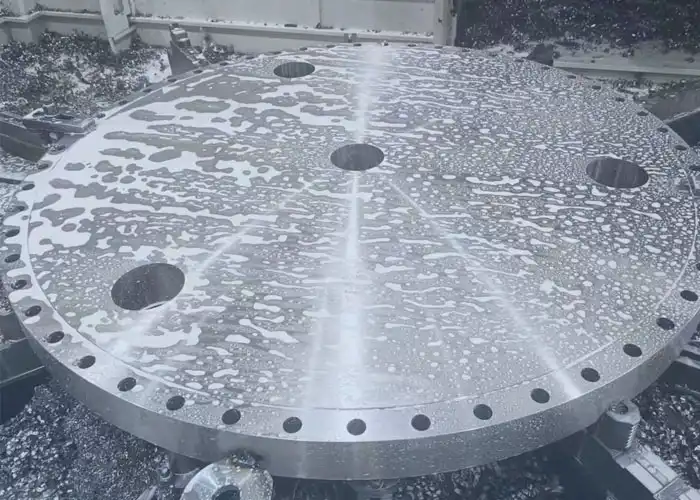
Understanding Custom Heavy Duty Forged Steel Flanges
Heavy-duty forged steel flanges are very important parts of piping systems because they connect pipes, valves, pumps, and other equipment into safe networks. The forging process is what makes these parts fundamentally different from cast alternatives. Cast flanges have holes and internal porosity and gas inclusions, but our forged versions go through high-pressure mechanical forging that smooths out the grain structure. By changing it in this way, the material gains better mechanical properties that let it withstand sudden changes in temperature and pressure without internal cracking. Our custom steel flanges provide the structural integrity required for the most demanding high-pressure service.
What Makes Forged Flanges Superior for High-Pressure Service?
The forging process gets rid of the structural flaws that come with casting. When we run raw steel billets through our forging tools, the metal changes shape in a controlled way that lines up the grains along load-bearing tracks. This improved internal structure makes it more resistant to wear, which is important for flanges that have to deal with bolt preload forces and fluctuations in internal pressure. This structural stability keeps big problems from happening in chemical plants that work with corrosive materials or factories that work with volatile hydrocarbons.
Common Applications Across Industrial Sectors
For oil and gas activities, custom steel flanges keep production zones in underwater manifolds and topside equipment separate. These parts are used in petrochemical plants to connect reactor vessels where the pressure level is above Class 1500. They are put in high-temperature steam lines that work above 500°C in power plants. There are specific size and material requirements for each purpose that can't be met by normal flanges.
Standard Flange Types We Manufacture
We make all the different types of forged flanges that are required by ASME/ANSI B16.5 for sizes 1/2" to 24" and ASME B16.47 Series A & B for 26" to 60" diameters. We also manufacture components compliant with DIN/EN 1092-1 European metric standards.The primary types include:
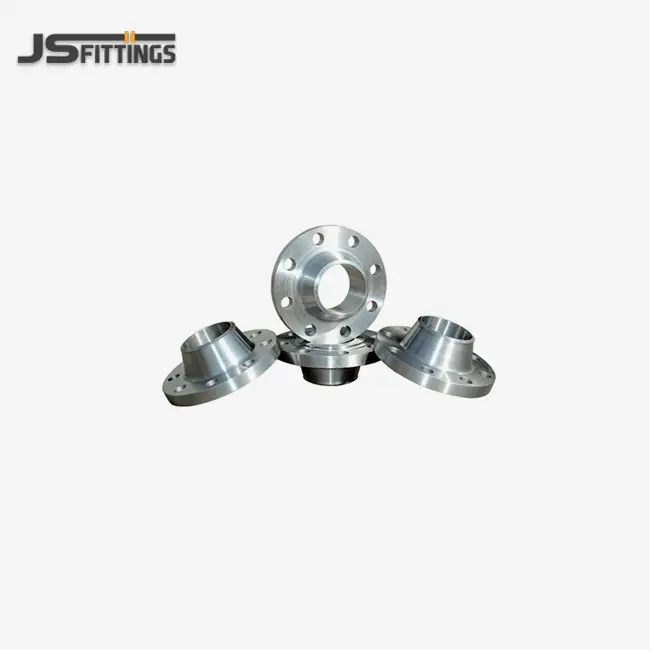
- Weld Neck Flanges (WN): For Weld Neck Flanges (WN), the curved hub design moves stress from the flange body to the connected pipe. This makes it perfect for high-pressure and high-strength service situations. The smooth change in width lowers the stress buildup at the base.
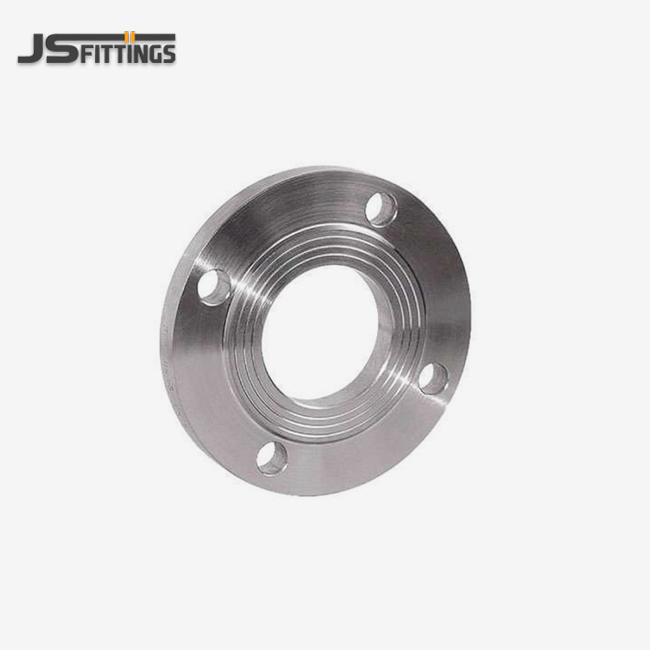
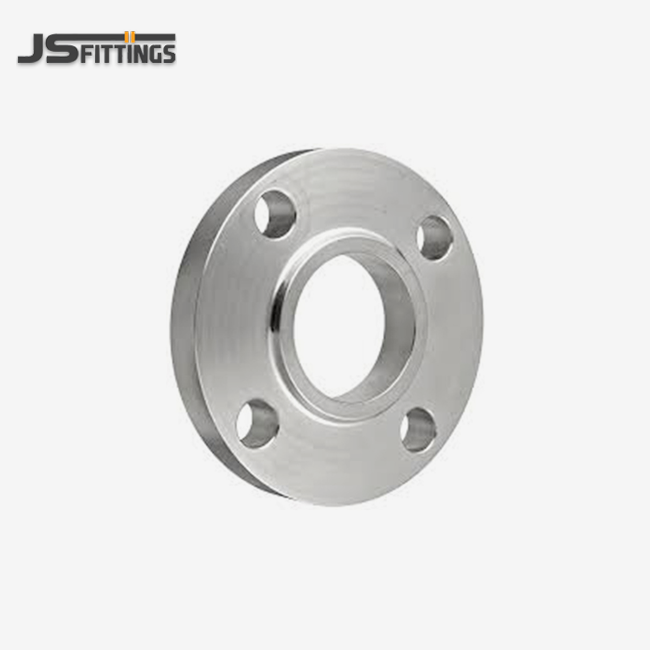
- Slip-On Flanges (SO): These flanges slide over the end of the pipe and make it easier to line them up during installation. They are commonly used for low- to moderate-pressure lines where the simpler welding process can reduce installation costs.
- Blind Flanges (BL): These solid discs are used to seal the ends of piping systems or vessel openings. They can handle full system pressure while still letting you get to them in the future for maintenance or expansion.
- Socket Weld and Threaded Flanges (SW/TH): These are made for small-diameter high-pressure pipes and make sure that equipment and sample lines are securely connected.
- Lap Joint Flanges (LJ): When systems need to be taken apart often for cleaning or repair, like in the food processing and pharmaceutical industries, lap joint flanges (LJ) are used with stub ends.
How to Choose the Right Custom Heavy-Duty Forged Steel Flange?
When choosing the right flanges, you have to weigh a lot of technical factors against budget and operational needs. When specifications are wrong, it can cause installation delays, system leaks, or early component failure, all of which are expensive in industrial projects.
Understanding Critical Dimensions and Specifications
The flange's width, thickness, bolt circle diameter, and number of bolt holes must all be exactly the same as those on the matching equipment. Purchasing teams should check the nominal pipe size (NPS), outside diameter (OD), bolt pattern according to ASME standards, and gasket seating surface dimensions when they ask for custom steel flanges. We keep tolerances even tighter than the standard ±1.6 mm, on some critical sealing surfaces getting as low as ±0.05 mm. This level of accuracy makes sure that field crews can get the right fit without having to grind or shim.
Material Selection for Performance and Longevity
The quality of a material has a direct effect on its ability to fight corrosion, be strong, and work at high temperatures. Grades of carbon steel like ASTM A105 can be used in a wide range of applications, with allowable temperature limits determined by the applicable pressure design code and service conditions. For service below zero in LNG plants, we offer ASTM A350 LF2, which is tougher at low temperatures. Stainless steel ASTM A182 F304 or F316 is needed in corrosive environments, while alloy steel F11 or F22 is needed for high-temperature steam service. Materials that comply with NACE MR0175 requirements for resistance to sulfide stress cracking are needed for sour service conditions.
Pressure Ratings and Temperature Considerations
Each flange has a pressure-temperature rating that tells you the highest pressure that can be used at certain temperatures. European standards use PN numbers (PN6 through PN64) instead of ASME B16.5 ratings, which range from Class 150 to Class 2500. At 38°C, a Class 300 carbon steel flange can handle 740 psi. At 260°C, the allowable pressure decreases according to the ASME pressure-temperature rating tables. By understanding these derating curves, you can avoid over-pressurization events that put people in danger.
Compliance Certifications That Matter
Certifications prove that flanges meet the strict needs of the business. We keep our quality control systems up to date with ISO 9001 and have CE marking for European markets. Our goods are certified by GOST-R for use in Russian projects and meet the standards of big energy companies like NIOC, ADNOC, and Petrobras. Material test reports that follow EN 10204 3.1 or 3.2 make it possible to track the whole process, from the heat of the raw material to the finished product.
Manufacturing Process and Quality Assurance of Custom Forged Steel Flanges
Our way of making things combines traditional forging skills with modern precision machining and strict quality standards. This integration makes sure that the dimensions are correct and that the machine works well enough for critical service. Our manufacturing of custom steel flanges ensures long-term reliability in power plants and refineries.
The Forging Process That Creates Strength
The first step in choosing raw materials is to make sure that the steel billets are certified and meet the chemical composition requirements. This can be done through spectrographic analysis. Induction heating brings these billets to forging temperature, which for carbon steel types is usually 1200°C. Controlled pressure from hydraulic forging presses shapes the material while improving the grain structure. Instead of solidifying from a liquid state like casting does, forging gets rid of pores and makes a straight grain flow that makes the metal stronger.
Heat Treatment for Optimal Properties
Post-forging heat treatment improves the mechanical properties. Normalizing heat cycles makes the grain size more uniform and reduces stress inside the material. The quenching and tempering methods create the right mix of hardness and stiffness for maintaining pressure integrity. Charpy V-notch specimens are used for impact tests to confirm low-temperature toughness, which is critical for sub-zero pipeline environments.
Precision Machining for Perfect Sealing Surfaces
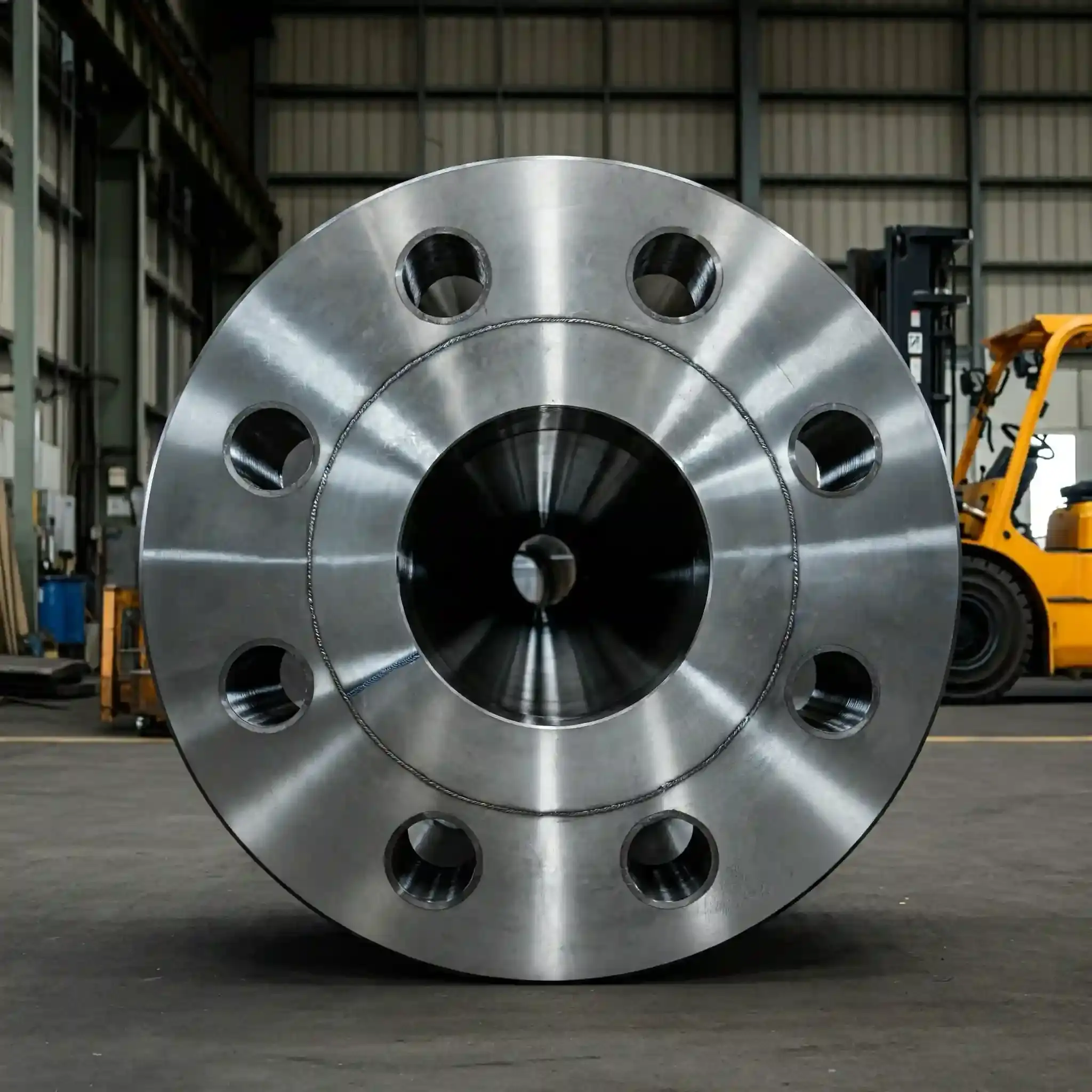
Our CNC machining centers give the sealing surfaces of custom forged flanges with high precision tolerances, exact serrated or smooth finishes.Raised Face (RF) flanges feature serrated surface finishes that grip gaskets and prevent them from blowing out. Ring Type Joint (RTJ) grooves are precisely machined to fit metal ring gaskets used in high-pressure situations. Male & Female (M&F) facings make sure that the valve connections are straight, while Flat Face (FF) finishing works with cast iron valve connections. Controlling the surface roughness values (Ra) makes sure that gaskets fit perfectly and stop leaks in both high-vacuum and high-pressure situations.
Quality Control at Every Stage
Throughout production, our QC system sets up checking stops. Positive Material Identification (PMI) proves the chemical composition of the material. Ultrasonic testing according to ASTM A388 can find cracks inside forgings.After machining, Magnetic Particle Testing (MT) is performed to verify that the surfaces are free of cracks or linear defects. Coordinate Measuring Machines (CMMs) are used to check the sizes of parts to make sure they match the approved drawings for bolt hole patterns and facing dimensions. Before the final check, hydrostatic pressure tests may be performed according to customer requirements or applicable specifications.
Surface Protection for Shipping and Storage
Our carbon steel flanges get protected coatings to prevent corrosion during maritime transit and long-term warehouse storage. Industrial black lacquer of high quality protects domestic shipments for a short time. The yellow oil coating works well in mild marine environments. Hot-dip galvanizing adds a metallurgically bonded zinc layer that improves outdoor corrosion resistance when properly applied. Because of these steps, flanges are "ready to install" when they get to job sites, meaning they don't need to be cleaned or prepared beforehand.
Procurement Insights for Bulk Buyers and OEM Clients
Deciding on the right provider can affect how quickly a project is finished, how much it costs, and how reliable the system is in the long run. Our work with EPC contractors, resellers, and OEM clients has taught us how to make good buying plans for every custom steel flange requirement.
Assessing the Manufacturing Skills of Suppliers
When evaluating a supplier, you should check their ability to produce, their technical knowledge, and their quality systems. Our building is 7,000 square meters, and every month we make 700 tonnes of flanges. We can make anything from DN15 to DN2000, and we can manufacture both standard configurations and customized flange designs. Finite Element Analysis (FEA) lets designers work with complicated shapes during the design process, which helps them get the best weight-to-performance rates for each application.
Understanding Pricing Factors and Volume Economics
Pricing for flanges is based on the cost of the material grade, the level of customization, and the number of orders. Advanced alloys, like Super Duplex F53, generally cost more than common materials because they provide higher corrosion resistance, but they also resist corrosion better. Custom designs that need special tools have upfront development costs that are spread out over the number of orders. There are big discounts for buying in bulk when you buy more than 50 of a certain item. This is because it saves time and money on buying materials. Our sales team gives clear quotes that break down the costs into their individual parts.
Lead Times and Logistics Planning
Standard specs arrive between 15 and 20 business days after the order is confirmed. Lead times go up to 30 to 40 days for custom designs that need new tools. Our inventory system keeps popular combinations on hand in case of an emergency. Every month, we ship more than 90 containers, and more than 95% of them arrive on time. Flexible logistics support includes FOB, CIF, and CFR terms, as well as help with customs paperwork.
After-Sales Support That Protects Your Investment
If you find material defects or problems with the way the product was made within 12 months of shipment, our warranty covers them. Technical support helps with questions about installation and fixing problems. Our yearly complaint rate stays below 0.5%, which shows how reliable our products are. Customers trust our quality and service, as shown by the fact that over 98% of them have bought from us again.
Comparing Custom Heavy-Duty Forged Steel Flanges with Other Flange Types
Knowing the differences in performance between types of flanges helps people who work in buying make choices that meet business needs and stay within budget.
Forged Versus Cast Flanges
Cast flanges work well in low-pressure situations where cost is important. The casting method makes parts cheaply, but it adds holes that make it harder to keep air inside. Forged flanges cost more, but they have better mechanical qualities because the grains are finer. For high-pressure systems above Class 600, forged designs are preferred because they provide better mechanical properties and reliability under stress.
Carbon Steel Versus Stainless Steel Options
Carbon steel flanges, such as ASTM A105, are custom-forged flanges with high-precision tolerances that are very strong and don't cost too much. They can be used with media that doesn't corrode. Surface coatings make things last longer in settings that are slightly corrosive. Without coatings, stainless steel F304 or F316 flanges resist corrosion and chemical attack.Even though they cost three to four times as much at first, stainless steel choices save money over time because they don't need to be replaced as often in harsh chemical service.
Standard Versus Custom Engineered Designs
Standard ASME flanges work well and cheaply in 85% of manufacturing settings. Custom steel flange designs are made to solve specific problems, like geometry mismatches with old equipment, limited space in small installations, and extreme operating conditions that go beyond standard pressure-temperature ratings. Custom flanges can also be used with tongue-and-groove or custom O-ring grooves for sealing purposes when there is no leakage in dangerous media.
Metal Flanges Versus Plastic Alternatives
PVC and CPVC flanges can be used for water treatment and some chemical applications within their specified temperature limits. Most installations that are subject to high temperatures, high pressures, or a lot of mechanical stress use metal flanges. The thermal conductivity and mechanical strength of metal are needed for hydrocarbon service, steam systems, and uses that involve thermal cycles. The extra cost provides safety margins that are necessary for critical infrastructure.
Conclusion
For high-pressure pipe systems where normal parts can't meet the needs of the job, custom steel flange solutions are the perfect answer. Forging makes grain structures that are finely tuned and can handle sudden changes in pressure and temperature. To make the right choice, you need to know about the dimensions, properties, pressure ratings, and compliance certifications of the material. Precision forging, heat treatment, CNC machining, and strict inspection protocols are all parts of high-quality manufacturing. When looking at suppliers, you should look at their production skills, certifications, help with transportation, and service after the sale. Investing in properly defined forged flanges lowers lifetime costs by making the system more reliable and giving it a longer life.
FAQ
1. What is the typical lead time for custom forged steel flanges?
Standard configurations from our stock ship between 15 and 20 business days after the order is confirmed. Lead times are extended to 30 to 40 days for custom steel flange designs that need special tools or dimensions that aren't standard. We keep clear lines of communication open during production and give weekly reports on the state of production. We can handle rush orders by handling them faster for jobs that need to be done quickly.
2. Which certifications should I verify when purchasing custom flanges?
Material test reports according to EN 10204 3.1 or 3.2 show the chemical makeup and mechanical properties of a substance. Quality management systems are confirmed by ISO 9001 certification. Approvals specific to the industry, such as NACE MR0175 for sour service or API 6A for wellhead tools, show that the application is suitable. We have certificates from NIOC, ADNOC, and Petrobras that show we can meet the strict needs of the energy business.
3. Are forged steel flanges suitable for corrosive chemical processing?
Material selection determines corrosion resistance. Grades F304 and F316 stainless steel can handle most environments with organic acids and chlorides. In harsh situations, duplex and super duplex metals stop pitting and stress corrosion cracking. Chemical compatibility is also affected by the choice of gasket and the finish on the surface. We offer material suggestion services based on certain working conditions and process media for every custom steel flange project.
Partner with JS Fittings for Reliable Custom Steel Flange Solutions
For every custom steel flange project, JS Fittings brings more than 40 years of experience making things. Every month, our 7,000-square-meter factory makes 700 tonnes of flanges for EPC contractors, distributors, and industrial end-users in 30 different countries. We keep our ISO 9001, CE, GOST-R, and approvals from big energy companies up to date. For the best flange specifications for your high-pressure applications, our engineering team can help you with technical questions. We deliver precision parts on time more than 95% of the time, whether you need standard ASME configurations or custom-engineered solutions. Email our expert team at admin@jsfittings.com to talk about the needs of your project. As a trusted custom steel flange manufacturer, we offer competitive bulk pricing, flexible OEM services, and comprehensive after-sales support that protects your investment throughout the system lifecycle.
References
1. American Society of Mechanical Engineers, "ASME B16.5-2020: Pipe Flanges and Flanged Fittings NPS 1/2 Through NPS 24 Metric/Inch Standard," ASME International, New York, 2020.
2. Becht Engineering, "Flange Joint Assembly: Best Practices for Bolted Flange Connections in Process Plants," Technical Paper Series, Houston, 2019.
3. European Committee for Standardization, "EN 1092-1:2018 Flanges and their Joints - Circular Flanges for Pipes, Valves, Fittings and Accessories, PN Designated," CEN Brussels, 2018.
4. Metals Handbook Desk Edition, "Forging and Heat Treating of Steel: Microstructure and Properties," ASM International, Materials Park, Ohio, 2021.
5. National Association of Corrosion Engineers, "NACE MR0175/ISO 15156: Petroleum and Natural Gas Industries - Materials for Use in H2S-Containing Environments," NACE International, Houston, 2015.
6. Process Industry Practices, "PIP STE05121: Pressure Testing of Piping Systems and Equipment," Construction Industry Institute, Austin, 2017.
Send Inquiry
Related Industry Knowledge
- ASTM A312 vs A358: Choosing the Right Stainless Steel Pipe Standard
- How long does A53 ERW Pipe last?
- FBE Coated Steel Pipe: The Ultimate Guide (Process & Specs)
- Internal Burr Removed ASTM A53 ERW Pipe for Precision Applications
- A105 Carbon Steel Forged Steel Flange for Refinery Piping
- ASTM A105 Carbon Steel Forged Steel Flange Specifications
- What is seamless carbon steel pipe used for?
- Seamless vs Welded Buttweld Tee: Which Performs Better?
- What is the difference between seamless and welded pipe?
- What is the temperature to weld carbon steel pipe?