
What is seamless carbon steel pipe used for?






2026-05-28 10:19:15
Oil factories, water treatment plants, and power plants all use seamless carbon steel pipe when they need a safe way to connect pipes. Seamless carbon steel pipe is the strongest type of pipe for high-pressure situations where failure is not a choice. Instead of having a horizontal line like soldered versions, seamless versions don't have one. This makes them stronger in systems that move oil, natural gas, steam, and chemicals that break down metal. Industries depend on this material because it strikes a good mix between structural soundness and cost-effectiveness. It solves the problem of meeting safety standards while keeping project budgets in check, which is a problem that everyone faces.
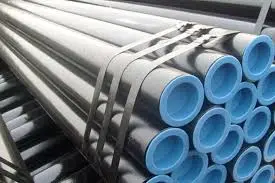
Understanding Seamless Carbon Steel Pipe Construction
In order to make seamless pipes, solid steel billets must be heated to very high temperatures and then pierced and rolled into hollow tubes that don't have any bonded joins. With this hot-forming method, the pipe wall has a regular grain structure all the way through.
Things about the material don't change in any way because there is no joint line. Engineers choose seamless pipe when they need to operate under high temperatures, high pressures, or cyclic loading conditions where weld integrity becomes a critical concern. The frame is made of one piece of metal, so there are no force groups like there are on parts that are bonded together.
ASTM A106 Grade B and API 5L are rules for making things that tell you what chemicals to use and how to make them. These rules make sure that buyers get materials whose tensile strength they can trust. Different grades provide specified minimum yield strengths ranging from approximately 35,000 psi to 95,000 psi depending on the material specification.
Seven Critical Applications Where Seamless Carbon Steel Pipe Solves Real Problems
Oil and Gas Transmission Pipelines
Energy companies transport crude oil and natural gas across thousands of miles using seamless pipe for gathering lines and distribution networks. The material withstands reservoir pressures often exceeding 1,500 psi while maintaining structural integrity through temperature fluctuations.
Pipeline operators in the Middle East and Latin America choose seamless options for sour service environments containing hydrogen sulfide. When manufactured to NACE MR0175 standards with controlled sulfur content below 0.01%, these pipes resist sulfide stress cracking that destroys inferior materials within months.
A major benefit here involves reducing catastrophic failures. Blowouts in offshore platforms or onshore facilities cost millions in remediation and lost production. Seamless construction eliminates the longitudinal weld seam, reducing one of the primary potential failure locations found in welded pipe.
High-Pressure Steam Systems in Power Generation
Coal-fired and natural gas power plants rely on seamless boiler tubes meeting ASTM A192 specifications for superheater and reheater sections. These tubes carry steam at pressures reaching 2,400 psi and temperatures up to 1,050°F.
The uniform wall thickness in seamless construction prevents localized thinning that causes tube ruptures during thermal cycling. Power plant operators often report improved reliability and reduced unplanned shutdown risk when using properly specified seamless tubes in high-temperature service.
Maintenance teams appreciate the extended service life. A seamless boiler tube properly treated and installed can operate for 100,000+ hours before requiring replacement, significantly lowering the total cost of ownership.
Hydraulic Cylinder Manufacturing
Equipment manufacturers building excavators, bulldozers, and industrial presses require seamless mechanical tubing for hydraulic cylinders. These components endure constant pressure cycling between 2,000 and 5,000 psi.
Seamless pipe provides the tight tolerances needed for honed cylinder bores. The consistent wall concentricity means machinists remove less material during finishing operations, reducing manufacturing waste by 15-20%.
Cold-drawn seamless variants offer superior surface finish straight from the mill. Construction equipment operating in African mining operations or Southeast Asian infrastructure projects depends on these cylinders functioning flawlessly in dusty, high-vibration environments.
Chemical Processing and Refinery Units
Petrochemical complexes processing aromatics, ethylene, and other feedstocks specify seamless pipe for cracking furnaces and distillation columns. These systems handle corrosive substances at elevated temperatures where material degradation accelerates rapidly.
Engineers select ASTM A333 Grade 6 seamless pipe for cryogenic service in LNG facilities, where temperatures may fall below -50°F. The fine-grained microstructure maintains notch toughness, preventing brittle fracture during emergency shutdowns.
Refineries reduce maintenance costs through longer run cycles. Seamless construction in fluid catalytic cracking units can significantly extend inspection intervals and operational uptime between maintenance turnarounds, doubling operational uptime between turnarounds.
Structural Applications in Heavy Construction
High-rise buildings, bridges, and offshore platforms incorporate seamless structural pipe as load-bearing columns and bracing members. Civil engineers specify these products when welding schedules would delay project completion.
The uniform properties allow structural fabricators to achieve consistent weld quality when joining seamless columns to beam connections. This reliability matters during seismic events where structural ductility prevents catastrophic collapse.
Government infrastructure projects in Central Asia and CIS countries favor seamless options for piling foundations, and carbon steel pipe drives through dense soil and rock layers without developing longitudinal cracks that compromise bearing capacity.
Water Treatment and Municipal Systems
Cities expanding water supply networks specify seamless pipe for high-pressure pump discharge lines and cross-country transmission mains. Municipal engineers calculate pump station requirements knowing the pipe will handle surges without failure.
Galvanized seamless variants meeting ASTM A53 serve potable water distribution where corrosion protection extends service life beyond 50 years. The zinc coating bonds uniformly to the smooth exterior surface, unlike welded pipe, where seam preparation creates coating discontinuities.
Waterworks managers in developing regions appreciate the reduced leak rates. Seamless construction lowers water losses from 30% to under 8%, making scarce resources available to growing populations.
Heat Exchanger Tube Bundles
Industrial cooling systems and condensers utilize seamless tube bundles manufactured to ASTM A179 specifications. These small-diameter tubes (typically ½" to 2" OD) transfer thermal energy between process fluids.
The smooth interior bore minimizes pressure drop and turbulence, improving heat transfer coefficients by 12-18% compared to welded tubing. Chemical plants achieve target production rates while consuming less pumping energy.
Maintenance personnel appreciate the inspection access. Eddy current testing rapidly evaluates tube condition without disassembly, identifying thinning before leaks contaminate process streams.
Material Selection: Matching Grade to Application Requirements
The amount of carbon in a material has a direct effect on its mechanical properties and its ability to be welded. It is very easy to bend and flare low-carbon types that have between 0.10 and 0.25 percent carbon. Grades with 0.25 to 0.50% carbon offer higher tensile strength and improved pressure containment capability.
Buyers should know what kind of heat treatment is needed based on how the item will be used. The small grain structure of a material that has been normalized makes it harder to touch at low temperatures. Stress-relieved pipe gets rid of any stresses that were there when it was made. This helps prevent distortion during welding.
The sizes are set with the NPS (Nominal Pipe Size) and Schedule method. For normal use, Schedule 40 gives you a normal wall width. Schedule 80 and 160, on the other hand, can handle higher forces. To find the wall thickness of a pipe, ASME B31.3 is used for process pipes, and ASME B31.4 is used for liquid transfer systems.
Quality Verification: What Serious Buyers Should Demand?
Suppliers you can trust give you Mill Test Certificates (MTC) that show the results of chemistry research and mechanical tests. These documents link the material to the heat number, which lets quality checks be done years after the installation.
Non-destructive testing finds problems with the way something is made before it is shipped. Laminations and particles in the pipe wall can be found with ultrasonic analysis. Eddy current testing finds surface cracks that can't be seen with the naked eye.
Hydrostatic proof tests are used to make sure that the pressure is stable. To make sure there are no breaks or changes in size, suppliers should perform hydrostatic testing in accordance with applicable ASTM or API specifications, using the required test pressure and hold time for the pipe grade and dimensions.
Making sure that the sizes are correct will allow them to fit normal fittings. As per ASTM guidelines, outside diameter tolerances should comply with the applicable ASTM or API specification requirements for the pipe size and manufacturing method. To make sure the minimum design thickness is met, wall thickness tolerances should be within -12.5%.
Understanding Cost Drivers and Value Propositions
Most of the time, seamless pipe costs 15 to 35 percent more than ERW welded pipe of the same size. This is because it is harder to make. But this extra doesn't matter when you add up how much it costs to build a high-pressure system.
On transmission lines with a big diameter, eliminating longitudinal weld inspection requirements can reduce non-destructive testing costs and shorten project schedules. All of the lengthwise parts in welded pipe need to be X-rayed, which adds weeks to the schedule for the job.
Things that last longer cost less to replace. In the same gas field, a seamless gathering line will last 25 to 30 years, but a welded line may only last 15 to 20 years. The higher starting cost is worth it because the replacement cost will come later.
Insurance companies and regulatory agencies often favor seamless construction for critical infrastructure applications.For critical and hazardous industrial applications, pressure vessel codes—such as those governed by ASME Section VIII—strictly mandate the use of seamless pipe for specific high-pressure or extreme-temperature services. No matter how much it costs, this means that there is no other valid option.
Coating and Corrosion Protection Strategies
Coatings on the outside of underground or underwater devices make them last longer. Three-layer polythene (3LPE) methods are great at keeping water out, which significantly reduces external corrosion rates when properly applied and maintained.
Fusion-bonded epoxy (FBE) is better at withstanding high temperatures in systems that move hot oil and steam. The coating hardens directly on the steel, which stops cathodic disbondment, which can degrade poorly bonded coatings.
Corrosive process fluids are dealt with by internal linings. To keep drinkable water lines safe from tuberculation, cement mortar covering is used. For sour gas service, epoxy phenolic coats keep chemicals from attacking them.
Coatings and cathodic protection devices work together to stop rust completely. By keeping pipe surfaces at safe potentials with sacrificial anodes or imposed current systems, assets can last longer than 50 years.
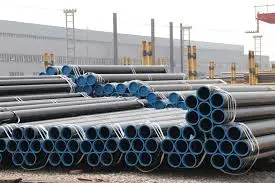
Global Standards Compliance for International Projects
Different regions mandate specific material standards. North American projects reference ASTM and ASME specifications, while European tenders require DIN or EN compliance. Middle Eastern and African projects often accept multiple standards, with API 5L being universally recognized.
Certification requirements vary by application. Petroleum pipelines demand API 5L PSL2 with stringent toughness testing. Pressure vessels need ASME certification with U-stamp authorization. Government infrastructure projects in Latin America may require local testing laboratory verification.
Traceability documentation proves material pedigree. Each pipe should carry permanent markings identifying manufacturer, heat number, grade, and specification. This traceability satisfies insurance underwriters and regulatory inspectors decades after installation.
Practical Procurement Guidance for Project Managers
Lead times for seamless pipes vary in size and amount and range from 30 to 90 days. In Schedules 40 and 80, standard sizes like 2" through 12" usually ship within 45 days. Special orders for large diameters or thick walls may take 12 to 16 weeks.
Minimum order amounts have a big effect on prices. Prices are better for container-load shipments (20–25 tonnes) than for LCL (less than container load) shipping. To get big savings, project managers should combine needs from different work streams.
Payment terms affect which suppliers are chosen. Distributors that have been around for a while and have a good track record offer net-30 or net-60 options. When you buy directly from a mill, you need a letter of credit. This adds to your bank fees but could lower unit costs for big projects.
However, price should not be the sole deciding factor; robust technical support is equally critical. A premier carbon steel seamless pipe manufacturer provides invaluable engineering assistance—guiding material selection, protective coatings, and fitting compatibility—which prevents costly field modifications and ensures a seamless installation process.
Conclusion
Seamless carbon steel pipe solves critical infrastructure challenges where welded alternatives introduce unacceptable risk. From high-pressure petroleum transmission to power generation steam systems, this material delivers proven reliability across demanding applications. Understanding the manufacturing process, material grades, and quality verification methods empowers procurement professionals to specify optimal solutions. While initial costs exceed welded pipe, the total value proposition—including installation efficiency, extended service life, and reduced maintenance—makes seamless construction the intelligent choice for pressure-critical systems. Partner with experienced suppliers offering technical support, proper certifications, and proven delivery performance to ensure project success.
FAQ
1. How does seamless pipe compare to welded pipe for high-pressure applications?
Seamless pipe eliminates the longitudinal weld seam, removing a potential weak point in pressure containment systems. The uniform grain structure provides equal strength in all directions, making it superior for pressures above 3,000 psi or critical applications where failure consequences are severe.
2. Can seamless carbon steel pipe be used in corrosive environments?
Yes, when properly protected with external coatings and cathodic protection systems. The base material resists general corrosion similar to welded pipe. For highly corrosive service, specify low-sulfur grades meeting NACE MR0175 requirements and apply appropriate protective coatings.
3. What diameter range is available in seamless construction?
Manufacturing limitations generally constrain seamless pipe to approximately 24"–26" outside diameter in common commercial production. Larger diameters require welded construction such as LSAW or SSAW methods. Small-bore applications from ⅛" to 2" commonly use seamless variants.
4. How do I verify seamless pipe quality before acceptance?
Demand Mill Test Certificates documenting chemical composition and mechanical properties. Inspect permanent markings for heat number traceability. Request ultrasonic testing reports confirming the absence of internal defects. Verify dimensional measurements against purchase order specifications using calibrated instruments.
Partner with JS FITTINGS: Your Trusted Carbon Steel Pipe Supplier for Mission-Critical Projects
Looking for a highly reliable manufacturing partner who truly understands the high stakes of your critical industrial projects? With 43 years of manufacturing excellence, JS FITTINGS is a premier global supplier delivering premium carbon steel seamless pipes—including ASTM A106, ASTM A53, and API 5L grades—to elite EPC contractors, distributors, and government infrastructure projects across more than 30 countries. Our ISO-certified facility supports global project deliveries with reliable logistics and documented quality control systems, backed by complete Mill Test Certificates and third-party inspection coordination. Contact our technical team at admin@jsfittings.com for material selection guidance, competitive quotations, and solutions that minimize your project risk while meeting deadlines.
References
1. American Society of Mechanical Engineers. (2020). ASME B31.3 Process Piping: Materials, Design, and Fabrication Standards for Industrial Applications. New York: ASME Press.
2. Bose, A. and Rahman, K. (2019). Seamless Steel Pipe Manufacturing: Metallurgy, Quality Control, and Application Engineering. Materials Science International Journal, Volume 12, Issue 4, pp. 287-312.
3. International Organization for Standardization. (2021). ISO 3183: Petroleum and Natural Gas Industries - Steel Pipe for Pipeline Transportation Systems. Geneva: ISO Standards Publishing.
4. Mohitpour, M., Golshan, H., and Murray, A. (2018). Pipeline Design and Construction: A Practical Approach for Engineers and Project Managers. Third Edition. Houston: Gulf Professional Publishing.
5. National Association of Corrosion Engineers. (2022). NACE MR0175/ISO 15156: Petroleum and Natural Gas Industries - Materials for Use in H2S-Containing Environments in Oil and Gas Production. Houston: NACE International.
6. Smith, J.R. and Peterson, L.M. (2021). Carbon Steel Piping Systems: Selection, Installation, and Maintenance Best Practices for Industrial Facilities. Engineering Materials Handbook Series. Boston: Technical Publications Institute.
Send Inquiry
_1775029585391.webp "Buttweld Elbow")
Related Industry Knowledge
- Types of ASTM A105 weld neck flange
- Stainless Steel 316L Buttweld Tee for Offshore Pipelines
- Differences Between AWWA Flanges and ANSI Pipe Flanges
- CRA Clad Pipe vs Mechanically Lined Pipe: Key Differences Explained
- What is A312 stainless steel pipe? Everything You Need to Know
- Understanding the API 5L Seamless Steel Line Pipe Specification
- FBE Coated Steel Pipe: The Ultimate Guide (Process & Specs)
- Internal Burr Removed ASTM A53 ERW Pipe for Precision Applications
- What are butt weld fittings?
- Is a 90 or 45 degree elbow better for drain?