
Understanding the API 5L Seamless Steel Line Pipe Specification






2026-06-16 17:18:24
To make sure long-term safety and efficiency when buying pipeline materials for important oil and gas infrastructure, you need to know the API 5L specification. Although they are more expensive, API 5L seamless steel line pipes are the best way to move oil, gas, water, and other fluids in tough circumstances. Unlike welded options, these pipes are made without longitudinal gaps, so they are more resistant to pressure and have uniform mechanical properties throughout the pipe wall. The American Petroleum Institute keeps this guideline up to date. It sets strict rules for chemical makeup, mechanical strength, dimensional tolerances, and testing methods that protect your investment and keep your business running.
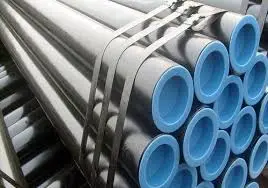
What Is API 5L Seamless Steel Line Pipe?
API 5L seamless steel line pipes are made to meet strict industry standards so they can move water, natural gas, and heavy oil over long distances. The specification stands out because it has clear requirements that cover both normal and unusual working situations.
Seamless vs. Welded: Structural Differences That Matter
It is how they are made that makes the main difference between API 5L seamless steel line pipes and welded pipes. Seamless pipes are made from solid steel billets that are hot-pierced and rolled to make a continuous structure without any weld lines. This gets rid of the longitudinal joint, which is the weakest part of welded pipes and is where stress builds up, and failures often initiate. Whether they are made with ERW or submerged arc welding, welded pipes have a heat-affected zone that can have different mechanical qualities than the base material.
When buying, managers look at risk; this difference in structure directly affects how reliable something is. Because seamless pipes do not contain a weld seam, they eliminate weld-related concerns and are often preferred for certain high-pressure and critical-service applications. This makes it less likely that they will burst catastrophically in high-stakes situations like offshore platforms or sour service environments with hydrogen sulfide.
Physical and Mechanical Properties for High-Pressure Environments
Because the microstructure is more uniform, seamless line pipes always give the same mechanical performance. As long as the wall thickness tolerances stay within ±12.5% of the standard specs, the structure will behave as expected when it expands and contracts and is loaded and unloaded over and over again. Because the inside of the pipe is smooth, there is less friction, which means that the pipeline will use less energy over its lifetime.
When installing something in the field, accuracy in the measurements is very important. Pipes that are consistently round and square at the ends cut down on the time it takes to fit them together during girth welding. This saves money on work and speeds up project plans. This is especially helpful when you have to meet tight building dates or work in remote areas where delays caused by bad logistics cost a lot.
Chemical Composition and Steel Grades: PSL 1 and PSL 2
There are two Product Specification Levels that set the quality standards in the API 5L specification. PSL 1 is the normal quality level that meets the basic chemical and mechanical requirements for use in transportation. PSL 2 has tighter rules on the amount of carbon equivalents, sulfur, and phosphorus in a material. It also requires Charpy V-Notch impact tests to make sure the material is tough enough to break.
Steel grades go from Grade B (less strong but more flexible) to X42, X46, X52, X60, X65, and finally X70. The number after the grade name tells you the minimum yield strength in thousands of pounds per square inch. Lower-pressure gathering lines and water transfer work best with Grade B. On the other hand, X60 through X70 are recommended for high-pressure trunk lines where optimizing wall thickness saves money on materials without lowering safety limits.
Carbon equivalent calculations help evaluate weldability and how easily it can crack when hydrogen is added. For sour service uses, some sour-service steel grades may use calcium treatment for inclusion shape control to improve resistance to hydrogen-induced cracking. This stops cracks from starting in H₂S-rich environments, which would otherwise cause failures that are hard to predict and costly shutdowns.
Manufacturing Process: From Billet to Finished Pipe
The first step in making a seamless pipe is choosing steel billets that meet exact chemical requirements. By heating these billets to forging temperature and piercing holes in them with rotating piercing mills or Mannesmann methods, a hollow shell is made. Several rolling and sizing processes are used to gradually make the pipe longer and thinner while controlling the spread of wall thickness.
During heat treatment steps like normalizing, cooling, and tempering, the microstructure is fine-tuned to get the desired mechanical qualities. Non-destructive testing, such as ultrasonic testing, looks over the whole pipe body to find problems inside, and hydrostatic testing checks that the pipe is strong under pressure. The production cycle ends with end beveling and dimensional checking, which ensures that every length meets the standards before it is shipped.
Understanding this process helps people who buy things figure out how good a seller is.Compared to older legacy mills, premier manufacturers utilizing state-of-the-art rotary piercing technology and fully automated ultrasonic testing (UT) systems consistently deliver superior API 5L seamless steel line pipes with exceptionally tight tolerances and virtually zero defect rates.
Comparing API 5L Seamless Steel Line Pipes with Alternatives
To choose the right pipe type, you have to weigh the performance needs against the supply plans and budgets. Depending on the needs of the project, each production method has its own benefits.
Seamless vs. ERW: Durability and Pressure Tolerance
Electric Resistance Welded (ERW) pipes are most often used in smaller capacity uses because they are cost-effective and can be made quickly. A longitudinal weld seam is made during the welding process. The heat-affected area is then normalized through post-weld heat treatment. Even though current ERW pipes meet strict requirements, the weld seam could still be weak in settings that are very corrosive or that load them in cycles.
API 5L Seamless Steel Line Pipes eliminate this concern entirely. The even structure can handle changes in temperature and pressure without causing potential failure initiation points. This benefit is very important in offshore settings where repair costs go up a lot, or in remote onshore sites where pipeline failures cause environmental problems and fines from the government that are much higher than the difference in material prices.
Corrosion resistance is also not the same. If the heat treatment doesn't completely even out the grain, ERW weld seams may corrode at slightly higher rates. Because seamless lines rust in the same way, it's easier to figure out the corrosion allowances during the engineering design steps.
Evaluating LSAW and SSAW for Large-Diameter Projects
Longitudinal Submerged Arc Welded (LSAW) pipes work great in heavy-wall, large-diameter situations where making seamless pipes would be too expensive. The JCOE or UOE forming methods make pipes that are safe for trunk lines, but they are more difficult to use because they need to be inspected at the weld seam. When it comes to very big sizes, spiral submerged arc welded (SSAW) pipes are cheaper, but their weld seam lengths are longer than usual, which is usually a problem for high-pressure gas service.
For smaller and medium pipe sizes, seamless pipes eliminate many of the weld-related considerations associated with welded products. The higher price is because they are harder to make and lose a lot of material when they are piercing, but the increased reliability makes it worth it in serious situations where failure would have worse effects than the initial cost savings.
Steel Grade Selection: Grade B Through X70
Picking the right grade relies on the temperature range, working pressure, and government rules. For low-pressure gathering systems and water transportation networks, Grade B is strong enough. Its higher ductility makes field bending easier when pipeline lines run into objects in the ground.
The X42 and X46 grades are good choices for moderate-pressure uses because they have better strength-to-weight ratios that lower the need for support structures. X52 fills the gap between standard and high-strength requirements, which are usually set for regional transmission lines.
Premium grades such as X60, X65, and X70 are specifically engineered for high-pressure operations, allowing engineers to utilize optimized, thinner wall sections without compromising safety. This lowers the amount of material needed and the cost of welding on long-distance projects. The higher strength means stricter welding methods and a possible loss of ductility, so building and working conditions need to be carefully thought out. Choosing the right grade affects not only the cost of the materials but also the cost of shipping, the speed of installation, and the long-term upkeep plans.
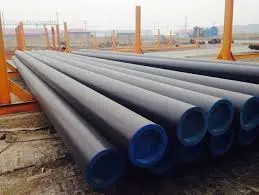
Technical Applications and Performance Advantages of API 5L Seamless Pipes
API 5L seamless steel line pipes are the best choice for demanding situations where dependability can't be sacrificed because they have better mechanical stability.
Industry Applications: From Wellhead to Market
High-pressure trunk lines that connect oil and gas production facilities to refineries and export ports use seamless pipes for transporting crude oil and natural gas. The pipes carry fuels safely over hundreds of miles. They can handle changes in pressure from compressor stations and changes in temperature from seasonal changes.
For important junctions and high-pressure areas where preventing leaks directly affects public safety, natural gas delivery networks that serve cities require seamless lines. Petroleum product pipes that carry gasoline, diesel, and jet fuel have a smooth interior bore that keeps the products from getting contaminated while they are being transported in batches.
Field gathering systems and flow lines within oil fields use seamless pipes to connect individual wells to separation centers through field gathering systems and flow lines. The pipes deal with multiphase flows that include sand, water, and toxic chemicals that would make weaker materials fail faster. For subsea and offshore installations, building must be seamless so that it can resist marine corrosion, wave loads, and installation pressures that are too high for the material to handle.
Performance Benefits Validated by Real-World Projects
The dependability benefit of seamless design is shown by large pipeline projects. Offshore platforms in the Gulf of Mexico and the North Sea have used seamless pipe systems for decades without any problems linked to the seams. This proves that the technology works in harsh marine settings. Onshore projects that go through seismically busy areas benefit from the uniform flexibility that lets the ground move without cracks spreading.
The accurate control of dimensions that comes with seamless making speeds up the fitting process. When pipes are consistently straight and square at both ends, they take less time to line during welding, which saves 15 to 20 percent on labor costs compared to pipes that need a lot of field grinding and fit-up adjustments. This increase in productivity is especially helpful for big jobs where welding costs a lot of money.
Better flow efficiency saves money on operations that can be seen. When compared to welded pipes with internal weld beads, seamless pipes use 3–5% less pumping energy because their smooth inner surface reduces noise and pressure drop. Over many decades of use, these energy savings will make up for the higher cost of the materials at first.
Compliance with Wall Thickness and Tolerance Standards
API 5L sets strict limits for dimensions that make sure function stays the same. Changes in wall thickness have an effect on both figuring out the pressure number and estimating the corrosion margin. When pipes are made with strict process controls, the wall thickness is maintained within the tolerances specified by API 5L and the applicable purchase requirements.
When engineers build things, this uniformity is important. Tighter standards let you choose the best wall width without adding too many safety factors, which lowers the cost of materials while still meeting code requirements. Procurement teams can be sure that manufacturing differences won't affect pressure ratings or speed up the rate of rust penetration when they set the minimum allowed wall thickness.
Installation and Welding Best Practices
The benefits of seamless pipes are maximized when they are installed correctly. The grade of metal and the temperature of the work area determine how much pre-heating is needed. For example, higher-strength grades need limited heat input to keep hydrogen from cracking in the weld metal and heat-affected zones. Matching the grade of the pipe to the type of metal used in the filler makes sure that the joint strength meets or exceeds the qualities of the base material.
Radiographic testing (RT) or ultrasonic testing (UT), combined with rigorous visual inspection of the root passes, are indispensable field inspection protocols that guarantee absolute weld integrity. When you curve and control the gaps correctly during fit-up, you can avoid problems with incomplete fusion that could lead to cracks during service or pressure testing. For thick-wall, high-strength types, stress relieving of field welds can be requested to reduce residual stresses that cause stress corrosion cracking in harsh settings.
Conclusion
Procurement workers can make choices that balance performance needs, price limits, and delivery plans when they understand the API 5L specification. API 5L seamless steel line pipes have clear benefits in maintaining pressure integrity, maintaining structural uniformity, and being easy to install, which is why they are used in important oil and gas infrastructure. Choosing the right grade, evaluating suppliers, and using the right buying methods will make sure that the material meets the goals of the project while staying within budget. Buyers can get reliable materials that help projects succeed, and operations run smoothly for a long time by working with experienced makers who offer tested quality systems and quick service.
FAQ
1. What factors affect the price of API 5L seamless steel line pipe?
Prices depend on many things, such as the cost of steel billets, which changes with the prices of metal elements and commodities around the world. Tighter tolerances, specialized heat treatments, or luxury types that need controlled chemicals make manufacturing more difficult. When piercing, the material output is affected by the mix of diameter and wall thickness. Some size ranges produce more waste during production. Conditions in the market, the number of orders, and how quickly they need to be delivered all affect the end price. When comparing quotes, you should look at the total cost of ownership, which includes things like quality assurance, shipping reliability, and expert support, instead of just the unit price.
2. How can I be sure that my provider is following the API 5L certifications?
Multiple checks must be done to make sure that API 5L compliance is real. Check each heat lot's mill test records to see that the chemical analysis, mechanical testing, and non-destructive examination reports are correct. Use the American Petroleum Institute's online database to make sure the provider has up-to-date API monogram rights. Ask for copies of qualification letters and certifications for your quality management system from buyers who are known to be trustworthy in your field. Third-party inspection services can watch the production and tests to make sure they are done correctly. Suppliers with a good reputation accept openness and provide full paperwork to back up claims of compliance.
Partner with JS FITTINGS for Your API 5L Seamless Steel Line Pipe Requirements
Finding the best manufacturer for your pipeline materials starts with picking one that blends proven knowledge with quick service. JS FITTINGS adds to every project more than 40 years of specialized production knowledge, as well as a full range of quality assurance methods and international certifications such as ISO, CE, and GOST-R. Being an accepted provider for NIOC, ADNOC, and Petrobras shows that we are dedicated to meeting the highest standards for technical and written work.
We make API 5L seamless steel line pipes in grades B through X70, with wall thicknesses from SCH 10 to SCH 160 and sizes from 1/2" to 26". Our factory can make more than 30,000 tons of goods every year, and we ship more than 90 containers every month. Our on-time delivery rate is always above 95%. Our technical team is here to help you find the right materials for your needs, whether you need standard specs from our stock or custom configurations designed to fit the needs of your project.
As a specialized supplier, we help you with the buying process by giving you thorough product catalogs, clear quotes, and full mill documentation. Email us at admin@jsfittings.com to talk about the details of your project and find out how our production skills, quality systems, and focus on the customer can improve the stability of your supply chain while keeping project costs low.
References
1. American Petroleum Institute. API Specification 5L: Specification for Line Pipe, 46th Edition. Washington, DC: API Publishing Services, 2018.
2. Bai, Yong, and Qiang Bai. Subsea Pipeline Design, Analysis, and Installation. Oxford: Gulf Professional Publishing, 2014.
3. Campbell, John M. Gas Conditioning and Processing, Volume 2: The Equipment Modules, 9th Edition. Norman, OK: Campbell Petroleum Series, 2014.
4. Mohitpour, Moness, Howard Golshan, and Alan Murray. Pipeline Design and Construction: A Practical Approach, 3rd Edition. New York: ASME Press, 2007.
5. Palmer, Andrew C., and Roger A. King. Subsea Pipeline Engineering, 2nd Edition. Tulsa: PennWell Corporation, 2008.
6. Revie, R. Winston, editor. Oil and Gas Pipelines: Integrity and Safety Handbook. Hoboken: John Wiley & Sons, 2015.
Send Inquiry
_1775029585391.webp "Buttweld Elbow")

Related Industry Knowledge
- All About ASTM A105 weld neck flange
- Carbon Steel Buttweld Reducer Material Standards Explained
- Long Radius Buttweld Elbow: Ultimate Guide 2026
- What Are Slip-On Flanges?
- The Ultimate Guide to Slip-On Flanges: Exploring Applications and Benefits
- CRA Clad Pipe vs Mechanically Lined Pipe: Key Differences Explained
- Understanding Long Radius Buttweld Elbow: Essential Components for Your Construction Projects
- ASME B16.9 Buttweld Tee Dimensions and Weight Guide
- What is the difference between seamless and welded pipe?
- What is a plate flange?