
ASME B16.9 Buttweld Tee Dimensions and Weight Guide






2026-05-27 10:42:50
When choosing a buttweld tee for important pipe systems, exact measurements and weight information are necessary. ASME B16.9 sets the standards for center-to-end lengths, branch exit sizes, and wall thickness accuracy for both equal and reducing tees. This guide brings together the technical specs, accuracy ranges, and weight charts that EPC contractors, dealers, and engineering companies need to correctly predict the cost of materials, plan logistics, and make sure that installation goes smoothly in the field. Knowing these factors reduces the chance of mistakes during purchase, stops scheduling delays, and ensures compatibility with existing pipeline infrastructure.
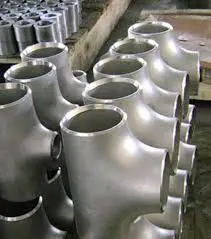
Why Does ASME B16.9 Dimensional Accuracy Matter for Your Project Success?
Every project manager knows how frustrating it is when parts that don't fit arrive on site. A small difference in one measurement in a buttweld pipe tee can lead to extra work being done on the welding, extra shipping costs, and missed deadlines. This risk is taken away by ASME B16.9, which makes the center-to-end measurements the same for all makers around the world (dimension M for run outlets and dimension C for branch outlets).
For EPC companies in charge of multi-phase plant developments, this standardization means that some parts can be used instead of others. If both suppliers follow ASME B16.9 standards, a 6-inch Schedule 40 Equal Tee from JS FITTINGS will fit perfectly with a pipe from another source. The dimensions are the same for the beveled end preparation, which is typically cut to 37.5° ± 2.5° and has an approximate 1.6 mm root face. This makes sure that welders can get the right depth without having to grind or re-bevel the end.
Distributors who keep stock face a different problem: how to best use their store space. Weight information from ASME B16.9 charts lets you do accurate freight estimates and plan the layout of your building. A 24-inch XXS carbon steel buttweld tee weighs significantly more than 350 kg and requires heavy-duty handling equipment. If you know these numbers ahead of time, you won't be able to underestimate the costs of handling and shipping.
Tender standards are very strict for government building projects. To keep audit records clear, procurement officers must make sure that the material quoted meets the requirements of ASME B16.9 measurement tables. Every package from JS FITTINGS comes with a verified measurement report that is compared to the published tables of the standard. This gives buying teams official proof that the standards have been met.
Decoding the ASME B16.9 Dimension Tables: What Engineers Actually Need?
The ASME B16.9 standard categorizes buttweld tee dimensions into two primary measurements: center-to-end for run (M) and center-to-end for branch (C). For an equal tee, both dimensions remain identical. In a reducing tee, the branch outlet adopts a smaller NPS, but its center-to-end dimension follows the branch size's standard value.
Take a common specification: 8" x 8" x 6" Reducing Tee, Schedule 40. The run outlets (8-inch) maintain a center-to-end dimension of 203mm, while the reduced 6-inch branch measures 152mm from the centerline. Wall thickness uniformity becomes critical here—the crotch radius internally compensates for metal thinning during the hot-forming process, a detail often overlooked in imported generic fittings.
Tolerance bands defined in ASME B16.9 allow ±1.6mm variance for diameters up to 24 inches, tightening to ±3.2mm for larger welded tees. JS FITTINGS employs CNC beveling machines calibrated quarterly to maintain tolerances within ±0.5mm, significantly tighter than code requirements. This precision matters when automated orbital welding equipment is deployed—machinery calibrated for exact fitment cannot accommodate loose-tolerance components without manual intervention.
Wall thickness selection follows the Schedule system (Sch 10S through XXS), but engineers must understand that the nominal wall thickness applies only to the straight pipe section. For a buttweld tee, ASME B16.9 mandates minimum wall thickness measurements at the crotch and branch areas, where forming stresses concentrate. A Schedule 80 buttweld tee, suitable for higher-pressure service depending on material grade and design conditions, achieves its pressure capability only when these critical zones meet the reinforced thickness criteria outlined in Table 4 of the standard.
Weight Charts and Their Hidden Impact on Project Economics
Material weight directly influences three cost drivers: raw material pricing, transportation logistics, and on-site handling labor. The ASME B16.9 weight chart provides theoretical weights based on standard wall thickness and material density. Carbon steel (ASTM A234 WPB) assumes a 7.85 g/cm³ density, while stainless steel grades (ASTM A403 WP316L) use 8.00 g/cm³.
A practical example illustrates the financial stakes: a petrochemical plant requiring 150 units of 12-inch Schedule 40 Equal Tees. Each unit weighs approximately 45 kg, totaling 6,750 kg of material. At current steel prices, this represents a $12,000 material cost baseline. However, switching to Schedule 80 (78 kg per unit) for enhanced pressure rating inflates the weight to 11,700 kg—a 73% increase in both material cost and freight charges.
Shipping logistics compound these figures. Container load optimization depends on precise weight calculations to maximize payload without exceeding the 28-ton container limit. JS FITTINGS calculates mixed-size shipments using ASME B16.9 weight data, often combining smaller fittings with heavier flanges to achieve 98% container utilization. This efficiency reduces per-unit freight costs by 15-20% compared to less sophisticated packing strategies.
On-site handling becomes a safety concern when buttweld tee sizes exceed 20 inches. A 30-inch XXS carbon steel tee can weigh well over 800 kg and typically requires crane lifts and multiple riggers. Installation contractors bidding on projects need accurate weight data during the estimating phase to price lifting equipment rental and labor hours correctly. Underestimating fitting weights leads to under-resourced crews and schedule slippage.
Material Grade Selection: Matching Dimensions with Service Conditions
ASME B16.9 dimensions remain constant across material grades, but weight varies slightly due to density differences. The standard covers carbon steel, alloy steel, and stainless steel variants, each suited for distinct operating environments.
Carbon steel buttweld tee options like ASTM A234 WPB dominate general industrial service—water distribution, compressed air systems, and low-temperature hydrocarbon lines. The grade offers a tensile strength of 415 MPa minimum, sufficient for pressures up to 30 MPa when paired with appropriate wall thickness. The WPC variant (with higher strength) may be used for higher-pressure applications, though creep resistance at elevated temperatures typically requires alloy steel grades.
For projects spanning regions with sub-zero winters, ASTM A420 WPL6 low-temperature steel becomes mandatory. This grade maintains impact toughness down to -46°C, preventing brittle fracture in Alaskan pipeline systems or Canadian LNG terminals. The dimensional footprint matches WPB exactly, allowing direct substitution based solely on temperature criteria.
Stainless steel grades are specifically selected to address severe corrosion challenges. For instance, ASTM A403 WP316L buttweld tees are heavily utilized in chemical processing plants handling aggressive acids, chlorides, and pharmaceutical-grade solvents. The "L" suffix indicates low-carbon content (≤0.03%), preventing carbide precipitation during welding—critical for avoiding intergranular corrosion in heat-affected zones. Despite costing 4-5 times more than carbon steel, stainless grades eliminate maintenance costs from corrosion-related failures over a 25-year service life.
Chrome-moly alloy steel (ASTM A234 WP11, WP22, WP91) targets high-temperature power generation. Supercritical boilers operating at 580°C and 25 MPa demand alloys that resist creep deformation. WP91 grade, containing approximately 9% chromium and 1% molybdenum, maintains structural integrity through 200,000 hours of thermal cycling. JS FITTINGS sources these specialty alloys from mills holding NORSOK M-650 approval, ensuring traceability back to vacuum-melted ingots.
Seamless vs. Welded Construction: How Manufacturing Method Affects Dimensions?
ASME B16.9 permits two manufacturing routes: seamless (cold-drawn or hot-formed) and welded (fabricated from plate). The distinction matters beyond just pressure ratings—it influences dimensional accuracy and weight distribution.
Seamless buttweld tee production begins with pierced seamless pipe, either forged under hydraulic presses or extruded through mandrels. Sizes up to 24 inches typically follow this route. The absence of a longitudinal seam means uniform metallurgical properties in all directions, often achieving high pressure capability without the need for weld seam radiographic testing. Dimensional consistency excels because forming dies control the exact center-to-end measurements.
Welded construction takes over for sizes above 24 inches, where seamless pipe becomes prohibitively expensive. Fabricators roll steel plate into cylinders, seam-weld the body, and then hot-form the branch outlet. Project specifications may require 100% X-ray inspection (RT) of the longitudinal seam to detect any lack of fusion or slag inclusions. JS FITTINGS employs automated ultrasonic testing (PAUT) in addition to RT, scanning the weld zone at 5mm intervals to ensure zero defects reach the customer.
Weight differences emerge from manufacturing tolerances. Welded tees often carry 3-5% additional weight due to conservatively thicker plate selection, compensating for potential seam irregularities. Seamless units hold tighter weight tolerances—within 2% of theoretical ASME B16.9 chart values. For distributors managing inventory turns, this consistency simplifies stock planning and reduces capital tied up in excess safety stock.
The dimensional advantage of seamless construction shows most clearly in the crotch radius. Cold-drawn tees maintain sharper internal radii with predictable reinforcement patterns, whereas welded tees exhibit slight variations from plate-forming stresses. High-velocity steam applications prefer seamless units because the smoother internal geometry minimizes erosion at the branch junction.
Installation Tolerances and Field Fitup: What the Tables Don't Tell You?
ASME B16.9 publishes dimensions under laboratory conditions—perfect bevels, square cuts, and ambient temperatures. Field reality introduces variables that procurement teams must anticipate.
Thermal expansion affects large-diameter systems significantly. A 600mm carbon steel tee installed in a desert climate can experience significant length change due to day–night temperature variation. Piping designers incorporate expansion loops, but the buttweld tee dimensions serve as the baseline for calculating these offsets. Using incorrect center-to-end measurements compounds through the system, potentially overstressing supports or causing flange misalignment.
Bevel angle precision directly impacts weld quality. ASME B16.9 specifies 37.5° ± 2.5°, but field welders prefer the tighter end of that range (37-38°) for easier root pass penetration. JS FITTINGS machines bevels to 37.5° ± 0.5° using automated lathes with diamond-tipped tooling, verified via optical comparators. This attention reduces on-site weld rejection rates from a typical 8% down to under 2% on recent Qatar LNG projects.
Out-of-roundness represents another hidden tolerance. While ASME B16.9 defines specific dimensional tolerances for out-of-roundness, modern automated welding positioners often require near-perfect circularity—beyond standard code limits—to maintain a consistent torch standoff during installation.Fittings stored improperly—stacked without dunnage—develop flat spots exceeding tolerance. Distributors partnering with JS FITTINGS receive fittings individually wrapped in VCI paper and nested in custom racks, preserving geometry through multiple transshipments.
Root face width (land) affects penetration depth. The standard's 1.6mm land creates the optimal keyhole for GTAW root passes, but field grinding to remove mill scale often removes 0.3-0.5mm. Welders compensate by adjusting amperage, but inconsistent root faces lead to variable penetration. Procurement specifications should mandate "ready-to-weld" surface finish, eliminating this variable.
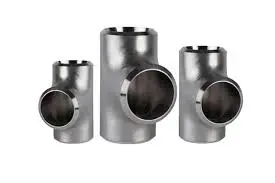
How JS FITTINGS Ensures Your Dimensional Compliance From Mill to Site?
Purchasing buttweld tee fittings involves more than matching numbers on a datasheet. JS Fittings, a buttweld tee manufacturer with 43 years of production expertise, implements a seven-stage verification process ensuring every dimension aligns with ASME B16.9 requirements before shipment.
- Incoming Material Control: Raw pipe undergoes ultrasonic wall thickness mapping at 50 mm intervals, rejecting any tube with a -12.5% undermeasure—tighter than ASTM A53's -10% tolerance. This guarantees finished fittings retain adequate wall thickness post-forming.
- Forming Process Monitoring: Hydraulic presses form branches under controlled temperature (920-1050°C for carbon steel). Infrared pyrometers verify heat uniformity, preventing localized thin spots. Post-forming, every tee receives dimensional measurement using coordinate measuring machines (CMM) with ±0.02 mm accuracy.
- Heat Treatment Verification: Normalizing cycles restore grain structure, but JS FITTINGS goes further with automated hardness testing—Rockwell B measurements at crotch, run, and branch locations ensure uniformity within 5 HRB points, indicating consistent mechanical properties.
- Beveling Precision: CNC beveling machines cut under continuous coolant flow, preventing thermal distortion. Random samples undergo optical microscopy to verify bevel angle and land width meet the ±0.5° and ±0.2 mm internal targets.
- Final Inspection Protocol: Third-party inspectors (SGS, TÜV, Bureau Veritas) witness dimensional checks against certified gauge blocks traceable to national metrology institutes. This independent verification satisfies government tender requirements and risk-averse contractors.
- Documentation Package: Each shipment includes Material Test Reports (EN 10204 3.1), Dimensional Inspection Reports, and Heat Treatment Charts. For critical applications like ADNOC projects, JS FITTINGS provides full PMI (Positive Material Identification) reports with alloy composition verified to ±0.01% accuracy.
These quality layers explain why JS FITTINGS maintains a 98% repurchase rate among distributors and under 0.5% complaint incidence—clients recognize that dimensional accuracy delivered consistently reduces their project risk and protects their reputation with end-users.
Practical Application Scenarios: Sizing Tees for Real-World Systems
Understanding dimensions theoretically differs from applying them to solve actual piping challenges. Three scenarios illustrate how ASME B16.9 data guides decisions.
- Scenario One: The Refinery Crude Distillation Unit requires a 20" x 20" x 16" Reducing Tee in ASTM A234 WPB, Schedule 80 service. The engineer must verify that the 16-inch branch provides sufficient flow area for the draw-off stream without excessive pressure drop. ASME B16.9 dimensions confirm the branch center-to-end at 305 mm, allowing adequate straight length before the next elbow for turbulence dissipation. Weight data (285 kg per unit) determines that existing pipe racks, rated for 400 kg/m, can support the addition without reinforcement.
- Scenario Two: A Municipal Water Treatment Plant specifies 10-inch Schedule 40 Equal Tees for its clarifier distribution manifold. The procurement officer questions whether seamless or welded construction is required. Since system pressure peaks at 1.2 MPa (below the 4.8 MPa rating of Sch 40), either type suffices. However, the 15-year service life expectation favors seamless construction, which avoids longitudinal seam corrosion under stagnant water conditions. JS FITTINGS supplies seamless ASTM A234 WPB units at a 12% premium over welded alternatives, justified by eliminating mid-life replacement costs.
- Scenario Three: LNG export terminal demands cryogenic service buttweld tee fittings for -162°C LNG handling. ASTM A420 WPL6 material becomes mandatory, but the engineer must confirm that ASME B16.9 dimensions accommodate the thermal contraction of 4.2 mm per meter at operating temperatures. The branch outlet location shifts slightly relative to supports designed at ambient temperature. JS Fittings provides thermal contraction coefficients alongside dimension reports, enabling the designer to pre-position supports accounting for this shrinkage.
Conclusion
ASME B16.9 dimensions and weight data form the technical foundation for reliable piping system procurement. Mastery of these specifications enables accurate cost estimation, logistics planning, and field installation success. Whether sourcing seamless units for high-pressure refinery service or welded large-diameter tees for infrastructure projects, alignment with ASME B16.9 standards ensures compatibility, safety, and long-term performance. Partnering with manufacturers who demonstrate dimensional precision through certified processes and transparent documentation transforms specification sheets into delivered project success.
Partner with JS FITTINGS for Precision-Engineered Buttweld Tee Solutions
JS FITTINGS, a premier manufacturer and trusted supplier of industrial piping components since 1983, delivers precision-engineered, ASME B16.9 compliant buttweld tees that eliminate dimensional guesswork from your projects. Our CNC-machined bevels, certified dimensional reports, and 95% on-time delivery record give EPC contractors and distributors the confidence to meet tight schedules without compromise. Contact admin@jsfittings.com to discuss your specifications with engineers who understand that precise dimensions today prevent costly field corrections tomorrow.
References
1. American Society of Mechanical Engineers. (2018). ASME B16.9: Factory-Made Wrought Buttwelding Fittings. New York: ASME Press.
2. Nayyar, M.L. (2019). Piping Handbook, 8th Edition. New York: McGraw-Hill Professional.
3. Becht, C. (2017). Process Piping: The Complete Guide to ASME B31.3, 4th Edition. New York: ASME Press.
4. Chuse, R. & Eber, S.M. (2016). Pressure Vessels: The ASME Code Simplified, 9th Edition. New York: McGraw-Hill Education.
5. Ellenberger, J.P. (2020). Piping and Pipeline Calculations Manual: Construction, Design Fabrication and Examination, 2nd Edition. Oxford: Butterworth-Heinemann.
6. Parisher, R.A. & Rhea, R.A. (2021). Pipe Drafting and Design, 4th Edition. Cambridge: Gulf Professional Publishing.
Send Inquiry
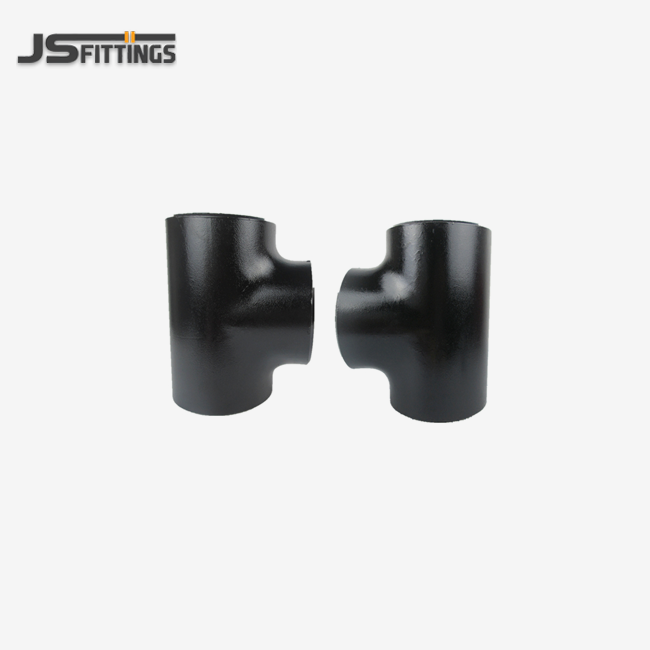
_1775029549981.webp "Buttweld Tee")
Related Industry Knowledge
- What is the service life of an ASME B16.5 carbon steel flange?
- Carbon Steel Buttweld Reducer Material Standards Explained
- Key Considerations With ANSI Pipe Flanges
- Carbon Steel Forged Steel Flange in Oil, Gas & Power Plants
- Buttweld Tee Pressure Ratings Explained for Industrial Piping
- ASTM A105 Carbon Steel Forged Steel Flange Specifications
- Industrial Buttweld Reducer Selection for Refinery Projects
- Does ASME require hydrotesting for a blind flange?
- How to bolt to flanges with threaded holes?
- Do blind flanges require hydrotesting?