
Why Is a Seamless Buttweld Tee Preferred in Critical Service?






2026-06-09 09:43:47
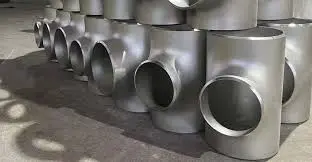
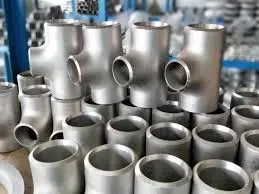
An in-depth guide for engineers, distributors, and procurement managers in the business world. For important service uses, the seamless buttweld tee is the best choice when looking for pipe fittings for harsh industrial environments with high pressure, high temperature, or corrosion. When you compare seamless butt-welded tees to welded ones, they are made from a single piece of material using hot forming or centrifugal casting. This means that there are no horizontal weld gaps, which can be weak spots when they are stressed. This continuous grain structure makes the material stronger, more resistant to rust, and more reliable. These are three qualities that are very important for keeping oil pipelines, chemical plants, and power plants from failing in terrible ways. Since seamless butt-weld tees don't have any weld gaps, they don't leak as easily and last longer. This makes them a popular choice for procurement managers and engineers who want to keep project risks to a minimum while still meeting strict safety and compliance standards.
Introduction
A buttweld tee is an important part of industrial pipe systems because it splits or joins fluid streams within a network at 90-degree angles. The stability of these T-shaped fittings has a direct effect on operating safety and efficiency, whether they are used in fuel systems for spacecraft, oil transmission lines, or pharmaceutical processing units. For procurement managers, project engineers, and sellers who work in tough B2B markets, knowing the difference between seamless and welded buttweld tees is essential.
Seamless butt-weld tees are typically made from solid billets using hot extrusion or hot forging. This ensures a uniform material structure without welded seams. Welded butt-weld tees, on the other hand, are formed by joining pieces of pipe or plate, creating potential weak points at the weld seam. This guide looks at why seamless versions are used in so many important service uses. It will help you choose materials that will improve project results and meet international standards like ASME B16.9, ASTM A234, and EN 10253-2.
Understanding Seamless Buttweld Tees in Critical Applications
Manufacturing Process and Structural Integrity
When hot shaping or centrifugal casting is used, heated steel billets are formed with hydraulic presses or rotating molds to make seamless buttweld tees. This method makes the grain run continuously through the fitting, getting rid of the lengthwise weld seam that is present in welded butt-weld tees. Without a seam, there are no weak spots where stress buildup or wear cracks can start, which makes the structure much stronger.
We manufacture seamless buttweld tees ranging from 1/2" to 24" (DN15 to DN600) in nominal diameter, while offering welded buttweld tees for larger applications exceeding 24" and extending up to 72" (DN1800), perfectly accommodating your specific project requirements. After being shaped, each part goes through a full heat treatment that includes normalizing, cooling, and tempering. This restores the metal's best mechanical qualities and ensures that the whole structure is the same hardness.
Material Standards and Pressure Ratings
Materials that can handle harsh conditions are needed in critical work settings. To make sure they meet strict standards like ASME/ANSI B16.9 and ASTM A234, seamless buttweld tees are tested for tensile strength, yield strength, and impact resistance. Wall thickness choices range from Schedule 10s to Schedule 160 and XXS. This lets engineers make sure that fittings are perfectly matched to the pressure values of the system.
Our seamless butt-weld tees come in different materials that are better suited for different types of work. ASTM A420 WPL6 low-temperature steel works well in cold and Arctic conditions. On the other hand, ASTM A403 WP321 and WP347 stainless grades don't crack when exposed to high temperatures and chemicals. Chrome-moly metals, such as WP91, are designed for high-temperature service in power plant piping, with continuous operating temperatures up to approximately 540°C.
Dimensional Accuracy and Compliance
For smooth merging in piping networks, accuracy in the dimensions is very important. For seamless buttweld tees, the center-to-end measurements, beveling angles, and crotch thickness (the high-stress area at the branch crossing) are made with very close standards. JS FITTINGS uses CNC beveling tools to make 37.5° ± 2.5° bevels with consistent root faces. This makes sure that the joints fit perfectly when they are welded on-site and lowers the risk of flaws that weaken the joints.
Core Reasons Seamless Buttweld Tees Are Preferred in Critical Service
Superior Mechanical Strength
When it comes to mechanical strength, seamless buttweld tees are better than bonded ones because the material is continuous. Longitudinal weld lines in welded buttweld tees create stress risers, which are places where loads are concentrated, making it more likely that cracks will form. This weakness is gone with seamless construction, so the fitting can spread stress equally across the whole body. In high-pressure systems, sudden pressure jumps or cyclic loading situations could cause catastrophic breakdowns, so this property is very important.
Enhanced Corrosion Resistance and Service Life
Weld seams can be affected by galvanic corrosion, pitting corrosion, and crevice corrosion, especially when different metals are used or when welding methods are not used correctly, causing metallurgical errors. Seamless buttweld tees have a uniform material makeup throughout, which stops these corrosion routes and increases the product's useful life in harsh settings like chemical reactors, oil platforms at sea, and seawater cooling systems. At JS FITTINGS, our seamless stainless steel buttweld tees go through strict rust tests and material verification using XRF testers to make sure they have the right amount of alloying elements before they are shipped.
Rigorous Inspection and Quality Assurance
Zero-defect manufacturing is needed for critical business uses. Ultrasonic testing (UT), radiographic testing (RT), and liquid penetrant testing (PT) are some of the non-destructive testing (NDT) methods that are used on seamless buttweld tees. These methods find problems inside the material, like laminations, holes, or inclusions that could make it less effective. At JS FITTINGS, we check all of our high-pressure metal butt-weld tees and large-diameter fittings with X-rays, so you can be sure that the products are 100% authentic. Each unit is permanently marked with its heat number, material grade, and size. This makes it possible to track each unit all the way back to the test reports from the raw material mill, which is necessary for audit compliance.
Proven Performance in Extreme Conditions
When worn in the toughest workplace settings, seamless butt-weld tees always work. They can handle corrosive chemicals, hydrogen sulfide, and high-pressure steam in oil and gas research without leaking or breaking down. Chemical companies depend on seamless buttweld tees to protect their pipes from acids, solvents, and reactive chemicals. Power plants rely on smooth chrome-moly buttweld tees to keep their structures strong, even when temperatures are high for long periods of time and change. These real-life examples show why seamless butt-weld tees are still the safer and more reliable choice for important pipes where downtime directly leads to safety risks and financial losses.
Comparison Between Seamless Buttweld Tee and Other Types
Seamless vs. Welded Buttweld Tees
Welded buttweld tees are made from pieces of rolled plate or pipe that are joined together by lengthwise welds. While welded butt weld tees can fit bigger diameters (24" to 72" at JS FITTINGS) and are cheaper for large uses, they must be inspected completely with an X-ray machine because of the chance of weld flaws. When made from solid billets, seamless buttweld tees get rid of failure modes related to seams and make important service pipes more reliable. When system stability is important, procurement managers should choose seamless construction over welded butt-welded tees. Welded buttweld tees should be saved for less demanding large-bore uses.
Seamless Buttweld Tees vs. Socket Weld Tees
While socket weld tees offer installation convenience for small-bore piping (typically NPS 2" / DN50 or smaller), the localized stress concentrations at their fillet welds severely reduce fatigue life in high-vibration or cyclic loading conditions. This critical vulnerability is exactly why seamless buttweld tees remain the undisputed standard for vital services involving severe vibration, extreme temperature cycling, or rapid pressure fluctuations.
Seamless Buttweld Tees vs. Threaded Tees
While threaded tees are easy to install and don't require welding, they have low pressure values and can leak when they are shaken. Threads make notch effects that focus worry and make life less tiring. Seamless buttweld tees get rid of these problems by using high-strength, permanent welds that can withstand high temperatures and pressures. Threaded fittings should still only be used for low-pressure, non-critical water pipes.
Procurement Considerations for Sourcing Seamless Buttweld Tees
Supplier Evaluation and Certification
Thoroughly evaluating suppliers is the first step to successful buying. Check to see if the makers are certified to ISO 9001 quality management and follow foreign standards like ASME B16.9, ASTM A234, and EN 10253-2. We keep our CE, ISO, GOST-R, PETROBRAS, NIOC, and ADNOC certifications up to date, which shows that we are committed to meeting world quality standards. Because we've been making seamless buttweld tees for 43 years and are a supplier to big energy companies, you can be sure that they meet the strict requirements of critical service uses.
Standard vs. Custom Sizing and Material Selection
In sizes 10s through XXS, standard seamless butt-weld tees come in sizes from 1/2 inch to 24 inches. Larger or non-standard sizes may need to be made to order, which can affect wait times and costs. When you list the grades of a material, you should make sure that the chemical makeup and mechanical qualities are right for the job. Carbon steel WPB is good for general-purpose uses, chrome-moly metals don't creep at high temperatures, and duplex stainless grades stop chloride stress corrosion cracking in naval settings. JS FITTINGS can help you choose the right material by giving you advice based on things like pressure, temperature, corrosivity, and government rules.
Lead Times, Pricing, and Supply Chain Dynamics
Cost and availability are affected by factors in the global supply chain. Because they need special ways to be formed, seamless butt-welded tees usually take longer to make than welded ones. Delays can be avoided, though, if the sellers are well-known and have good inventory methods. Every month, JS FITTINGS ships more than 90 containers, and they always deliver on time more than 95% of the time and buy them back more than 98% of the time. We answer questions within an hour and offer low prices for large orders. This helps procurement managers keep project budgets in check and meet schedules.
Regional Compliance and Trusted Suppliers
ASME B16.9 and ASTM guidelines must be followed for all important pipe projects in the United States. Conformity to EN 10253-2 is needed for European markets, while GOST, JIS, or DIN standards are often needed for foreign oil and gas projects. Buying from sellers who are certified to more than one standard makes the process easier and makes sure that the fittings meet both local and foreign safety standards. JS FITTINGS offers full mill test reports, material certificates, and NDT paperwork to meet tender standards and make project reviews easier.
Best Practices for Installation, Inspection, and Maintenance in Critical Service
Welding Techniques and Alignment Strategies
To avoid internal flaws that cause turbulence and erosion, the right way to build something starts with making sure it is perfectly lined up. Standardized beveling on seamless buttweld tees makes it easier to get a good fit and entry during welding. To get full-penetration butt welds with tensile strengths equal to or greater than the base pipe, use qualified welding methods (WPS) and approved welders. Some thick-walled carbon steel and alloy parts may need post-weld heat treatment (PWHT) to get rid of leftover stresses and stop stress corrosion cracks.
Non-Destructive Testing and Ongoing Integrity Monitoring
After installation, use X-rays or ultrasound waves to check the quality of the weld and look for problems below the surface. Inspections done on a regular basis with UT or RT find early signs of rust, erosion, or fatigue before they get worse and cause breakdowns. JS FITTINGS buttweld tees are made with an improved crotch thickness that makes up for material thinning during shaping. This makes sure that the highest-stress zone meets or exceeds ASME B16.9 safety standards and can last for a long time.
Preventive Maintenance and Troubleshooting
Set up preventative maintenance plans that include checking for damage visually, measuring thickness, and keeping an eye on rust. Take care of damaged coatings on the outside right away to stop rusting under the insulation. Before they weaken the system, replace any parts that have a lot of wall loss, cracks, or warping. JS FITTINGS' seamless buttweld tees are marked with heat numbers and material grades. This makes them easier to find during upkeep and makes sure that replacement parts meet the original specs.
Conclusion
Seamless buttweld tees are the best choice for important service pipes in the oil and gas, chemical processing, and power production industries because they are very reliable, keep their shape, and don't rust. Their continuous grain structure gets rid of weak spots in join seams, lowers the risk of failure, and makes them last longer in harsh environments. When looking for parts for important projects, procurement managers and engineers should know about the benefits of smooth building, strict material standards, and qualified suppliers. When you work with approved makers like JS FITTINGS, you can get high-quality seamless buttweld tees that have been tested thoroughly, can be tracked, and have been used successfully for decades.
FAQ
1. Can seamless buttweld tees be used in all pipeline types?
Absolutely. Seamless buttweld tees are the premier choice for the most critical pipeline tasks, including the distribution of high-temperature superheated steam, the transportation of high-pressure hydrocarbons, and the handling of highly hazardous chemicals. As long as the appropriate material grade (e.g., specific stainless steels or exotic alloys) is selected, they will perform flawlessly even in extreme temperatures or highly aggressive chemical environments.
2. What advantages do seamless tees have over socket weld fittings?
Seamless buttweld tees make full-penetration welds that spread stress widely. This gets rid of the stress buildup and failure risk that come with socket weld and fillet welds. Socket welds can fail early in systems with a lot of shaking or cycle loads, but these are perfect for those situations.
3. How can I verify supplier quality for seamless buttweld tees?
Ask for proof of ISO 9001 certification, ASME B16.9 compliance, and mill test results that prove the chemical and mechanical qualities of the material. Suppliers with a good reputation, like JS FITTINGS, make it easy to track everything by using heat marking, third-party inspection certificates, and NDT records that include ultrasound and radiographic test results.
Partner with JS FITTINGS for Premium Seamless Buttweld Tees
Since 1983, JS FITTINGS has been working with businesses around the world to make ISO-certified seamless buttweld tees that meet the strictest critical service needs. Our factories follow strict quality rules, such as using spectral analyzers to check the materials and doing a full NDT review of all the high-pressure alloy parts. We sell high-quality materials like ASTM A234 WPB, A403 WP316L, and A420 WPL6, along with seamless buttweld tees in sizes 1/2" to 24" and wall thicknesses from Schedule 10s to XXS. With more than 90 containers shipped every month, more than 95% of deliveries happening on time, and a return rate of more than 98%, we offer reliable supply chains that keep your projects on track. Our experienced foreign trade team answers questions within an hour and can help you choose materials, make sure your orders are the right size, and make sure you're following all the rules. Get in touch with a reputable maker and supplier who cares about quality, safety, and long-term performance at admin@jsfittings.com to talk about your seamless buttweld tee needs.
References
1. American Society of Mechanical Engineers. (2020). ASME B16.9: Factory-Made Wrought Buttwelding Fittings. New York: ASME International.
2. ASTM International. (2019). ASTM A234/A234M: Standard Specification for Piping Fittings of Wrought Carbon Steel and Alloy Steel for Moderate and High Temperature Service. West Conshohocken: ASTM.
3. Mohitpour, M., Golshan, H., & Murray, A. (2007). Pipeline Design & Construction: A Practical Approach (3rd ed.). New York: ASME Press.
4. European Committee for Standardization. (2018). EN 10253-2: Butt-Welding Pipe Fittings – Part 2: Non-Alloy and Ferritic Alloy Steels with Specific Inspection Requirements. Brussels: CEN.
5. Ellenberger, J. P., & Chuse, R. (2004). Pressure Vessels: The ASME Code Simplified (8th ed.). New York: McGraw-Hill.
6. National Association of Corrosion Engineers. (2015). Corrosion Control in the Oil and Gas Industry: Critical Service Piping Systems. Houston: NACE International.
Send Inquiry

Related Industry Knowledge
- What is ASME B16.5: A Guide to ASME B16.5 carbon steel flange
- Stainless Steel 316L Buttweld Tee for Offshore Pipelines
- ASTM A234 WPB Buttweld Tee Material Properties Overview
- What is the material of A53 ERW Pipe?
- Cold Drawn vs Hot Rolled ASTM A312 Seamless Pipe: Key Differences
- Understanding the API 5L Seamless Steel Line Pipe Specification
- API 5L Seamless Steel Line Pipe for Pipelines Explained
- Buttweld Elbow vs Socket Weld Elbow: Key Differences Explained
- Do blind flanges require hydrotesting?
- How to weld carbon steel pipe?