
Lap Joint Pipe Flanges: Everything You Need to Know






2026-06-10 11:12:08
When looking for piping components for industrial applications, the lap joint pipe flange stands out as a clever two-piece solution that makes it easier to line up parts and saves money on materials. Instead of standard flanges that are firmly welded to pipes, this unit has a separate stub end and a loose backing flange. This gives installers more options when they are working with complicated installations. This design lets engineers use corrosion-resistant metals only where they come into contact with fluids, along with economical carbon steel backing flanges. This saves money on materials while maintaining the required integrity of the system when properly designed and installed.
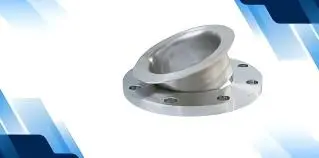
Understanding Lap Joint Pipe Flanges: Fundamentals and Specifications
What Makes Lap Joint Flanges Unique?
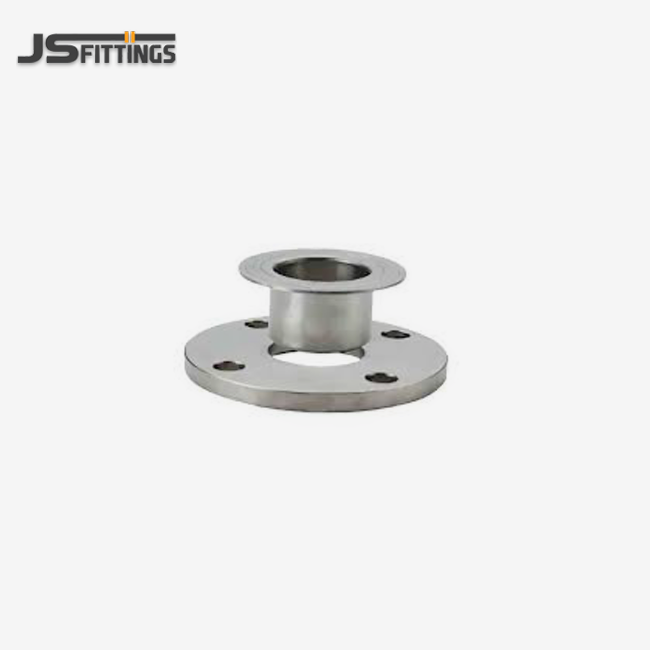
A carbon steel lap joint pipe flange works in a different way than other types of flanges. The assembly has two separate components: a loose backing flange that can slide over the pipe and a stub end that is butt-welded to the piping system. Over 43 years of production experience at JS Fittings, we've improved this design so that the backing flange can spin fully around the pipe axis. This makes it the best choice when installation and aligning the bolt holes is difficult.
Between the pipe and the backing flange, the stub end is what goes between them. The flared end forms a sealed surface that fits over the gasket, and the backing flange provides the structural support needed to tighten the bolted connection. This separation of functions has practical benefits that become clear during system changes and maintenance processes.
Technical Specifications and Standards Compliance
Our production process strictly follows standards that are known all over the world. We follow the ASME/ANSI B16.5 standards for common applications, which cover sizes from 1/2" to 24". When larger diameters are needed, like for industrial tank connections and large-bore piping systems, we follow ASME B16.47 standards when making our products so we can accommodate sizes from 26" to 60".
Pressure ratings are another important aspect of specifications. For every level of pressure, we manufacture flanges for Class 150, 300, 600, 900, 1500, and 2500. By choosing the right pressure rating, you can be sure that the assembly will be able to handle the working conditions of the system while still meeting the safety standards required by engineering codes.
Pay close attention to the internal bore shape. When the bore transitions to the flange face, we machine a certain radius that must exactly match the fillet radius of the corresponding stub end. This geometric compatibility ensures that the load is transferred correctly and prevents stress concentration points that could cause the structure to fail prematurely.
The choice of material is based on the needs of both the backing flange and the stub end. For the backing flange, carbon steel materials such as ASTM A105 are commonly used for most applications without being too expensive. When corrosive fluids run through the system, the stub end might need to be made of stainless steel (304, 316, or 321) or nickel-based alloys such as Inconel or Hastelloy. The backing flange, on the other hand, remains carbon steel since it does not come into contact with the process fluid.
Surface Treatments and Protective Coatings
Protecting components from atmospheric corrosion makes them last a lot longer. We offer three common surface finishes: a black lacquer coating for indoor use, a rust-preventative oil coating for shipping and short-term storage, and hot-dip galvanizing for outdoor or marine settings where moisture speeds up corrosion.
Advantages That Drive Specification Decisions
The ability to rotate that comes with lap joint pipe flange design saves a lot of work during installation. When there are a lot of branch connections in a small space, and the piping system gets complicated, aligning the bolt holes on fixed flanges often means rotating the pipe, which isn't always possible once the connections next to it are finished. Installers can significantly reduce installation time compared to fixed welded flange configurations because our backing flange isn't welded. Instead, they just rotate it to match bolt hole patterns.
Specifications are chosen based on how often maintenance needs to be done in sites that prepare food, manufacture drugs, and treat water. These fields require regular cleaning of the inside of pipes to stop contamination or buildup. Maintenance crews can unbolt and separate flanges without cutting welds or affecting the main pipeline's integrity because of the lap joint pipe flange design. This can significantly reduce downtime during planned cleaning cycles.
Thermal cycling causes expansion and contraction, and rigid flange joints have to absorb all of that stress through the weld joint. The two-piece lap joint pipe flange system can help accommodate minor alignment and thermal movement requirements, letting small movements happen between parts without putting all the stress on one weld point. This stress distribution makes connections last longer in systems where temperatures change, like steam lines and heat exchanger piping.
Material segregation makes it possible to get the best prices. Consider a chemical processing job where sulfuric acid runs through pipes made of stainless steel. For traditional flanges, the whole assembly has to be made of stainless steel, even the bulky flange ring. In lap-joint pipe flange systems, an expensive corrosion-resistant alloy is only needed on the stub end, which is a relatively small part. The backing flange is made of inexpensive carbon steel, which can substantially reduce material costs while still providing full corrosion protection where it matters.
Reusability of parts adds another economic layer. When a plant grows, or a process is modified, welded flanges are usually cut off and scrapped along with the pipe section being replaced. Since lap joint pipe flange backing flanges are not connected to the pipe, they can be removed, inspected, and then reinstalled on new sections of pipe. This saves facility managers time and money when managing the long-term lifecycles of their assets.
Lap Joint Flange Comparison: Making the Right Choice for Your Project
What Makes Lap Joint Flanges Different from Other Types of Flanges?
Weld neck flanges are very strong because their hubs are tapered, which makes the transition from the thickness of the pipe wall to the thickness of the flange smooth. This makes them perfect for high-stress and high-pressure situations. But this strength comes with a permanent installation—once welded, the flange cannot rotate to line up the bolt holes, and to replace it, you have to cut it out and re-weld it. Lap joint pipe flange assemblies are generally selected for applications where alignment flexibility and maintenance access are priorities, but they gain flexibility that is very useful in environments where maintenance is often needed.
To secure them in place, slip-on flanges need two fillet welds, one on the inside and one on the outside of the pipe. Even though they are cheaper than weld necks, they are still fixed in place. These joints are in the middle ground because their pressure ratings are between those of a weld neck and a lap joint pipe flange. Slip-on flanges and weld necks both make it difficult to disassemble and reassemble systems that need periodic maintenance.
Socket weld flanges are used for smaller pipe sizes (typically under 3") where there isn't enough room for butt welding. The pipe fits into a socket, and the joint is completed with a single fillet weld. These work great for instrumentation lines and small-bore pipes, but once they are welded, they cannot be rotated. Lap joint pipe flange kits are the way to go when the placement of the bolt holes is important, even in small sizes.
Threaded flanges screw onto pipes that have matching external threads, eliminating the need for welding entirely. Because of this, they can be used in places where it is difficult to obtain hot work permits or where fire safety concerns prohibit welding. Their use is generally limited in systems with high pressure, severe cyclic loading, or significant vibration or when the system experiences vibration, which can loosen threaded connections. Lap joint pipe flanges can handle moderate pressures and are easier to align than threaded options.
Blind flanges do not join two pipes together; instead, they seal pipe ends or vessel openings. When a lap joint pipe flange system needs to accommodate future expansion, pairing a lap joint pipe flange with a blind flange on the opposite side preserves the ability to quickly remove the blind and extend the line without cutting any welds.
Comparison Summary for Procurement Teams
In addition to the initial material cost, you should also consider how much installation labor will cost, how often maintenance will be needed, and how long each component will last. For Class 150 lap joint flange assemblies, the initial procurement cost is usually 15-20% higher than that of standard slip-on flanges. However, for pipelines requiring frequent servicing, this investment rapidly pays off, often delivering 30–50% savings in maintenance labor over a ten-year operating period. When an exotic metal is needed for corrosive service, the material cost savings alone often justify the lap joint pipe flange specification.
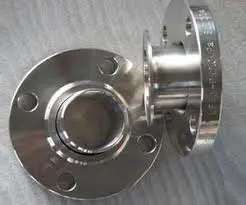
Installation, Maintenance, and Safety Guidelines for Lap Joint Flanges
Step-by-Step Installation Process
Making sure that the stub end and backing flange are the right size is the first step in a proper installation. Confirm that the stub end's fillet radius matches the bore radius on the backing flange. Check the length of the stub end to ensure it properly engages with the flange face when everything is assembled.
Thoroughly clean all surfaces that touch. Use wire brushes or abrasive pads to remove mill scale, rust, dirt, and old gasket material. If the sealing surface is dirty, it won't close properly, which can cause leaks when pressure is applied. Check the face of the stub end for damage like gouges, scratches, or corrosion pits that could compromise the sealing surfaces.
Before welding the stub end, position the backing flange over the pipe. This sequence is critical—installing the flange after the stub end has been welded is generally not possible. Slide the flange down the pipe, making sure there is enough clearance for welding operations. Align the stub end with the pipe so that the faces of the pipe and stub end touch without any gaps. To hold it in place, tack-weld in three locations around the circumference. Then, follow qualified welding procedures to complete the circumferential butt weld.
Do not force the weld to cool; this can introduce residual stresses. Instead, let it cool naturally. Visually inspect the completed weld, and if the project requirements specify, use radiographic, ultrasonic, or other specified non-destructive testing methods. Grind any excessive weld reinforcement that could interfere with the backing flange positioning.
Move the backing flange along the pipe until it seats against the flared section of the stub end. On the stub end face, place the appropriate gasket material. Depending on the service conditions, this is usually a flat ring gasket made from compressed fiber, rubber, or PTFE. Position the mating flange and insert bolts through aligned holes. First, thread nuts onto bolts until they are finger-tight.
Tighten the bolts in a cross-pattern (star pattern) instead of going around the circle sequentially. This distributes the compression forces evenly, which prevents gasket distortion. Apply bolt loads using a calibrated torque wrench according to the gasket manufacturer's specifications. Usually, you will need to make several passes at increasing torque values until reaching the final target.
Essential Tools and Common Installation Errors
For larger flanges, you need lifting equipment that is properly rated, torque wrenches that have been calibrated within the past year, alignment pins to help match up bolt holes, and the appropriate personal protective equipment, including safety glasses, gloves, and steel-toed boots. When installing in a confined area, use impact-rated sockets and extension bars to reach bolts that are difficult to access.
Installers often make three avoidable mistakes. Using uneven torque across the bolt circle creates unbalanced gasket compression, which can lead to leak paths. When tightening in a star pattern, you should always use calibrated tools. It might seem economical to reuse damaged gaskets, but when the system is pressurized, leaks are almost certain to occur. Replace gaskets after each disassembly. Ignoring the condition of the stub end face overlooks the actual sealing interface—remember that the stub end face, not the flat face of the backing flange, creates the seal.
Maintenance Best Practices for Extended Service Life
Establish inspection intervals based on service severity. For benign services like water and air, annual inspections are sufficient. Applications that are corrosive or operate at high temperatures should be checked quarterly. During inspections, look for visible corrosion on the exterior of the backing flange. However, since the flange does not contact process fluids, this does not necessarily indicate a problem. Look for weeping around the gasket perimeter, which signals insufficient bolt tension or gasket degradation.
Regularly check the tightness of the bolts, especially after system startup, when thermal cycling may cause initial relaxation. If tension loss appears, re-torque the bolts to the correct level. When the joint is disassembled, examine the stub end sealing face. Light scratches can be dressed with fine abrasive cloth, but deep gouges require a new stub end.
Every time you disassemble a flanged joint, you must strictly replace the gaskets with new ones, regardless of their visual appearance. During service, gasket materials compress and take a set, and used gaskets rarely seal properly, even if they look intact. Stock extra gaskets in popular sizes to avoid maintenance delays.
Before assembly, apply appropriate lubricants to the bolt threads. This ensures accurate torque-to-tension relationships and prevents galling on stainless steel fasteners. Use anti-seize compounds that can handle the service temperature, and avoid getting lubricant on gasket surfaces where it can cause slippage.
Conclusion
When choosing lap joint pipe flanges, you need to consider carefully the technical requirements, the costs, and the supplier's abilities. The unique two-piece design addresses specific challenges in system maintenance, alignment flexibility, and material cost optimization that make these assemblies the preferred choice across applications from chemical processing to water treatment. Understanding standard specifications, pressure class requirements, and installation best practices ensures successful implementation that delivers long-term value. As procurement professionals and engineering teams evaluate options for upcoming projects, partnering with experienced manufacturers becomes essential. Our 43-year manufacturing heritage, comprehensive quality systems, and proven ability to deliver on schedule position us to support your piping system requirements reliably and cost-effectively.
FAQ
1. What are the primary advantages of lap joint flanges compared to weld neck flanges?
Lap joint pipe flanges provide rotational freedom for easy bolt hole alignment during installation, significantly reducing labor time in complex piping layouts. They allow for material cost savings by using expensive alloys only for the stub end, while the backing flange remains carbon steel. The design also simplifies maintenance by enabling quick disassembly without cutting welds.
2. Are lap joint flanges suitable for high-pressure applications?
Lap joint pipe flange assemblies handle moderate pressure applications effectively and are available in pressure classes up to 2500. However, for extremely high-pressure or high-stress cyclic loading, weld neck flanges typically provide superior structural integrity due to their reinforced hub design. Application appropriateness depends on specific operating conditions.
3. What is the typical lead time for custom lap joint flange orders?
Standard catalog sizes from existing inventory ship within days, while custom specifications—unique dimensions, special materials, or nonstandard pressure ratings—typically require a 3-6 week manufacturing lead time. JS Fittings' established production capacity allows us to accommodate rush orders when project schedules demand accelerated delivery, though expedited charges may apply.
Partner with JS FITTINGS for Reliable Lap Joint Pipe Flange Supply
JS FITTINGS brings 43 years of manufacturing excellence to every lap joint pipe flange we produce. Our comprehensive inventory spans sizes from DN15 to DN2000 across all standard pressure classes, meeting ASME, DIN, JIS, and GOST specifications that ensure code compliance worldwide. We maintain qualified supplier status with major global energy companies, including NIOC, ADNOC, and Petrobras—credentials that reflect our consistent quality and reliability. With monthly shipments exceeding 90 containers and on-time delivery above 95%, we support project schedules you can depend on. Our technical team responds to inquiries within one hour, providing expert guidance on specification selection and application questions. Whether you need immediate shipments from stock or custom-engineered solutions, contact our specialists at admin@jsfittings.com to discuss your lap joint pipe flange requirements. As a trusted manufacturer and supplier, we deliver the combination of product quality, competitive pricing, and responsive service that keeps procurement professionals returning for project after project.
References
1. American Society of Mechanical Engineers. ASME B16.5: Pipe Flanges and Flanged Fittings, NPS 1/2 Through NPS 24 Metric/Inch Standard. New York: ASME International, 2020.
2. American Society of Mechanical Engineers. ASME B16.47: Large Diameter Steel Flanges, NPS 26 Through NPS 60 Metric/Inch Standard. New York: ASME International, 2020.
3. Bickford, John H. Gaskets and Gasketed Joints. 2nd ed. Boca Raton: CRC Press, 2016.
4. Ellenberger, J. Paul. Piping and Pipeline Calculations Manual: Construction, Design Fabrication and Examination. Oxford: Butterworth-Heinemann, 2014.
5. Nayyar, Mohinder L., ed. Piping Handbook. 8th ed. New York: McGraw-Hill Education, 2019.
6. Singh, Keshavan, and Chen Xin. Mechanical Engineering Design of Process Systems, Volume 1: Stationary Equipment. Gulf Professional Publishing, 2017.
Send Inquiry
Related Industry Knowledge
- FBE vs 3LPE vs CWC for Underground and Subsea Applications
- What Are Slip-On Flanges?
- ANSI Pipe Flanges Dimensions and Selection Guide for 2026
- Understanding the API 5L Seamless Steel Line Pipe Specification
- Carbon Steel Forged Steel Flange Supply: China Factory Wholesale
- Carbon Steel Forged Steel Flange: Class 150 to 2500 Guide
- What is a blind flange used for?
- How to Choose the Right Buttweld Elbow for High-Pressure Piping
- What specification is the carbon steel black pipe?
- Is a 90 or 45 degree elbow better for drain?