
Carbon Steel Forged Steel Flange Supply: China Factory Wholesale






2026-06-02 10:29:39
The standard for structural stability and pressure retention when selecting pipe parts for important industrial uses is the carbon-steel forged-steel flange. Carbon steel forged steel flanges are different from cast options because they go through controlled high-pressure compression at high temperatures. This aligns the material's grain structure so it can fight fatigue, thermal stress, and sudden pressure spikes. This difference in production directly addresses the main problems that procurement teams have to deal with: lowering the risk of downtime, making sure that codes are followed, and making sure that long-term performance is maintained without going over budget.
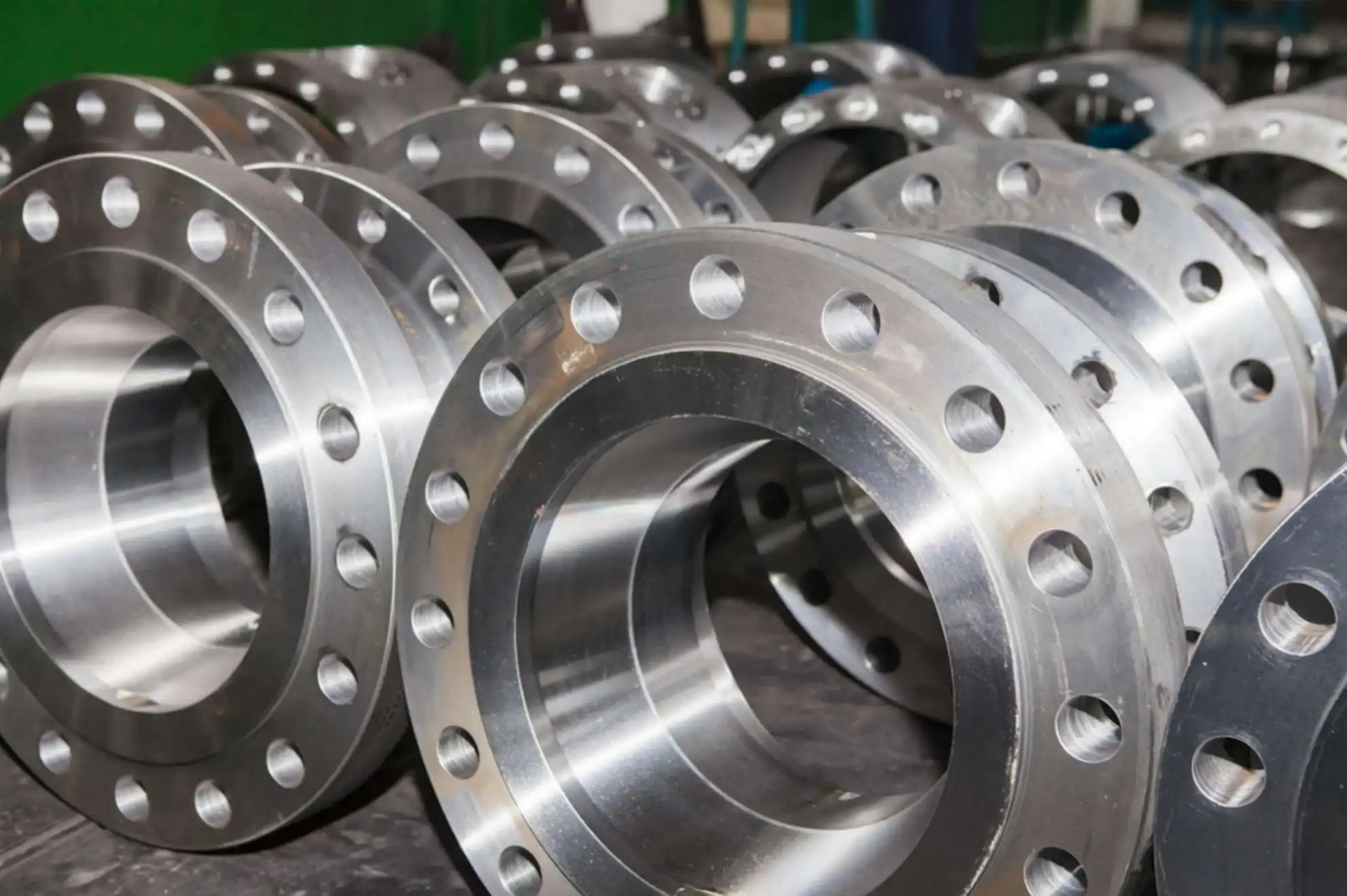
Understanding Carbon Steel and Forged Steel Flanges
Carbon steel and forged steel flanges are the most important part of a system because they hold dangerous fluids in place in the harshest conditions. They connect pipes, valves, pumps, and tanks together. Carbon steel billets are compressed by more than a thousand tonnes during the forging process, but the steel stays in a semi-plastic state. This change in the metal's structure gets rid of empty spaces and makes the grain structure smoother so that the flow pattern is continuous and directed, just like the flange shape.
Manufacturing Process and Material Characteristics
For service at ambient and moderately elevated temperatures, carbon steel that meets ASTM A105 standards is widely used because it offers a good balance of cost and mechanical strength. Forging, which includes heating, punching, and controlled cooling, makes a part that is stronger and more resistant to impact than cast or machined-from-plate options. Internal irregularities are what usually cause cast flanges to fail. During the forging strokes, these are physically removed, leaving a smooth structure that can handle bolt preload and internal pressure without microcracking.
Standards and Specifications
During the manufacturing of our forged carbon steel flanges, we enforce strict compliance with widely recognized international standards:
- ASME/ANSI B16.5 standard sets the sizes and pressure-temperature limits for pipes with diameters from 1/2 inch to 24 inches and pressure classes from 150 to 2500. This standard makes sure that parts can be swapped out across global supply lines. This lets EPC companies buy parts from different suppliers without having to worry about how they will fit together.
- ASME B16.47 Series A and B cover big diameter needs from 26 inches to 60 inches, which is important for main transmission pipes and vessel nozzles in power plants and factories.
- With PN grades from PN6 to PN64, DIN/EN 1092-1 gives metric counterparts that are widely used in projects in Europe and the Middle East.
Common Flange Configurations
- Weld Neck (WN) flanges have a long hub that tapers down to the thickness of the pipe wall. Because of this shape, stress is spread out away from the weld area, which makes them ideal for high-pressure steam lines, industrial pipes, and other uses where temperature or pressure changes are likely to happen. The gentle taper on the hub also makes it easier to look at the circular weld on X-rays, which is required by ASME B31.3 heavy cyclic service.
- Slip-On (SO) flanges are welded on the inside and outside and slide over the outside of the pipe. Even though they make installation easier in the field, they are usually only good for lower-pressure classes and non-critical services. The two fillet welds may create areas where crevice corrosion can develop under certain service conditions, making them less suitable for some corrosive environments.
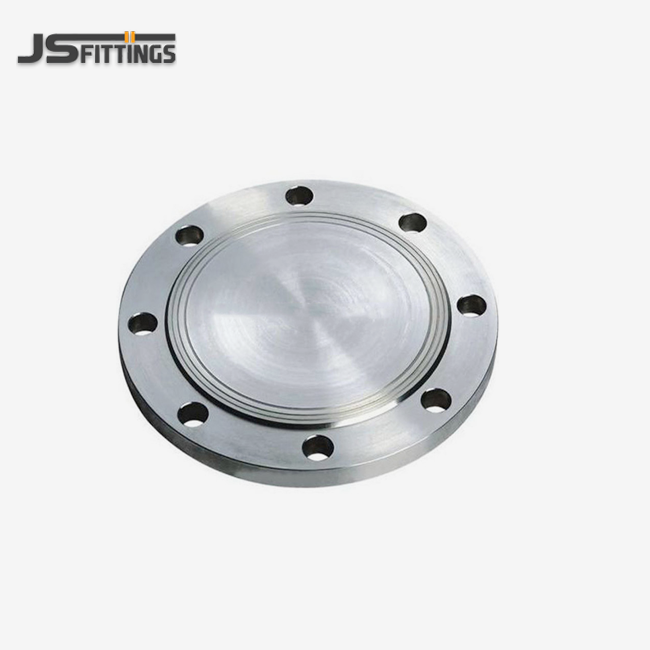
- Blind (BL) flanges are solid discs that don't have a hole in the middle. They are used to connect the ends of pipes or make access points for repair and inspection. In the design of pressure vessels, blind flanges on manways and nozzles let workers check inside during turnarounds without having to cut permanent pipes. Because it is designed and rated for the applicable pressure class, the blind flange can withstand full system pressure, which in hydrostatic test settings is often tested at approximately 1.5 times the design pressure.
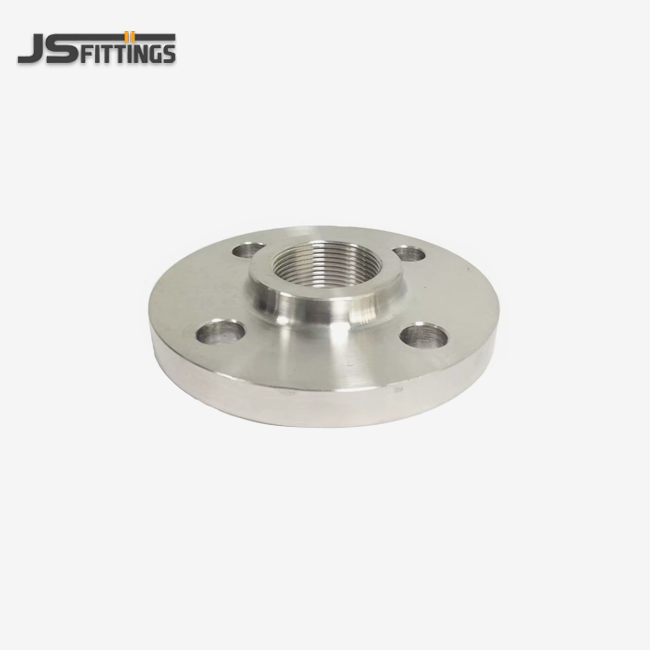
- Socket Weld (SW) and Threaded (TH) types are usually chosen for small-bore pipe (NPS 2 and below) in utility and monitoring lines where leak-tight joints are needed, but there isn't much room to weld.
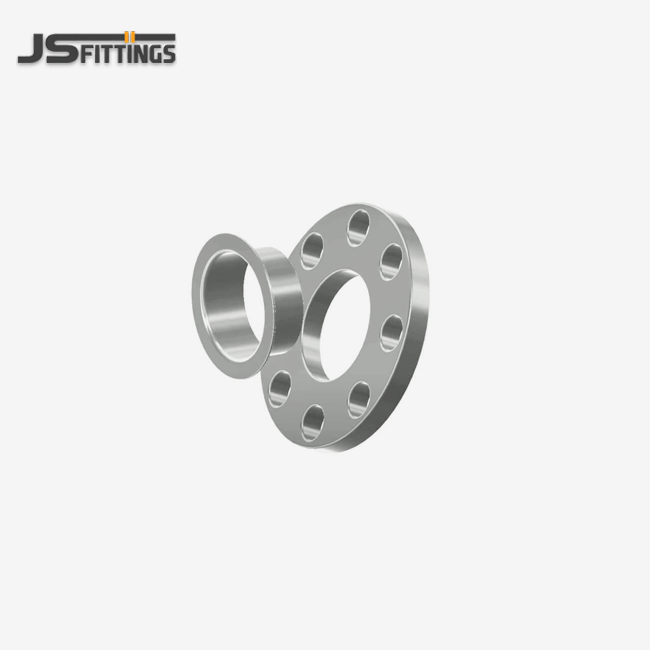
- Lap Joint (LJ) flanges can spin easily on a stub end. This makes it easier to line up bolt holes in systems that need to be taken apart often, like lab pipes or processes that clean things regularly.
Facing Types and Gasket Compatibility
The finish on the flange face has a direct effect on how well it seals. The standard in the industry is Raised Face (RF) flanges with a serrated circular finish. These give spiral-wound or graphite seals the best compression. Flat Face (FF) shapes keep fragile parts like cast iron valves from being overstressed. Metal ring seals for high-pressure sour service in oil and gas wellheads fit into Ring Type Joint (RTJ) holes that have been machined to meet API 6A standards.
These arrangements solve one of the most important problems in procurement for carbon steel forged steel flanges: making sure that gaskets work with each other and don't leak in a wide range of working conditions, from superheated steam engines to cryogenic LNG ports.
Comparing Forged Steel Flanges: Carbon Steel vs. Other Materials
The choice of materials affects not only the initial buy price but also the total cost of ownership. Carbon steel forged steel flanges work great in fuel service at normal and elevated temperatures, water transfer, and compressed air systems, where corrosion rates can be controlled with coatings or cathodic protection.
Carbon Steel vs. Stainless Steel
Forged stainless steel flanges, such as ASTM A182 F316/F316L, don't rust as easily in chloride conditions, acidic condensate systems, and marine settings. However, the higher cost of the material—often three to five times that of carbon steel—makes it economically impossible to specify on a large scale unless process chemistry or government rules require it. Carbon steel is still the main material used in industrial structures. Most rust problems can be avoided by treating the surface properly and choosing the right gaskets.
Carbon Steel vs. Alloy Steel
Chromium and molybdenum are added to alloy steel types (ASTM A182 F5, F9, F11, and F22) to make them stronger at high temperatures and against creep. This is important in fossil fuel power plants and thermal cracking units. When temperatures exceed approximately 850°F (454°C), these flanges provide improved creep resistance and strength retention. At elevated temperatures, carbon steel gradually loses strength and creep resistance, making alloy steels a better choice for long-term service. Carbon steel works just as well as alloy steel at temperatures below 700°F, but it costs a lot less. This has a direct effect on project budgets and purchasing decisions.
Forged vs. Cast Flanges
Cast steel flanges, which are made by putting melted metal into moulds, naturally have holes and gas pockets that allow the metal to shrink. Non-destructive testing can find big flaws, but microporosity can't be seen until it breaks in a big way during cyclic loads. These internal voids are completely eliminated during the high-pressure forging process, resulting in a dense, uniform component capable of withstanding millions of high-stress vibration cycles without failure. This dependability means lower upkeep costs, fewer emergency shutdowns, and safer working conditions for everyone—all of which are very important for plant managers and project developers who are looking at the total cost of ownership.
Procurement Guide: Buying Carbon Steel and Forged Steel Flanges from Chinese Factories
Buying from Chinese manufacturers has a lot of great benefits, such as low prices because they use localised supply lines for raw materials, output that can be scaled up or down, and quality systems that are well-developed from years of exporting. But for buying to go well, suppliers need to be carefully evaluated, and communication must be clear.
Supplier Qualification Criteria
Manufacturers with a good reputation keep third-party certifications that check their quality control systems and make sure their products meet standards. Getting ISO 9001:2015 certification shows that you have organised process control, can track documents, and use frameworks for ongoing growth. API Q1 certification adds petroleum-industry-specific quality management requirements, including enhanced controls for risk management, supplier qualification, traceability, and manufacturing processes.
Ask end-users like national oil companies (NIOC, ADNOC, and Petrobras) for pictures of their qualification papers. These companies do full factory checks that include metallurgical lab exams, heat treatment proof, and dimensional capability studies. These approvals show that the provider can always deliver goods that are in line with the rules and meet the strict needs of international energy projects.
Production Capabilities and Capacity
Lead times depend on how complicated the order is and how busy the business is. Standard ASME B16.5 forged carbon steel flanges in popular sizes (4" to 24") and pressure classes (Class 150 to 600) typically ship within three to four weeks of order confirmation. Large-diameter or high-pressure items that need to get special raw materials may take up to six weeks longer. Established manufacturers may maintain monthly production capacities of several hundred tonnes or more, depending on facility size and equipment.
Minimum order amounts depend on the size and details of the order. For standard carbon steel forged-steel flanges, minimum order quantities vary by manufacturer, flange size, pressure class, and material grade. For metals or pressure classes that aren't as common, the minimum number of pieces needed may be higher. Distributors who work with more than one end user can combine needs to meet minimums and spread out inventory risk.
Pricing Structure and Negotiation
The price of a flange is based on three main factors: the cost of the raw materials (often representing a significant portion of the total cost); the costs of making it (forging, cutting, heat treatment, and testing); and the profit margin. The prices of carbon steel billets change with the prices of iron ore and scrap metal around the world. This makes long-term contracts less stable. Smart buyers get price adjustment terms that are linked to public steel indices. This limits their risk and lets sellers keep their margins even when input costs go up.
When you commit to buying a lot, you can get better prices. Annual purchase deals that cover more than one project let providers make the best use of their time and resources when planning production and buying raw materials. They can share the savings through tiered discount structures. Setting up a qualified vendor list with two or three main sellers strikes a mix between competition and relationship depth, ensuring quick service for special needs.
Logistics and Compliance
International shipping makes things more complicated than FOB price alone, especially for items like GOST flanges. Containerised cargo (FCL) has the best cost per unit. A 40-foot container is typically loaded within applicable weight limits, often in the range of approximately 20–28 metric tonnes depending on destination regulations and cargo characteristics. Less-than-container-load (LCL) packages cost more to handle, but they are good for small test orders or restocking needs.
For carbon steel forged steel flanges, the correct Harmonised System (HS) classification and business paperwork (invoice, packing list, and proof of origin) are needed to get through customs. Certificate of Conformance (CoC) packages that include material test reports (MTRs), dimensional inspection records, and heat treatment charts meet the quality goals for projects and allow checks of traceability years after the products were installed.
Because of the combined inventory control, deliveries are always on time. When suppliers keep extras of popular things on hand, lead times for urgent needs are cut to one to two weeks. Leading exporters typically monitor on-time delivery performance as a key service metric. These rates show practical discipline that is important for EPC contractors to keep up with tight building schedules and milestone payments.
Conclusion
To buy carbon-steel forged flanges successfully, you need to find a balance between technical compliance, cost optimisation, and supply chain stability. Forged design gives high-pressure, high-consequence systems the mechanical stability they need while still being affordable for big industrial projects. When you buy directly from well-known Chinese makers, you can get low prices, quality systems, and production capacity that has been tested over decades of global supply. With careful seller qualification, clear sharing of specifications, and aggressive relationship management, procurement can be turned from a transactional necessity into a strategic benefit. This lowers project risk and keeps total lifecycle costs under control.
FAQ
1. What are the key differences between forged and cast flanges?
Carbon steel forged steel flanges are compressed mechanically, which matches the grain structure and gets rid of any internal voids. This gives them better tensile strength, impact resistance, and fatigue life than cast options. When liquid metal is poured into moulds to make cast flanges, the metal naturally shrinks and gas bubbles form inside the flanges, which makes them less reliable when they are loaded and unloaded repeatedly or when they are heated up. Forged parts generally provide better mechanical properties and are often preferred for higher-pressure and critical-service applications.
2. How can I verify Chinese supplier quality and credentials?
Ask for copies of your ISO 9001 and API Q1 certifications, as well as letters of recommendation from large end users such as national oil companies. Do factory checks that look at the tools used for metallurgical testing, the control of the production process, and the training records of the staff. Check sample material test results to make sure they are correct in terms of chemical makeup and mechanical properties. Third-party inspections during production by companies like SGS or Bureau Veritas give extra assurance before the goods are shipped.
3. What are typical lead times and minimum order quantities?
Standard ASME B16.5 carbon steel forged steel flanges can be shipped three to four weeks after they are made, but things with a big diameter or made of a special material may take six weeks. To warrant setting up production, minimum quantities vary by manufacturer and product specification. However, established providers may be able to handle lower volumes for standard items that are kept in stock. Costs and wait times are cut down by combining orders for various sizes or pressure classes.
Partner with JS FITTINGS for Reliable Flange Supply
When you need to buy a flange, JS FITTINGS can help you with factory-direct prices, certified quality assurance, and quick expert service.As a premier manufacturer of industrial forged flanges, backed by 40 years of export experience and verified approvals from top global energy companies, we deliver the uncompromising stability and dependability your critical projects require.Our engineering team and current production facilities make sure that all of your needs are met, whether you need standard ASME parts or unique fabrications.
You can talk about your needs, get material test results, or set up a factory check by emailing admin@jsfittings.com. We offer customised quotes within hours, competitive pricing for volume commitments, and flexible OEM customisation to meet your unique requirements. Our complete documentation packages and logistics coordination simplify international procurement, allowing you to focus on project execution rather than supply chain management. Discover why many customers choose to place repeat orders with us.
References
1. American Society of Mechanical Engineers. (2020). ASME B16.5: Pipe Flanges and Flanged Fittings NPS 1/2 Through NPS 24 Metric/Inch Standard. New York: ASME Press.
2. American Petroleum Institute. (2019). API Specification Q1: Specification for Quality Management System Requirements for Manufacturing Organizations for the Petroleum and Natural Gas Industry. Washington, DC: API Publishing Services.
3. Singh, R., & Verma, A. K. (2018). Piping Design and Engineering: Comprehensive Guide to ASME B31.3. Houston: Gulf Professional Publishing.
4. European Committee for Standardization. (2018). EN 1092-1: Flanges and Their Joints – Circular Flanges for Pipes, Valves, Fittings and Accessories, PN Designated – Part 1: Steel Flanges. Brussels: CEN.
5. Bai, Y., & Bai, Q. (2019). Subsea Pipeline Design, Analysis, and Installation. Oxford: Gulf Professional Publishing.
6. Harvey, J. F. (2020). Pressure Vessel Design: Concepts and Principles. New York: Springer International Publishing.
Send Inquiry
Related Industry Knowledge
- ASTM A312 vs A358: Choosing the Right Stainless Steel Pipe Standard
- Choosing the Right Size Long Radius Buttweld Elbow for Your Project
- What Is a Buttweld Bend? Types, Radius & Standards
- ASTM A312 vs ASTM A213 Steel Pipe: What Are the Key Differences?
- ASTM A263/A264 Standard for Corrosion-Resistant CRA Clad Pipe
- CRA Clad Line Pipe for Subsea and Offshore Pipelines
- What ANSI Pipe Flanges Are Commonly Applied Today?
- Carbon Steel Forged Steel Flange in Oil, Gas & Power Plants
- Sch 40 Buttweld Reducer vs Sch 80 Pressure Performance
- Carbon Steel Forged Steel Flange: Class 150 to 2500 Guide