
What ANSI Pipe Flanges Are Commonly Applied Today?






2026-06-18 10:13:11
Once you have the right-sized ANSI pipe flanges, it's time to plan and build the pipeline. Because they have a 1.5D curve radius that keeps the pressure and flow the same, pipe systems are easy to rearrange. Specifying the incorrect flange size or pressure class can lead to catastrophic system failures, severe safety hazards, and exorbitant repair costs. This comprehensive guide will help you navigate the essential specifications and industry codes to ensure you build a pipeline that is unequivocally safe, highly efficient, and built to last.
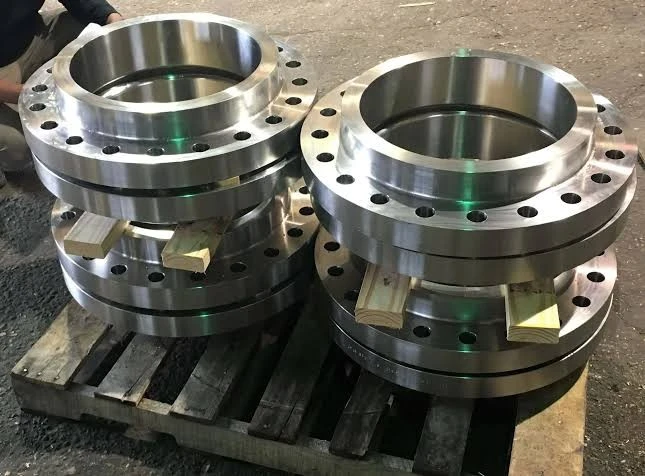
Understanding ANSI Pipe Flanges: Standards, Specifications, and Types
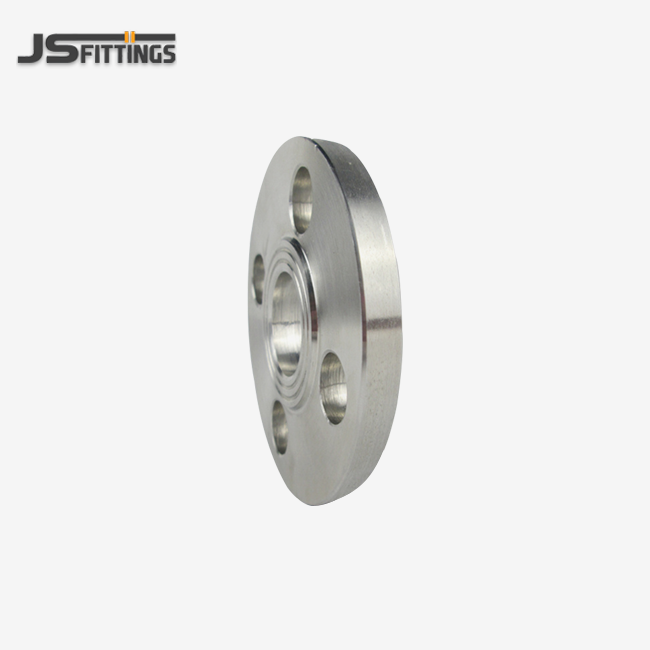
Learn about ANSI pipe flanges and how they work. It is important to understand why ANSI pipe flanges are used. ANSI pipe flanges are piping components used to connect pipes, valves, pumps, and other equipment, creating a secure and leak-tight joint that allows assembly, inspection, and maintenance. By utilizing properly specified flanges—such as robust weld neck configurations for severe conditions—pipes, valves, and specialized equipment are seamlessly integrated. This engineering approach guarantees a strong, leak-proof, and fully inspectable joint capable of withstanding extreme temperatures and high-pressure fluctuations.
The Relationship Between ANSI and ASME Standards
The tool will work if you know how to use it. The rules in different parts of the world, such as ASME B16.9 and MSS-SP-43, cover wrought stainless steel buttwelding fittings; EN 10253 and DIN 2605 say that our buttwelding fittings must touch. ERW/EFW sizes go up to 72", and seamless sizes go from 1/2" to 24". These can be used in many business settings. Wall thickness options range from Schedule 10s to XXS (Schedule 160), so you can be sure that your pipeline meets all of its flow rate and pressure class needs.
Pressure Class Standards and Material Selection
You should know what kind of material you need and how long it will last. Carbon steel grades like ASTM A234 WPB are cheap and strong, but stainless steel grades like ASTM A403 WP304/304L and WP316/316L are better at resisting corrosion in chemical processing and offshore environments. Alloy steel grades (ASTM A234 WP5, WP9, WP11, WP22, and WP91) are used to make high-temperature power, and low-temperature steel (ASTM A420 WPL6) stays stable in cryogenic conditions. Depending on the environment, hot-dip galvanising, pickling, and passivation can also make steel last longer.
Find out how well real-life pressure ratings work. Heavy schedules, like SCH 80 or XXS, can hold more pressure, but they are also heavier and cost more. If you know your system's Maximum Allowable Operating Pressure (MAOP) and how the temperature will change over time, you can choose fittings that will keep their shape. That way, you won't have to order too many that cost too much or too few that put safety at risk.
Common Flange Types and Their Industrial Applications
If there isn't much room, specifiers may want to use short radius (1.0D) options, but the performance trade-offs should be carefully thought through. Common flange types include weld neck, slip-on, socket weld, threaded, lap joint, and blind flanges. Each design offers different advantages depending on pressure class, maintenance requirements, and installation conditions.
ASTM A234 WPB carbon steel is the most common type of industrial pipe material. It is easy to find and has a good strength-to-cost ratio. It works well in neutral or mildly corrosive environments and is commonly used in moderate-temperature service, subject to applicable design code limits. 304L and 316L stainless steel grades are more expensive, but they are worth it in corrosive environments like food processing, chemical plants, and marine environments, where contamination or corrosion would threaten safety or product quality.
Critical Dimensional Measurements
Before you start installing something, make sure that the fittings were not damaged during shipping and that the bevel angles, dimensions, and heat numbers are correct. Also, make sure that the pipe schedule and ANSI pipe flange bore dimensions line up so that the internal diameter stays the same across joints. This stops erosion and turbulence at transitions. Finally, clean the bevel surfaces well to get rid of any mill scale, oil, or other things that could damage the quality of the weld.
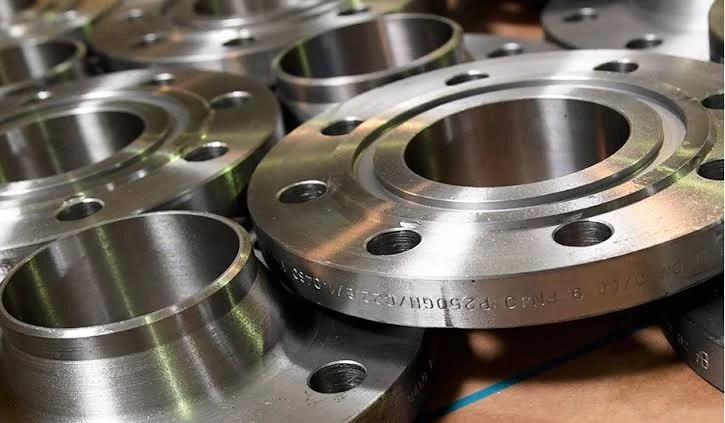
Key Decision Factors When Selecting ANSI Pipe Flanges for Industrial Use
Matching Flange Size and Pressure Class to System Requirements
To make the right choice for ANSI pipe flanges, you should first carefully write down how your system works. The nominal pipe size (NPS) is the pipe's approximate inside diameter and is used as a standard for sizing. Next, you should find the design pressure and temperature, as these directly affect the material grade and wall thickness requirements. The chemical composition and pH of the fluid being transported help you choose the material to avoid corrosion or chemical attack. Flow velocity calculations show if turbulence mitigation is important, which favours long radius configurations in high-velocity applications.
Comparing International Standards for Global Projects
Large oil companies like the National Iranian Oil Company, Abu Dhabi National Oil Company, and Petrobras have approved JS FITTINGS to supply them. This shows that we can meet a lot of different international needs. For example, in North America, factory-made wrought buttwelding fittings must follow ASME B16.9 standards, which spell out size tolerances, material needs, and testing procedures. In Europe, projects usually follow EN 10253 or DIN standards, and in Russia and the CIS, they need to follow GOST standards.
Material Selection for Specific Environments
Before you buy something, you should think about how much it costs and how well it works. Better materials and thicker wall schedules may cost more at first, but they save you money in repairs and replacements over time. For important uses, a total cost of ownership analysis that looks at installation labour, downtime risk, and lifecycle duration may justify a higher initial investment. For less important service lines, standard schedules and carbon steel materials may work, making the most of capital efficiency without sacrificing safety.
To fix operational problems, you might need non-standard degrees, odd diameters, alloy compositions, or specialised heat treatments. For example, you might need epoxy coatings for potable water, fusion-bonded epoxy (FBE) coatings for buried pipelines, or PTFE coatings for harsh chemicals. JS FITTINGS supports custom options and offers a range of surface treatments.
Practical Guide: Installation and Maintenance of ANSI Pipe Flanges
Step-by-Step Installation Procedures
It is important to make sure that the four weld neck flanges verify that the bevel dimensions comply with ASME B16.25 requirements and that heavier sections have compound J-bevels. This makes the welding process faster and more reliable. Preheating needs depend on the material and the temperature outside. For example, carbon steel fittings usually need to be heated up before they can be welded if they are thicker than 19 mm or if the temperature outside drops below 0 °C. Post-Weld Heat Treatment (PWHT) relieves residual stresses in thick-walled or alloy steel parts, which keeps them from cracking and makes them stronger.
Common Installation Errors and Prevention
To check the angle of orientation, you can use protractors or laser alignment tools. To account for thermal expansion in long pipeline runs, add expansion loops or bellows. This will reduce excessive stress on the piping system and flange connections during temperature cycling. Find out the material's expansion coefficients based on the temperature range it will be used in. Support fittings so they can move without putting bending moments on them.
Maintenance Strategies for Extended Service Life
Our goods, including ANSI B16.5 forged flanges, are sent in seaworthy plywood cases or on pallets with clear heat-number markings so that distributors can keep track of their stock and there is less confusion on-site. If a customer has a question, our experienced international trade team answers it within an hour, which helps with scheduling and understanding technical needs. Full after-sales service includes help with paperwork, warranty support, and technical troubleshooting, which lowers project risk and builds long-term partnerships.
Sourcing ANSI Pipe Flanges: What Procurement Managers Need to Know?
Manufacturing Channels and Customization Options
If you want to find a good supplier for ANSI pipe flanges, look for ones with industry-specific certifications like GOST-R for Russian markets or API monograms for oil and gas applications. JS FITTINGS has all of these, as well as ISO, CE, and GOST-R certifications. It is also an approved vendor for big energy companies like NIOC, ADNOC, and Petrobras. Our strict quality control includes non-destructive testing (NDT) methods like ultrasonic testing (UT) and magnetic particle inspection (MPI), which find cracks or flaws on the surface that you can't see.
Pricing Dynamics and Lead Time Expectations
Standard-sized carbon steel components can be shipped quickly from stock, but custom shapes or exotic alloys take 4 to 8 weeks to make. If you buy a lot, you can get volume discounts because we ship over 90 containers every month and have an on-time delivery rate of over 95%, which supports large-scale projects and distributor inventory programs. To get an accurate quote, ask for quotes that break down the costs of materials, manufacturing, testing, shipping, and surface treatment.
Evaluating Supplier Credibility and Reliability
To guarantee complete material traceability and uncompromised quality, we exclusively source high-grade carbon steel from Tier-1 mills like Baosteel and Tsingshan for all our forged pipe flange applications.Our improved hot-mandrel and cold-forming processes keep the wall thickness the same at the extrados, which is where it's weakest when internal pressure is applied. Each fitting has a heat number that lets you keep track of it throughout its service life. This is helpful for keeping records of maintenance and failure analysis.
Conclusion
To choose the right ANSI pipe flanges, you need to know a lot about your pipeline's diameter, pressure, temperature, and flow characteristics. To make sure you get the right thing, you should make sure the supplier is reliable, follow all the rules, and check the quality carefully. These components are used in many important industrial applications because they stop erosion, lower pressure drop, and make it easier to pig. To protect your investment and finish your project faster, work with experienced manufacturers who have global logistics skills and quality systems that have been used before.
FAQ
1. What distinguishes ANSI flanges from ASME flanges in practical applications?
ANSI flange standards are now maintained by ASME. In practical applications, the terms "ANSI flange" and "ASME flange" are often used interchangeably, with current products typically manufactured to ASME B16.5 or ASME B16.47 standards.
2. When should a ring-type joint facing be specified instead of a raised face?
Ring Type Joint (RTJ) facings are typically specified for high-pressure and high-temperature services where enhanced sealing performance is required. Raised Face (RF) flanges are commonly used in general industrial piping systems.
3. How do Series A and Series B differ in large-diameter flanges?
Series A flanges generally have thicker sections and larger bolt circles, while Series B flanges are usually lighter and more economical. The choice depends on project specifications and applicable standards.
4. What performance differences exist between slip-on and weld-neck flanges?
Weld neck flanges provide better stress distribution and are preferred for high-pressure and cyclic services. Slip-on flanges are easier to install and are often used in lower-pressure applications where cost savings are important.
Choosing the Right ANSI Pipe Flanges Supplier for Your Project
Since more than 40 years ago, JS FITTINGS has been a certified supplier of ANSI Pipe Flanges to major energy companies all over the world. We know how important it is to meet deadlines and make sure our products are delivered correctly and on time. Our products come in many grades, like carbon steel, stainless steel, and alloys, and can be seamless from 1/2" to 24" or welded up to 72". Every part has a 3.1 Mill Test Certificate, and NDT quality checks are also done. You can see where the material traceability information is provided in these certificates. We can help with both big EPC projects and plans to help people who sell things get more of them. By shipping over 90 containers monthly, we consistently maintain an on-time delivery rate exceeding 95%. Contact our expert engineering and sales team at admin@jsfittings.com today to receive free technical consultation, highly competitive pricing, and tailored solutions that will ensure your project's absolute success.
References
1. American Society of Mechanical Engineers. (2020). ASME B16.5: Pipe Flanges and Flanged Fittings NPS 1/2 Through NPS 24 Metric/Inch Standard. New York: ASME Press.
2. American Society of Mechanical Engineers. (2019). ASME B16.47: Large Diameter Steel Flanges NPS 26 Through NPS 60 Metric/Inch Standard. New York: ASME Press.
3. Becht, C. (2018). Process Piping: The Complete Guide to ASME B31.3. Fourth Edition. New York: ASME Press.
4. Ellenberger, J. P. (2016). Piping and Pipeline Calculations Manual: Construction, Design Fabrication and Examination. Oxford: Butterworth-Heinemann.
5. Nayyar, M. L. (2019). Piping Handbook. Eighth Edition. New York: McGraw-Hill Education.
6. Singh, R. K. (2017). Pipeline Integrity Handbook: Risk Management and Evaluation. Houston: Gulf Professional Publishing.
Send Inquiry
Related Industry Knowledge
- What Is a Buttweld Bend? Types, Radius & Standards
- What is an API 5L Seamless Steel Line Pipe?
- Carbon Steel Forged Steel Flange in Oil, Gas & Power Plants
- Buttweld Bend vs Elbow: Key Differences Explained
- What is seamless carbon steel pipe used for?
- What is a blind flange used for?
- What specification is the carbon steel black pipe?
- What is a plate flange?
- What causes porosity in carbon steel pipe welding?
- What is a blind flange?