
What is an API 5L Seamless Steel Line Pipe?






2026-06-26 10:53:28
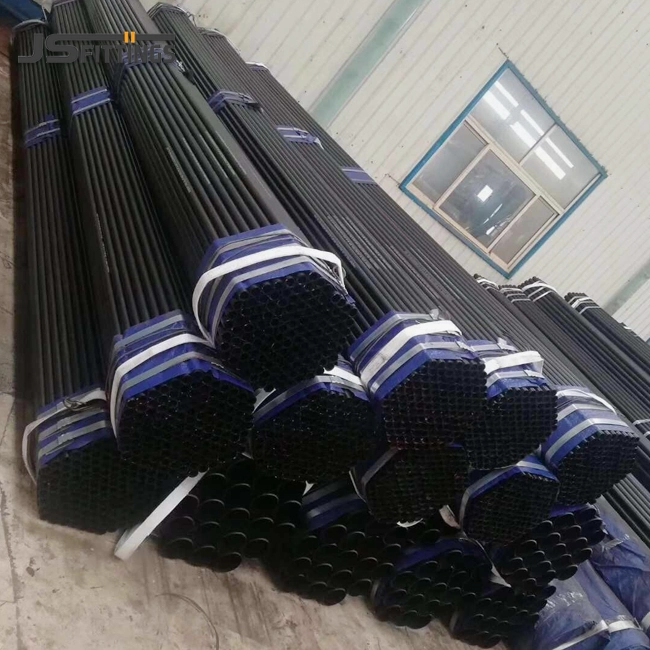
What is an API 5L Seamless Steel Line Pipe? It's a high-performance pipeline material manufactured according to the American Petroleum Institute Specification 5L, specifically engineered for transporting oil, gas, and water in the petroleum and natural gas industries. Unlike welded pipes, seamless pipes are produced from solid round steel billets heated and formed into hollow tubes without any longitudinal weld seam. This manufacturing approach eliminates the traditional weak point in pipelines, delivering superior structural integrity under extreme high pressure, enhanced fatigue resistance in deep-water offshore risers, and reduced susceptibility to weld-related corrosion issues in sour service environments containing hydrogen sulphide (H₂S).
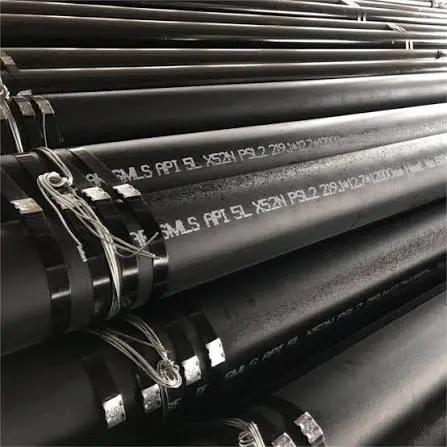
Why Does the Oil and Gas Industry Depend on Seamless Line Pipes?
One worry keeps coming up when I talk to project managers and procurement specialists across the United States: when pipelines fail, terrible things happen. A single break can stop production for weeks, cause environmental tragedies, and cost millions of dollars. Although traditional welded pipes are cheap for some uses, they have a weakness: the lengthwise weld seam is a place where they could break under changing pressure loads and acidic circumstances.
This basic problem is solved by API 5L seamless steel pipes. Since there is no joint line, there is no heat-affected zone where changes in the grain structure could make the material less strong. This directly reduces risk for EPC companies who are in charge of billion-dollar building projects. Because the pipes are smooth, their mechanical features are the same all the way through, so they will always work the same way when they are under mechanical stress and heat expansion.
Take offshore oil and gas fields and platforms in the Gulf of Mexico as an example. Pipelines there are constantly moving because of waves, salty rust, and pressures higher than 10,000 psi. Pipes that are seamless and made to API 5L X65 standards are reliable enough for these harsh settings. The manufacturing process produces a uniform microstructure that helps resist crack initiation and slows crack propagation, maintaining pipeline integrity throughout its service life.
Along with their structural benefits, smooth pipes also make it easier to move things around. Distributors and stockists who keep emergency fix parts in stock need goods that can be used for a variety of projects. Our Grade B through X70 seamless line pipes are versatile enough to work in a wide range of industries, from natural gas networks that serve neighbourhoods to petroleum product pipelines that bring jet fuel to airports.
Core Features That Deliver Real-World Performance
The technical specifications of API 5L seamless steel line pipe might seem complex, but each feature directly impacts your project success. Our manufacturing facility produces pipes ranging from 1/2" to 24" in diameter, with wall thicknesses from Schedule 10 to Schedule 160. This range covers applications from low-pressure gathering lines to high-pressure transmission pipelines spanning hundreds of miles.
High-pressure integrity stands as a defining characteristic. The absence of a longitudinal weld seam eliminates weld-related considerations and can provide advantages in certain high-pressure and critical-service applications. During hydrostatic testing, we subject every pipe length to hydrostatic test pressures in accordance with API 5L requirements to verify pressure integrity and leak-tightness before shipment. This verification ensures leak tightness before the pipe leaves our facility. For project managers facing tight deadlines, this means confidence that materials won't fail during commissioning.
- Precision dimensional control matters more than many realise. Welders working on pipeline construction projects know that poor dimensional tolerances cost time and money. Pipes with excessive ovality or inconsistent wall thickness require additional fit-up time, potentially delaying critical path activities. Our seamless pipes maintain tight tolerances, enabling perfect alignment during field welding. This precision reduces labour hours and consumable costs while improving weld quality.
- Enhanced flow efficiency impacts operational economics over the pipeline's entire service life. The smooth internal surface of seamless pipe minimises friction and turbulence. Compared to welded alternatives where internal weld beads may create flow restrictions, seamless pipes reduce pumping costs and internal erosion. Over a 20-year operational period on a 500-mile transmission pipeline, this efficiency can save hundreds of thousands of dollars in energy costs.
- Critical Environment Reliability extends to specialised applications requiring NACE MR0175 compliance for sour service environments. When natural gas contains hydrogen sulphide, material selection becomes crucial to prevent sulphide stress cracking. Our seamless pipes can be supplied with chemical compositions and heat treatments specifically designed for these corrosive conditions. Government infrastructure projects and industrial end users benefit from this capability, knowing their pipelines will maintain integrity despite challenging service conditions.
The steel grades available for API 5L Seamless Steel Line Pipe—from Grade B through X70—provide engineering flexibility. Grade B (with 35,000 psi minimum yield strength) suits lower-pressure applications like water distribution systems. X52 and X60 grades serve typical oil and gas transmission pipelines. X65 and X70 high-strength grades enable thinner walls at equivalent pressure ratings, reducing material costs and installation effort on long-distance projects.
Understanding the Manufacturing Technology Behind Seamless Pipes
The seamless pipe manufacturing process begins with solid round steel billets produced from carefully controlled steel chemistry. These billets undergo heating to temperatures around 1,200°C in rotary hearth furnaces, ensuring uniform temperature distribution throughout the material. This heating phase is critical—insufficient temperature causes excessive forming forces and potential defects, while overheating can cause grain coarsening that compromises mechanical properties.
Once heated, the billet moves to a piercing mill where a pointed mandrel penetrates the centre while rotary rollers apply radial pressure. This process transforms the solid billet into a thick-walled hollow shell. Subsequent rolling operations on pilgering mills or continuous mandrel mills reduce wall thickness and increase length while maintaining precise dimensional control. The entire forming process occurs at temperatures where the steel remains ductile, allowing plastic deformation without cracking.
After forming, pipes undergo controlled cooling and heat treatment. Normalising heat treatment involves heating the pipe to approximately 900-950°C and cooling it in still air. This process refines the grain structure, producing uniform mechanical properties throughout the pipe body. Quenching and tempering treatments can be applied to achieve higher strength grades like X65 and X70, creating a martensitic or bainitic microstructure that provides excellent combinations of strength and toughness.
Chemical composition control throughout manufacturing ensures weldability and performance. Carbon content varies depending on the specific grade and manufacturing route, and is meticulously controlled alongside manganese, silicon, and critical microalloying elements such as niobium, vanadium, and titanium.These additions provide strengthening through grain refinement and precipitation hardening while maintaining carbon equivalent levels that ensure good field weldability. Phosphorus and sulphur impurities are strictly limited below 0.015% each to prevent embrittlement and hot cracking during welding.
Key Advantages That Protect Your Investment
Selecting seamless line pipe delivers measurable advantages throughout your project lifecycle. The uniform grain structure created during seamless manufacturing provides predictable mechanical behaviour. When pipeline systems experience pressure fluctuations, thermal cycling, or ground movement, seamless pipes respond consistently without the variability associated with weld seam properties.
Corrosion resistance improves because there's no weld seam where residual stresses and microstructural changes concentrate corrosion attack. Internal corrosion from transported fluids and external corrosion from soil contact both progress more uniformly on seamless pipes. This characteristic extends service life and reduces maintenance frequency, directly addressing the concerns of industrial end users seeking to minimise total cost of ownership.
Installation efficiency increases with seamless pipes' superior dimensional consistency. Automatic welding equipment performs optimally when pipe ends align perfectly. The tight tolerances we maintain on ovality and wall thickness enable faster welding speeds and higher quality joints. For medium and small engineering firms managing labour-intensive projects, this translates to meeting deadlines while controlling budget.
Safety margins expand significantly. The absence of a weld seam eliminates the risk of longitudinal seam-related failures, which historically has caused numerous pipeline incidents. Regulatory agencies increasingly scrutinise pipeline safety, and seamless construction provides inherent advantages during permitting and inspection processes. Government infrastructure projects benefit from simplified compliance documentation and reduced liability concerns.
Performance in extreme conditions truly sets seamless pipes apart—most notably premium grades like API 5L X65, which are engineered specifically for critical oil and gas pipelines. For instance, Arctic pipelines operating at -40°C absolutely require materials with exceptional low-temperature toughness to resist catastrophic brittle fracture. Our seamless pipes undergo Charpy V-notch impact testing at temperatures matching service conditions, verifying adequate shear area percentages and absorbed energy values. This capability supports projects in challenging climates where material failure could prove catastrophic.
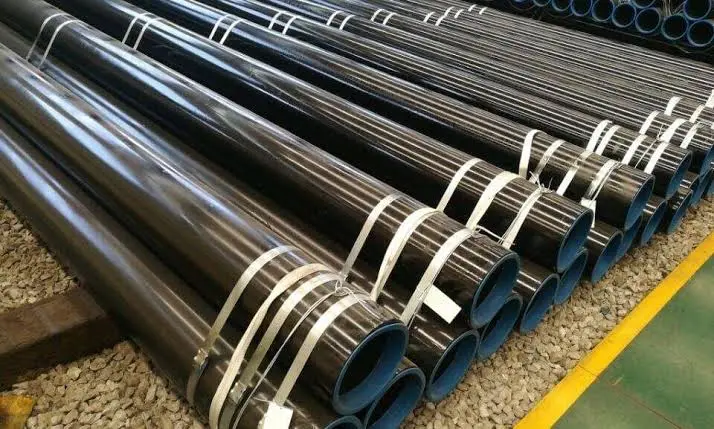
Important Considerations When Specifying Seamless Line Pipe
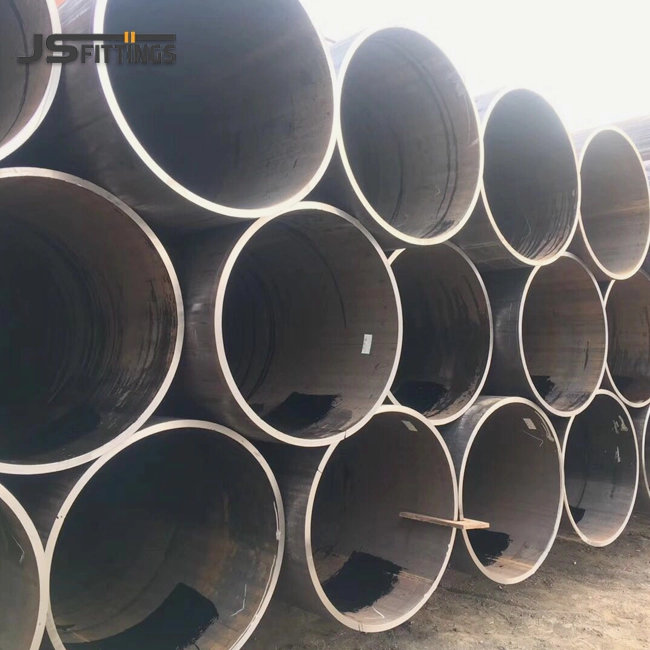
Even though seamless pipes have a lot of benefits, the needs of the job should determine which materials are best. It's important to think about cost, since seamless pipes usually cost more at first than welded ones.. For pipes with diameters greater than 24 inches, smooth manufacturing is both technically difficult and not cost-effective. LSAW pipes are often a better deal in these situations while still performing well enough.
Availability can change how a job is planned. When making seamless pipes, it takes longer than when making soldered pipes, especially for sizes or grades that aren't normal. Trading and distributors should keep a smart stock of popular sizes so they can meet customer needs quickly. We keep stock of commonly requested sizes at our plant, but special orders may take 8 to 12 weeks to make.
Choosing the right product standard affects both cost and effectiveness. PSL1 sets the general standards for less important uses, while PSL2 adds stricter limits on chemical makeup, requires impact testing, and improves non-destructive examination. The extra testing for PSL2 costs more, but it gives more confidence in systems with high stakes where failure risks are not acceptable.
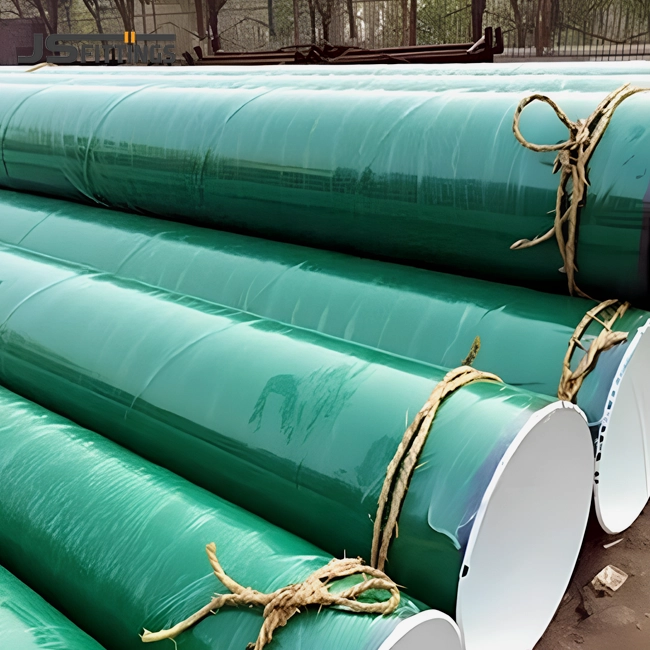
The needs for coating and security make things more complicated. We offer pipes with different surface treatments, such as natural finish, varnish, black paint, 3PE coating, or fusion-bonded epoxy (FBE). However, project requirements must include field joint coating and cathodic protection. The uniform design doesn't get rid of the need for full rust protection systems, especially in harsh soil conditions or underwater installs.
How you prepare the end affects how you put it in the field. Not only do bevelled sides make welding easier, but the bevel angle, root face, and land measures must be carefully specified to fit the project's welding processes. Plain ends work well for mechanical joining, but they might not be strong enough for high-pressure uses. We have both options available, and as an API 5L seamless line pipe manufacturer in China, we can also meet your specific end preparation needs.
Conclusion
API 5L seamless steel line pipe represents proven technology addressing the oil and gas industry's most demanding pipeline applications. The elimination of longitudinal weld seams provides inherent reliability advantages in high-pressure, corrosive, and critical service conditions. While initial costs exceed welded alternatives, the long-term benefits of extended service life, reduced maintenance, and enhanced safety often justify the investment. Careful specification considering grade, wall thickness, and product specification level optimises performance for your application. As energy infrastructure expands and aging pipelines require replacement, seamless line pipes will continue serving as essential components, delivering the reliability modern projects demand.
FAQ
1. What's the difference between API 5L PSL1 and PSL2 seamless pipes?
PSL2 includes more stringent requirements than PSL1, adding mandatory chemical composition limits, Charpy V-Notch impact testing, tighter carbon equivalent controls, and enhanced non-destructive examination. While PSL2 pipes generally cost more than PSL1 pipes due to these additional testing and stringent quality requirements, they provide indispensable assurance for critical applications where the consequences of failure would be catastrophic. We recommend PSL2 for high-pressure transmission lines, sour service environments, and offshore installations. PSL1 suits less critical applications like low-pressure gathering lines and water distribution, where the additional testing isn't necessary.
2. Can seamless pipes be field welded to flanges and fittings?
Absolutely. API 5L seamless pipes are specifically designed for field welding, with controlled carbon equivalents ensuring good weldability. The chemical composition limits prevent excessive hardness in heat-affected zones, reducing the risk of cracking during welding and cooling. Our pipes arrive with mill test certificates documenting chemistry, allowing welders to select appropriate filler metals and procedures. Bevelled ends facilitate butt-welding to adjacent pipe sections, while plain ends can be machined or grooved for mechanical joining to flanges and fittings. We can provide pipes with customised end preparations matching your specific welding procedures.
3. How do I select the appropriate grade for my pipeline project?
Grade selection depends on operating pressure, temperature, and fluid characteristics. Calculate required wall thickness using ASME B31.4 or B31.8 design codes, considering maximum operating pressure, pipe diameter, and desired safety factors. Higher grades like X65 and X70 allow thinner walls at equivalent pressure ratings, potentially reducing material costs and installation effort. However, higher grades also cost more per pound. For standard oil transmission, X42 or X52 typically proves economical. Natural gas transmission often uses X52 through X65. Sour service applications require careful material selection with potential NACE compliance.
4. What delivery timeframes should I expect for seamless pipe orders?
Standard sizes from our inventory ship within 7-14 days after order confirmation. Common specifications like 6" Schedule 40 X52 and 8" Schedule 80 X60 are typically stocked. Custom orders requiring special dimensions, grades, or end preparations need 8-12 weeks of production time depending on order quantity and current production schedules. Large projects should plan procurement timelines accordingly, placing orders during engineering phases rather than waiting for construction to begin. We can provide detailed delivery schedules during quotation, allowing accurate project planning.
Partner with JS FITTINGS: Your Trusted API 5L Seamless Steel Line Pipe Manufacturer
Choosing the right seamless steel line pipe supplier directly impacts your project success.
As a premier global manufacturer of industrial piping with over 40 years of manufacturing excellence since 1983, JS FITTINGS delivers the uncompromising quality, API 5L compliance, and supply chain reliability your critical projects demand.
Our facility ships more than 90 containers monthly with an on-time delivery rate exceeding 95% and customer repurchase rates above 98%. We maintain a strategic inventory of common specifications, enabling a rapid response to your requirements. Our engineering team provides technical support throughout your project, and our comprehensive quality documentation simplifies compliance with your specifications. Contact us at admin@jsfittings.com to discuss your seamless pipe requirements and discover how our expertise can support your next pipeline project.
References
1. American Petroleum Institute. (2018). Specification for Line Pipe: API Specification 5L, Forty-sixth Edition. Washington, DC: API Publishing Services.
2. Bai, Y., & Bai, Q. (2014). Subsea Pipeline Design, Analysis, and Installation. Oxford: Gulf Professional Publishing.
3. Mohitpour, M., Golshan, H., & Murray, A. (2007). Pipeline Design and Construction: A Practical Approach, Third Edition. New York: ASME Press.
4. Palmer, A. C., & King, R. A. (2008). Subsea Pipeline Engineering, Second Edition. Tulsa: PennWell Corporation.
5. Revie, R. W. (2015). Oil and Gas Pipelines: Integrity and Safety Handbook. Hoboken: John Wiley & Sons.
6. Sotoodeh, K. (2021). Piping and Pipeline Engineering: Design, Construction, Maintenance, Integrity, and Repair. Cambridge: Woodhead Publishing.
Send Inquiry
Related Industry Knowledge
- Types of ASTM A105 weld neck flange
- How to Inspect Buttweld Elbow Quality Before Installation?
- ASTM A312 vs A358: Choosing the Right Stainless Steel Pipe Standard
- ASME B16.9 Buttweld Reducer Dimensions and Weight Guide
- A312 stainless steel pipe – Stainless Steel Pipe Dimensions, Chemical Composition
- How to Select the Right Buttweld Bend Radius (3D–20D)
- Carbon Steel Forged Steel Flange Supply: China Factory Wholesale
- What is seamless carbon steel pipe?
- Industrial Buttweld Reducer Selection for Refinery Projects
- What is a plate flange used for?