
A312 stainless steel pipe – Stainless Steel Pipe Dimensions, Chemical Composition






2026-06-25 10:17:11
A312 stainless steel pipe is the best choice for industrial projects that need to be reliable in harsh circumstances. This high-alloy pipe system is the best at resisting corrosion and staying stable at high temperatures. It is essential for chemical processing plants, desalination plants, and remote sites where carbon steel just won't work. Knowing the exact sizes and chemical make-up of these pipes helps buying pros keep project risks to a minimum and make sure strict safety standards are met.
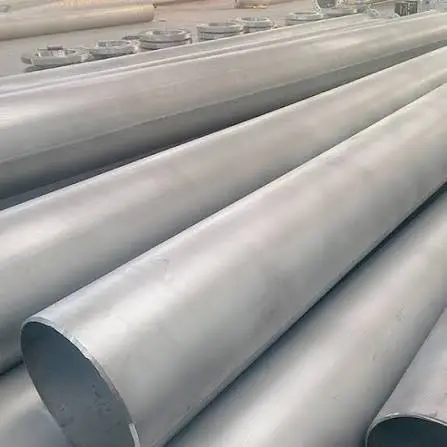
Understanding A312 Stainless Steel Pipe Specifications
What Defines ASTM A312 Stainless Steel Pipe?
ASTM A312 is the standard for seamless and welded austenitic stainless steel lines that are made to work in harsh settings with high temperatures. Unlike structural tubes, these pipes are designed to carry gases and fluids under pressure and meet the requirements of ANSI/ASME B36.19 nominal pipe size dimensions. The standard solves important problems in the industry that have to do with keeping structures strong when temperatures change and not reacting badly with corrosive acids. These are issues that many large-scale operations have.
Common Grades and Their Chemical Composition
In more complex situations, Duplex 2205 may be needed, each of which is made to meet specific operating needs. About 18% of TP304 and TP304L is chromium and 8% is nickel. This gives them excellent corrosion resistance in general service. The "L" designation means that the material has a low carbon content (below 0.035%), which stops carbide precipitation during welding, which is a very important part of keeping the weld zone intact.
TP316 and TP316L add molybdenum (2–3%) into the metal core, which makes it much more resistant to pitting and crevice corrosion in places with a lot of chloride. Because of this, they are the best choice for water uses and desalination devices. Titanium is used as a stabilizing element in TP321 to stop intergranular corrosion at temperatures between 800°F and 1500°F. TP347 also uses niobium to keep things stable, which is especially useful in processing petrochemicals.
In more complex situations, duplex stainless steel grades such as 2205 may be needed. These materials are typically supplied under separate duplex stainless steel pipe specifications rather than ASTM A312. This steel has microstructures that are both austenitic and ferritic, and it has twice the yield strength of normal austenitic types while still being very resistant to corrosion. In all L-grades, the carbon content stays below 0.03%, the manganese content stays between 2.0% and 3.0%, and the silicon content stays below 1.0%.
Mechanical Properties That Matter
For grades like TP304 and TP316, A312 stainless steel pipe must have a tensile strength of at least 75 ksi (515 MPa) and a yield strength of at least 30 ksi (205 MPa). These mechanical qualities have a direct effect on the safety gaps for operations. Most elongation values are greater than 35% in 2 inches, which means the material is very flexible and won't break in a catastrophic way. When material has been softened, its hardness is usually less than 201 Brinell.
At JS FITTINGS, we know that buying choices depend on performance data that can be checked. Our mill test reports include chemical information that changes with heat, mechanical test results, and optical emission spectroscopy (OES) results that prove the material is what it says it is. When contractors have to deal with third-party checks or governmental audits, this ability to track back is very important. We use a solution annealing method that involves heating the metal above 1040°C and then quickly cooling it. This completely dissolves the carbides and restores the best corrosion resistance. This is especially important in weld areas that are prone to intergranular attack.
A312 Stainless Steel Pipe Dimensions and Standards
Nominal Pipe Sizes and Schedule Systems
Costly mistakes in buying can be avoided by understanding the dimensions required. Nominal Pipe Size (NPS) is not a measurement but a designation that doesn't give any specifics. The outside diameter of an NPS 2 pipe is not exactly 2 inches. According to the ASME B36.19 standard, each NPS has a defined outside diameter, and the wall thickness changes based on the schedule number.
Schedule numbers, like 5S, 10S, 40S, 80S, and others, show how thick the wall is compared to the size of the pipe. When the schedule number goes up, the walls get stronger, the pressure grade goes up, and the weight goes up. There is a difference in the wall thickness between a Schedule 40 A312 stainless steel pipe in NPS 6 and one in NPS 12, but both meet the pressure needs. With this method, engineers can say how strong something is without having to figure out the wall dimensions for each job again.
We maintain inventory from DN15 to DN2000, which is about NPS 1/2 to NPS 78, and we have plans from 5S to 160. As per A312, wall thickness limits allow changes of +22% or -12.5% for welded pipes and +20% or -12.5% for seamless pipes. These differences have an impact on both the weight calculations needed to support structures and the flow factors used in hydraulic models.
Comparing A312 with A213 and A269
A312 stainless steel pipes and related standards are often hard for procurement teams to understand. The rules for seamless ferritic and austenitic alloy steel tubes used in boilers, superheaters, and heat exchangers are set by ASTM A213. The main difference is how the dimensions are named: A213 uses exact measures for outside diameter and wall thickness (for example, 2.000" OD × 0.120" WT), while A312 uses the NPS and schedule methods. A213 tubes are usually used for heat transfer where exact sizes determine how well they work, while A312 pipes are used to move fluids under pressure.
For general corrosive work, ASTM A269 covers both seamless and welded austenitic stainless steel tube. This type of tubing is often used in monitoring and control systems that need smaller sizes and tighter standards. A269 allows both English and metric measurements, but it doesn't have the pressure-temperature rates that are essential for A312 uses. When placing an order for process pipe systems that fall under ASME B31.3, A312 is still the correct standard.
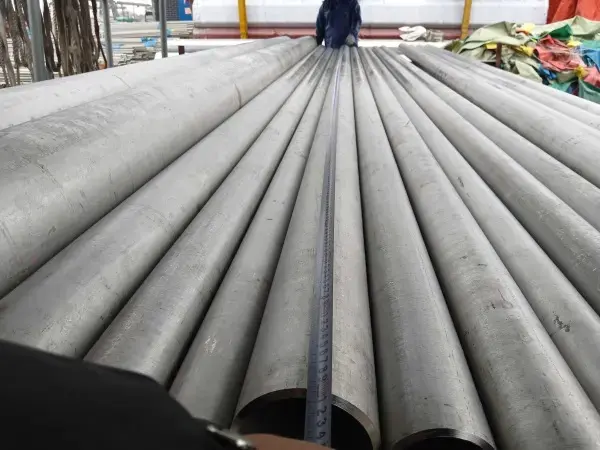
Comparison and Selection: A312 Stainless Steel Pipe vs. Other Grades and Standards
Manufacturing Methods: Seamless vs. Welded
Understanding the differences in production is the first step in choosing the right materials. Extrusion or rotary piercing of solid billets is used to make seamless A312 stainless steel pipes. This gives the pipe wall similar qualities all the way through. Because of this, seamless pipe is perfect for high-pressure, critical applications where the chance of a weld joint failing is not acceptable. For example, hydrodesulfurization units in refineries and supercritical steam lines in power plants are both examples of these types of applications.
It is possible to join flat-rolled coils into tubes and then use electric resistance welding (ERW), submerged arc welding (SAW), or tungsten inert gas (TIG) to join them. Today's welding methods make seams that can withstand the same levels of mechanical testing as parent material that is smooth. When working with bigger sizes and less pressure, where weld quality isn't at risk, the cost savings become important. JS FITTINGS uses a dual-certification system to make sure that most of its welded product meets both 304/304L and 316/316L standards. This gives our customers the power of standard grades and the easier weldability of low-carbon versions.
Grade Selection for Specific Environments
TP304/304L is the standard for moderately toxic environments, such as food processing tools, building materials, and general chemical handling. TP316/316L is needed when chloride levels are higher than 200 ppm or when sea atmospheres are common. The addition of molybdenum makes the steel much less likely to pit, which is why it costs 15-20% more than 304.
Stabilized types TP321 or TP347 are helpful for petrochemical plants that have problems with carbide precipitation during thermal cycling. These types keep their ability to fight corrosion at temperatures where regular 304/316 would become less resistant. Duplex 2205 is a great choice for uses that need both corrosion protection and mechanical strength. For example, marine platforms, chemical ships, and pulp bleaching systems can save a lot of weight by allowing higher pressures.
When evaluating suppliers, it's very important to make sure that the information is real. Material that is fake or not up to standard can be very dangerous for operations. We use positive material identification on every heat, which lets us make thorough mill test records that show how the chemicals were mixed in the original melt. Spectral analysis shows that the amounts of chromium, nickel, molybdenum, and carbon are in line with what is required for the grade. Tensile, yield, and elongation qualities are checked by mechanical tests. This paperwork meets the requirements of both provider quality assurance programs and end-user acceptance standards.
Procurement Guide for A312 Stainless Steel Pipes
Evaluating Supplier Capabilities
To find a reputable provider, you need to look at more than just price quotes. The manufacturer's production ability shows if they can meet project delivery dates without sacrificing quality by working too quickly. At JS FITTINGS, we ship more than 90 containers and 800 tons of A312 stainless steel pipes every month, which is enough for large EPC projects while still being flexible for smaller engineering companies that only need a few items.
Holding prestigious international certifications demonstrates a manufacturer's unwavering commitment to quality and global market access. Our comprehensive product portfolio strictly meets international standards, bolstered by project-specific approvals from major energy corporations like NIOC, ADNOC, and Petrobras. Furthermore, our GOST-R certification ensures full compliance for projects across Russia and CIS countries. By providing this rigorous, independent validation of our manufacturing excellence, these certifications drastically minimize procurement risks for our clients.
Mill test reports are the most important record for ensuring quality. For full tracking, each MTR should show the heat number, the chemical analysis results showing that the grade requirements were met, the solution annealing heat treatment proof, and the mechanical test data such as the tensile strength, yield strength, and elongation percentage. The results of hydrostatic testing or nondestructive electric testing show that the building is leak-free. Ultrasonic, radiography, or eddy current tests that don't damage the object are used to find flaws below the surface before it is shipped.
Direct Factory Purchasing Advantages
Getting rid of middlemen and wholesalers has more benefits than just lowering costs. When you talk directly with the production team, you can get unique sizes, special heat treatments, and faster delivery for urgent needs. Our engineering staff can help you choose the right grade, make the best use of your plan, and make sure that your new system will work with the ones you already have. When specs say that the solution annealing parameters need to be changed to fit certain service conditions, factory-direct relationships make it possible to do so.
Being clear about prices helps you stick to your budget. Procurement teams can keep an eye on changes in alloy surcharges by using published product prices for nickel, chromium, and molybdenum. Our pricing systems split the costs of base materials from the costs of processing them. This makes it possible to make accurate cost estimates even when the markets for raw materials change. When you make a volume promise, you can get better prices and still have some freedom because the deliveries will happen in stages that match up with building milestones.
Compliance Verification Checklist
Before completing the purchase, check the following paperwork:
- Material Certification: Make sure that the ASTM A312 standard is mentioned and not just "stainless steel pipe." The grade name (TP304, TP316L, etc.) must be clearly shown.
- Dimensional Conformance: Make sure that the NPS, schedule, and length all match what is written on the buy order. Check that the wall thickness is within the ASTM error bands.
- Heat Treatment: Solution annealing needs to be recorded with a temperature range and a way to cool it down. According to A312 standards, this process has to be done.
- Testing Records: The hydrostatic test pressure should be the same as or greater than the estimated numbers according to ASME B31.3. The mechanical properties must meet the minimum requirements of the specified grade.
- Surface Condition: Choose a finish that is pickled and passivated for corrosive service or bright annealed for food and medicine-grade uses. In sewage systems, surface roughness affects how well they clean.
- Dual Certification Value: Specifying dual-certified materials (e.g., 304/304L or 316/316L) provides maximum operational flexibility and procurement efficiency. The "L" (low-carbon) component eliminates concerns regarding sensitization during welding, while the base grade guarantees that minimum yield strength requirements are fully met.
Conclusion
A312 stainless steel pipe has been shown to work well in situations where operating integrity can't be compromised. ASTM A312's dimensional standards, chemical makeup requirements, and production specs make it easy for businesses in all kinds of fields to make good purchasing choices. Contractors, distributors, and end users can safely describe materials when they understand these technical factors, which range from NPS sizing systems to solution annealing needs. JS FITTINGS has been making products for 40 years and has strict quality control systems in place. This makes us your reliable partner for important pipe projects. Our factory-direct model, many approvals, and track record of on-time deliveries all help your project succeed.
FAQ
1. How Can I Verify Authentic ASTM A312 Certification?
There are a few important parts that make up authentic material verification for A312 stainless steel pipe. The mill test record needs to clearly state that it follows ASTM A312 and name the type (TP304L, TP316, etc.). The pipe is linked to output data by a heat number that can be tracked. The results of the chemical analysis should show how much chromium, nickel, molybdenum, carbon, manganese, and silicon are present. Specification minimums must be met for mechanical qualities like tensile strength, yield strength, and elongation. Proof of the solution annealing heat treatment shows that the necessary thermal processing was done. Ask for positive material identification (PMI) using X-ray fluorescence or optical emission spectroscopy to check the chemistry on your own against the claims made in the certification.
2. What Distinguishes Seamless from Welded A312 Pipe Performance?
ASTM A312 says that both ways of making something must meet the same mechanical property standards. Without weld seams, seamless pipes have uniform wall properties and are chosen for high-pressure uses that must work perfectly or have very bad results if they fail. Welded pipes are cheaper, especially when they have bigger diameters, and current welding technology makes seams that are as strong as the parent material. When properly welded, low-carbon L-grades perform reliably in most situations. Instead of pure performance differences, the decision is based on pressure ratings, criticality assessments, and economic factors.
3. What Temperature Limitations Apply to A312 Applications?
Standard austenitic types, such as TP304 and TP316, retain useful mechanical properties at elevated temperatures up to about 1500°F, but their ability to fight corrosion changes depending on the climate. At high temperatures, carbide doesn't form on stabilized types TP321 and TP347. Continuous use above 1000°F might need a creep study and H-grade materials with more carbon for better strength at high temperatures. Check out the ASME B31.3 allowable stress tables to find out what the temperature-dependent pressure values are for your chosen grade and plan.
Partner with a Trusted A312 Stainless Steel Pipe Supplier
JS FITTINGS can help you with your next project by sending you approved A312 stainless steel pipe straight from the plant. We are a trusted sourcing partner for you because we have been making things for 43 years, have many quality certifications, and have a history of working with foreign energy companies. Our expert team can help you quickly and give you cheap quotes whether you need standard inventory items or custom setups from DN15 to DN2000. We keep over 98% of our customers coming back by providing steady quality, on-time delivery more than 95% of the time, and full paperwork that meets your compliance needs. Email our foreign trade experts at admin@jsfittings.com to talk about your needs, get mill test results, or get prices on projects. Let us show you how our skills can lower your buying risk and help you meet important project goals.
References
1. ASTM International. (2021). ASTM A312/A312M-21: Standard Specification for Seamless, Welded, and Heavily Cold Worked Austenitic Stainless Steel Pipes. West Conshohocken, PA: ASTM International.
2. American Society of Mechanical Engineers. (2020). ASME B36.19M: Stainless Steel Pipe. New York, NY: ASME Press.
3. American Petroleum Institute. (2019). API 5L: Specification for Line Pipe – Comparative Analysis with Stainless Steel Standards. Washington, DC: API Publishing Services.
4. Davis, J. R. (Ed.). (2017). Stainless Steels: Properties and Selection. Materials Park, OH: ASM International Handbook Committee.
5. Sedriks, A. J. (2018). Corrosion of Stainless Steels in Industrial Process Environments. New York, NY: John Wiley & Sons.
6. Bhadeshia, H. K. D. H., & Honeycombe, R. W. K. (2020). Steels: Microstructure and Properties – Fourth Edition. Oxford, UK: Butterworth-Heinemann.
Send Inquiry
_1775030564781.webp "Blind Flange")
Related Industry Knowledge
- How Are Carbon Steel Forged Steel Flanges Heat Treated?
- ASTM A263/A264 Standard for Corrosion-Resistant CRA Clad Pipe
- What Is The Difference Between Different Grades Of API 5L Seamless Steel Line Pipe In Performance?
- CRA Clad Pipe vs Mechanically Lined Pipe: Key Differences Explained
- Understanding the API 5L Seamless Steel Line Pipe Specification
- FBE Coated Steel Pipe: The Ultimate Guide (Process & Specs)
- API 5L Seamless Steel Line Pipe for Pipelines Explained
- Why Is a Seamless Buttweld Tee Preferred in Critical Service?
- A105 Carbon Steel Forged Steel Flange for Refinery Piping
- What is seamless carbon steel pipe used for?