
What is seamless carbon steel pipe?






2026-05-26 10:27:22
It's helpful to know about seamless carbon steel pipe if you are in charge of a big pipeline project or are looking for building materials for factories. This essential industrial product has supported modern infrastructure for decades. The fact that it costs more in important cases is still not clear to many professionals, who want to know what makes it different from welded alternatives. For thirty years, I worked at JS FITTINGS and talked to a huge number of builders and business buyers. Choosing the right pipe can make or break project plans, safety records, and budget predictions. I've seen it happen myself. Don't be confused about seamless carbon steel pipe anymore. This guide explains what makes it unique, how it's made, and how it can be used in real-life situations that matter to people like you who are making choices.
What is Seamless Carbon Steel Pipe?
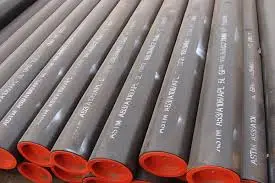
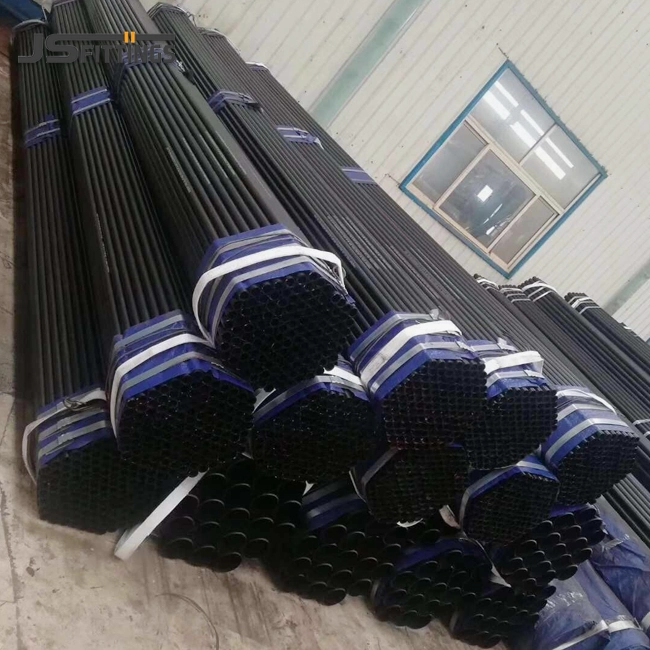
When a solid steel billet is pierced and then rolled into a hollow cylindrical shape, seamless carbon steel pipe is produced. This is a manufactured steel tube that does not contain any welded joints. Welded pipes use cross- or longitudinal welds to connect steel tubes or plates. When you cut a seamless pipe, its structure remains continuous around the circumference. Typically, carbon content ranges from about 0.05% to 0.30% in most commercial pipe grades to balance strength and weldability. With this method, the gap between the two pipes is not there, which makes them stronger. This means that smooth solutions are the best choice for places with a lot of pressure, important energy systems, and uses where something going wrong would be very bad.
Why Seamless Carbon Steel Pipe Exists: Solving Critical Industrial Challenges?
The industrial world has a problem that won't go away: how can fluids and gases be moved safely under high pressures without causing disasters? Welded steel pipe is a cheap option for many uses, but there is a weakness at the seam where the metal qualities are different from the base material. This weakness is not acceptable in power plants that work at temperatures above 400°C, refineries that deal with volatile chemicals, or underwater pipes that are exposed to saltwater that is toxic and have pressures that can reach very high levels in demanding applications.
To fix these problems, seamless carbon steel pipe came into being. When an offshore drilling station pulls crude oil from depths greater than 5,000 feet, the pressure differences require materials that won't break when loaded and unloaded over and over again. Any weak spot in a chemical plant that moves toxic chemicals around at high temperatures becomes a risk that could cause environmental disasters and production shutdowns that cost millions of dollars every day.
Along with safety, a smooth pipe fixes the problem of compliance. Specifications such as ASTM A106 Grade B and API 5L X65 set very strict requirements for mechanical properties that welded options may not consistently achieve under extreme service conditions. For companies taking on big contracts, government building projects, and energy sector bids make it clear that vital service lines must be built without any problems.
In many critical scenarios, the long-term cost balance heavily favors seamless carbon steel pipes over welded alternatives. While ERW (welded) options may appear less expensive upfront, a thorough Total Cost of Ownership (TCO) analysis paints a very different picture. The higher initial cost is more than made up for by shorter upkeep periods, longer service lives (often 30+ years compared to 15-20 years for welding in difficult conditions), and lower insurance rates due to better safety records. A refinery manager I worked with found that moving to ASTM A106 seamless carbon steel pipe for their reformer units cut down on unexpected shutdowns by 40% over five years, which saved the company $3.2 million.
How Seamless Pipes Are Made: Manufacturing Process Decoded?
Seamless carbon steel pipe starts with a solid cylindrical steel billet, typically around 1 to 3 meters in length and weighs a few tonnes. There are two main ways to make things in this business, and each one works best for a different range of sizes and uses.
To begin the hot-rolling process for carbon steel pipe, the billet is heated to about 1,200°C until it turns orange-red. A pointed rod is then driven through the middle of the block by a piece of machinery that spins it very quickly. This makes an empty shell with thick walls. The shell is then put through a number of rolling mills that gradually make the walls thinner and the length longer while keeping the diameter exactly the same. The best range for this method is pipe sizes between 2 inches and 16 inches, which is the range that most commercial uses need.
Hot-rolled seamless pipe is used as a material in cold-drawing methods, which makes it even better. The pipe goes through a die that cuts down on its width while pulling it through. This makes the dimensions very accurate and the surface flat. For normal hot-rolled goods, the wall thickness limits are ±12.5%, but now they are only ±5%. When tight specs are needed, like in hydraulic cylinders and precision measurement tubes, cold-drawn seamless pipe is the most common choice.
After the pipe is formed, it goes through a heat treatment process that completely changes its mechanical features. To normalize a pipe, it is heated to 900–950°C and then cooled in air. This smooths out the grain structure and makes the pipe stronger. Some standards, like ASTM A333 for low-temperature use, need extra impact tests to make sure that the notch toughness is still valid below -45°C. This is very important for Arctic pipes and LNG plants because brittle fracture is very dangerous.
During production, quality control checks include 100% ultrasonic testing to detect internal defects, hydraulic pressure testing to make sure the product is solid, and measurement checks to make sure the width, wall thickness, and straightness all meet the requirements. We've seen makers skip these steps and still make pipes that pass the first check, but break down quickly in use at JS FITTINGS.
Key Advantages That Make Seamless Carbon Steel Pipe Indispensable
The main benefit is that the power is spread out evenly. Without a soldered seam, stress peaks are spread out evenly around the pipe's outside. This is very important during pressure cycling, because it reduces the risk of stress crack propagation associated with welded seams. In many cases, seamless pipes can handle higher working pressures than equivalent welded pipes, depending on design and standards.
Seamless carbon steel pipe unequivocally demonstrates superior performance in the most severe industrial environments. When used at temperatures above 400°C, heat-affected areas in welded pipes go through microstructural changes that make them less resistant to creep. Even after thousands of hours at high temperatures, the seamless structure keeps its qualities the same. In the same way, cryogenic service at -50°C needs the extra toughness that comes from naturally smooth manufacturing.
Seamless versions are better at resisting corrosion, especially in sour service settings with hydrogen sulfide. When you hot-work metal, the long-grain structure that you get is better at stopping stress corrosion cracks than the mixed-grain patterns that you see near weld lines. This is why API 5L standards for sour service pipelines may favor seamless construction in certain applications, particularly for smaller diameters.
Installers care about the benefits of machining and construction. The constant wall thickness and qualities of the material make fitting easier for smaller sizes. When making precise bevels for orbital welding, seamless pipe gives consistent results because you don't have to worry about hitting a seam that machines differently than the base metal.
Lower lifetime costs come from being reliable. Even though seamless pipe costs more at first, the longer repair gaps and lower failure rates make it worth it. A wholesaler we work with found that seamless ASTM A106 pipe for steam service needed to be replaced every 25 years, while welded options only needed to be replaced every 12 years. This meant that, when labor and downtime are taken into account, the long-term costs were 35% lower.
Understanding Seamless Carbon Steel Pipe Limitations
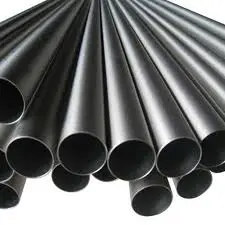
Cost represents the most obvious barrier. Seamless carbon steel pipe typically runs 20-40% more expensive than ERW welded equivalents in common sizes. This premium narrows as the diameter increases above 20 inches, but remains significant. Budget-conscious projects handling noncritical fluids at moderate pressures often find that welded pipe delivers adequate performance at a lower cost.
Size limitations constrain seamless pipe applications. Manufacturing economics make seamless production increasingly difficult above 24-inch diameters. While technically feasible up to 36 inches, costs skyrocket and lead times extend significantly. Large-diameter transmission pipelines for water, oil, and gas typically rely on LSAW or SSAW welded construction, accepting the seam as a trade-off for economic viability.
Availability challenges affect project planning. The specialized equipment required for seamless pipe production means fewer mills operate compared to welded pipe facilities. This concentration results in longer lead times, particularly for less-common grades like ASTM A333 low-temperature service pipe or ASTM A179 heat exchanger tubing. Distributors and stockists maintain inventory in popular sizes (2-inch through 12-inch in ASTM A106 Grade B), but custom orders may require 8-16 weeks.
Surface finish varies more than welded alternatives. The hot-rolling process creates a rougher exterior compared to the smooth surface of cold-formed ERW pipe. Because of this mill scale, applications requiring advanced painting or anti-corrosion coating systems (like 3LPE) necessitate rigorous surface preparation, such as abrasive blast cleaning, prior to application. However, this rarely poses problems for industrial piping, where mill scale is acceptable or where external coatings like FBE or 3LPE are applied anyway.
Conclusion
Seamless carbon steel pipe represents the gold standard for high-pressure, high-temperature, and critical-service applications where reliability cannot be compromised. Its uniform strength, absence of weak seam points, and superior performance under extreme conditions justify the cost premium in refineries, power plants, and energy infrastructure. While welded alternatives serve adequately in less demanding applications, understanding when seamless construction becomes essential separates competent engineers from those risking project failures. As industrial demands intensify and safety regulations tighten, seamless carbon steel pipe will continue anchoring the infrastructure that powers modern civilization.
FAQ
1. Can seamless carbon steel pipe be used for buried service?
Seamless pipe works excellently for buried applications when properly protected against external corrosion. The key lies in coating selection rather than pipe construction. For underground oil and gas pipelines, seamless API 5L pipe with 3LPE (three-layer polyethylene) coating provides decades of reliable service. The coating shields against soil corrosion while the seamless construction handles internal pressures safely. Some specifications also require cathodic protection systems as an additional safeguard. Galvanized seamless pipe serves well for water service lines, though plastic alternatives have gained market share in residential applications.
2. How do I verify that a seamless pipe meets specification requirements?
Legitimate seamless carbon steel pipe arrives with Mill Test Certificates (MTC) documenting chemical composition, mechanical properties, and dimensional measurements. Look for heat numbers stamped on the pipe that match the certificate. The MTC should show compliance with specified standards (ASTM A106, API 5L, etc.) and include results from tensile testing, hardness measurements, and non-destructive examination. Third-party inspection agencies like SGS, Bureau Veritas, or TUV can provide independent verification if you're sourcing from unfamiliar suppliers. At JS FITTINGS, we provide complete material traceability and welcome third-party inspection before shipment.
3. What's the difference between ASTM A106 and API 5L seamless pipe?
Both specifications cover seamless carbon steel pipe, but they target different applications. ASTM A106 focuses on high-temperature service in power plants, refineries, and process industries, with grades A, B, and C offering increasing strength levels. API 5L serves oil and gas pipeline applications, with grades like X42, X52, and X65 indicating minimum yield strength in ksi. API 5L includes additional requirements for toughness and weldability critical to pipeline construction. Chemical composition overlaps significantly—ASTM A106 Grade B and API 5L Grade B are nearly identical—but testing requirements differ. Your application determines which specification to follow, though both deliver excellent performance.
4. Does seamless pipe require special welding procedures?
Seamless carbon steel pipe welds using standard procedures appropriate for the carbon content and wall thickness. Low-carbon grades like ASTM A106 Grade B weld readily with common processes (SMAW, GMAW, GTAW) without preheat in most thicknesses. Wall thicknesses exceeding 3/4 inch or carbon equivalents above 0.40 may require preheating to 150-200°F to prevent hydrogen cracking. Welding Procedure Specifications (WPS) and Procedure Qualification Records (PQR) should follow AWS D1.1 or ASME Section IX requirements. The uniform composition of seamless pipe actually simplifies welding compared to joining dissimilar materials or welding near existing seams in welded pipe.
Partner with JS FITTINGS: Your Trusted Premier Manufacturer of Carbon Steel Pipes
With 43 years of manufacturing excellence since 1983, JS FITTINGS has supplied seamless and welded carbon steel pipe to over 30 countries, maintaining a customer repurchase rate exceeding 98%. Our comprehensive inventory spans ASTM A106, A53, A333, and API 5L specifications in sizes from 1/2-inch up to approximately 24–36 inches for seamless pipe, with larger diameters typically supplied as welded pipe. We respond to inquiries within one hour and maintain on-time delivery above 95% through our 90+ monthly container shipments. Contact our experienced international trade team at admin@jsfittings.com for technical specifications, competitive quotations, and piping solutions that minimize your project risk while meeting the tightest deadlines.
References
1. American Society for Testing and Materials. "Standard Specification for Seamless Carbon Steel Pipe for High-Temperature Service." ASTM A106/A106M-19a, West Conshohocken, PA, 2019.
2. American Petroleum Institute. "Specification for Line Pipe: ISO 3183." API Specification 5L, Forty-Sixth Edition, Washington, DC, 2018.
3. Smith, William F. and Hashemi, Javad. "Foundations of Materials Science and Engineering." Sixth Edition, McGraw-Hill Education, New York, 2019, Chapter 11: Steel Manufacturing Processes.
4. Bai, Yong and Bai, Qiang. "Subsea Pipeline Design, Analysis, and Installation." Gulf Professional Publishing, Oxford, 2014, pp. 156-189.
5. Davis, Joseph R. "Metals Handbook Desk Edition, Second Edition." ASM International, Materials Park, Ohio, 1998, Section on Carbon Steels and Piping Materials.
6. McAllister, Eugene W. "Pipeline Rules of Thumb Handbook: A Manual of Quick, Accurate Solutions to Everyday Pipeline Engineering Problems." Eighth Edition, Gulf Professional Publishing, Houston, 2014, Chapter 4: Material Selection and Properties.
Send Inquiry
_1775029549981.webp "Buttweld Tee")
_1775030068227.webp "ASTM A105 Weld Neck Flange")
_1775030564781.webp "Blind Flange")
Related Industry Knowledge
- Types of ASTM A105 weld neck flange
- What is an API 5L Seamless Steel Line Pipe?
- CRA Clad Line Pipe for Subsea and Offshore Pipelines
- How thick is the FBE Coated Steel Pipe?
- A53 ERW Pipe – Type, Grade, Performance, Tolerance, Application Full Analysis
- Carbon Steel Forged Steel Flange in Oil, Gas & Power Plants
- Lap Joint Pipe Flanges: How and When to Use Them
- Carbon Steel Forged Steel Flange: Class 150 to 2500 Guide
- What is the difference between seamless and welded pipe?
- What specification is the carbon steel black pipe?