
Lap Joint Pipe Flanges: How and When to Use Them






2026-06-05 09:44:58
A lap joint pipe flange is a useful engineering solution for situations where aligning bolt holes in complicated pipe plans or planning for systems that need regular repair access can be hard. This two-piece system, which includes a loose backing flange and a stub end, allows for rotational freedom, which makes fitting easier and lowers long-term operating costs. Chemical processing and water treatment industries depend on this design to keep systems running smoothly and avoid having to do a lot of re-welding when they need to be fixed.
What Is a Lap Joint Pipe Flange and How Does It Work?
Understanding the Two-Component Design
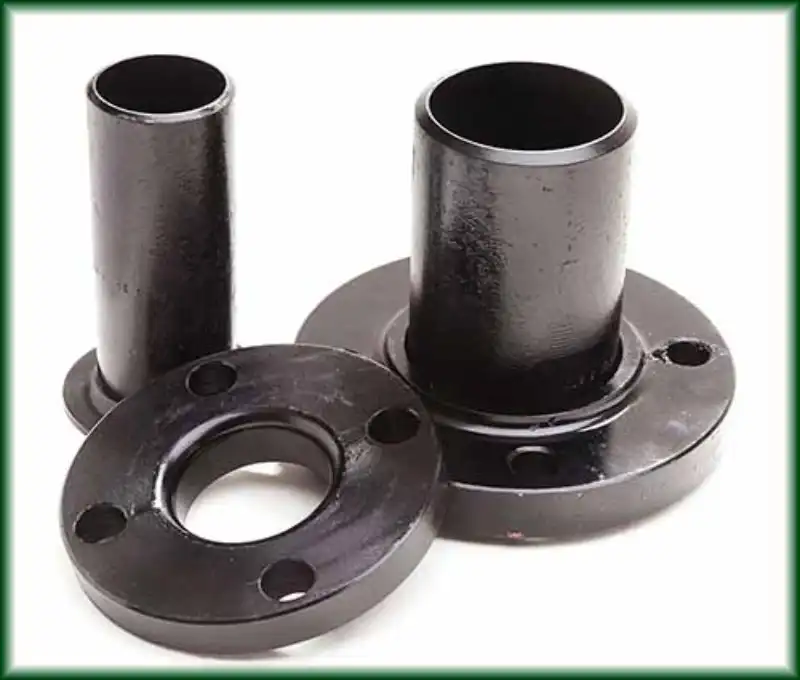
A carbon steel lap joint pipe flange is a one-of-a-kind, two-part structure made up of a loose backing flange and a matched stub end. These parts can be bought separately or together. This unit doesn't have a raised face like most flanges do, and it's never welded straight to the pipe. Instead, it fits over the pipe and behind the short end, which is joined to the pipe system by a butt joint. At JS Fittings, we make flanges that can rotate fully around the pipe. These are the usual choices for systems that need to be taken apart often for cleaning or inspection, as well as for projects where aligning the bolt holes is hard.
Key Design Standards and Specifications
To meet the needs of a wide range of projects, our lap joint pipe flanges are compliant with a number of foreign standards. The ASME/ANSI B16.5 standard covers sizes from 1/2" to 24", and the ASME B16.47 standard covers big diameter uses from 26" to 60", which are often found in industrial tanks. Pressure ratings are typically available in ASME Class 150, 300, 600, and in selected cases higher classes depending on size, material, and project requirements. The internal hole has a certain radius where it meets the flange face. This radius is meant to fit the fillet radius of the stub end, which makes sure that the load is evenly distributed and that the seal works well.
Material and Surface Finish Options
The facing form has a flat face design, which means that the face of the stub end does the closing instead of the flange itself. Engineers can choose cost-effective carbon steel for the backing flange and only use corrosion-resistant metals for the stub end that comes into contact with process fluids because of this separation. Standard surface finishes include black lacquer, rust-preventative oil, or hot-dip galvanized coats, which protect better against the elements and make things last longer in tough conditions.
Comparing Lap Joint Pipe Flanges with Other Flange Types
Performance Against Weld Neck and Slip-On Flanges
When comparing different types of flanges, it's important to know what the practical trade-offs are. Because their hubs are curved, weld neck flanges are very strong and work well in high-pressure and high-temperature situations. But they need to be precisely aligned before welding, which makes fitting in the field more difficult. While slip-on flanges are easier to install than weld neck types, they still need to be welded, which makes the positioning fixed and limits the options for future adjustments. Lap joint pipe flange systems get around these problems with a moving backing flange that lets you change the position of the bolt holes even after the stub end is welded.
Cost and Durability Considerations
Cost-wise, lap joint pipe flanges may require a bigger original investment than slip-on types because they have an extra stub end part. But most of the time, the total cost of ownership is less. Since the flange doesn't come into contact with the process fluid, only the short end needs to be upgraded when working with corrosive media. This lets you use long-lasting carbon steel backing flanges with stainless steel stub ends, which saves a lot of money on materials compared to using stainless steel all the way through the assembly. The backing flange can often be taken off and used on new pipe parts during system upgrades or repairs. This saves money in the long run for plant workers and stockists.
Advantages and Applications of Lap Joint Pipe Flanges
Procurement teams can make far more strategic decisions when they clearly understand exactly where lap joint flanges offer the greatest value and operational advantages.The benefits go beyond just being easy to install; they also include managing costs over the whole lifespan and being able to change how things are run.
Core Operational Benefits
Here are the primary advantages that make lap joint pipe flanges valuable for industrial applications:
- Fast Bolt Hole Alignment: The flange can turn easily because it's not bonded to the pipe. Installers can easily line up the bolt holes with the matched flange, even if the pipes are arranged in a complicated or crowded way. This saves a lot of time and effort.
- Simplified Maintenance Access: Systems that need to be cleaned or inspected regularly, like chemical or water treatment plants, can be taken apart quickly without having to cut or re-weld the main pipeline. In minutes instead of hours, maintenance teams can unbolt the link, move the flange out of the way, and get to the parts inside.
- Minimized Stress Concentration: The free-rotating backing flange perfectly accommodates precise bolt alignment and vastly simplifies disassembly during maintenance. More importantly, in systems exposed to severe thermal cycling, this decoupled design effectively absorbs thermal expansion, significantly reducing stress concentration and preventing premature fatigue cracks at the flange-to-pipe junction.
- Economic Advantage in System Upgrades: Only the short end needs to fit the pipe's inside dimensions, since the flange never comes into contact with the fluid. You can use strong carbon steel backing flanges even if the pipe system has acidic media because they are paired with a stainless steel stub end that doesn't react with chemicals.
Industry-Specific Applications
Lap joint pipe flanges are often used in acid and caustic transfer lines in chemical processing plants. The flexibility to use different materials (a carbon steel backing flange with a Hastelloy stub end) can significantly reduce material costs compared with manufacturing the entire flange assembly from high-alloy materials. Water treatment plants use these units in filter manifolds and clarifier systems. For maintenance access every three months, hundreds of flange disconnections are needed each year. The rotational alignment feature greatly lowers the cost of labor.
Limitations and Selection Considerations
Being clear about limitations helps buyers avoid applying them in the wrong way. Because they do not provide the same hub reinforcement and fatigue resistance as weld neck flanges, lap joint assemblies are generally less suitable for severe cyclic loading and critical high-stress applications. This means that their failure life is about the same as that of slip-on flanges. Weld neck options may be needed for applications that need to cycle high pressures over and over or have a lot of mechanical shaking. The two-part design also means more steps need to be taken to put it together than with one-piece flanges, but the benefit of circular alignment usually makes up for this.
Installation Process and Best Practices for Lap Joint Pipe Flanges
Step-by-Step Installation Guide
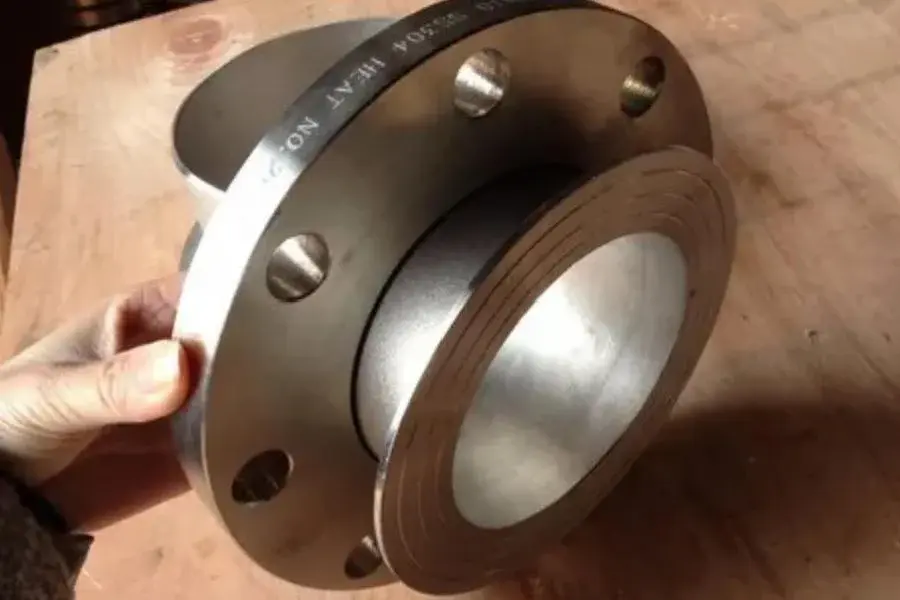
Making sure that the stub end bore fits the pipe plan, and the backing flange bore radius fits the stub end fillet radius, is the first step in a proper fitting of a lap joint pipe flange. Before welding the short end, put the backing lip over the pipe. Do a full-penetration butt weld between the pipe and the stub end according to ASME B31.3 or any other plumbing code that applies. Allow enough time for the weld to cool down before moving the backing lip against the shoulder of the stub end.
Common Installation Challenges and Solutions
When the stub-end weld shrinks while it cools, it can sometimes cause problems with alignment. To keep this from happening, tack-weld the short end in at least four places before finishing the full weld, making sure the whole thing stays straight. When choosing a gasket, pay attention to the flat-face shape. Don't use gaskets made for raised-face flanges because they won't fit right against the stub end face. For higher-pressure systems, spiral-wound gaskets with inner rings work well. For lower-pressure systems, full-face gaskets work best.
Inspection and Maintenance Protocols
Checking that the bolts are tight, the seal is compressed, and there is fluid seepage at the stub end face should all be part of regular checkups. Follow the cross-pattern tightening procedure and the torque numbers given in ASME PCC-1 standards. At JS Fittings, our expert team makes torque charts that are special to your project and match the gasket material and pressure class. The loose backing flange makes it possible to see the stub end weld without taking the whole thing apart, which is better than welded flange types.
Procuring Lap Joint Pipe Flanges: A Buyer's Guide for B2B Clients
Evaluating Suppliers and Quality Assurance
To find trustworthy makers of lap joint pipe flanges, you need to check their qualifications and manufacturing capabilities. You should look for pressure equipment guidelines (CE marks for European markets) and specific approvals from big energy companies. JS Fittings has foreign certifications like ISO, CE, and GOST-R. It is also a qualified supplier for the National Iranian Oil Company, the Abu Dhabi National Oil Company, and Petrobras. These certificates show that the company consistently delivers high-quality products for tough uses.
Pricing Factors and Customization Options
Choosing the right material has a big effect on the price. For example, carbon steel backing flanges are much cheaper than stainless steel versions, but unusual alloy stub ends are more expensive. Costs are also affected by size and pressure class. Orders of more than 100 pieces usually qualify for volume discounts, and multi-shipment contracts that cover annual needs can save you even more. We sell items from DN15 to DN2000 and can also work on custom projects that need non-standard sizes, different materials, or special surface treatments.
International Delivery and Export Considerations
For global B2B clients, successfully navigating export documentation, international shipping logistics, and complex customs regulations is a critical aspect of seamless procurement.Our skilled foreign trade team handles all of these issues by giving correct material test results, mill certificates, and, if needed, coordinating third-party inspections. We keep the dependability that project plans need by delivering on time more than 95% of the time and getting complaints less than 0.5% of the time. Working with freight forwarders helps us load containers more efficiently and keep track of them throughout the shipping process.
Conclusion
In conclusion, when working on industrial projects that need flexible installation, easy access for upkeep, and the best material choices at the lowest cost, lap joint pipe flanges are a great choice. The rotational alignment feature solves problems that come up in real life with complicated pipe systems, and the two-part design lets you use corrosion-resistant metals only where they come into contact with fluid. Knowing the right way to put these assemblies together and choosing reliable providers will make sure they work well for a long time. When choosing an engineering part, it's important to make sure that the flange type fits your needs.
FAQ
1. What kinds of pressure values are there for lap joint assemblies?
Based on ASME B16.5 standards, lap joint pipe flanges are commonly available in Class 150, 300, and 600, with higher pressure classes available for selected sizes and applications. The pressure number is based on the specs of both the backing ring and the stub end. To keep system pressures safe, stronger flange bodies and bigger fitting patterns are needed for higher pressure classes. For your application, you should always make sure that both parts have the same pressure class and temperature grade.
2. When I replace pipe pieces, can I use the backing flanges again?
Yes, backing flanges can often be used again after system changes because they don't come into contact with process fluids and don't rust. Check for damage or wear on the flange bore radius, make sure the bolt holes are still within the tolerances, and make sure the face stays flat. If these conditions are met, the flange can be paired with a new stub end that is attached to new pipes. This saves money on materials during retrofits.
3. I need to choose the right material for the short end for a service that will be acidic.
Use industry rust guides to match the stub end material to the properties of your process fluid. Hastelloy C-276 can handle very acidic and chloride environments, while stainless steel 316L can handle many acidic and chloride environments. The backing plate doesn't have to be made of stainless steel because only the stub end touches the fluid. For material suggestions based on your working conditions, talk to your metallurgist or our expert team.
Partner with JS Fittings for Reliable Lap Joint Pipe Flange Solutions
Every industrial pipe component manufactured by JS FITTINGS—including our premium lap joint flanges—is proudly backed by over 40 years of manufacturing excellence, comprehensive international certifications, and field-proven performance in the world's most demanding industrial environments. Our ability to produce 800 tons of fittings every month and deliver them on time or early 95% of the time means that your project schedules will stay on track, whether you need standard catalog items or special specs from DN15 to DN2000. With ISO, CE, GOST-R, and PETROBRAS approvals, we give you the quality guarantee you need. Email our experts at admin@jsfittings.com to talk about your needs with a reputable manufacturer who knows how to match low costs with long-term dependability.
References
1. American Society of Mechanical Engineers. (2020). ASME B16.5: Pipe Flanges and Flanged Fittings: NPS 1/2 Through NPS 24 Metric/Inch Standard. New York: ASME Press.
2. American Society of Mechanical Engineers. (2019). ASME B16.47: Large Diameter Steel Flanges: NPS 26 Through NPS 60 Metric/Inch Standard. New York: ASME Press.
3. Becht Engineering. (2018). "Flange Joint Assembly: Best Practices for Industrial Applications." Journal of Pressure Vessel Technology, Vol. 140, Issue 3, pp. 45-58.
4. Nayyar, M.L. (2021). Piping Handbook, Eighth Edition. New York: McGraw-Hill Education.
5. American Society of Mechanical Engineers. (2017). ASME PCC-1: Guidelines for Pressure Boundary Bolted Flange Joint Assembly. New York: ASME Press.
6. Singh, R. & Kumar, A. (2019). "Comparative Analysis of Flange Types in High-Temperature Piping Systems." International Journal of Mechanical Engineering and Technology, Vol. 10, Issue 8, pp. 112-125.
Send Inquiry

Related Industry Knowledge
- Types of ASTM A105 weld neck flange
- What is the service life of an ASME B16.5 carbon steel flange?
- Carbon Steel Buttweld Reducer Material Standards Explained
- ASME B16.9 Buttweld Reducer Dimensions and Weight Guide
- How to Select a Buttweld Reducer for Process Piping?
- What is carbon steel pipe made of?
- How Does a Buttweld Elbow Reduce Pressure Loss in Pipelines?
- Buttweld Bend vs Elbow: Key Differences Explained
- Where can I buy carbon steel pipe?
- What is a plate flange?