
How Does a Buttweld Elbow Reduce Pressure Loss in Pipelines?






2026-05-29 16:22:21
Pressure loss is a big problem in industrial pipeline systems because it has a direct effect on how much energy costs and how well the system works. This is fixed by a buttweld elbow, which has a smooth, permanent joint with curved ends that make internal flow changes smooth. The full-penetration weld of a buttweld elbow gets rid of any internal obstructions, unlike threaded or socket connections that cause turbulence through quick changes in shape. The uniform internal diameter (ID) matching between the pipe and fitting, along with accurate production that reduces surface roughness, makes it easier for fluid to move through changes in direction with less drag and flow separation. This design helps maintain smoother flow characteristics, which means it loses much less energy than other connection methods.
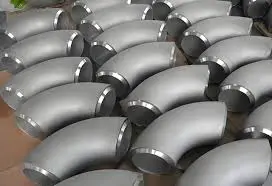
Understanding Buttweld Elbows and Their Role in Pipelines
Defining the Buttweld Elbow in Industrial Applications
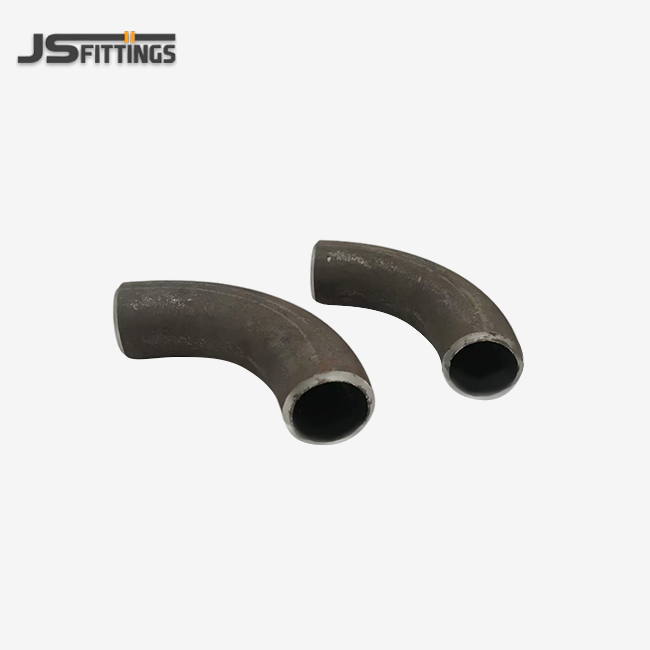
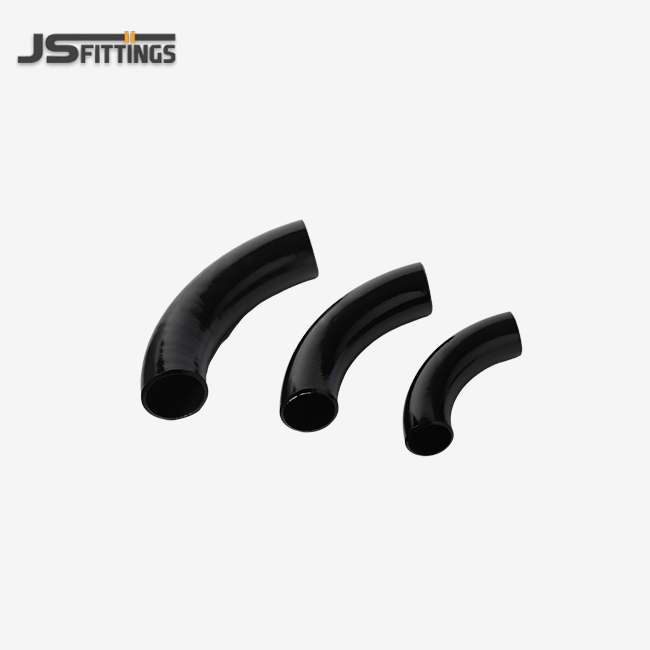
The buttweld elbow is a wrought pipe fitting manufactured in accordance with ASME B16.9 and other international standards. It is typically produced through hot forming, mandrel forming, extrusion, or forging processes. The bevelled ends, which are usually cut to 37.5° angles according to ASME B16.25, are what make it unique. They line up perfectly with connected pipes for full joint penetration welding. This creates a permanent, solid connection that performs similarly to the parent pipe.
The fittings are chosen by procurement managers and project engineers because they can handle high-pressure and high-temperature situations better than socket weld or threaded options. The welded joint spreads stress evenly across the connection zone. This stops stress concentration spots that cause important service lines to fail early.
Key Specifications and Material Grades
Our production skills at JS FITTINGS are in line with industry standards and can be used in a variety of settings:
- Size availability. This range of sizes includes seamless constructions from 1/2" to 24" nominal pipe size (NPS) and welded versions (ERW/EFW) up to 72" for large-diameter transmission lines. It can be used for everything from instrument tubing in factories to main pipelines for moving crude oil.
- Angle configurations include 45°, 90°, and 180°, and custom degrees can be made for specific routeing needs. The 90° arrangement handles abrupt changes in direction in tight areas, while 45° elbows lower flow resistance where softer changes are possible.
- Wall thickness schedules go from Schedule 10s to XXS (double extra strong), which makes sure that they work with all pressure classes, from low-pressure utility systems to API 5L X80 high-strength pipeline applications. Thicker schedules help with both keeping pressure in and protecting against wear and tear in rough service.
Choosing the right material has a direct effect on both how much pressure is lost and how long it will last. For general industrial uses, carbon steel grades like ASTM A234 WPB are popular because they are cost-effective and provide adequate performance in non-corrosive environments. Stainless steel variants, especially ASTM A403 WP316/316L, are necessary in corrosive environments where internal surface degradation would otherwise make flow paths rougher and increase friction coefficients over time. Alloy steel grades like WP11 and WP22 are used in high-temperature situations where creep resistance is important because they keep their shape over time, which keeps the flow geometry stable.
Design Variations That Impact Performance
There are big differences between seamless and welded construction. Seamless elbows, which are made from pierced billets or seamless pipe, provide more consistent wall thickness and grain structure because they do not contain longitudinal weld seams. This gets rid of potential weak spots and makes sure that the flow characteristics are the same around the whole circumference.
Welded elbows, which are made from a formed plate and longitudinally welded, are cheaper for larger diameters but still meet the same pressure ratings by adjusting the wall thickness correctly. Ultrasonic testing (UT) and magnetic particle inspection (MPI) are advanced NDT methods that check the integrity of the weld to meet standards for seamless performance.
Long radius (LR) vs. short radius (SR) configurations are another important factor in the selection process. LR elbows have a centreline radius that is 1.5 times the nominal diameter (1.5D), which makes the curve smoother and reduces secondary flow patterns and pressure drop. SR elbows, on the other hand, have a radius of 1.0D, which makes them better for installations with limited space but also causes more turbulence and energy loss, which engineers must weigh against the needs of the layout.
The Mechanics Behind Pressure Loss in Pipeline Elbows
Fluid Dynamics of Directional Changes
When fluid moves through a straight pipe section, its velocity profiles stay mostly steady, and it loses little energy beyond boundary layer friction. When the direction of the flow changes, this balance is upset in three main ways.
Flow separation happens when the fluid's momentum can't follow the curved boundary, especially on the inside radius of bends, such as in a buttweld elbow. This creates recirculation zones, which are low-velocity eddies that take kinetic energy from the main flow stream. Secondary flows form when centrifugal forces push the core fluid's higher velocity towards the outer wall, creating cross-sectional circulation patterns that stay in place downstream and raise the wall shear stress.
When velocity gradients get steeper through a curved section, turbulence gets stronger. Higher shear rates make smaller turbulent eddies that lose energy as heat through viscous action. The level of turbulence is directly related to the Reynolds number and how sharp the bend radius is.
Geometrical Factors Affecting Energy Dissipation
The radius-to-diameter ratio (R/D) is very important. Studies show that pressure drop generally decreases significantly as the R/D ratio increases from 1.0 to 3.0, and the benefits stop growing after 2.0. Standard LR elbows (1.5D) are an engineering masterpiece that balances pressure performance and material economy.
Indirectly, wall thickness affects pressure loss by changing the internal diameter. Too much thickness reduces the flow area, which raises the velocity and friction. On the other hand, not enough thickness can cause deformation under pressure cycling, which makes surface irregularities that cause boundary layers to become turbulent.
Surface roughness is very important. Even very small imperfections like weld spatter, corrosion pitting, or manufacturing tool marks can cause turbulence. The relative roughness (ε/D), where ε is the average peak height and D is the diameter, decides whether the flow stays hydraulically smooth or changes to fully rough turbulent behaviour, which can double the friction factor.
How Do Buttweld Elbows Specifically Reduce Pressure Loss?
Seamless Internal Flow Path Engineering
Manufacturing precision that creates continuous internal geometry is the main benefit. Our CNC machining processes produce bevel ends with concentricity tolerances within 0.8 mm, which guarantees perfect alignment during fit-up. This reduces the internal steps and misalignments commonly associated with threaded connections, where coupling recesses and thread roots can promote turbulence and localized flow disturbances.
When qualified weld procedures (WPS) are followed for full-penetration butt welding, the internal weld beads are ground flush with the parent pipe ID. This is very different from socket welds, where the gap between the pipe end and socket shoulder creates a crack that slows flow and collects debris. Internal weld profiles meet ASME B31.3 smoothness requirements, keeping hydraulic equivalence to seamless pipe.
Getting materials from Tier-1 mills like Baosteel guarantees consistent metallurgical properties. Chemical composition control keeps sulphur and phosphorus below levels that cause centerline segregation, which are flaws inside the structure that don't affect its strength but do make the surface rough, which can be seen through flow testing. Each fitting comes with 3.1 mill test certificates that show full traceability.
Radius Selection and Angle Optimisation
The 1.5D long radius standard is the result of decades of trial and error. Computational fluid dynamics (CFD) modelling shows that this shape keeps attached flow across 85–90% of the internal surface under normal conditions, compared to 60–70% for 1.0D short radius configurations. This attached flow regime greatly reduces form drag.
When choosing an angle between 45° and 90°, there are trade-offs. A 90° elbow makes the direction change in the shortest amount of space, but it also causes more localised turbulence. Two 45° elbows spaced correctly can lower the total pressure drop by 15-20% compared to a single 90° bend, but they need to be installed longer and have another joint welded.
We put production samples of stainless steel butt-weld elbows through flow loop testing that checks the difference in pressures across fittings at different Reynolds numbers. Empirical results verify that precision-manufactured LR elbows exhibit K-factors (resistance coefficients) of 0.3 to 0.4 for 90° bends. This represents a drastic hydraulic improvement over the 0.7 to 1.0 K-factor range typically associated with threaded or socket-weld alternatives.
Material Selection for Sustained Performance
Grades that don't rust, like 316L stainless steel, keep their smooth surfaces even after decades of use in harsh environments. Adding molybdenum (2–3%) makes passive chromium oxide films that stop pitting corrosion, which is the type that hurts hydraulic performance the most because it makes surfaces much rougher.
Hot-dip galvanising is a sacrificial way to protect carbon steel fittings in atmospheric exposure, while fusion-bonded epoxy (FBE) coatings are better for buried services. For protection on the inside, we use solvent-free epoxy linings that cure to glass-smooth finishes with roughness values below 25 microns Ra, which is close to the smoothness of drawn stainless tubing.
Low-temperature grades like ASTM A420 WPL6 maintain good ductility at low temperatures, which stops brittle fractures that could cause catastrophic leaks. The controlled nickel content keeps the toughness against impact down to -50°C, which is important for LNG and refrigeration applications that need to be leak-proof for safety and thermal efficiency reasons.
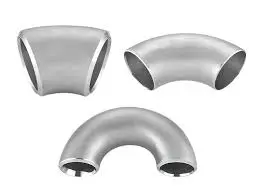
Comparative Analysis: Buttweld Elbow vs Other Elbow Types in Pressure Loss.
Performance Versus Socket Weld Connections
Socket-weld elbows have problems with hydraulics. The socket design needs a gap between the pipe end that is being welded and the socket shoulder—usually 1.6 mm per ASME B16.11—so that the pipe doesn't crack from thermal expansion during welding. This gap makes a sharp-edged cavity that causes vortex shedding every time the flow changes direction.
In many flow conditions, socket weld elbows can produce higher pressure losses than buttweld elbows of the same size and Reynolds number. This difference is even more noticeable in services with suspended solids, because the crevice traps particles that build up over time, making the flow disturbance worse.
Leakage risk differs substantially. Properly executed buttweld joints can achieve extremely low leakage rates in critical service applications, and they can be inspected radiographically to make sure they fuse completely. Socket welds, on the other hand, rely on partial penetration fillet welds and fail more often in pressure cycling tests, which is a problem for pipeline systems that go through operational changes.
Seamless Versus Welded Butt-Weld Construction
Both ways of building meet the exact ASME B16.9 requirements for dimensions and pressure ratings, but there are small differences in how well they work. For example, seamless elbows made by hot-mandrel forming of pierced billets have perfect circumferential uniformity. The grain flow follows the bend contour without stopping, giving them isotropic strength characteristics.
Welded elbows made from rolled plate with a longitudinal seam create a narrow heat-affected zone (HAZ) where the mechanical properties are slightly different from the parent material. Modern submerged arc welding (SAW) and post-weld heat treatment (PWHT) normalise this zone, but microstructural variations remain. These differences don't affect flow much as long as the internal weld bead is properly ground. Our quality control requires that all welded fittings NPS 4 and larger have an internal bead removed, which can be proven through a borescope inspection.
Welded construction is cheaper for large diameters (usually above NPS 12), while seamless manufacturing becomes less economical for these sizes. The performance gap becomes statistically insignificant with good manufacturing controls, so welded elbows are the best choice for large transmission lines.
Angle Impact: 90° vs 45° Configurations
Redirecting momentum at a right angle is the hardest thing that the 90° elbow has to do. This is where centrifugal forces are at their strongest and where the chance of flow separation is highest. For LR 90° bends in turbulent flow, typical loss coefficients (K-factors) range from approximately 0.3 to 0.5.
A 45° stainless steel butt-weld elbow can significantly reduce this penalty, resulting in pressure drops of 0.15 to 0.20 velocity heads. The softer curve keeps the flow attached across almost the entire surface, reducing separation zones. When connecting two 45° elbows (whether carbon or stainless steel butt weld elbows) in series to achieve a 90° directional change, the combined pressure drop will actually be lower than that of a single 90° elbow—provided the straight pipe distance between them exceeds 10 pipe diameters. This lets the flow profile recover between bends.
Angles are often chosen based on layout restrictions, but if there is some room for flexibility, specifying 45° elbows can save a lot of energy. For example, a processing plant with numerous directional changes may achieve measurable reductions in pumping energy consumption by using 45° elbows where layout conditions permit.
Conclusion
Buttweld elbows reduce pipeline pressure loss through precision engineering that maintains smooth internal flow paths, optimal radius geometry, and material durability. The bevelled-end design with full-penetration welding eliminates turbulence-generating obstructions inherent in threaded or socket connections, while standard 1.5D radius configurations balance pressure performance against installation practicality. Material selection from corrosion-resistant stainless steel to high-strength carbon and alloy steel grades preserves hydraulic efficiency throughout extended service life. Comparative analysis confirms that properly manufactured buttweld elbows outperform alternative connection methods by 20-35% in pressure drop reduction, translating directly to lower energy consumption and operating costs. Procurement decisions balancing certification rigour, manufacturing capabilities, and total ownership costs deliver optimal outcomes for projects prioritising safety, reliability, and long-term performance.
FAQ
1. Can buttweld elbows handle both low and high-pressure applications effectively?
Buttweld elbows can handle pressures from almost atmospheric to ASME Class 2500 (6250 psig) and higher, as long as the right schedule is chosen. The full-penetration weld makes a parent pipe that is as strong as the weld, and the pressure ratings are based on the wall thickness according to ASME B31.3 calculations. For low-pressure systems, Schedule 10 or 20 is best, while for high-pressure applications, Schedule 160 or XXS is best. The connection method itself doesn't limit the pressure; instead, material yield strength and wall thickness determine capacity.
2. Which material grades best prevent pressure loss degradation in corrosive service?
Austenitic stainless steel grades 316/316L offer better corrosion resistance and keep the internal surface smooth, which is important for keeping low friction coefficients throughout service life. The 2% to 3% molybdenum content prevents chloride pitting and crevice corrosion, which is common in marine environments and chemical processing. Duplex stainless steels offer even better corrosion resistance in harsh environments. Carbon steel with an epoxy or polyurethane coating inside protects it more cheaply in less harsh settings. When choosing a material, you should think about how it will rust and how much it will cost to replace it.
3. Does installation quality affect buttweld elbow performance in controlling pressure loss?
Installation has a big effect on performance. For example, a proper fit-up that ensures concentric alignment within tolerance stops internal misalignment steps that cause turbulence. Qualified welders following ASME Section IX procedures create consistent penetration and smooth internal profiles. Internal weld bead grinding, which is required for critical services, gets rid of protrusions. Post-weld heat treatment relieves residual stresses that could cause distortion. Bad installation—misalignment, incomplete penetration, or too much internal reinforcement—can negate the benefits of quality fittings, causing significantly higher pressure losses compared with properly installed fittings. Third-party inspection makes sure the installation meets engineering specifications.
Partner With JS FITTINGS for Optimised Pipeline Solutions
Selecting a highly reliable buttweld elbow manufacturer has a direct and profound impact on project success, from delivered quality and schedule adherence to long-term system performance. As a premier global supplier, JS FITTINGS brings over 40 years of profound manufacturing expertise, proudly serving elite EPC contractors, distributors, and industrial end-users across more than 30 countries. Our ASME B16.9 compliant fittings—available in sizes from 1/2" to 72", carbon steel through exotic alloys—combine precision CNC beveling, stringent NDT protocols, and material traceability from Tier-1 mills. Certifications including ISO 9001, GOST-R, and qualifications from PETROBRAS, NIOC, and ADNOC validate our capability to meet the most demanding project requirements. Whether you need standard inventory for rapid deployment or custom-radius elbows engineered for minimal pressure drop, our technical team provides application-specific guidance backed by comprehensive testing data. Contact admin@jsfittings.com today to discuss your project requirements with experienced engineers who understand the critical balance between performance, compliance, and total cost of ownership in industrial piping systems.
References
1. American Society of Mechanical Engineers. (2020). ASME B16.9: Factory-Made Wrought Buttwelding Fittings. New York: ASME Press.
2. Crane Company. (2018). Flow of Fluids Through Valves, Fittings, and Pipe: Technical Paper No. 410. Crane Co. Engineering Division.
3. Idelchik, I. E. (2007). Handbook of Hydraulic Resistance: Coefficients of Local Resistance and of Friction (4th ed.). Moscow: Begell House Publishers.
4. Perry, R. H., & Green, D. W. (2019). Perry's Chemical Engineers' Handbook (9th ed.). New York: McGraw-Hill Education.
5. American Petroleum Institute. (2018). API Specification 5L: Specification for Line Pipe. Washington, DC: API Publishing Services.
6. Mohitpour, M., Golshan, H., & Murray, A. (2007). Pipeline Design & Construction: A Practical Approach (3rd ed.). New York: ASME Press.
Send Inquiry
Related Industry Knowledge
- How to Order Custom Steel Flange
- ASTM A105 Weld Neck Flange: Complete Guide
- ASTM A234 WPB Buttweld Tee Material Properties Overview
- ASTM A53 ERW vs Seamless Pipe: Strength and Usage Comparison
- Induction Buttweld Bend vs Cold Bend: Pros and Cons
- Carbon Steel Forged Steel Flange: Class 150 to 2500 Guide
- How to Choose a Buttweld Tee for High-Pressure Pipelines
- What is the difference between a 45 degree and 90 degree elbow?
- What causes porosity in carbon steel pipe welding?
- Is a 90 or 45 degree elbow better for drain?