
Induction Buttweld Bend vs Cold Bend: Pros and Cons






2026-06-11 09:58:16
How much they cost, how safe they are, and how effective they will be in the long run are all directly related to the way they are bent. Engineers and procurement managers have to make a big decision that will affect the project's outcome when they compare cold bends and induction buttweld bends. Controlled electromagnetic heating is used in induction bending to form precise bends while maintaining the required mechanical properties of the material. When you cold bend, on the other hand, you use force instead of heat. These two methods can help professionals in the US get better at moving oil and gas, generating power, and supporting industrial processing facilities. This guide talks about the technical details, differences in performance, and buying factors that affect the type of bend you choose. It helps you choose parts that fit your price, testing needs, and pressure rates.
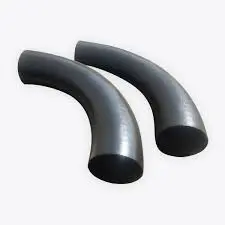
Understanding Induction Buttweld Bends and Cold Bends
Defining Pipe Bends and Elbows
What makes bends and elbows different is the ratio of bend radius to pipe diameter. If the amount of bend is more than twice the pipe's width, it's called a pipe bend. There are 3D, 5D, 6D, and 8D bends in this group. Elbows are commonly manufactured in short-radius (1D) and long-radius (1.5D) configurations. Large diameter pipe bending is needed in oil and gas pipelines so that extended curves keep pressure drop to a minimum and make room for pipeline inspection gauges, also called "pigs." These smart machines move through pipes to look for rust, find out how thick the walls are, and make sure the structure is solid. Tight-radius elbows may restrict pig passage in some pipeline applications. For transmission lines that run for hundreds of miles, bigger radius turns work better.
Induction Bending Process Explained
An electromagnetic induction coil heats a localized area of the pipe to a controlled temperature appropriate for the material grade, depending on the type of material. This is done for induction bending. As the hot part cools down, a bending arm pushes on the pipe in a controlled way as it goes through the induction coil. This localized heating helps preserve the required mechanical properties of the pipe without changing them. The guidelines for making induction bends are ASME B16.49 and SY/T 5257. The bends can have shapes from 3D to 20D and angles from 15° to 90°, or they can be made to fit your specific needs. This method can be used with seamless pipes from 1/2" to 24" in diameter and welded pipes up to 60" in diameter. Wall thicknesses can be anywhere from SCH 10s to SCH 160 or more.
Pipeline steel grades API 5L Gr.B through X70 in PSL1 and PSL2 versions, high-yield alloys like the ASTM A860 WPHY series, low-temperature carbon steel ASTM A420 WPL6, and corrosion-resistant stainless steel ASTM A403 WP304/L, WP316/L, and duplex stainless steel grades such as 2205 are some of the materials that are used. Each grade is made to work in a specific environment, such as one with sour service, subzero temperatures, or harsh chemical exposure. Post-bend heat treatment removes any remaining stress by normalizing or quenching and tempering, which refines and restores the steel's microstructure and stops brittle spots that could be dangerous.
Cold Bending Mechanics
By slowly applying pressure through rollers or mandrels, hydraulic or mechanical bending machines can bend pipes at room temperature into the desired shape without changing their temperature. This method works best for situations that need moderate bend radii and standard angles, commonly used for moderate-radius configurations, depending on pipe size and material properties. Cold-bending equipment works best with smaller diameter pipes, usually between 1/2" and 12", though larger sizes can be handled by special machines. Since cold bending doesn't require heat treatment, it saves time and money and is a good choice for projects with limited funds and tight deadlines.
When you cold bend something, it adds mechanical stress that makes the extrados (outer curve) thinner and the intrados (inner curve) thicker. This creates ovality, which is the deviation from perfect roundness. Too much ovality can make field welding harder and may make it harder for the pig to pass through the bend through during inspections. High-strength alloys and thick-wall pipes don't deform easily, so they need too much force that could crack them. While project specifications provide strict dimensional acceptance criteria, it is widely recognized in the industry that cold bends rarely achieve the precise dimensional accuracy and mechanical consistency that hot induction buttweld bends deliver, particularly in demanding high-stress service conditions.
Comparing Induction Buttweld Bend vs Cold Bend – Technical and Performance Analysis
Mechanical Properties and Structural Integrity
Controlled heating and cooling during induction bending help maintain the mechanical properties required for demanding low-temperature applications. This keeps the mechanical properties high. The localized heat-affected zone goes through controlled metallurgical transformation, and post-bend heat treatment restores ductility and toughness. Hardness testing makes sure there are no brittle zones, and Charpy V-notch impact tests show that energy is absorbed at low temperatures. Manufacturers figure out the required starting wall thickness to make sure the finished bend exceeds the minimum design requirements per ASME B31.3 or B31.8 codes. This accuracy supports demanding pressure and temperature applications when specified by the applicable design code and material grade.
Without heat treatment, cold bending creates tensile stress on the extrados and compressive stress on the intrados. This changes how the material reacts to stress and strain, and it may make the material less resistant to fatigue under cyclic loading conditions that are common in pump discharge lines and compressor stations. The cold-working process increases yield strength but decreases ductility, which makes cold bends more likely to break in cold service. Wall thinning depends more on the bending radius and the operator's technique, so pieces that don't meet standards need to be carefully looked at and may be thrown away.
Dimensional Accuracy and Piggability
If pipeline bends are dimension-consistent, pigs can move freely through them during maintenance and inspection work. Induction bends have very little ovality—usually less than 3% out-of-roundness—, so the internal geometry is smooth, and pigs don't get stuck. The controlled bending process creates a uniform curvature without flat spots or uneven transitions. Straight tangents at each end, usually between 50mm and 200mm, make butt-welding easier by separating the heat-affected zone of the field weld from the bent section's complex grain structure. These tangents also give alignment tools a place to press against, which speeds up the process and improves the quality of the weld.
Cold bends have more variations in cross-sectional shape, with ovality sometimes exceeding 8%, especially in thin-wall pipes and tight-radius configurations. This distortion makes it harder for the pig to pass through the bend and may require expensive re-rounding operations in the fabrication shop or in the field. It's harder to weld in the field when the ends of oval pipes need to be ground and shimmied to fit properly, which adds to the cost of labor and delays the project, canceling out any money saved by buying cheaper materials at the start.
Corrosion Resistance and Coating Compatibility
For installations that are buried or submerged, both induction and cold bends need coatings to keep the outside from rusting. Three-layer polyethylene (3LPE), fusion-bonded epoxy (FBE), and internal liquid epoxy can all be used as coatings on induction bends that have been heat-treated and inspected. Controlled heating makes the surface smooth and uniform, which makes it easier for coatings to stick and gets rid of flaws like pinholes or holidays. The thickness of the coating stays the same around the bend, protecting it from chemicals and soil moisture.
Conversely, mechanical cold bending can leave the pipe surface uneven, introducing roller scoring marks and localized thinning spots that prevent uniform coating adhesion and thickness.Coating applicators have to be more careful when preparing the surface, and often need to blast it more to get the desired cleanliness profile. It's harder to apply the coating internally when the oval shape makes it hard to get to the spray equipment, leaving areas that are vulnerable to corrosive fluids open. Long-term field experience has shown that induction bends with the right coating systems have longer service lives, lower maintenance costs, and less downtime.
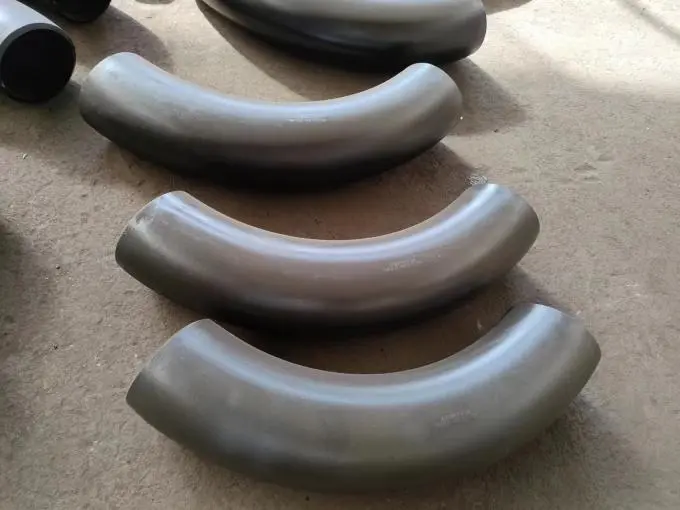
Pros and Cons of Induction Buttweld Bends and Cold Bends
Advantages of Induction Buttweld Bends
It is very accurate because it can work with custom radii from 3D to 20D and non-standard angles shown on isometric drawings. This cuts down on the number of welds needed in complex pipe layouts because it gets rid of the need for multiple elbows to make compound directional changes. Fewer welds mean lower inspection costs, lower leak risk, and faster construction schedules. This is especially helpful on offshore platforms where limited space requires efficient routing solutions. It can be used for everything from processing petrochemicals at high temperatures to distributing water at room temperature.
If you heat treat induction butt-welded bends properly, they have the same or better mechanical properties as the parent pipe material. This gives operators confidence in their ability to contain pressure. Piggability assurance takes away concerns about inspection tool compatibility, so operators can set up full integrity management programs throughout the pipeline's lifecycle. Global EPC contractors choose induction bends for important infrastructure projects where safety rules need documented material traceability and third-party certification. Induction bending has a history of working well in harsh environments, like subsea pipelines 10,000 feet deep, Arctic gas transmission at -60°F, and corrosive sour service with high H2S concentrations, making it the standard for reliability.
Limitations of Induction Buttweld Bends
While induction buttweld bends offer vastly superior mechanical properties, they do come with certain limitations—primarily related to cost and production lead times. The induction bending process requires highly specialized, energy-intensive equipment and sophisticated CNC controls, which makes the initial manufacturing cost significantly higher than that of cold bending or standard elbows. Additionally, because the process involves slow, controlled heating and subsequent post-bend heat treatment (PBHT), manufacturing lead times are considerably longer, requiring procurement teams to plan their sourcing strategies months in advance. Furthermore, induction bending is not economically viable for very small-diameter piping or simple, low-pressure utility lines where standard off-the-shelf fittings would easily suffice.
Advantages of Cold Bends
If you need parts right away for maintenance projects or retrofit installations, cold bending is a quick way to make standard-radius bends in pipes with a moderate diameter. Making the equipment simpler lowers the costs of buying and running it, so smaller fabricators can offer bending services at competitive prices. Not heating the steel cuts down on energy use and production cycles, so manufacturers can respond quickly to urgent requests. Material restrictions favor commonly specified carbon steel grades like API 5L Gr.B and ASTM A53, which are used in water distribution, HVAC systems, and structural applications with less demanding operating conditions.
Distributors can easily keep local supplies on hand to serve contractors in the area, and cold bends are a cheap way to balance performance and affordability. Projects with limited budgets, such as water systems for cities, irrigation systems for farms, and light industrial facilities, can save money without sacrificing basic functionality. Procurement managers can bid against many suppliers to get better prices and payment terms.
Limitations of Cold Bends
Cold bending can only be done at low temperatures (below 400°F) and moderate pressures (below 1,000 psi). It takes too much force to bend high-strength pipeline grades like API 5L X65 and X70 because they don't deform easily in cold conditions. This can damage the pipe structure or be too much for the equipment to handle. Thick-wall pipes (SCH 80 and heavier) also make cold bending hard, so they can't be used in heavy industrial settings. Dimensional variability increases the number of rejections during quality inspection, which wastes material and delays deliveries because new bends have to be made.
Long-distance transmission pipelines that require regular in-line inspections (ILI) under regulations like DOT 49 CFR Part 195 strictly avoid tight cold bends due to their severe ovality, which creates insurmountable blockages for smart pigs.Because custom radii and angles can't be accommodated, engineers have to specify multiple standard elbows, which increases the number of welds and creates possible leak points. Field experience shows that these elbows have shorter service lives in corrosive environments, where surface irregularities and residual stress speed up corrosion initiation and propagation. The cost of maintenance goes up when early failures require excavation, replacement, and system downtime.
Conclusion
There are pros and cons to both induction buttweld bends and cold bends. Induction bending is best for high-pressure, high-temperature, and corrosive service applications where dimensional accuracy, mechanical properties, and piggability are crucial. Cold bending, on the other hand, is a cost-effective option for moderate-pressure systems with standard geometries and less demanding operating conditions. To make procurement successful, specifications must be clear, suppliers must be carefully chosen, and quality checks must be strict. Knowing the pros and cons of these bending methods helps engineering and purchasing teams improve pipeline system reliability while keeping costs low and meeting construction schedules.
FAQ
1. What wall thickness should I specify for induction bends to prevent excessive thinning?
When manufacturers figure out the minimum wall thickness needed, they look at the bending radius, the material grade, and the design pressure. The extrados (outer curve) stretches, which lowers the thickness by 10% to 25%, depending on the radius. To make sure that the finished bend meets the minimum wall requirements per ASME B31.3 or B31.8 codes, they usually choose a heavier schedule than straight pipe sections. Ask for inspection reports that show measurements of the thickness before and after the bend.
2. Can cold bends accommodate pipeline inspection gauges effectively?
It can be hard for the pig to move around in cold bends with small radii (2D or less) and a lot of ovality, which can cost a lot to fix or trap the tool. Projects that need to be pigged regularly should specify induction bends with 5D radii or larger to make sure the internal geometry is smooth. Check the piggability by looking at the dimensions and making sure there are no internal weld beads or protrusions and ovality below 3%.
3. How do I verify that heat treatment was performed correctly on induction bends?
If you ask for heat treatment charts that show time-temperature profiles during normalizing or tempering cycles, you can be sure that the properties are uniform across the bend radius. Charpy impact test results show that the material is ductile at the minimum design temperature. Third-party inspection by accredited agencies is a good way to make sure that the right steps were taken during the heat treatment.
Partner with JS FITTINGS for Reliable Pipe Bending Solutions
Choosing a trusted buttweld bend supplier determines whether your pipeline project achieves safety, performance, and budget targets. JS FITTINGS brings 43 years of manufacturing expertise, producing induction and cold bends from DN15 to DN1500 in carbon steel, alloy steel, and stainless steel grades. Our ISO9001-certified facility holds CE, GOST-R, PETROBRAS, NIOC, and ADNOC approvals, qualifying us as a preferred vendor for major energy infrastructure projects. We maintain strict control over wall thinning, ovality, and heat treatment processes, ensuring every bend meets ASME B16.49 standards and your engineering specifications. With monthly shipments exceeding 90 containers and on-time delivery above 95%, we support fast-track construction schedules without compromising quality. Request your technical consultation and competitive quotation today by contacting admin@jsfittings.com—our team responds within one hour to address your specific requirements and connect you with certified pipe bending solutions that minimize project risk.
References
1. American Society of Mechanical Engineers. ASME B16.49-2021: Factory-Made Wrought Steel Buttwelding Induction Bends for Transportation and Distribution Systems. New York: ASME Press, 2021.
2. Steel Tube Institute. Technical Report on Cold Bending of Steel Pipe: Mechanical Properties and Dimensional Control. Lake Forest: Steel Tube Institute, 2019.
3. Pipeline Research Council International. Effects of Bending Methods on Pipe Mechanical Properties and Service Performance. Houston: PRCI Catalog, 2020.
4. American Petroleum Institute. API Standard 5L: Specification for Line Pipe, 46th Edition. Washington: API Publishing Services, 2022.
5. Det Norske Veritas. Recommended Practice DNV-RP-F101: Corroded Pipelines—Assessment of Pipe Bends and Fittings. Oslo: DNV Technical Publications, 2017.
6. National Association of Corrosion Engineers. NACE SP0169: Control of External Corrosion on Underground or Submerged Metallic Piping Systems, Including Bends and Fittings. Houston: NACE International, 2020.
Send Inquiry
Related Industry Knowledge
- ASTM A234 WPB Buttweld Tee Material Properties Overview
- CRA Clad Pipe: Applications, Benefits, and Future Trends
- Role of API 5L Seamless Steel Line Pipe in Marine Industries
- Buttweld Tee vs Socket Weld Tee for High-Pressure Piping
- What Are Slip-On Flanges?
- CRA Clad Line Pipe for Subsea and Offshore Pipelines
- How long does FBE Coated Steel Pipe last?
- Understanding the API 5L Seamless Steel Line Pipe Specification
- A105 Carbon Steel Forged Steel Flange for Refinery Piping
- Why Is Long Radius Buttweld Elbow Preferred in Oil & Gas?