
CRA Clad Line Pipe for Subsea and Offshore Pipelines






2026-06-25 10:17:02
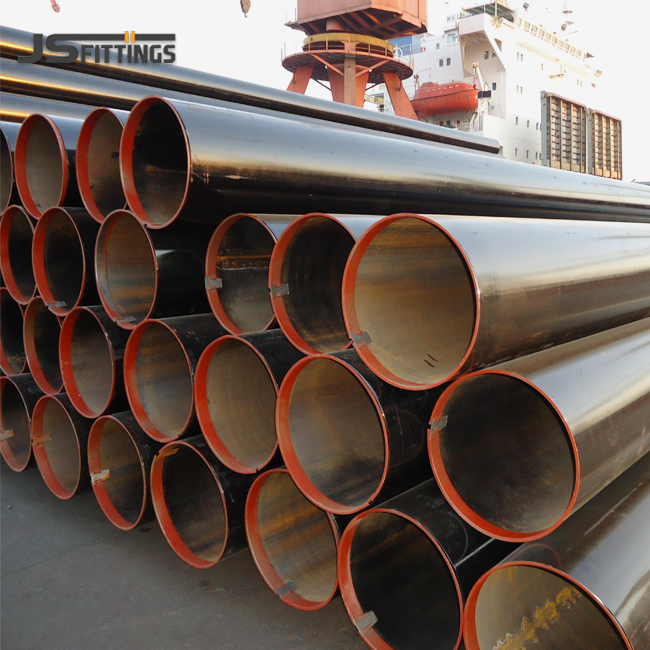
CRA-clad pipe is a big step forward in underwater pipeline building. It has a carbon steel base for the structure and an alloy layer inside that doesn't rust. This two-metal approach handles the toughest corrosion problems that come up in offshore oil and gas output while keeping costs low. JS FITTINGS specializes in providing CRA-clad pipes made for harsh underwater conditions, where solid alloy building is too expensive and carbon steel fails.
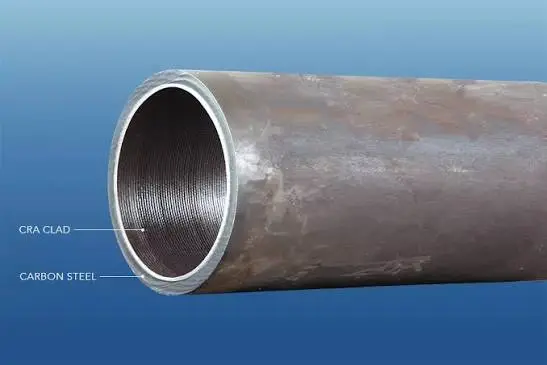
What Are CRA Clad Line Pipes, and Why Are They Essential for Offshore Pipelines?
CRA-clad line pipes combine two different types of materials into one high-performance pipe system. The outside is made of high-strength carbon steel, which can handle mechanical loads and maintain pressure containment. In the inner layer, corrosion-resistant alloys, like Inconel 625, Incoloy 825, or 316L stainless steel, come into direct contact with corrosive fluids that contain hydrogen sulfide, carbon dioxide, and chlorides.
Understanding the Metallurgical Bond
The metal link that holds clad pipes together is what makes them unique. In contrast to manually lined pipes, which use friction, clad pipes use techniques like explosion bonding or hot rolling to fuse the two metals at the atomic level. This typically provides high shear strength that resists delamination during service, which stops the material from delaminating even when it's under constant pressure and bending stress during installation and use.
Why Do Offshore Projects Demand CRA Solutions?
Subsea pipes work in harsh conditions. Standard carbon steel breaks down quickly in environments with saltwater rust, high pressures up to 15,000 psi, temperature changes, and exposure to sour gases. It is possible for solid metal lines to not rust, but they are very expensive and might not be strong enough for deepwater uses. This problem can be solved with CRA clad technology, which saves 30–50% of the cost of solid alloy building while still meeting the requirements for corrosion protection and mechanical performance for pipeline applications using API 5L X65 or X70 grade line pipe as the backing steel.
Specialized Solutions for Extreme Conditions
We at JS FITTINGS know that not all offshore projects have the same problems. Our range of products meets unique operating needs with custom pipe configurations. ASTM A333 Grade 6 pipes are used in low-temperature services such as LNG facilities and arctic or cryogenic applications because they can bend at temperatures as low as -45°C. Charpy V-notch impact tests are done on these lines to make sure they won't break easily when moving liquefied natural gas or working in cold regions.
Our CRA clad setups use a carbon steel backing and carefully chosen metals that don't rust. Alloy 625 covering works great in sour service settings where high levels of H₂S can damage materials. Alloy 825 is very good at resisting erosion by sulfuric acid and phosphoric acid. 316L stainless steel cladding is a cheap option for general seawater uses that doesn't sacrifice longevity.
Comparing CRA-Clad Pipes with Other Piping Solutions
When building offshore systems, procurement workers have a number of pipe choices to choose from. Understanding differences in performance helps both project costs and the life of operations.
CRA-Clad Pipes Versus Solid-Alloy Construction
When used over long distances or with big diameters, solid Inconel or duplex stainless steel lines are completely resistant to corrosion, but they are very expensive. Some 24-inch solid Inconel 625 pipelines can cost several times more than equivalent CRA clad pipes. Some 24-inch solid Inconel 625 pipelines can cost several times more than equivalent CRA clad pipes. The clad method provides the same level of rust protection where it matters most—at the contact with the fluid—while using less expensive carbon steel for structural needs. This material economy is very important when project budgets have to balance keeping costs low while still meeting safety standards.
On top of that, solid alloys and CRA clad pipe usually have lower yield strengths than high-grade carbon steel. Solid alloy construction might not be good enough for deepwater systems that need X70 mechanical qualities. On the other hand, CRA-clad pipes have high-strength backing steel and corrosion-resistant inner layers.
CRA Clad Versus Mechanically Lined Pipes
A corrosion-resistant tube is put inside a carbon steel frame by mechanically lined pipes. This method has lower start-up costs, but it also comes with operating risks. The mechanical bond depends on interference fit instead of atomic fusion, which means that the liner could break when the pressure drops quickly or when it is bent. When pipes are installed offshore, they are often reeled or laid in a J shape, which puts a lot of stress on them to bend. When these things happen, the lining on lined pipes could wrinkle or come off, which would make rust protection less effective and require expensive repairs.
Because of their structural bond, CRA clad pipes don't have these problems. Even when the pieces are stressed during installation, the bond between them stays strong even when pressure changes and the temperature rises. Before launch, ultrasonic testing makes sure that the bond is 100% solid. This gives remote operations peace of mind that there won't be any unexpected corrosion breakthroughs.
Carbon Steel with Corrosion Allowance
In traditional methods, thick-walled carbon steel corrosion allowances are used. Engineers figure out how fast the walls are likely to rust and add extra thickness to make sure they stay strong under pressure for the whole design life. This method works well and doesn't cost too much in places with light rust, but it doesn't work at all in harsh conditions below the sea, where corrosion rates rise without warning. Service with sour gas, high salt levels, and high temperatures can go beyond what was planned, causing the system to fail early. Instead of depending on predictions of corrosion allowances, CRA clad pipes offer solid corrosion protection.
Technical Specifications and Manufacturing of CRA Clad Line Pipes
Following international guidelines and strict testing procedures is key to making sure that the quality of CRA clad pipes is high. By knowing these standards, buying teams can check the skills of suppliers and make sure that the materials provided meet the needs of the project.
Governing Standards and Specifications
API 5LD is the world standard for CRA clad and lined steel pipe. It says what materials must be used, how they must be made, and how they must be inspected. This comprehensive standard strictly defines the manufacturing, testing, and material requirements for CRA-clad and lined steel pipes utilized across high-pressure pipeline transportation systems. ASTM A333 is a standard that makes sure that materials can handle low temperatures and still be tough when they are hit. The standards ISO 15156 and NACE MR0175 tell us how to choose materials for sour service settings and what they say about how resistant they should be to rusting in fluids that contain H₂S.
Our production methods at JS FITTINGS are in line with ASME, GOST, JIS, DIN, and EN standards, so they can be used for a wide range of foreign projects. Our quality control system is ISO 9001-certified, so we know that these standards will always be met in every production batch.
Manufacturing Methods for Clad Pipes
The mechanical link in CRA-clad pipes is produced using three main methods. Explosion bonding speeds up the CRA plate onto the carbon steel base by using a controlled explosion. This makes a metallurgical bonding at the interface. This method makes a strong bond and can be used with a wide range of alloys. In hot roll bonding, both metals are heated to forging temperatures and then physically joined together by rolling pressure. This method works well for making a lot of things at once. Weld overlay uses automatic welding to add a corrosion-resistant metal to the inside of the pipe. This makes it possible to work with shapes that aren't simple.
There are clear benefits to each method. Explosion bonding makes the CRA layer uniformly thick and with little iron loss. When making a lot of things, hot rolling is a cheap way to do it. Weld overlay allows fabrication of corrosion-resistant internal layers and localized repair applications. Our factories use all three methods, choosing the best one based on the type of pipe, the size of the order, and the needs of the application.
Non-Destructive Testing and Quality Verification
To make sure the bond is strong and the metal is the right makeup, it needs to be inspected carefully. Ultrasonic testing inspects the bonding interface to detect delamination, lack of fusion, or voids to find any delamination, lack of fusion, or holes that might affect how well it works. For shear strength tests, destructive samples are taken from production lots to make sure the bond strength is higher than the minimum standard of 140 MPa. Positive Material Identification (PMI) is rigorously conducted to verify that the chemical composition of the CRA layer precisely meets all specified alloy requirements, ensuring absolute corrosion resistance in the field.
In hydrostatic testing, each pipe, including clad or lined steel pipe, is put under forces that are higher than its design values. This makes sure that there are no leaks and that the structure is solid. Charpy V-notch impact testing verifies low-temperature toughness performance at low temperatures for ASTM A333 uses. This makes sure that pipes stay flexible in cold or LNG service. Our high-tech testing tools, like spectral analyzers and automatic ultrasonic scanning systems, make sure the quality is correct before the goods are shipped.
Procurement Insights: How to Source and Specify CRA Clad Line Pipes?
Technical requirements, delivery times, seller dependability, and the total cost of ownership must all be balanced for buying to go well. Decisions about strategic sources affect how long a project takes, how well it stays within budget, and how well it runs in the long term.
Pricing Factors and Cost Considerations
The price of CRA clad pipe depends on a number of factors. The prices of nickel, chromium, and molybdenum on the market affect the costs of raw materials, which in turn affect the costs of metal layers. Labor and equipment prices are affected by how complicated the manufacturing process is. For example, explosion bonding usually costs more than hot rolling. The number of units ordered changes the cost per unit because more units mean better production and lower setup costs.
Customization needs, like non-standard sizes, wall thicknesses, or metal combinations, raise the cost of engineering and machining. Pricing is affected by how quickly something needs to be delivered, since faster production means rearranging schedules and working extra hours. At JS FITTINGS, we keep our prices clear and work with our customers to find the best specifications that get the best value for money without sacrificing performance.
Lead Time Management
When you place an order for standard CRA clad pipes, it usually takes between 8 and 12 weeks to ship them. This time includes getting the materials, making the pipes, checking them, and keeping quality records. Depending on how complicated they are, custom specs may make wait times 14 to 16 weeks longer. Because we have long-term relationships with material suppliers and handle our inventory strategically, we can answer customer questions within an hour and give them realistic shipping dates that help them plan their projects.
JS FITTINGS can make more than 800 tons of pipe fittings and 700 tons of flanges every month, and they can make more for big jobs if they need to. Over 95% of the time, we deliver on time. This is possible thanks to advanced production management tools that keep track of orders as they are made. Our flexible logistics planning helps clients who need stepped deliveries to fit building plans.
Supplier Evaluation Criteria
To choose skilled CRA pipe makers, you need to look at them from a lot of different angles. Check for ISO 9001, API 5LD, and other related pressure vessel certifications in the company's certification collection to see if it can demonstrate compliance. Technical potential is based on the manufacturing infrastructure, which includes places to do heat treatment, bonding tools, and testing labs. Having worked on similar projects before gives you trust in the execution, especially when the requirements are complicated and are located abroad.
Global energy companies like Petrobras, the National Iranian Oil Company, and the Abu Dhabi National Oil Company have accepted JS FITTINGS as a source because they trust our quality processes and delivery performance. Our dedication to foreign standards is shown by our CE, GOST-R, and industry-specific certifications. We have been making things since 1983, so we have a lot of practice with difficult pipe jobs.
Customization and Technical Support
Offshore jobs often need special combinations that aren't in the list. JS FITTINGS can meet standards from DN15 to DN2000, giving you a wide range of diameter options. We can make custom wall thickness combinations, special metal grades, and lengths that aren't normal to meet the needs of your project. During the planning process, our engineering team works with customers and gives them technical advice on things like choosing the right materials, figuring out pressure ratings, and making sure that corrosion protection is true.
Before committing to full-scale production, customers can thoroughly verify material properties, bond integrity, and dimensional accuracy through prototype sample production and small-batch trial orders. This way of reducing risk works well when adding new sources or trying out new requirements. Our skilled international trade team handles export paperwork, shipping operations, and customs procedures, making it easier for clients in 30+ countries to buy things all over the world.
Conclusion
When corrosion protection, mechanical strength, and cost-effectiveness all come together, CRA-clad line pipes are the best choice for underwater and offshore pipeline uses. The metallurgically bonded construction gives strong alloy performance at a lot lower costs, which helps with budgeting without lowering safety or durability. The right choice of materials, screening of suppliers, and construction methods make sure that these pipes last as long as they are supposed to in the harshest marine conditions. If procurement professionals know about the technical specs, manufacturing methods, and performance benefits of CRA clad pipes, they can safely select them, which lowers project risk and raises operational reliability and financial returns.
FAQ
1. What differentiates CRA-clad pipes from lined alternatives?
The most important change is the bonding process. CRA clad pipes have an atomic-level mechanical connection between the carbon steel base and the corrosion-resistant alloy layer. This can be done by hot rolling, explosion bonding, or welding on top. This glue can handle bending stress during placement and changing pressures while it's working. Lined pipes depend on mechanical interference fit, which means that the liner can fall apart when the pressure drops quickly or when the pipe is bent. This is especially likely to happen in active marine installation situations like reel-laying or J-laying.
2. How do CRA clad pipes achieve cost savings compared to solid alloy construction?
Solid metal pipes need expensive materials that don't rust all the way through the wall. When fluids come into touch with CRA-clad technology, a thin protection layer is put on top. For structural needs, cheap high-strength carbon steel is used. This material improvement usually cuts costs by 30 to 50 percent. The savings are bigger for larger sizes, where the cost of a solid metal wall thickness becomes too high, but the material still protects against corrosion and has better mechanical strength.
3. What lead times should procurement teams expect?
Standard CRA-clad pipes take about 8 to 12 weeks to deliver from the time the order is confirmed. This time includes getting the materials, making the pipes, checking them, and filling out the paperwork. Depending on how complicated they are, custom specs may make the time frame 14 to 16 weeks longer. At JS FITTINGS, our established supply lines and production capacity of more than 30,000 tons per year allow us to be flexible with scheduling and produce products on time over 95% of the time.
Partner with JS FITTINGS for Reliable CRA Clad Pipe Supply
JS Fittings can help you with your most difficult offshore pipeline jobs because they have been making things for 43 years. As a qualified CRA clad pipe seller to some of the world's biggest energy companies, we offer API 5LD-compliant solutions with a full quality guarantee. Our metallurgical gluing methods make sure that our ASTM A333 Grade 6 pipes don't delaminate even when they're under a lot of pressure and bending stress. They also keep their impact toughness in cold and LNG uses. We can help with projects of any size because our production facilities can handle more than 30,000 tons of cargo every year and we ship more than 90 containers every month. Backed by ISO 9001, CE, and GOST-R certifications, and holding approved vendor status with PETROBRAS, NIOC, and ADNOC, we are a premier global manufacturer of advanced piping solutions. Email our expert engineering team at admin@jsfittings.com to discuss your CRA clad pipe requirements, request customized quotes, or arrange material testing. We provide rapid responses within one hour and offer highly tailored OEM solutions for sizes ranging from DN15 to DN2000.
References
1. American Petroleum Institute, "Specification for CRA Clad or Lined Steel Pipe," API 5LD, Fourth Edition, 2019.
2. ASTM International, "Standard Specification for Seamless and Welded Steel Pipe for Low-Temperature Service," ASTM A333/A333M-18, 2018.
3. Det Norske Veritas, "Submarine Pipeline Systems," DNV-OS-F101, Offshore Standard, October 2021.
4. NACE International, "Petroleum and Natural Gas Industries—Materials for Use in H2S-Containing Environments in Oil and Gas Production," NACE MR0175/ISO 15156, 2015.
5. Mohitpour, M., Golshan, H., and Murray, A., "Pipeline Design & Construction: A Practical Approach," Third Edition, ASME Press, 2007.
6. Bai, Y. and Bai, Q., "Subsea Pipeline Design, Analysis, and Installation," Gulf Professional Publishing, 2014.
Send Inquiry
Related Industry Knowledge
- Long Radius Buttweld Elbow vs Short Radius Elbows: Which One to Use?
- Getting to Know ASTM A53 ERW Pipe: Characteristics & Uses
- Understanding the API 5L Seamless Steel Line Pipe Specification
- Slip-On Flanges: Types, Uses, and Installation Guide
- Carbon Steel Buttweld Reducer for High-Pressure Pipelines
- Sch 40 Buttweld Reducer vs Sch 80 Pressure Performance
- Carbon Steel Forged Steel Flange: Class 150 to 2500 Guide
- What is the difference between seamless and welded pipe?
- What specification is the carbon steel black pipe?
- What is a plate flange?