
Buttweld Bend vs Elbow: Key Differences Explained






2026-05-28 10:19:23
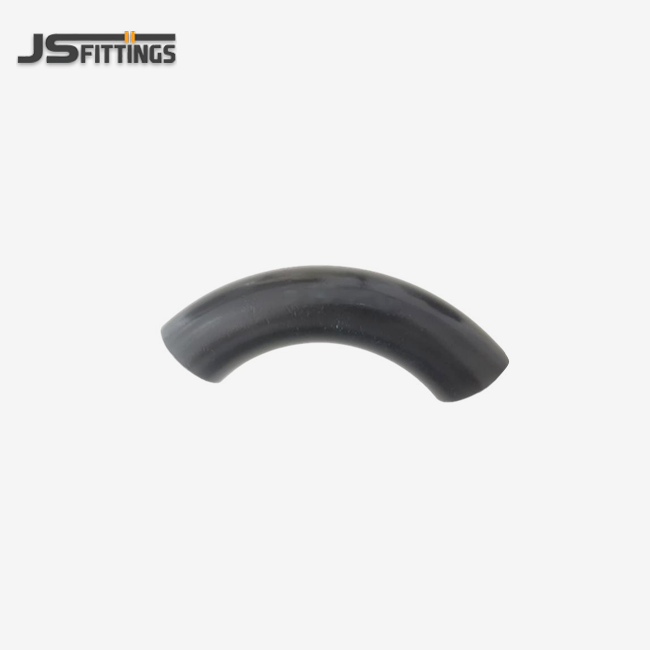
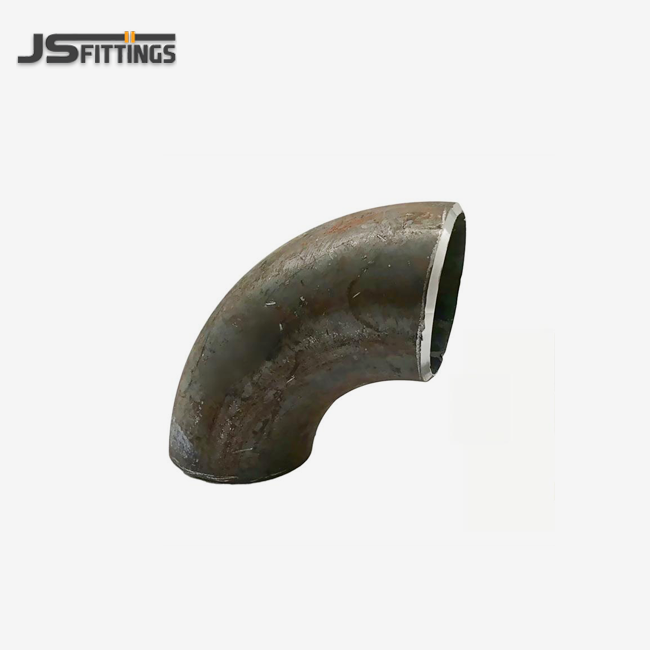
When looking for pipe parts for important industrial uses, knowing the difference between buttweld bends and elbows can have a big effect on how well the project works, how much it costs, and how reliable it is in the long run. Hot induction bending is used to make a butt weld bend with a radius of bend bigger than two times the pipe diameter (2D, 3D, 5D, 6D, 8D). On the other hand, elbows have smaller radii—1D for a short radius and 1.5D for a long radius—and are usually made by hot forming or pressing (rather than casting). Flow needs, room limitations, pressure levels, and the total cost of ownership must all be taken into account when choosing the right fitting.
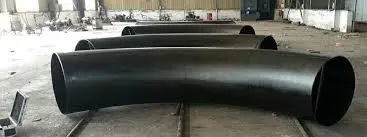
Understanding the Core Differences: Radius and Manufacturing Process
The main difference is in the shape of the turn and the way it is made. Buttweld pipe bends go through a controlled heating process called induction bending, in which pipe parts move through induction coils that heat them to controlled high temperatures (typically in the range appropriate for the material grade) in the bending zone. This method lets the curves form gradually without affecting the strength of the structure.
Three main ways that bends and elbows are different:
- Radius specifications: bends use multiples of diameter (3D bend means radius is three times normal diameter); elbows always use 1D or 1.5D, no matter what size.
- Method of production: induction bending for parts with wider radii vs. hot forming or pressing for small changes in direction
- Wall thickness distribution: Bends keep a more even thickness by controlling the heat, while elbows may show localized thinning at the intrados.
According to typical compliance verification and industry testing aligned with ASME B16.49 requirements, 5D bends keep the wall thickness within 87.5% of the normal specification at the extrados, while standard elbows may experience greater localized thinning depending on the manufacturing process.
If reducing pressure drop and turbulence is important for your project, like in slurry transport or high-viscosity fluid systems, then buttweld bends with bigger arcs are better. On the other hand, regular elbows allow for small changes in direction when working with modular skid systems that are limited in space.
Flow Dynamics and Pressure Drop Considerations
How fluid moves through pipe parts has a direct effect on how much it costs to pump and how well the system works. Computational fluid dynamics (CFD) studies generally show that at the same speeds, a standard long radius elbow typically creates a higher resistance coefficient (K-factor) than a long-radius bend, and a 90-degree 5D bend creates about 0.17.
The long curve in butt weld bends lets the flow be redirected slowly, which lowers:
- Erosion caused by turbulent flow in particle-filled streams
- Uneven wear is caused by secondary flow patterns.
- Losses of energy that need more pumping power
- The risk of cavitation in liquid uses
Field readings from a petrochemical plant in the Middle East showed that switching from elbows to 8D bends in their crude oil transfer line cut the amount of energy used for pumping by 18% per year, which is equal to $47,000 saved per kilometer of pipeline.
For projects that will be working with rough materials like catalyst particles or mine slurries, choose bends with radii ≥5D to make them last longer. The smoother flow path lowers the impact speed against pipe walls, which directly lowers damage rates and keeps expensive, unexpected repair shutdowns from happening.
Material Standards and Specification Compliance
Both component types adhere to rigorous international standards, though manufacturing requirements for buttweld bends differ substantially. ASME B16.49 specifically governs factory-made induction bends, detailing acceptable limits for:
- Out-of-roundness (ovality) tolerances
- Wall thickness variation across bend sections
- Heat treatment requirements post-bending
- Dimensional verification protocols
Common material specifications applicable to both categories include:
Carbon Steel Grades:
- API 5L Grade B, X42, X52, X60, X65, X70 for pipeline projects
- ASTM A234 WPB for general-purpose applications
- ASTM A860 WPHY grades for high-yield strength demands
Corrosion-Resistant Alloys:
ASTM A403 WP304/304L for moderately corrosive environments
ASTM A403 WP316/316L for chloride-containing atmospheres
Duplex 2205 for offshore platforms requiring superior pitting resistance
Low-Temperature Service:
- ASTM A420 WPL6 for cryogenic LNG facilities
- Impact testing per ASME B31.3 is mandatory below -29°C.
JS FITTINGS maintains full traceability documentation linking raw material mill test certificates to finished component markings, ensuring compliance verification during third-party inspections required by EPC contractors.
Size Range and Customization Capabilities
Manufacturing limitations create practical boundaries for each fitting type. Standard buttweld elbows in seamless construction are commonly available up to around 24-inch diameter, with welded versions extending to 60 inches. Beyond these thresholds, fabricating elbows becomes economically prohibitive due to forging press capacity constraints.
Buttweld bend manufacturing through induction heating accommodates significantly larger diameters:
Seamless pipe bending: 1/2" through 24" (DN15-DN600)
Welded LSAW/HSAW bending: up to 60" (DN1500)
Custom heavy-wall applications: Schedule 160 and XXS available
Large-diameter pipeline projects—particularly long-distance oil and gas transmission systems—rely almost exclusively on bends rather than elbows for directional changes. A recent 48-inch diameter gas pipeline spanning 850 kilometers through South American terrain utilized over 320 custom-angle bends ranging from 15° to 90° to navigate topographical variations.
Wall thickness options span from Schedule 10S (light wall) through Schedule 160 and double-extra-strong (XXS) specifications. When designing high-pressure systems exceeding ANSI Class 1500 ratings, specify thicker-wall bends with post-bend heat treatment to restore material properties altered during induction heating.
If your engineering drawings show diameters above 24 inches with directional changes, then welded pipe bends represent the practical solution. Smaller bore piping networks benefit from the cost-effectiveness and faster delivery of standard elbow inventories.
Critical Quality Control: Wall Thinning and Ovality Management
A primary engineering concern during the induction bending process—particularly for high-pressure components manufactured to ASME and ANSI standards—is extrados wall thinning. The outer curve experiences severe tensile stress, causing material elongation and a subsequent reduction in wall thickness.Uncontrolled thinning compromises pressure containment capability and accelerates corrosion penetration.
Advanced induction bending systems employ real-time monitoring to maintain wall thickness above minimum design requirements:
- Pyrometer arrays track temperature distribution across the heating band.
- Ultrasonic thickness gauges verify remaining wall thickness during production.
- Hydraulic mandrels provide internal support, preventing excessive ovality.
- Controlled feed rates balance heating duration with bending force application
Quality acceptance criteria per ASME B31.3 mandate that the minimum wall thickness post-bending must equal:
t_min = t_nom minus applicable manufacturing tolerance and corrosion allowance, as defined by the relevant design code
Nominal thickness accounts for pressure design calculations. JS FITTINGS implements staged verification—inline monitoring during bending, followed by batch sampling with calibrated ultrasonic equipment traceable to national metrology standards.
Ovality (out-of-roundness) affects field welding alignment and internal pig passage in pipelines. The formula for ovality calculation:
Ovality % = [(D_max - D_min) / D_nominal] × 100 (based on nominal diameter definition)
Manufacturing targets maintain ovality below 1.5% for bends intended for piggable pipelines, ensuring intelligent inspection tools traverse smoothly without becoming lodged at direction changes.
Projects requiring pipeability guarantee—such as offshore production pipelines—should specify ovality limits in procurement documents. JS FITTINGS provides certified dimensional reports documenting actual measurements at multiple cross-sections along each bend.
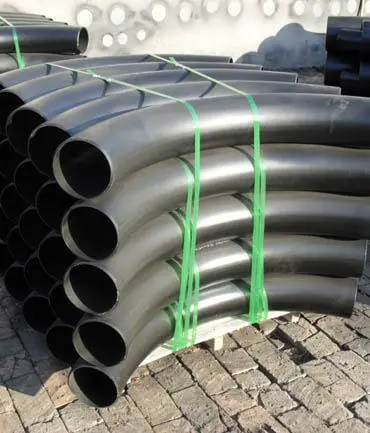
Post-Bend Heat Treatment and Mechanical Property Restoration
Induction heating alters the microstructure of steel within the heated zone, potentially creating regions with unfavorable hardness or reduced toughness. Post-Bend Heat Treatment (PBHT) becomes mandatory for:
- Carbon steel bends in sour service (H₂S-containing environments)
- Alloy steel grades requiring specific mechanical properties
- Applications subject to impact loading or cyclic stress
- Low-temperature service below -20°C
Common PBHT processes include:
- Normalizing: Heating to 900-950°C followed by air cooling to refine grain structure and eliminate banding from the bending process. This treatment restores uniform hardness distribution across the bend section.
- Stress Relieving: Lower temperature treatment (typically 600-650°C) reduces residual stresses without significantly altering the microstructure. Appropriate for carbon steel bends in non-critical service.
- Quenching and Tempering: High-temperature austenitizing followed by controlled cooling and reheating, specified for alloy steel grades like ASTM A234 WP11 or WP22, requiring specific yield strength and impact toughness values.
Laboratory testing post-PBHT verifies:
- Hardness surveys across weld-affected zones (typically ≤200 HB for carbon steel)
- Charpy V-notch impact testing at design minimum temperature
- Tensile testing confirming yield and ultimate strength compliance
- Macrographic examination showing uniform grain structure
JS FITTINGS operates calibrated heat treatment furnaces with programmable logic controllers, maintaining temperature uniformity within ±10°C throughout the treatment cycle. Pyrometric charts and thermocouple data become part of the material traceability package delivered with each shipment.
If your specifications reference NACE MR0175/ISO 15156 for sour service applications, then PBHT with documented hardness testing becomes non-negotiable for bend procurement.
Cost Analysis: Initial Investment vs. Lifecycle Economics
Procurement managers often focus on initial purchase price, yet the total cost of ownership reveals different economic realities.When comparing standard catalog prices, conventional elbows typically cost 40-60% less than equivalent-diameter, ASME/ANSI certified induction pipe bends.
Hidden costs shifting the economic equation include:
- Energy Consumption: Higher pressure drop through elbows requires increased pumping capacity. A 12-inch pipeline operating 8,000 hours annually with a 5D bend versus a standard elbow saves approximately $3,200 yearly in electricity costs at $0.12/kWh rates.
- Maintenance Frequency: Erosion patterns in tight-radius fittings necessitate more frequent inspections and replacements. Documenting failure rates across a 10-year service interval often shows bends lasting 2-3 times longer in abrasive service.
- Installation Labor: Larger bend radii require more linear space during installation, potentially increasing support structure costs. Compact elbows minimize the footprint in dense pipe rack configurations.
- Inventory Management: Distributors maintaining stock for rapid fulfillment typically carry standard elbow sizes due to a broader application range and faster turnover, while bends often require made-to-order lead times.
Application Guidelines: Matching Components to Service Conditions
Selecting between bends and elbows depends on multiple intersecting factors beyond simple dimensional considerations. Application-specific guidance includes:
- High-Pressure Gas Transmission (>1000 psi): Specify seamless buttweld bends ≥5D radius with PBHT. The smoother flow path reduces turbulence-induced vibration and pressure pulsation that can initiate fatigue cracking. Material selection typically involves matching pipe grades such as API 5L X60 or X65 with enhanced toughness requirements.
- Dense-Phase Pneumatic Conveying: Erosion from particle impact accelerates dramatically in tight-radius fittings. Testing shows that increasing the radius from 1.5D to 5D extends wear life by 300-400% in catalyst transfer systems. Specify wear-resistant linings or upgrade to ceramic-lined bends for extreme conditions.
- Cryogenic LNG Service: Low-temperature brittleness concerns mandate Charpy impact testing at the design minimum temperature. Both bends and elbows require ASTM A420 WPL6 material with -46°C impact values ≥27 Joules. Bends offer the advantage of reduced weld count (potential leak points) in large-diameter transfer lines.
- Offshore Platform Piping: Space constraints on production decks favor compact elbows, while subsea flowlines prioritize bends to minimize turbulence affecting multiphase flow patterns. Corrosion protection through duplex stainless or Super 13Cr material grades applies equally to both fitting types.
- Slurry and Mining Applications: Abrasive wear dominates failure mechanisms. Specify minimum 5D bends with hardness-enhanced materials or replaceable wear backs at impact zones. Computational modeling identifies high-velocity impingement areas requiring special protection.
- Sanitary and Pharmaceutical Systems: Smooth internal surfaces preventing bacterial growth mandate electropolished stainless steel bends. The extended radius facilitates cleaning pig passage and drainage, meeting FDA 3A sanitary standards more readily than tight-radius elbows with potential dead legs.
EPC contractors managing brownfield modifications should conduct computational flow analysis comparing existing elbow performance against potential buttweld bend retrofits. Pressure drop reduction may justify replacement during turnaround windows.
Conclusion
Distinguishing between buttweld bends and elbows extends beyond simple dimensional differences to encompass flow performance, manufacturing methodology, lifecycle economics, and application suitability. Bends with radii ≥2D deliver superior flow characteristics and extended service life in erosive or high-pressure applications, while elbows provide compact directional changes where space constraints dominate design considerations. Successful component selection requires balancing initial investment against energy consumption, maintenance frequency, and total cost of ownership. Partnering with manufacturers demonstrating verifiable quality systems, international certifications, and technical support capabilities ensures project success while minimizing procurement risk.
Partner with a Trusted Buttweld Bend Manufacturer
JS FITTINGS combines 40+ years of manufacturing expertise with comprehensive quality systems, delivering pipe bending solutions that minimize project risk and lifecycle costs. Our buttweld bend supplier capabilities span materials from API 5L pipeline grades through exotic alloys, with radii from 2D through 20D in diameters up to 60 inches. Certified to ASME B16.49 standards and qualified by major energy companies globally, we provide the technical support and documented quality assurance that EPC contractors, distributors, and end-users require. Contact admin@jsfittings.com to discuss your specific project requirements and receive detailed technical proposals backed by our 98% customer repurchase rate.
References
1. American Society of Mechanical Engineers. ASME B16.49: Factory-Made Wrought Steel Buttwelding Induction Bends for Transportation and Distribution Systems. New York: ASME Press, 2021.
2. Mohitpour, M., Golshan, H., and Murray, A. Pipeline Design and Construction: A Practical Approach, Third Edition. New York: ASME Press, 2007.
3. Krist, T. Piping and Pipeline Engineering: Design, Construction, Maintenance, Integrity, and Repair. Boca Raton: CRC Press, 2016.
4. Nayyar, M.L. Piping Handbook, Eighth Edition. New York: McGraw-Hill Education, 2016.
5. American Petroleum Institute. API Standard 5L: Specification for Line Pipe, Forty-Sixth Edition. Washington, D.C.: API Publishing Services, 2018.
6. Becht, C. and Levit, M. Process Piping: The Complete Guide to ASME B31.3, Fourth Edition. New York: ASME Press, 2018.
Send Inquiry
_1775029585391.webp "Buttweld Elbow")
Related Industry Knowledge
- ASTM A105 Weld Neck Flange: Complete Guide
- ASTM A234 WPB Buttweld Tee Material Properties Overview
- Benefits of Using A312 stainless steel pipe In Various Industries
- What Is a Buttweld Bend? Types, Radius & Standards
- CRA Clad Pipe vs Mechanically Lined Pipe: Key Differences Explained
- Understanding the API 5L Seamless Steel Line Pipe Specification
- API 5L Seamless Steel Line Pipe for Pipelines Explained
- Carbon Steel vs Stainless Steel Buttweld Bend: Which to Use?
- What is a blind flange used for?
- What is a plate flange?