
What is carbon steel pipe made of?






2026-06-09 09:43:43
When looking at pipe options for industrial jobs, it's very important to know what the materials are made of. Carbon Steel Pipe is primarily made of iron that has been mixed with carbon, usually with 0.05% to 2.0% carbon by weight, and small amounts of manganese, silicon, phosphorus, and sulfur. This mix of iron and carbon makes a flexible, low-cost material with great mechanical strength for use in building, industrial, oil and gas, and pressure uses. The amount of carbon in a pipe directly affects its hardness, tensile strength, and ability to be welded. Therefore, procurement professionals need to understand material composition in order to choose pipes that meet project costs and performance needs.
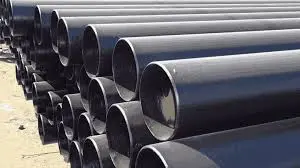
Understanding Carbon Steel Pipe Composition
The chemicals that make up a pipe system are what make it work. The carefully controlled amount of iron and carbon in Carbon Steel Pipes makes them strong. Small alloying elements add to the strength and improve performance.
The Role of Carbon Content in Pipe Performance
How pipes respond to changes in temperature and stress is based on their carbon content classification. Low-carbon steel (0.05% to 0.25% carbon) is easier to weld and shape, which makes it perfect for structural uses and general pipes where reasonable strength is enough. Medium-carbon types (0.25% to 0.60% carbon) are strong and easy to work with. They are often used in pressure tanks and mechanical parts. High-carbon versions (0.60% to 2.0% carbon) are the hardest but also the least flexible. They are rarely used in normal pipes because they are hard to weld. Most industrial pipes have low to medium carbon levels, which makes them stable for field manufacturing and keeps the pressure ratings for fluid transport systems at a good level.
Key Alloying Elements and Their Impact
Besides carbon, many other things affect how well a pipe works. Manganese (usually 0.30% to 1.50%) makes things stronger and tougher, making them more resistant to deformation under load. Silicon (0.10% to 0.35%) removes oxygen during production, which helps keep the grain structure uniform. Phosphorus and sulfur are controlled residual elements; too much phosphorus makes the material more brittle, and too much sulfur can reduce weldability and create weak spots in heat-affected zones. Understanding how these elements interact with each other helps procurement teams look at mill test certificates and make sure that materials are suitable for the job, especially in corrosive or low-temperature settings where small changes in composition can have a big impact on how well they work over time.
International Standards Governing Pipe Composition
Material standards make sure that quality is the same all along the world's supply lines. ASTM A106 Grade B seamless pipes are commonly used in industrial piping and steam systems because they can handle high temperatures and have a proven tensile strength of more than 60,000 psi. ASTM A53 includes Grades A and B in both seamless and welded forms, giving it a wide range of uses for structural and pressure purposes. It also includes hot-dipped galvanized versions to protect against corrosion. API 5L standards are used for most oil transportation, and grades from B to X80 show a rise in yield strength. Grades X52 to X70 combine strength with field weldability for onshore pipelines, while grade X80 allows high-pressure transmission that needs thinner walls.
Specialized needs are met by other standards. For example, ASTM A333 Grades 1 through 6 are intended for low-temperature service, with specific minimum service temperatures depending on the grade, which is very important for LNG plants and other cold-climate sites. ASTM A192 specifies seamless carbon steel boiler tubes designed for high-pressure service, while ASTM A252 covers welded and seamless steel pipe piles intended for structural and foundational applications that demand high impact resistance.The European DIN 2440 and Brazilian NBR 8261 standards make it easier for countries in the region to follow the rules. However, ASTM and API standards are still the most widely used in foreign purchasing. Welded pipe standards, such as ASTM A134/A135 for ERW (Electric Resistance Welded) and CSA Z245 covers requirements for steel pipe systems used in the Canadian pipeline industry, spell out what kind of quality is expected in production. The pressure ratings and safety gaps are directly affected by the acceptance criteria for weld seam integrity.
Advantages and Performance Factors of Carbon Steel Pipes
Selecting the optimal pipe material requires carefully evaluating multiple performance factors against your project's constraints. When correctly specified and adequately protected against corrosion, carbon steel pipes offer exceptional structural and economic benefits.
Mechanical Strength and Durability Benefits
Because of its strength-to-cost ratio, carbon steel pipes are a good choice for large-scale projects. With yield values between 30,000 psi (API 5L Grade A) and 80,000 psi (API 5L X80), these pipes can handle high pressures inside while still staying structurally sound when loads are applied from the outside. Seamless versions don't have longitudinal weld gaps, so stress is spread evenly across the pipe wall. This is especially helpful in situations with cyclic pressure where fatigue resistance is important. When proper welding techniques are used and 100% radiography testing is done to check the quality of the seams, pipes welded using the LSAW (Longitudinal Submerged Arc Welded) or SSAW (Spiral Submerged Arc Welded) methods are as strong as pipes welded using the other method. Low-carbon types are flexible enough to allow for thermal expansion in above-ground systems, which lowers the stress that builds up at supports and joints.
Corrosion Considerations and Protective Measures
The main problem with carbon steel compared to stainless metals is that it easily oxidizes. When it's wet, bare carbon steel corrodes quickly. When it's acidic or salty, the rust rate speeds up. But protective layers turn this weakness into a care plan that can be handled. When put correctly, three-layer polyethylene (3PE) coatings protect underground pipes from abrasion and cathodic disbondment and make them last longer than 30 years. Fusion-bonded epoxy (FBE) can handle higher temperatures better for hot service lines, while hot-dipped galvanizing (per ASTM A53 standards) protects pipe surfaces in environments where they are exposed to air, such as on scaffolding and structure supports.
Fluid interaction problems can be fixed with internal covering technologies. Corrosion-resistant alloy (CRA) cladding or lining is costly, but it protects against sour service (H₂S conditions) without having to be made entirely of stainless steel. Linings made of cement mortar stop tuberculation in water transfer lines and keep the hydraulic efficiency for decades. In the vast majority of industrial settings, utilizing internally lined or coated carbon steel is significantly more cost-effective than deploying solid stainless steel alternatives. The initial investment required for high-performance coatings is negligible compared to the massive material cost savings achieved—especially in large-diameter (24"-60") transmission pipelines where the cost of solid stainless steel would be prohibitively expensive.
Industry-Specific Performance Applications
Different industries put more value on different success factors. Oil and gas companies require API 5L pipes that meet PSL2 (Product Specification Level 2) requirements. These requirements include stricter chemical composition tolerances, impact testing, and non-destructive examination of welds. These requirements make sure that the pipes are reliable in remote areas where failures could cause environmental and economic disasters. ASTM A53 Grade B is used in construction projects for fire protection systems and structural members because its mechanical qualities are reliable and it's easy to weld, which cuts down on installation work costs.
ASTM A106 seamless pipes, including carbon steel pipes, are used in factories that work with steam, compressed air, and process fluids because they can handle higher pressures and temperatures than normal A53 pipes. Chemical plants and cooling systems that work at low temperatures need ASTM A333 grades that have approved Charpy V-notch impact values. This keeps the steel from breaking when it's below zero degrees. Knowing these application-specific needs helps procurement teams make sure that the materials they choose are in line with business risk profiles and legal standards.
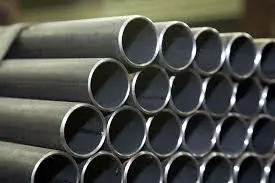
Comparing Carbon Steel Pipes with Other Pipe Materials
The choice of material has a big effect on the total cost of ownership, so it's important to compare things in a structured way across both scientific and economic aspects. Carbon Steel Pipes remain the dominant choice for most industrial infrastructure projects.
Carbon Steel vs. Stainless Steel
Pipes made of stainless steel must have at least 10.5% chromium in them. This creates a passive oxide layer that protects against rust without any extra coatings. Because of this, they are better for chemical, food preparation, pharmaceutical, and other uses where clean products are important. But stainless steel types are three to five times more expensive than their carbon steel counterparts, and they need special filler metals and purge gas protection when they are welded. Carbon steel is still better for transporting hydrocarbons, building things, and any other use where coatings are enough to stop rust. This is especially true for large-diameter lines, where material costs make up most of a project's budget.
Seamless vs. Welded Carbon Steel Pipes
By poking holes in solid billets, seamless pipes are made that don't have any longitudinal seams, so they should have equal strength qualities. This production benefit is very important in situations with very high pressure (>2,500 psi) and fatigue cycle, because weld heat-affected zones can serve as potential initiation sites for failure. But continuous production means that seamless pipe production becomes increasingly difficult and costly at larger diameters and prices go up a lot beyond 16 inches NPS.
There are three main ways that welded pipes are used for large-diameter tasks. ERW (Electric Resistance Welded) pipes up to 24 inches in diameter and mild pressure levels are a cost-effective way to distribute water and build things. LSAW pipes made from plates use automatic submerged arc welding and 100% X-ray inspection to make pipes with diameters from 16 inches to 60 inches that can handle high-pressure transfer. Our cold-expansion method makes sure the pipes are perfectly round, which makes installation easier. SSAW (spiral welded) pipes are the most cost-effective way to send large amounts of water, but the longer spiral seam distributes stress differently than straight longitudinal welds. Modern API 5L PSL2-compliant SSAW pipes work reliably in high-pressure onshore applications and are 15-20% less expensive than LSAW alternatives.
Galvanized and Coated Options
Hot-dipped galvanizing according to ASTM A53 standards gives things that are exposed to the air decades of service without any repairs. Even if the zinc covering gets scratched or broken, the steel underneath is still protected because it corrodes on its own. Galvanized pipes can be used in fire water systems, as outdoor supports for structures, and in farming where painting is not an option. However, galvanizing makes materials about 30% more expensive and limits the highest temperature that they can be used at to 390°F. Above that, the zinc covering breaks down.
Advanced covering methods have benefits that depend on the application. For carbon steel pipes, 3PE coatings have an epoxy primer, an adhesive layer, and a polyethylene jacket layer. They protect underground pipes better mechanically when they are exposed to earth stress and rainwater. Because they can handle temperatures up to 250°F, FBE coats can be used on hot oil transfer lines. To choose the right protection methods, you need to look at the service environment, the estimated lifespan, and how easy it is to do upkeep. These are all decisions that have a direct effect on the costs and dependability of the system over its lifetime.
Conclusion
When procurement workers know that Carbon Steel Pipe is made of iron mixed with carbon and trace elements, they can make choices that balance performance, cost, and dependability. Composition of a material has a direct effect on its mechanical strength, weldability, and resistance to rust. International standards such as ASTM A106, A53, and API 5L set guidelines for quality that are always met. When you choose the right materials for the job and make sure they are of high quality through thorough quality checks like mechanical testing and non-destructive examination, you can lower the risks of the project. Strategic relationships with manufacturers that show they can produce, have quality certifications, and deliver on time improve the resilience of the supply chain. This makes sure that projects are finished on time and on budget while still meeting safety and compliance standards that are necessary for industrial operations.
FAQ
1. What factors determine carbon steel pipe grade selection?
When choosing a grade, you have to think about the mechanical qualities, the working conditions, and the cost. ASTM A106 Grade B is good for uses above 400°F because it has a proven tensile strength and a fine-grain structure. The API 5L Grade B through X70 line supports the transfer of oil. Higher X-grades offer higher yield strength, which lets wall thickness be lowered. ASTM A333 grades are made for low-temperature work that needs toughness against impact, and ASTM A53 grades are made for moderate-pressure structural and fluid transport uses at a cheap cost.
2. How does corrosion resistance compare between carbon and stainless steel pipes?
The chromium in stainless steel creates inactive oxide layers that protect against rust even without coatings. Carbon Steel Pipe rusts easily in wet places, so it is commonly protected with coatings such as 3PE or FBE. But properly treated carbon steel has a service life of 30 years or more and costs a lot less than stainless steel. This makes it the better choice for most commercial uses where product purity and cleanliness aren't very important.
3. What quality standards should procurement teams verify?
Some important licenses are ISO 9001 for quality management, ASTM, API, and EN standards for materials, and CE and GOST-R standards for regional compliance. Material can be tracked by its chemical makeup and mechanical qualities, which are written down in mill test results. The integrity of the production process is checked by non-destructive testing standards (UT, RT, MPI). Supplier approval by big energy companies like NIOC, ADNOC, and Petrobras shows that they can handle tough jobs.
Source premium carbon steel pipe from JS FITTINGS.
Industrial plumbing needs partners with manufacturing knowledge, quality assurance, and quick service in order to work its way through global supply lines. JS FITTINGS has been making carbon steel pipes that meet ASTM A53, A106, A333, and API 5L standards for more than 40 years. They can make pipes that are seamless or welded. Our 30,000-ton annual capacity can handle jobs with walls that are between 1/2" and 60" in diameter with wall thicknesses ranging from 10 mm to 160 mm. We can meet both standard and unique needs.
We have complete quality systems that are certified by ISO 9001, CE, and GOST-R. We are also an accepted provider for NIOC, ADNOC, and Petrobras, which shows that we can handle important jobs. Our testing facilities, which include spectral analyzers and ultrasonic inspection tools, make sure that every shipment meets the requirements of the specifications. This is backed up by full mill test paperwork and the ability to track down materials. We've gained trust in more than 30 countries through steady quality and quick support, as shown by our 95%+ on-time delivery rate and 98% repurchase rate. Contact our technical team at admin@jsfittings.com to talk about your project needs. Whether you need standard API 5L Grade B for building pipelines or specialty ASTM A333 Grade 6 for cryogenic service, as your trusted carbon steel pipe manufacturer, we can help you achieve operational success.
References
1. American Society for Testing and Materials. (2023). Standard Specification for Carbon Steel Pipes for High-Temperature Service. ASTM International Standards Compendium, Vol. 01.01.
2. American Petroleum Institute. (2022). Specification for Line Pipe: Technical Standards and Grade Requirements. API Publishing Services, 46th Edition.
3. Davis, J.R. (ed.). (2021). Metals Handbook: Carbon and Alloy Steels—Composition, Properties, and Applications. ASM International Materials Reference Series.
4. International Organization for Standardization. (2023). Petroleum and Natural Gas Industries—Steel Pipe for Pipeline Transportation Systems. ISO Technical Committee 67 Documentation.
5. Bringas, J.E. (2020). Handbook of Comparative World Steel Standards: International Specifications for Carbon and Alloy Steel Pipes. ASTM Data Series Publication DS67B, Fifth Edition.
6. National Association of Corrosion Engineers. (2022). Corrosion Control in Oil and Gas Pipelines: Material Selection and Protective Coating Systems. NACE International Technical Report Series, Publication 21453.
Send Inquiry
Related Industry Knowledge
- Buttweld Elbow Dimensions Guide for ASTM A234 WPB Fittings
- Choosing the Right Size Long Radius Buttweld Elbow for Your Project
- What Is the Difference Between LR and SR Buttweld Elbow?
- Long Radius Buttweld Elbow: Ultimate Guide 2026
- CRA Clad Line Pipe for Subsea and Offshore Pipelines
- What Is The Difference Between Different Grades Of API 5L Seamless Steel Line Pipe In Performance?
- Collaborative Art of Lap Joint Pipe Flange and Stub End
- Why Is a Seamless Buttweld Tee Preferred in Critical Service?
- Why Is Long Radius Buttweld Elbow Preferred in Oil & Gas?
- What is carbon steel pipe used for?