
A53 ERW Pipe – Type, Grade, Performance, Tolerance, Application Full Analysis






2026-06-22 11:12:58
When evaluating industrial piping solutions for mechanical and pressure applications, understanding A53 ERW pipe specifications becomes essential for project success. This carbon steel pipe, manufactured to ASTM A53 Type E standards through electric resistance welding, balances cost-efficiency with reliable performance in steam, water, gas, and air transport systems. Unlike seamless alternatives requiring higher investment, ERW technology delivers structural integrity suitable for low-to-medium pressure environments while accelerating delivery timelines and reducing total project expenditure.
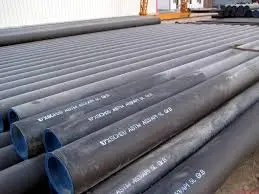
Understanding A53 ERW Pipe – Types and Specifications
What Defines ASTM A53 ERW Pipe?
ASTM A53 covers black and hot-dipped galvanised welded and seamless steel pipes. 'Type E' in this standard means 'electric resistance-welded' construction, which uses high-frequency induction welding to form flat steel coils into cylindrical pipes. The lengthwise seam goes through a controlled heat process to even out the grain structure and reduce residual stresses that might shorten its useful life.
As per the ASTM A53 standard, there are three kinds of products: Type F (furnace-welded, mostly defunct), Type E (electric resistance-welded), and Type S (seamless). Classifying materials by grade further improves their mechanical properties. Grade A has average strength for most uses, while Grade B has a higher minimum yield strength of 35,000 psi, making it suitable for structural and pressure-service applications, making it the best choice for structural frames and installations that are under a lot of pressure.
Standard Dimensions and Manufacturing Process
Our A53 ERW pipes at JS Fittings come in sizes ranging from 1/2" to 24" nominal diameter (DN15 to DN600), so they can be used for a wide range of projects, from home plumbing to industrial utility mains. There are different wall thickness choices, such as Schedule 10, 20, 40, standard, 80, and extra strong. This lets engineers perfectly match pressure ratings with practical needs.
The first step in manufacturing ERW pipe is cold-forming a continuous steel strip into the shape of a tube. Edge preparation makes sure that the mating edges are clean before high-frequency electrical current heats up a specific area. When the edges hit the forging temperature, mechanical pressure bonds the steel edges together at the weld seam. After that, online heat treatment of the seam area gets rid of any remaining stress in the heat-affected zone. This makes sure that the weld has the same strength and flexibility as the base metal. This controlled process makes it possible to get consistent dimensional accuracy and a smooth finish on the surface that can't be achieved with standard welding methods.
Material Composition and Chemical Properties
The carbon steel in ASTM A53 Grade B pipe and A53 ERW pipe has fixed alloy ratios that make it easier to weld and improve its mechanical performance. The carbon content is controlled according to ASTM A53 requirements to maintain weldability and mechanical performance, which makes the material flexible, which is important for installing things in the field that require bending and flaring. Adding manganese in amounts ranging from 0.27% to 1.06% makes steel stronger and helps it deoxidise while it is being made. It's important that the levels of sulphur and phosphorus stay below 0.05% and 0.045%, respectively. This keeps the weld from breaking when the temperature changes in working settings.
Performance, Quality & Tolerance Analysis of A53 ERW Pipe
Mechanical Performance Characteristics
Grade B A53 ERW pipe works reliably in a wide range of industrial settings thanks to its mechanical qualities. The minimum tensile strength is 60,000 psi, which is high enough for pressure-service applications. At 35,000 psi, the yield strength standards support the weight of the structure without permanently deforming it. The elongation values show that the material is flexible enough to be used in manufacturing processes like threading, bevelling, and expansion.
These balanced traits take care of important practical issues. The mix of strength and flexibility lowers the chance of catastrophic failure in systems that are subject to changes in temperature or pressure. Because the material is ductile, it can bend to handle seismic movement in structures without getting stress cracks that spread over time.
Dimensional Tolerance Standards
ASTM A53 sets strict limits for dimensions, which makes sure that the parts will fit together correctly during installation. For pipes smaller than 1.9 inches, the outer diameter tolerances stay within ±1% of the nominal size, while for bigger sizes, they stay within ±0.75%. Different manufacturing methods have different wall thickness tolerances. Because the process is constantly watched during production, ERW pipes have better control than seamless options.
At our factory, high-tech inline measurement tools check each section of pipe against the requirements set by the specifications. This stability in dimensions directly improves field efficiency by cutting down on the time needed to make alignment changes when joining two flanges, valves, and fittings. Contractors like that our ERW pipes cut down on the amount of repair that needs to be done because of mismatched dimensions, which slows down projects and costs more in labour.
Quality Verification Through Testing
At JS Fittings, quality assurance includes several checks that protect against mistakes. Every piece of production goes through 100% hydrostatic testing, which means that the internal pressure is higher than the working rate to make sure there are no leaks. Eddy current testing finds flaws in weld seams that can't be seen with the naked eye. It can find porosity, partial fusion, or inclusion faults before the goods are shipped.
Each order comes with a material certification that lists the results of chemical tests, mechanical tests, and readings of the material's size. From the time we receive the raw materials to the time of the final inspection, our ISO 9001 quality control system makes it possible to track them. Our manufacturing controls meet international energy sector standards, as shown by certifications from PETROBRAS, NIOC, and ADNOC. This gives procurement teams trust when they choose our products for important infrastructure.
Comparative Performance Analysis
When looking at different options, knowing how their performance differs helps you make the right choice. Seamless pipes are better for high-pressure and high-temperature applications that go beyond what ERW can handle, but they cost 20–40% more for the same specs. For uses within the ASTM A53 working parameters—for typical low- and medium-pressure steam and water services within applicable design-code limits—ERW construction is just as reliable but much cheaper.
Compared to structural tube grades like SS400, ASTM A53 Grade B features superior tensile properties and strictly controlled chemical composition, which ensures excellent weldability and long-term performance for ERW pipes.The API 5L standards are for oil and gas transfer and need higher impact resistance and tight sulphur limits. They are designed primarily for oil and gas transmission applications rather than general utility piping, as A53 meets all service needs.
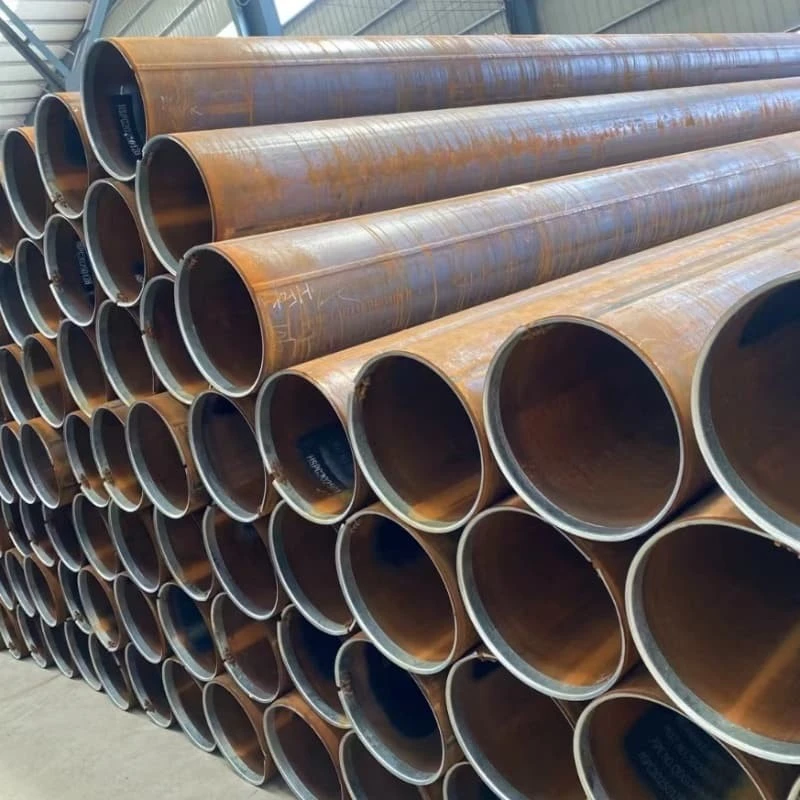
Applications and Use Cases of A53 ERW Pipe in Industry
Fluid Transport Systems
When it comes to uses, water delivery networks have the most A53 ERW pipes. Hot-dip galvanised finishes are important for irrigation infrastructure, industrial process water lines, and municipal potable water systems because they don't rust. The smooth inside surface reduces pressure drop and noise, which means that less pumping energy is needed for long pipeline runs.
Fire safety systems use ASTM A53 for sprinkler distribution pipes that need to be leak-proof so that water can be sent quickly during situations. The material's reliable flow properties help hydraulic formulas make sure that sprinkler heads far away have enough water flow. Black lacquer coats on exposed indoor piping keep them from rusting and keep the cost down compared to stainless steel options.
Heating plants and factories use the temperature resistance of carbon steel construction for steam and condensate return lines. Even though it can only handle mild pressures, A53 pipe is good for distributing low-pressure steam at 15 to 50 psi, which is widespread in HVAC systems and process heating.
Structural and Mechanical Applications
A53 erw pipe is strong for its weight, so it can be used for more than just moving fluids. When building foundations in soft soil, piling casings keep drilled holes safe. Galvanised pipe is used for fence posts and handrail systems because it doesn't rust when installed outside. Consistent mechanical qualities are needed for scaffolding devices to keep workers safe when they are under dynamic loading.
A53 pipe is used in HVAC duct support frames and equipment mounting structures where fire-resistant materials are required by building codes. The even surface finish lets paint and coats stick to it, keeping the surface's good looks in building settings.
Industry-Specific Implementations
EPC contractors rely heavily on ERW pipes for massive industrial projects due to their unwavering reliability and highly predictable costs. For instance, numerous power plants specify ASTM A53 for critical auxiliary systems, including cooling water transport, compressed air distribution, and internal fuel gas pipelines. Chemical processing plants choose the material for service lines that carry process fluids and don't rust and are compatible with carbon steel.
In oil and gas midstream activities, ERW pipe is used in gathering systems to collect production from wellheads at low pressures before sending it to other locations. Sour gas service typically requires materials and specifications meeting additional sour-service requirements, but sweet gas and produced water lines can work safely with A53 standards. Large amounts of energy are used by the utility systems in refineries that move steam, nitrogen, and monitoring air around the working units.
Customisation Options for Specialised Requirements
Because each project is different, it often needs changes that aren't possible with normal mill production. Our factory can prepare the bevelled ends according to ASME B16.25 standards, which lets you connect directly to flanges and fittings without having to do any field cutting. Threading and fitting services make mechanical joint systems work in places where upkeep is important.
More surface coating choices make things more compatible with the surroundings. For underground installations, bare ASTM A53 Grade B ERW pipes can be rigorously protected against aggressive soil corrosion by applying advanced fusion-bonded epoxy (FBE) or three-layer polyethylene (3PE) coating systems.Water systems that serve areas with harsh water chemistry can avoid scale buildup by lining the inside with cement mortar or epoxy. These services that add value simplify supply chains, making purchases easier and cutting down on project timelines.
Conclusion
Knowing everything about ASTM A53 ERW pipe specs, performance characteristics, and application suitability helps you make smart purchasing choices that keep costs down and guarantee reliability. This material standard is the best choice for utility piping and structural uses within its working range because it strikes a good mix between mechanical qualities and economic value. Because manufacturing quality, dimensional accuracy, and the reliability of the provider all have a direct effect on the project's results, choosing the right source is just as important as choosing the right materials. There are checks in place to make sure that goods are safe and last a long time, like strict testing methods and certification systems.
FAQ
1. What distinguishes ERW pipes from seamless pipes?
The main difference is in how they are made and the qualities they have when they are finished. ERW pipes are made from flat steel strips that are welded together lengthwise, making a seam that can be seen and that is heated to harden it. By cutting solid billets, seamless pipes are made with a regular structure that doesn't need any welds. When it comes to cost and size accuracy, ERW construction is better than seamless pipes. Seamless pipes can handle higher temperatures and pressures. For uses within the ASTM A53 grades, ERW performs as well as seamless options while being much cheaper.
2. How do I calculate the weight of A53 pipe?
Weight (lb/ft) = 10.68 × (Outside Diameter - Wall Thickness) × Wall Thickness is the formula used to figure out the weight of a pipe. Metric units: Weight (kg/m) = 0.0246 × (OD - WT) × WT, where OD and WT are the length and width of the item, respectively. ASTM publishes standard pipe tables that give estimated weights for typical sizes and schedules. This makes estimating easier during the planning stages of a project.
3. Can A53 ERW pipe handle high-pressure water systems?
When the pressure values match or go beyond the working conditions, ASTM A53 Grade B pipe can be used safely in water systems. Based on code-allowed stress, Schedule 40 pipe with a 4-inch diameter is commonly used in systems around this pressure range, subject to applicable design codes and service conditions. For higher pressures, wall schedules need to be heavy or the width needs to be shrunk. When the temperature goes up, the allowable stress goes down, so an engineering study is needed to make sure that the value is right for the particular service parameters.
Partner With JS FITTINGS for Reliable A53 ERW Pipe Supply
When you order industrial pipe from JS FITTINGS, your projects are linked to their 40 years of manufacturing experience and tried-and-true quality systems. We use modern high-frequency induction welding technology to make ASTM A53 ERW pipes. This ensures consistent weld quality and precise measurements, which speeds up installation and cuts down on rework on-site. We know the rules and standards for performance that govern vital infrastructure because we are an approved provider for big energy companies like PETROBRAS, NIOC, and ADNOC.
Our large collection, ranging from DN15 to DN600, along with our 90+ monthly container shipments and 95%+ on-time delivery record, gives large-scale projects the supply stability they need. Our experienced team creates unique solutions that meet your exact needs, whether you're an EPC contractor working with tight deadlines, a distributor keeping an eye on local stock levels, or an end-user looking to expand your facility.
Partner with a premier industrial pipe manufacturer for your next critical project. Email our engineering experts at admin@jsfittings.com to discuss your specific requirements. We streamline your procurement process by providing comprehensive technical specifications, highly competitive quotes, and full material certifications.Our helpful customer service team makes sure you get the information you need to make an informed choice by responding to your questions within an hour.
References
1. American Society for Testing and Materials. (2018). ASTM A53/A53M – Standard Specification for Pipe, Steel, Black and Hot-Dipped, Zinc-Coated, Welded and Seamless: Standard Specification for Pipe, Steel, Black and Hot-Dipped, Zinc-Coated, Welded and Seamless. West Conshohocken, PA: ASTM International.
2. American Society of Mechanical Engineers. (2020). ASME B31.3: Process Piping - Design, Fabrication, and Inspection Requirements. New York: ASME Press.
3. Bai, Y., & Bai, Q. (2014). Subsea Pipeline Design, Analysis, and Installation. Oxford: Gulf Professional Publishing.
4. Mohitpour, M., Golshan, H., & Murray, A. (2007). Pipeline Design and Construction: A Practical Approach (3rd ed.). New York: ASME Press.
5. Nayyar, M. L. (2019). Piping Handbook (8th ed.). New York: McGraw-Hill Education.
6. Revie, R. W., & Uhlig, H. H. (2008). Corrosion and Corrosion Control: An Introduction to Corrosion Science and Engineering (4th ed.). Hoboken, NJ: John Wiley & Sons.
Send Inquiry

Related Industry Knowledge
- CRA Clad Pipe: Applications, Benefits, and Future Trends
- FBE vs 3LPE vs CWC for Underground and Subsea Applications
- Differences Between AWWA Flanges and ANSI Pipe Flanges
- What is the material of A53 ERW Pipe?
- FBE Coated Steel Pipe: The Ultimate Guide (Process & Specs)
- Collaborative Art of Lap Joint Pipe Flange and Stub End
- Buttweld Tee Pressure Ratings Explained for Industrial Piping
- Buttweld Bend vs Elbow: Key Differences Explained
- What is seamless carbon steel pipe used for?
- What is a blind flange?