
What are ANSI Pipe Flanges, And How Does it work?






2026-06-22 11:12:52
ANSI pipe flanges are a large group of American standard pipe flanges that are used in energy and industry infrastructure around the world to connect pipes in a safe and effective way. These high-integrity mechanical connectors join pipes, valves, pumps, and other equipment according to the size and material rules set by ASME B16.5 and B16.47. This makes sure that the structure is reliable and that the connectors can be used anywhere in the world. They do their job by giving a bolted connection point that makes it easy to put together, take apart, and manage piping systems while keeping them leak-proof in high-pressure and high-temperature situations.
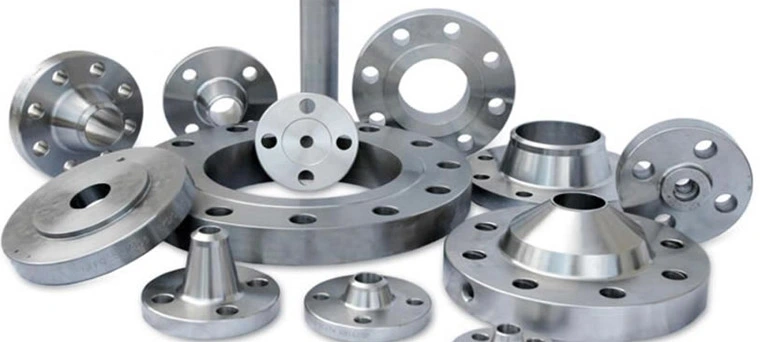
Understanding ANSI Pipe Flanges — Definitions, Standards, and Applications
What Defines ANSI Pipe Flanges in Modern Industry?
Even procurement professionals with a lot of experience can get lost in the language used to talk about pipe flanges. People often call these standards "ANSI Pipe Flanges," but in 1988, the American Society of Mechanical Engineers took over formal control of them from the American National Standards Institute. These days, ASME B16.5 rules apply to flanges with a width of up to 24 inches, and ASME B16.47 rules apply to flanges from NPS 26 through NPS 60. Even with this change, "ANSI" is still widely used in global supply lines for business language.
The flanges solve some of the most important problems that buying managers have to deal with every day. They keep the structure strong even when it's under a lot of pressure, get rid of the need for custom machining by using standard sizes, and make upkeep easier by letting you get to the system without damaging it. When an EPC contractor asks for ANSI Class 600 flanges for an offshore platform, all suppliers around the world know exactly what sizes, bolt hole shapes, and pressure values are needed.
Pressure Classes and Material Specifications
The pressure grade method is the most important part of choosing a flange. These grades, which come in classes 150, 300, 400, 600, 900, 1500, and 2500, show the highest pressure that can be used at certain temperatures. At room temperature, a Class 150 carbon steel flange can handle about 285 psi of pressure. In some situations, Class 2500 flanges can handle forces over 6,000 psi.
How well and how long something lasts are directly affected by what it's made of. Carbon steel ASTM A105 flanges are most often used in general industry settings because they are cheap and strong enough for most situations. Stainless steel types, especially ASTM A182 F304 and F316, are better at resisting corrosion in places where chemicals are processed and in marine sites that are hit with saltwater spray. Alloy steel types like F11 and F22 can handle high temperatures in power generation service and keep their yield strength when carbon steel would soften.
Each type of material goes through a lot of tests to make sure that its chemical makeup and mechanical qualities are correct. Spectral analysis confirms the amount of metal present, and tension testing shows the yield strength and elongation properties. These quality control steps keep end users safe from major failures that could cause accidents and stop production.
Flange Facing Types and Their Critical Functions
The features of the surface finish have a huge impact on how well the seal works. Raised Face (RF) flanges have a mounting surface that is slightly raised, usually 1/16 inch high. This makes the gasket compression force focus in a smaller area. In most businesses, this system rules Classes 150 through 600. Flat Face (FF) versions spread the pressure evenly across the whole gasket surface. This makes them good for materials like cast iron that are easily broken when stressed in one place.
When it comes to sealing, a Ring Type Joint (RTJ) face is the best choice for harsh service situations. Instead of soft gaskets, RTJ flanges use metal rings that can be bent into precisely machined grooves. This makes metal-to-metal contact that stays strong even when the temperature changes and the flange is vibrated. Offshore platforms that work at Class 900 or higher commonly use RTJ construction to stop chemical leaks in places where failure would be very bad.
Specifications for surface roughness are very important. The roughness of raised face surfaces is usually between 125 and 250 microinches, which is caused by circular serrations. These tiny holes catch gasket material, which raises friction and stops the gasket from blowing out when pressure rises. For the design to work, it's important to keep these finish specs during fitting and cleaning.
Common Flange Types and Industrial Applications
Weld neck flanges have the strongest structure because their hubs are curved, which makes the change from thick pipe walls to thick flanges more smooth. This shape spreads out stress and keeps the structure from breaking down from wear in high-pressure, high-temperature work. Refineries require weld-neck flanges for important process lines because failure could lead to emergency shutdowns that cost hundreds of thousands of dollars an hour.
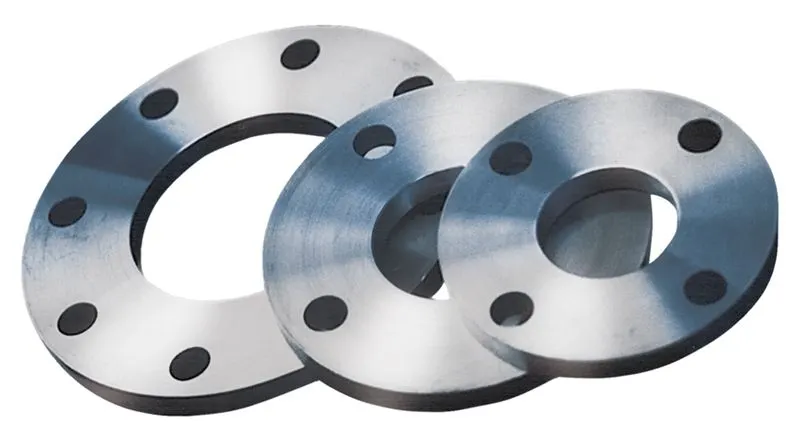
Slip-on flanges are easier to install and cheaper for uses with lower pressure. The pipe fits into the flange hole and gets fillet welds on the inside and outside. This makes the pipe strong enough for Classes 150 and 300 in non-critical service. In municipal water systems and HVAC installs, slip-on designs are often used because they are easier to align than weld-neck designs, which are stronger.
Blind flanges, including ANSI pipe flanges, either seal off the ends of pipelines or make it possible to add on in the future. Maintenance teams like that can separate equipment for review without having to drain the whole system. Socket weld and threaded flanges are used for small-bore applications where full-penetration butt welding is not practical, but because they can't handle as much pressure, they can only be used for non-critical tasks. Lap joint flanges and stub ends can be used with systems that need to be taken apart often, like those that deal with slurries that need to be cleaned regularly.
How ANSI Pipe Flanges Work: Installation and Performance Considerations
Proper Installation Procedures for Maximum Reliability
Whether an ANSI pipe flange system lasts as long as it was supposed to or breaks down early depends on how well it was installed. To start preparing the surface, wire brushes or grinding is used to remove mill scale, rust, and other contaminants from the joining sides of the pipe and flange. Any flaw makes leak routes that threaten the security of the system. Check the flange sides for any damage, like scratches, dents, or rust, that might stop the gasket from fitting properly.
The type of service and flange facing must be taken into account when choosing a gasket. In high-temperature situations, spiral wound gaskets with graphite material are most common because they stay flexible even when they are heated and cooled many times. Compressed non-asbestos fibre gaskets are a cheap way to seal lower-pressure systems. The seal needs to fit properly inside the raised face diameter. It shouldn't go into the bore and get damaged by flow, and it also shouldn't fall short of covering the whole face.
When installing bolts, there is a certain way to tighten them that makes the compression load spread out evenly. Cross-pattern tightening, which is also known as star-pattern, keeps the gasket from distorting and the flange from warping. Instead of hitting full torque all at once, technicians apply torque in several passes, slowly increasing it until it reaches the desired end value. This method lets the seal be compressed evenly, getting rid of any high spots that could lead to leaks. Calibrated torque wrenches make sure they are accurate because gaskets can blow out if they are over-tightened or under-tightened.
Critical Performance Factors and Maintenance Practices
Different businesses have very different needs when it comes to mechanical power. Offshore platforms put flanges through constant vibrations from waves and machine operation. This means that they need materials and designs that don't crack from use. As process conditions change in chemical plants, heat cycling happens. This means that flanges need to be able to keep their shape while they expand and shrink. For each use, the operating loads must be carefully matched to the pressure class, material grade, and facing type.
Precision in alignment keeps things from breaking too soon. Thermal expansion, settlement, and shaking all affect piping systems and cause bending moments at flange joints. When there is too much imbalance, stress builds up at the bolt holes and starts cracks that spread until the structure fails completely. By keeping the flange faces parallel and within a tolerance of no more than 1/16 inch, the loads are spread out equally around the bolt circle.
Routine checking procedures greatly increase the life of a product. Corrosion can be identified visually during turnarounds, especially in the heat-affected area next to welds where changes in the material make it more likely to happen. Ultrasonic thickness testing measures the amount of metal loss so that replacement can happen before the wall thickness falls below the minimum safety level. Checking the state of bolts shows rust or stress corrosion cracking that could lead to quick failure. By replacing the gaskets every time you take something apart, you can stop leaks from the squeezed set that weakens it.
Different environments require different ways to stop corrosion. When carbon steel flanges, including B16.5 Forged Steel Flanges, are exposed to air, coating methods protect them. For sites that are underground or submerged, cathodic protection is used. Most acidic substances can't damage stainless steel grades, but in some situations, chloride-induced stress corrosion cracks can happen. When choosing materials for purchase, every chemical species that could be present in regular operation and possible upset situations must be taken into account.
Comparing ANSI Pipe Flanges With Other Global Standards
Understanding International Standard Variations
Multiple fastener standards are common in global projects, which makes buying more difficult. Installations in Europe, especially in Germany and the surrounding areas, mostly follow DIN (Deutsches Institut für Normung) guidelines. DIN flanges do similar things to ANSI pipe flanges, but their size requirements are different, so they can't be directly swapped out. The pressure number of a DIN PN16 flange is similar to that of an ASME Class 150 flange. However, the bolt hole patterns and facing measurements are different enough that mixed-standard systems need adapter flanges.
The Japanese Industrial Standards (JIS) set the rules for sites all over Asia, especially in power plants and chemical plants. JIS flanges are designed with Japanese industrial goals in mind, and they usually have thicker webs and different bolt spacing than ASME classes that are the same. For international projects, procurement teams must clearly define standards to avoid problems with compatibility that slow down building plans.
API 6A flanges are used in specific oil and gas tasks, like on wellhead equipment and Christmas trees. These flanges have features that allow them to handle sour gas service and fast pressure switching that may not be possible with standard ASME flanges. Knowing when API requirements are more important than general-purpose ASME standards can help you avoid making mistakes that cost a lot of money.
Design Parameter Comparisons Across Standards
Different standard groups have different pressure-temperature ratios, which affects the choice of material. As the temperature rises, materials lose some of their yield strength, which is taken into account in the specific pressure-temperature rating charts that ASME standards provide. At room temperature, a Class 300 carbon steel joint can handle 740 psi. At 1000°F, it can only handle 230 psi. European PN names are not the same as American ones, so you need to carefully convert them instead of thinking they are the same.
Different countries have different bolt requirements. For example, DIN and JIS use metric threading, while ASME uses imperial measurements. This apparently small detail makes it hard to get what you need because mixing bolt types poses safety risks. Keeping separate inventory for each standard family increases inventory costs, which is why many businesses choose to use a single method when the law allows it.
Face-finishing requirements show various ways of making things. In the United States, circular serrations with clear hardness values are more common, while European standards may call for different ways to prepare the surface. These differences have an effect on how well gaskets work, especially in important services such as high-pressure ANSI flanges, Class 600/900/1500, for oil and gas, where the safety of operations depends on how well they close.
Conclusion
ANSI pipe flanges are the building blocks of effective pipe system connections in all fields that demand perfection. When procurement workers and engineers know the standards, material qualities, and installation requirements, they can choose flanges that will work safely and cost-effectively for the whole time they're in use. Standardized measurements make sure that parts can be used anywhere in the world. This makes managing the supply chain easier while still keeping the structural integrity that critical applications need. When you choose, install, and maintain something the right way, you can make it more reliable and lower your total purchase costs.
FAQ
1. What distinguishes ANSI flanges from ASME flanges in technical specifications?
In real-world business situations, the terms can be used equally. In 1988, ASME took over technical control of the B16.5 standard from ANSI. This made ASME the correct technical name. However, ANSI is still commonly used in business. The dimensions and materials that are meant by both words are the same.
2. When do engineers specify Ring Type Joint facing over Raised Face designs?
For Class 900 and higher pressure uses, RTJ facing is required. In heavy service, it is recommended up to Class 600. By shaping oval or octagonal rings into precise holes, a metal-to-metal seal is made that stays strong even when temperature changes and vibrations happen, which would damage soft gasket materials.
3. How do Series A and Series B large-diameter flanges differ functionally?
Both types are defined by ASME B16.47 for flanges larger than 24 inches. Series A (MSS SP-44) is built to be stronger, with thicker flanges and fewer, larger-diameter bolts. Series B (API 605) has a form that is lighter and has more small nuts. The series can't be switched out because they have different bolt designs and face sizes.
Partner With a Trusted ANSI Pipe Flanges Manufacturer for Your Next Project
Every flange that JS FITTINGS makes is the result of more than 40 years of experience making high-quality products. Our dedication to quality is backed by approvals from NIOC, ADNOC, and PETROBRAS. Our 7,000-square-metre warehouse ships more than 90 crates every month to customers in 30 countries. We keep a 98% return rate by strictly controlling quality and delivering more than 95% of the time. Forged carbon steel, stainless steel, and alloy steel flanges are made from DN15 to DN2000 in pressure classes 150 to 2500. They meet ASME, DIN, JIS, and GOST standards and can be fully traced back to the raw materials. As a premier manufacturer of ANSI Pipe Flanges with decades of global experience, we offer expert engineering consultation to help you achieve the optimal results for your specific requirements. We also have customizable MOQ arrangements and answer all of your questions within an hour. Get in touch with our team at admin@jsfittings.com to talk about your project needs and find out how our thorough quality systems can help you meet important dates and lower your buying risk.
References
1. American Society of Mechanical Engineers. (2021). ASME B16.5: Pipe Flanges and Flanged Fittings NPS 1/2 Through NPS 24 Metric/Inch Standard. New York: ASME Press.
2. American Society of Mechanical Engineers. (2020). ASME B16.47: Large Diameter Steel Flanges NPS 26 Through NPS 60 Metric/Inch Standard. New York: ASME Press.
3. ASTM International. (2019). ASTM A105/A105M: Standard Specification for Carbon Steel Forgings for Piping Applications. West Conshohocken: ASTM International.
4. Becht, C. (2018). Process Piping: The Complete Guide to ASME B31.3. New York: ASME Press.
5. Nayyar, M. L. (2019). Piping Handbook (8th ed.). New York: McGraw-Hill Education.
6. Singh, R. K. (2017). Pipeline Integrity Handbook: Risk Management and Evaluation. Houston: Gulf Professional Publishing.
Send Inquiry
Related Industry Knowledge
- All About ASTM A105 weld neck flange
- Carbon Steel Forged Steel Flange: Class 150 to 2500 Guide
- What is seamless carbon steel pipe?
- Seamless vs Welded Buttweld Tee: Which Performs Better?
- What are butt weld fittings?
- How thick is standard wall pipe on carbon steel?
- What is a plate flange?
- How are stainless steel butt weld fittings measured?
- Is a 90 or 45 degree elbow better for drain?
- What is a plate flange used for?