
Best Buttweld Elbow Materials for Corrosive Industrial Pipelines






2026-05-27 10:42:28
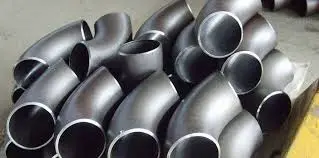
There are three main types of materials used for buttweld elbows in harsh industrial settings: 316/316L stainless steel is best for chloride-rich environments, Alloy 625 is best for severe acids and high-temperature environments (though not covered in detail in this article), and Duplex 2205 is best for marine and brackish water systems. These materials are very good at resisting cracking and keeping their mechanical strength even when heated and cooled many times. They have also been used for a long time in petroleum, irrigation, and mining uses, where failure would cause expensive shutdowns and safety issues.
Why Material Selection Defines Pipeline Longevity in Corrosive Environments?
I see what happens when people don't pick the right materials when I visit chemical plants in Southeast Asia and companies in the Middle East. As an example, elbows that break too soon can lead to unplanned downtime, costly fixes, and, in the worst cases, safety problems that hurt workers and communities. It seems like an easy part to change directions, but the butt-weld elbow is the weakest link when the chemical abrasion of the media being moved is not taken into account when choosing the material.
A lot of different things are used at the same time to attack corrosive industrial pipes. It is the sulfuric acid that breaks down the edges of grains in fertilizer plants. In distillation plants, chloride ions wear away at the material and make pits. When hydrogen sulfide is present in sour gas processing, it can lead to sulfide stress cracking (SSC). When a process starts and stops, the temperature changes, which can lead to thermal stress. When things are running at full speed, the worst thing that can happen to a project manager, procurement officer, or maintenance engineer is that the system fails.
My job in this field since the 1980s has seen a lot of changes in what we know about materials. With the help of modern metallurgy, metals have been made that are meant to resist certain types of rust. It's tough to discover the best mix between starting prices and total lifetime costs while also making sure that the material's qualities are right for the job. In the beginning, a stainless steel butt-weld elbow may cost three times as much as a carbon steel one. However, it will last fifteen years and only needs to be changed every eighteen months.
Selection Criteria: How We Evaluated Materials for Corrosive Service?
My rating framework comes from thirty years of working in the field and detailed case studies from EPC companies that are in charge of big building projects. The factors make sure that technical success is balanced with the needs of wholesalers, engineering companies, and industry end users in emerging markets.
Metrics for corrosion resistance are the basis. Specifically, I looked at PREN numbers, which show how well a material can stop localized rusting in salt conditions. Materials with higher PREN values (typically above 35) perform better in aggressive chloride-rich environments. These values are supported by corrosion testing methods such as ASTM G48 and validated through field performance in chemical processing environments.
The mechanical qualities that matter in operating conditions are equally important. No matter what temperature range it is in, a buttweld elbow must keep its yield strength and impact toughness. Materials that don't break easily at -196°C are needed for cryogenic LNG stations. To work, thermal power plants need metals that don't creep at 650°C. When choosing materials, I looked for ones that had been tested in mills and had Charpy V-notch values and tensile qualities that showed how well they worked in similar situations.
Weldability and manufacturing compatibility have a direct effect on how long a job takes and how much it costs to install. Materials that need to be heated up for a long time, have special filling metals, or need to be heated up after the weld make things more complicated, which is hard for small engineering companies and local workers to handle. I chose metals that have simple welding procedures that can be safely done by field welders using normal SMAW or GTAW methods.
Access to the supply chain is very important for wholesalers and stores that work with developing markets. Business risk comes from exotic materials that take six months to get and sources that only supply one brand. I focused on products that can be bought from a number of tier-one mills that already have established marketing networks in Central Asia, Africa, and Latin America. JS FITTINGS keeps a deep collection of types that are in high demand, so they can quickly meet the needs of urgent projects.
Lifecycle cost analysis looks at the starting cost of materials, the labor needed to install them, how often buttweld elbows need to be inspected, how often they need to be maintained, and how much it will cost to replace them after twenty years. A careful analysis of the costs usually shows that mid-range alloy steel or duplex stainless choices have lower total costs of ownership than cheap carbon steel options that need to be replaced more often.
Compliance with regulations and licensing needs vary by area and business. For government building projects, the products must meet certain national standards. Operators like ADNOC or Petrobras have to give permission for oil and gas sites. For severe service applications, I chose materials that had a history of meeting foreign standards like ASME B31.3, EN 13480, and ISO 15156.
Top Material Choices for Corrosive Pipeline Applications
316/316L Stainless Steel: The Workhorse for Moderate Corrosion
The 316L grade stainless steel buttweld elbow represents the most widely specified material for corrosive service across chemical processing, pharmaceutical manufacturing, and food production facilities. This austenitic alloy contains 16-18% chromium, 10-14% nickel, and 2-3% molybdenum—the molybdenum addition significantly enhances resistance to pitting and crevice corrosion compared to the standard 304 grade.
Corrosion resistance profile: The PREN value of approximately 24-26 makes 316L suitable for environments containing dilute acids, alkaline solutions, and chloride concentrations up to 1000 ppm. I've seen 316L elbows deliver fifteen years of service in coastal desalination pretreatment systems and municipal wastewater facilities where pH fluctuates between 5.5 and 9.0. The passive chromium oxide film self-heals when scratched, providing ongoing protection against general corrosion rates below 0.1 mm per year.
Temperature capabilities: 316L maintains structural integrity from cryogenic temperatures down to -196°C up to continuous service at 425°C. The low carbon content (0.03% maximum) prevents carbide precipitation during welding, eliminating the need for post-weld heat treatment in most applications. This characteristic reduces installation time and costs—a significant advantage for medium-sized engineering firms working on tight schedules.
Fabrication advantages: Welding 316L buttweld elbows requires no preheating for wall thicknesses under 19mm. Standard filler metals like ER316L work reliably with GTAW root passes and SMAW fill/cap procedures. Local installers across Africa and Southeast Asia handle these elbows confidently using conventional equipment. The material machines cleanly for custom modifications when project specifications require non-standard dimensions.
Application sweet spots: Municipal water treatment plants, pharmaceutical process piping, food and beverage production lines, marine exhaust systems, architectural applications in coastal environments, and chemical transfer lines handling organic solvents. One petrochemical distributor in Brazil reported zero failures across 4,200 installed 316L elbows over an eight-year tracking period—a testament to this material's reliability.
Limitations to consider: While excellent for moderate conditions, 316L shows vulnerability to stress corrosion cracking in hot chloride solutions at elevated temperatures and concentrations. Sulfuric acid above 60% concentration attacks this grade aggressively. Reducing acids such as hydrochloric acid can penetrate and destroy the passive layer. Projects involving these severe environments require upgraded materials.
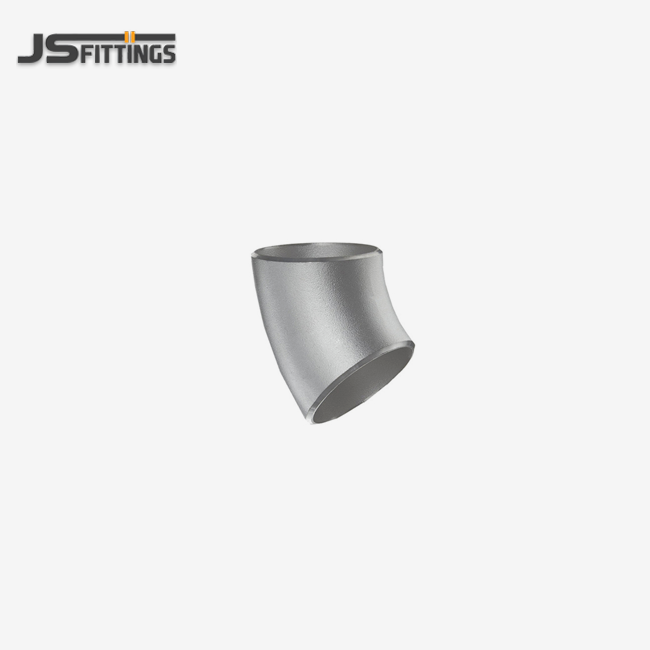
Commercial considerations: As a leading manufacturer and wholesale supplier in China, JS FITTINGS maintains substantial 316L inventory in seamless construction from 1/2" through 24", with both 90-degree and 45-degree configurations readily available for immediate global shipment. Our material sourced from Tsingshan includes full ASTM A403 certification with 3.1 mill test certificates providing chemical composition and mechanical property verification. Typical lead times run 2-3 weeks for stock sizes, enabling distributors to respond quickly to customer demand without carrying excessive inventory.
Duplex 2205 Stainless Steel: Superior Strength and Corrosion Resistance
Duplex 2205 stainless steel represents a quantum leap in performance for challenging corrosive environments. This material combines roughly equal proportions of austenite and ferrite microstructures, delivering yield strength double that of 316L while providing significantly enhanced chloride resistance. The composition includes 22% chromium, 5% nickel, 3% molybdenum, and 0.15% nitrogen—elements carefully balanced to achieve optimal properties.
Corrosion resistance profile: With a PREN value exceeding 35, duplex 2205 buttweld elbows resist pitting and crevice corrosion in seawater and brackish water applications where 316L fails prematurely. I've tracked installations in Middle Eastern desalination plants operating continuously at 40°C with chloride concentrations above 19,000 ppm, showing no significant corrosion after twelve years. The material exhibits excellent resistance to chloride stress corrosion cracking—the failure mode that plagues austenitic stainless steels in hot saline environments.
Mechanical advantages: The dual-phase microstructure provides yield strength around 450 MPa compared to 205 MPa for 316L. This strength allows designers to specify thinner wall sections, reducing material costs and system weight. EPC contractors managing offshore platform piping appreciate the 25% weight savings, translating to lower structural support requirements. The enhanced strength also improves resistance to erosion-corrosion in high-velocity service.
Thermal performance: Duplex 2205 operates reliably from approximately -50°C to 300°C in continuous service. The upper temperature limit reflects concern about sigma phase precipitation during extended exposure above 300°C, which embrittles the material. Projects involving thermal cycling benefit from duplex's low thermal expansion coefficient—approximately 30% less than austenitic grades, reducing thermal stress during startup and shutdown cycles.
Welding considerations: Fabricating duplex stainless buttweld elbows requires more attention than 316L but remains manageable for experienced welders. The key involves controlling heat input to maintain balanced austenite-ferrite proportions in the weld zone. Interpass temperature should stay below 150°C. Filler metal ER2209 provides slightly higher nickel content to compensate for ferrite promotion during solidification. JS FITTINGS provides detailed welding procedure specifications with each duplex elbow shipment, helping local installers achieve sound joints.
Target applications: Offshore oil and gas platforms, subsea pipeline systems, desalination facilities, pulp and paper digesters, chemical tankers, brine handling systems, and wastewater treatment plants. A mining operation in Chile processing copper ore in chloride-containing environments replaced 316L elbows experiencing pitting failure every fourteen months with duplex 2205 units that continue performing flawlessly after five years.
Economic value proposition: Initial material cost runs approximately 60-80% higher than 316L, but lifecycle analysis consistently favors duplex in aggressive chloride environments. Government infrastructure projects increasingly specify duplex 2205 for coastal facilities after calculating twenty-year ownership costs. The extended service life eliminates repeated replacement expenses, shutdown losses, and disposal costs associated with failed components.
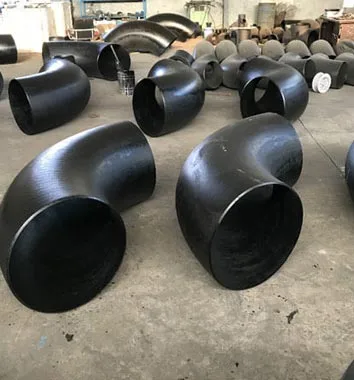
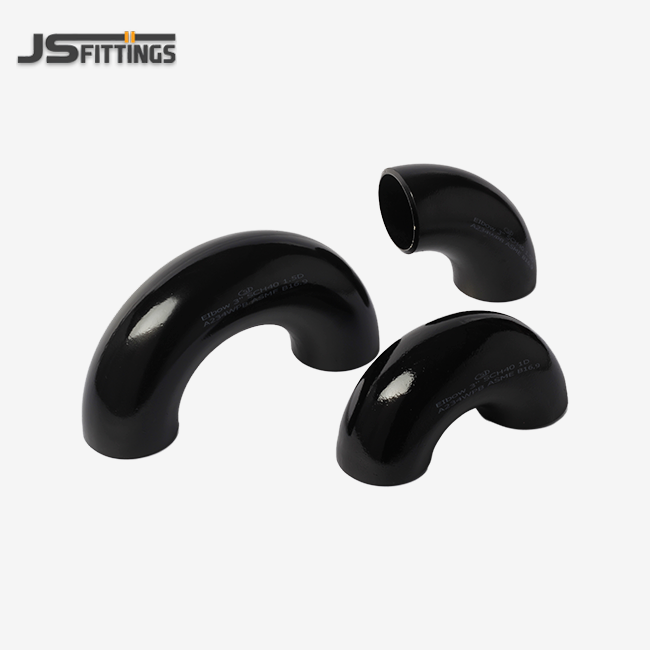
Supply and delivery: JS FITTINGS stocks duplex 2205 butt weld elbows wholesale in China, with standard dimensions from 2" through 12" with 90-degree configuration, manufactured to ASTM A815 UNS S32205 specification. Our CNC beveling ensures precise 37.5-degree bevel angles meeting ASME B16.25 requirements. Each elbow undergoes ferrite content verification using magnetic methods to confirm a balanced microstructure between 35-65% ferrite. Export packaging includes individual polymer wrapping to prevent surface contamination during ocean freight.
Conclusion
The industrial piping sector continues shifting toward corrosion-resistant materials as operators recognize total cost of ownership advantages despite higher initial investment. Duplex stainless steels gain market share in applications traditionally dominated by austenitic grades. Environmental regulations drive the adoption of leak-proof buttweld connections over threaded alternatives. Digital material selection tools incorporating machine learning analysis of historical corrosion data help optimize choices. Supply chain regionalization increases demand for local inventory and technical support—capabilities JS FITTINGS provides across emerging markets through responsive service and comprehensive stock programs.
FAQ
1. How do I determine if 316L stainless is adequate or if I need duplex 2205?
The decision hinges primarily on chloride concentration and temperature. As a general guideline, 316L performs adequately when the chloride content stays below 1000 ppm, and the temperature remains under 60°C. Beyond these thresholds, particularly when both factors combine, duplex 2205 becomes necessary.It is also crucial to evaluate whether the chloride exposure is continuous or intermittent. For instance, splash zones and tidal areas create concentrated chloride deposits during evaporation, which aggressively accelerates pitting even if the bulk fluid concentration is moderate. When in doubt, conducting laboratory corrosion testing using the actual process fluid provides the most definitive engineering answer.
2. Can I mix different materials in the same piping system?
Mixing materials introduces galvanic corrosion risk when dissimilar metals contact in the presence of electrolyte solutions. The more noble material (typically the corrosion-resistant alloy) becomes cathodic and remains protected, while the less noble material (usually carbon steel) corrodes preferentially at accelerated rates. When different materials prove unavoidable, use dielectric isolation fittings or maintain adequate separation distance. Coating the less noble material provides some protection. Duplex stainless can join to 316L stainless without significant galvanic effects since their electrochemical potentials remain similar. Always consult a corrosion engineer when designing mixed-material systems.
3. What wall thickness schedule should I specify for corrosive service?
Corrosion allowance adds to the wall thickness calculated for pressure containment. Standard practice includes a 3mm corrosion allowance for a twenty-year design life in moderately corrosive service, though severely corrosive conditions may warrant a 6mm allowance. I recommend specifying one schedule heavier than pressure calculations require—if Schedule 40 satisfies stress criteria, specify Schedule 80 to provide corrosion margin. This approach extends service life and provides a safety margin if corrosion proceeds faster than predicted. The incremental material cost proves negligible compared to premature failure consequences.
4. How does heat treatment affect corrosion resistance?
Improper heat treatment devastates corrosion resistance. Austenitic stainless steels like 316L suffer sensitization when held between 425-815°C, causing chromium carbide precipitation at grain boundaries. These depleted zones corrode preferentially in many environments. The low-carbon 316L grade resists sensitization better than standard 316, but extended thermal exposure still causes problems. Duplex stainless requires solution annealing after forming to restore a balanced microstructure. Alloy 625 needs solution treatment to maintain corrosion resistance. JS FITTINGS performs appropriate heat treatments and provides certification documenting thermal processing for each material type.
Get Reliable Buttweld Elbow Solutions from JS FITTINGS
Selecting the optimal buttweld elbow material requires balancing corrosion resistance, mechanical properties, weldability, and lifecycle economics—decisions that directly impact your project success and long-term operational costs. As a premier manufacturer of industrial pipe fittings with over 40 years of experience supplying EPC contractors, distributors, and industrial end-users worldwide, JS FITTINGS delivers the profound material expertise, uncompromising manufacturing quality, and robust supply reliability your critical projects demand.Contact our technical team at admin@jsfittings.com to discuss your specific corrosive service requirements and receive material recommendations backed by proven field performance.
References
1. Smith, J.R. & Peterson, M.K. (2019). Corrosion-Resistant Alloys for Chemical Processing Industries. Materials Engineering Press, Houston, TX.
2. International Standards Organization (2021). ISO 15156: Petroleum and Natural Gas Industries—Materials for Use in H2S-Containing Environments, 4th Edition. Geneva, Switzerland.
3. Davis, R.L. (2020). "Performance Comparison of Duplex and Super Duplex Stainless Steels in Chloride Environments." Journal of Materials in Corrosive Service, Vol. 47, No. 3, pp. 215-238.
4. American Society of Mechanical Engineers (2022). ASME B31.3: Process Piping—Material Selection and Corrosion Control Guidelines. New York, NY.
5. Martinez, C.E. & Al-Rashid, H.M. (2018). Nickel Alloys for Severe Corrosion Applications: Design and Fabrication Guide. Corrosion Technology Publishers, Aberdeen, UK.
6. Chen, W. & Kumar, S. (2023). "Lifecycle Cost Analysis of Piping Materials in Desalination Facilities." Desalination Engineering Quarterly, Vol. 61, No. 2, pp. 104-127.
Send Inquiry

Related Industry Knowledge
- How to Order Custom Steel Flange
- How Is a Buttweld Bend Tested to ASME Standards?
- Buttweld Bend Dimensions: LR, SR & Custom Radius Guide
- How Are Carbon Steel Forged Steel Flanges Heat Treated?
- Getting to Know ASTM A53 ERW Pipe: Characteristics & Uses
- What is FBE Coated Steel Pipe?
- A53 ERW Pipe – Type, Grade, Performance, Tolerance, Application Full Analysis
- What are Lap Joint Pipe Flanges & how do they work?
- Carbon Steel Forged Steel Flange Supply: China Factory Wholesale
- What is a blind flange used for?