
What are Lap Joint Pipe Flanges & how do they work?






2026-06-08 15:10:44
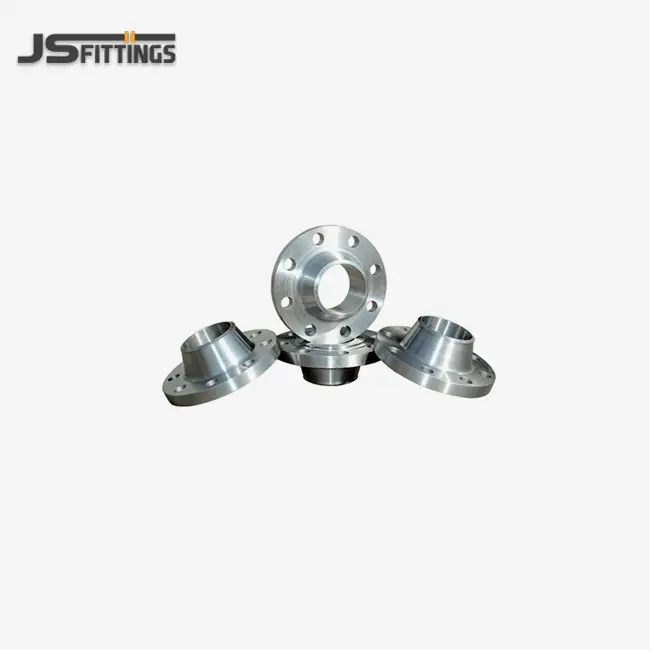
A lap joint pipe flange is a one-of-a-kind, two-piece assembly made up of a loose backing flange and a matched stub end. It can be bought individually or as a set. The backing flange doesn't connect to the pipe as regular flanges do. Instead, it goes over the stub end, which is butt-welded to the pipe system. This design lets the backing flange move easily around the pipe, which makes it the best choice for systems that need to be taken apart often, bolt holes need to be lined up in tight areas, and cost-effective material strategies need to be used in corrosive environments.
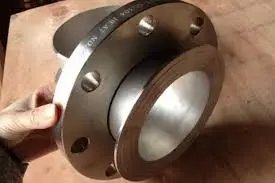
Understanding Lap Joint Pipe Flanges
What Makes Lap Joint Flanges Different from Other Flange Types?
We've been making piping parts at JS Fittings since 1983, and one thing we've learned is that procurement managers often have to figure out how to balance cost, safety, and the ease of upkeep in complicated pipe plans. The lap joint pipe flange solves this problem with its two-part design.
The part that is welded to the pipe and comes into contact with the process fluid is the stub end. On the other hand, the backing plate stays loose and can turn easily. This split keeps the backing flange from coming into contact with corrosive media, so you can use cheap carbon steel flanges even if the stub end needs to be made of stainless steel or an exotic metal like Hastelloy. In corrosive places like desalination plants or industrial acid lines, this mixed material approach can significantly reduce flange procurement costs compared with using full-alloy flanges throughout the assembly.
How Does the Two-Part Assembly Work in Practice?
When it is put together, the curved shoulder on the stub end fits against the backing plate. The gasket doesn't seal against the lap joint flange itself, but against the face of the stub end. This means that the flange ring only clamps the bolt, moving the load, and is not exposed to chemical attack or temperature cycling stress.
There is a certain radius in the internal hole of the backing flange where it meets the flange face. In order for the stub end to fit properly and pass load, this radius must match the fillet radius of the stub end. Without this exact fit, the system could have uneven stress distribution, which could cause the seal to fail early or the flange to warp.
Material Choices and Corrosion Resistance
Our backing flanges made of carbon steel meet the requirements of ASTM A105 for forged carbon steel. They are very strong and don't cost a lot of money. When these carbon steel flanges are paired with stub ends made of 316L stainless steel, duplex stainless steel, or nickel alloys, they provide rust resistance right where it's needed in systems that deal with acidic fluids.
Standard black paint can be used for indoor installations, rust-preventative oil can be used for short-term storage outside, or hot-dip galvanized coats can be used for long-term protection from the weather. For a lap joint pipe flange, these protective treatments make things last longer in wet or salty places, which lowers the cost of upkeep and the total cost of ownership.
Key Advantages and Applications of Lap Joint Pipe Flanges
Operational Benefits That Reduce Downtime and Labor Costs
The backing flange's ability to rotate gives real-world benefits that EPC workers and plant operators who are working to tight deadlines will appreciate.
- Fast Bolt Hole Alignment: When installing pipes in tight or complicated spaces, workers can turn the backing flange to line up the bolt holes with the matching flange without moving the whole pipe assembly. Compared to set weld neck flanges, this means that changes don't have to be made in the field, which saves up to 40% of the time needed for work. When it comes to government building projects with tight deadlines, this speed edge means finishing on time and not getting fined.
- Simplified Maintenance and Inspection: Systems that need to be cleaned on the inside on a regular basis, like water treatment plants, food processing lines, or pulp and paper mills, can be taken apart quickly. Technicians can get to the inside of the pipe without having to cut or reweld by unscrewing the connection and rotating the flange out of the way. This method of upkeep doesn't damage the pipes, so it keeps them in good shape and lowers the cost of replacement parts.
- Minimized Stress Concentration: The two-piece design can help accommodate assembly tolerances and simplify maintenance in systems subject to thermal expansion because it is made of two pieces. This makes connections last longer and lowers the risk of stress cracking at weld zones in systems with changing temperatures, like steam lines or heat exchanges.
- Economic Advantage in System Upgrades: It's cheaper to upgrade systems because only the stub end needs to match the pipe's internal material standards, not the backing flange, which never comes into touch with the fluid. You can use the old carbon steel backing flanges and add stainless steel stub ends to make an old carbon steel pipeline work with slightly corrosive media. This ability to be used again and again saves money in the long run for distributors who manage inventory and plant workers who do phased changes.
Industry Applications Where These Flanges Excel
When the choice of component is based on how often upkeep needs to be done, how much the materials cost, or how hard the fitting is, lap joint pipe flanges work well.
When used together, foreign metal stub ends and carbon steel backing flanges keep chemicals compatible while keeping capital costs low in chemical processing plants that use acids or alkalis. Water treatment plants make it possible to take apart the membranes or calibrate the sensors. In certain utility and non-product-contact piping systems, the smooth bore profile of the stub end can help reduce flow disturbances and simplify cleaning, and make clean-in-place (CIP) processes easier.
The galvanized finish on the backing flanges protects against rust, and the super duplex stainless steel stub ends make them strong enough to handle chloride-rich areas. The advantage of bolt-hole alignment speeds up installation in tight mechanical rooms or underground basements, even in less harsh environments like HVAC systems or city water distribution.
Comparison with Other Flange Types
Procurement teams can make better decisions when they know how lap joint flanges are different from slip-on, weld neck, and threaded options.
For slip-on flanges to work, they need to be double-fillet welded straight to the pipe. This makes a strong but not very permanent link. Weld neck flanges have the best pressure grade and fatigue protection because their hubs are tapered. However, they cost more to make and weld because of this. Threaded flanges let you put things together without soldering, but they can't handle a lot of pressure, and the threads can get stuck in hot environments.
In moderate-pressure situations, lap joint flanges are more stable than threaded links and easier to install than weld neck flanges. They are also more flexible than slip-on flanges. Their pressure capability is generally comparable to that of slip-on flange assemblies of similar rating and construction, making them ideal for Class 150 to Class 300 services, particularly in utility and low-pressure fluid transport systems.However, their unique benefits in terms of upkeep and alignment make them the best choice in some situations.
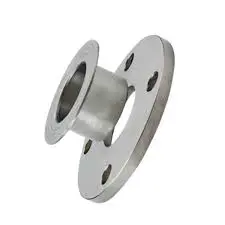
Detailed Specifications and Installation Guide
International Standards and Pressure Ratings
ASME/ANSI B16.5 backing flanges come in sizes from 1/2" to 24", and ASME B16.47 Series A or B backing flanges come in sizes from 26" to 60". These guidelines make sure that dimensions can be used interchangeably across global supply chains, which is very important for EPC workers who buy parts from many different suppliers.
Pressure rates include 150, 300, 600, 900, 1500, and 2500. The system rating is based on the plan and material grade of the stub end. In certain water-service applications, ductile iron flange assemblies may be used where permitted by the applicable piping standard to save money and keep the pipe from rusting in underground service.
Dimensional Details and Tolerances
It differs from raised-face (RF) and ring-type-joint (RTJ) flanges because it uses a lap-joint facing designed to mate with the stub end. The flat face fits the wide shoulder of the stub end, providing proper support for gasket compression.
The inside diameter of the bore must match the outside diameter of the pipe plus some extra space to allow for slip-fit assembly, as described in ASME B16.5. The fillet radius where the internal bore meets the flange face varies depending on the nominal flange size and applicable dimensional standards. It is critical that this radius perfectly matches the outer fillet radius of the stub end to prevent severe stress concentrations and ensure even seating.
Installation Best Practices
The first step in a proper fitting is to check both the backing flange and the stub end for surface flaws, accurate measurements, and material certificates. Check that the stub end dimensions are compatible with the pipe wall thickness and applicable design requirements to make sure that the ends are flush and that the weld goes all the way through during butt welding.
Before you weld the stub end in place, slide the backing flange over the pipe. Position the stub end correctly for alignment prior to welding. Next, do a full-penetration butt weld according to ASME B31.3 or the relevant plumbing code. Let the weld cool on its own so that no extra force builds up.
For high-temperature work, use spiral-wound gaskets, and for low-pressure water lines, use full-face gaskets. Place the gasket against the stub end face. Rotate the lap joint pipe flange so that the bolt holes line up with the holes in the matched flange. Then, enter the bolts and grease the threads and nut faces.
Tighten the bolts in a star design to spread the load out evenly. For more information on torque numbers that depend on flange class, bolt size, and gasket type, see ASME PCC-1. Don't over-tighten or under-tighten. If you do either, the seals or the backing lip could get damaged or the pressure could leak.
Maintenance and Corrosion Prevention
At regular times, the bolt tightness, gasket state, and surface rust on the backing flange should be checked. Check the thickness of the zinc coating on galvanized flanges and reapply cold galvanizing solution if it wears off more than half of the original coating.
When stub ends are exposed to highly erosive or corrosive media, they may require periodic replacement, even while the carbon or ductile iron backing flange remains completely structurally sound and functional.This repair at the component level keeps lifetime costs low and the integrity of the system intact. To keep extra backing flanges from rusting, keep them in dry places and add a thin layer of rust-preventative oil before storing them for a long time.
Conclusion
Lap joint pipe flanges are a useful option for plumbing systems that need to keep costs low, require little upkeep, and allow for flexible installation. Their two-part design splits the backing flange from the process-wetted stub end. This saves money on materials in corrosive environments and makes it easier to line up bolt holes in complicated plans. Their pressure capacity is better for Class 150 to Class 300 services than for very high-pressure systems. However, their practical benefits—free rotation, reused parts, and non-destructive disassembly—make them essential for water treatment, chemical processing, and marine uses. Working with certified makers makes sure that foreign standards are met, that materials can be tracked, and that deliveries are made on time, all of which are important for the success of the project.
FAQ
1. What is the main difference between a lap joint and a weld neck flange?
Lap joint flanges have a loose backing flange that can turn easily around a butt-welded stub end. Weld neck flanges, on the other hand, have a curved hub that is welded directly to the pipe. Weld neck designs can handle more pressure and last longer, but lap joint systems are easier to maintain and cost less in corrosive conditions.
2. Can lap joint flanges handle high-pressure applications?
These flanges can handle modest pressures. These flanges are available in a wide range of ASME pressure classes, although they are most commonly used in low- to moderate-pressure services with the right engineering study. Their pressure capacity is the same as slip-on flanges—their fatigue resistance is generally lower than that of weld neck flanges in cyclic service. This means they can't be used in cyclic high-pressure systems but are fine for steady-state low- to moderate-pressure uses.
3. How do I verify supplier quality and certifications?
Check for ISO 9001 certificates, material test records (MTRs) with heat numbers, and approvals from a third party, like CE or GOST-R. Energy sector providers like JS Fittings are qualified and have certifications from Petrobras, NIOC, and ADNOC, which show they follow strict rules for the oil and gas business.
4. Why choose a lap joint flange over a slip-on flange?
When bolt-hole alignment poses challenges or when the system requires frequent disassembly for cleaning, the rotational freedom of lap joint pipe flanges reduces installation time and maintenance downtime. When used with carbon steel backing flanges and stainless stub ends in acidic systems, the lower cost of the materials makes the choice even clearer.
Partner with JS Fittings for Quality Lap Joint Pipe Flange Solutions
With more than 40 years of experience making things and strict quality control, JS Fittings can provide backing flanges that meet the needs of EPC contractors, wholesalers, and industry end users. Our factory in Hebei, China, is ISO 9001-certified and makes flanges that meet ASME, DIN, JIS, and GOST standards. It serves more than 30 countries and delivers on time more than 95% of the time.
Our engineering team is here to help you with everything from reviewing your specifications to installing your Class 150 carbon steel backing flanges for local water projects or custom-sized kits for petrochemical uses. We ship more than 90 containers every month, which keeps dealers' supplies stable and makes sure that project goals are met on time. As a premier manufacturer of industrial flanges holding stringent approvals from Petrobras, NIOC, and ADNOC, we deeply understand the critical importance of full material traceability, absolute dimensional accuracy, and highly responsive customer service.
Email our team at admin@jsfittings.com to talk about your unique needs, get quotes, or set up shipping of samples. Let us help you keep project risks to a minimum, keep costs down, and make sure your pipe system keeps working well.
References
1. American Society of Mechanical Engineers. (2020). ASME B16.5: Pipe Flanges and Flanged Fittings NPS 1/2 Through NPS 24 Metric/Inch Standard. New York: ASME Press.
2. American Society of Mechanical Engineers. (2018). ASME B16.47: Large Diameter Steel Flanges NPS 26 Through NPS 60 Metric/Inch Standard. New York: ASME Press.
3. Harvey, J.F. (1991). Theory and Design of Pressure Vessels (2nd ed.). New York: Van Nostrand Reinhold.
4. Bickford, J.H. (2008). Gaskets and Gasketed Joints (2nd ed.). New York: CRC Press.
5. American Society of Mechanical Engineers. (2019). ASME B31.3: Process Piping. New York: ASME Press.
6. Parisher, R.A., & Rhea, R.A. (2012). Pipe Drafting and Design (3rd ed.). Waltham: Gulf Professional Publishing.
Send Inquiry
Related Industry Knowledge
- ASTM A312 vs A358: Choosing the Right Stainless Steel Pipe Standard
- Differences Between AWWA Flanges and ANSI Pipe Flanges
- Slip-On Flanges: Types, Uses, and Installation Guide
- What Are the Types of Buttweld Elbows in ASME B16.9 Systems?
- Buttweld Bend vs Elbow: Key Differences Explained
- What is a blind flange used for?
- Do flanges with threaded holes take stud bolts?
- What is the difference between a 45 degree and 90 degree elbow?
- How to weld carbon steel pipe?
- What causes porosity in carbon steel pipe welding?