
What Are the Types of Buttweld Elbows in ASME B16.9 Systems?






2026-06-03 10:32:43
When choosing pipe fittings for tough industrial uses, it's important to know how buttweld elbows are classified and what their features are. ASME B16.9 standards divide these fits into groups based on angle (mostly 90-degree, 45-degree, and 180-degree return bends), radius shape (long radius or short radius), material grade, and how they were made. Each version takes into account different flow direction needs, pressure rates, and space limitations in piping systems. Picking the right type lowers the pressure drop, stops turbulence, and protects the structure in the oil and gas, chemical processing, and power production industries.
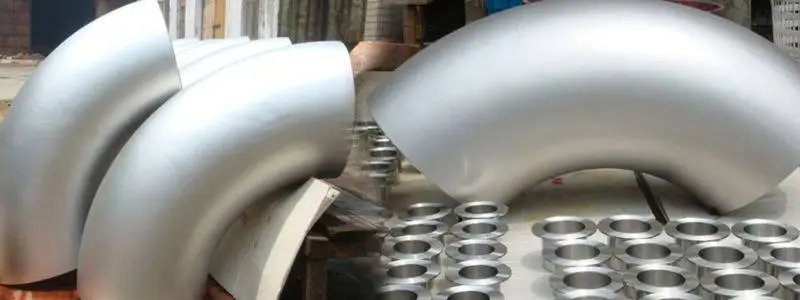
Overview of Buttweld Elbows in ASME B16.9 Systems
Buttweld elbows are very important parts of pressure pipe networks that change the direction of flow. Instead of threaded or socket-weld options, these fittings have precision-beveled ends that are made to weld straight to pipes that they fit with. This makes a single piece of metal that doesn't have any leak tracks or stress concentration zones.
Why ASME B16.9 Compliance Matters?
The ASME B16.9 standard establishes dimensions, tolerances, manufacturing requirements, and marking rules for factory-made wrought steel buttwelding fittings. The pressure-temperature capability of a fitting is determined by its material specification, wall thickness, and the applicable piping code rather than by ASME B16.9 itself. Compliance makes sure that parts can be switched out in global supply chains and checks that every fitting meets strict standards for chemical and mechanical properties. Standardization is used by procurement managers to keep project risks to a minimum, avoid costly rework, and meet legal requirements in places where safety rules use ASME standards. Certified parts also make it easier to fill out paperwork for government building bids and quality assurance programs for EPC contractors.
Core Performance Advantages
Butt-weld elbows get rid of the crevice rust that comes with socket-weld designs and make joins that can be scanned with x-rays for checking after the welding process. The smooth inner surface stops corrosion from fluids that contain particles and lowers energy loss in systems moving quickly. When the temperature is changed, the even spread of stress stops early fatigue failure. This directly addresses the dependability concerns of industrial end users who want to avoid unplanned downtime.
The Main Types of Buttweld Elbows According to ASME B16.9
ASME B16.9 divides these parts into different angular and radius configurations, with each one being best for a certain set of operating conditions.
90-Degree Elbows: The Workhorse of Sharp Direction Changes
The 90-degree elbow is still the most common joint used to change the direction of flow perpendicularly. There are two types: long radius (LR) and short radius (SR). The LR type has a centerline radius that is 1.5 times the standard pipe size and has less pressure drop and noise. As long as there is room, this means that LR elbows are normal for most medium- to large-bore jobs. With a radius of 1.0 times NPS, SR elbows work well in setups where fitting dimensions are limited by physical constraints. However, designers must take into account that friction losses and wear are higher at the inner radius.
JS FITTINGS makes 90-degree elbows that are seamless from ½" to 24" NPS and welded (ERW/EFW) up to 72" NPS. Wall thicknesses range from Schedule 10S to XXS, allowing the fittings to be used in piping systems covering a wide range of pressure and temperature conditions, subject to the applicable piping code and material specification. Each fitting goes through CNC beveling to make sure it has precise weld preparation angles that speed up installation on-site and reduce welding defects.
45-Degree Elbows: Minimizing Turbulence in Gradual Turns
45-degree elbows make the direction change more gentle and reduce flow resistance compared to paired 90-degree fittings. Engineers use these fittings in pump suction lines, HVAC ductwork, and other places where minimizing velocity-head loss is important. The lower angle also protects the elbow's internal surface from abrasive slurries, which makes it last longer in mining and mineral processing systems.
For general service, we can make 45-degree elbows out of ASTM A234 WPB carbon steel, and for corrosive environments, we can use ASTM A403 WP316L stainless steel. Material traceability through 3.1 mill test certificates from tier-1 mills like Baosteel makes sure that project specifications are met, and it makes third-party inspection paperwork easier.
180-Degree Return Bends: Compact Reversal Solutions
Return bends completely reverse the flow within a small space. They are commonly used in heat exchangers, coil piping, and reboiler circuits. The 180-degree shape gets rid of the need for two 90-degree elbows (such as buttweld elbows) and some straight piping in the middle, which cuts down on installation time and possible leak points. JS FITTINGS offers return bends in both LR and SR profiles, with sizes that match ASME B16.9 tables for easy integration into existing systems.
Custom-Degree Elbows: Tailored for Unique Layouts
We offer custom-degree elbows, such as 60-degree and 120-degree versions, when asked. These unique fittings help with layout problems in retrofit projects, skid-mounted modules, and OEM equipment where standard angles can't meet space or alignment needs. Our engineering team works with clients to confirm custom specifications and, when necessary, use finite element analysis to keep the structure's integrity.
Material Grades and Manufacturing Types of Buttweld Elbows
Material selection directly impacts rust protection, temperature capability, and total cost of ownership for buttweld elbows.
Carbon Steel: Strength and Economy
ASTM A234 WPB is still the standard material for moderate-temperature hydrocarbon service and general industrial applications. Its balanced mechanical properties and weldability make it the first choice for EPC contractors working on low-budget projects. JS FITTINGS only buys WPB billets from certified mills, and the chemical composition is checked using spectrographic analysis to make sure that no out-of-spec material gets into production.
Stainless Steel: Corrosion Resistance and Hygiene
ASTM A403 WP304/304L and WP316/316L are grades of stainless steel that can be used in corrosive media, high-purity processes, and sanitary settings. The molybdenum added to 316L makes it more resistant to chloride, which makes it a good choice for offshore platforms, desalination plants, and coastal installations. Our passivation and pickling surface treatments restore the chromium oxide layer after forming operations, making sure that the steel has maximum corrosion protection from day one.
Alloy Steel: Elevated Temperature Performance
For high-temperature uses in refinery catalytic crackers, power plant superheater lines, and petrochemical furnace outlets, alloy steel grades such as ASTM A234 WP11 (1.25Cr-0.5Mo) and ASTM A234 WP22 (2.25Cr-1Mo) are commonly used for elevated-temperature refinery and power-generation service. These materials retain creep strength at elevated temperatures and provide improved resistance to high-temperature hydrogen attack compared with carbon steel. Normalizing and tempering, which are types of post-forming heat treatment, fix the microstructure and toughness that were changed during hot-mandrel bending.
Seamless vs. Welded Construction
Welded elbows, which are made from plate and longitudinally welded, are cheaper for big sizes above 24" NPS. Seamless elbows, which are made from solid pipe without longitudinal welds, have a more uniform grain structure and are better for sour gas service and heavy cyclic loads. JS FITTINGS uses both hot-mandrel and cold-forming methods to make sure that the wall thickness is the same all the way around the elbow's vital back part, which is where pressure stresses are highest.
How to Choose the Right Buttweld Elbow for Your Project?
Specification is the process of matching technical needs with practical business issues to find the correct butt-weld elbow for your project.
Assessing Operating Conditions
First, write down the highest working pressure, the minimum and maximum design temperatures, and the type of fluid being moved. Upgrades to stainless steel or alloys are needed for corrosive media, and For service temperatures falling below -29°C, ASTM A420 WPL6 low-temperature carbon steel is commonly specified to prevent catastrophic brittle fracture. Furthermore, the velocity of the process fluid heavily dictates the choice of bend radius; for instance, LR (Long Radius) elbows are essential in high-velocity systems to minimize pressure loss, turbulence, and internal erosion.
Matching Pipe Specifications
To keep the internal width consistent and avoid steps that cause turbulence, the elbow plan must line up with the pipe next to it. Schedules that don't match up lead to erosion hotspots and make it harder to read x-rays during quality checks. To make delivery go more smoothly, distributors and stockists should make sure that the stated pipe size and wall thickness match what they already have in stock.
Comparing Connection Methods
While socket-weld fittings simplify small-bore installations (under 2" NPS) by eliminating the need for complex full-penetration welding, buttweld elbows offer vastly superior high-pressure integrity and are fully compatible with 100% radiographic (RT) inspection. Additionally, relying on flanged connections rather than buttwelds introduces unnecessary weight, bulk, and multiple potential leak paths into the piping system.
Supplier Qualification and Lead Times
Partnering with manufacturers that have ISO 9001 certification and customer-specific approvals from companies like NIOC, ADNOC, or Petrobras lowers the risk of procurement. JS FITTINGS keeps common sizes and schedules in stock, so shipments can be made within days instead of weeks. Each month, we ship more than 800 tons of fittings and more than 90 containers, and we've had an on-time delivery rate of over 95% over the past three years.
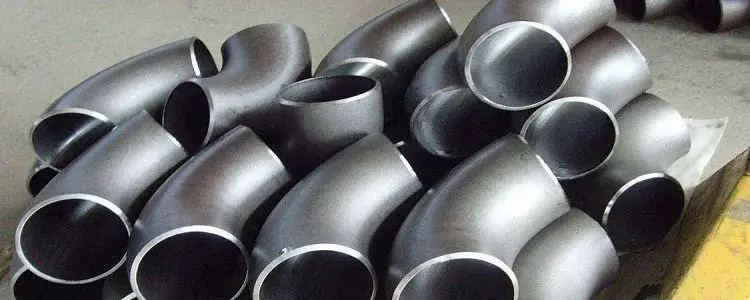
Installation, Inspection, and Maintenance of Buttweld Elbows
Investing in good hardware is safe as long as it is used correctly throughout its entire life, including proper installation and maintenance of buttweld elbows.
Welding Best Practices
Before tack-welding, beveled ends need to be cleaned of mill scale, oil, and moisture. Root pass welding is often performed using GTAW (TIG) in critical services, although other qualified welding processes may also be used depending on project requirements. Keeping the interpass temperature within certain ranges stops hydrogen cracking in alloy steels and guarantees fusion quality. Our precise CNC beveling to ASME B16.25 standards speeds up fit-up and cuts down on grinding time on-site, which directly lowers contractor labor costs.
Non-Destructive Testing Protocols
Post-weld radiography or ultrasonic testing finds flaws below the surface, such as a lack of fusion or porosity. JS FITTINGS does its own ultrasonic testing (UT) and magnetic particle inspection (MPI) before shipping, finding problems with the manufacturing process early. Sending documented NDT results with every shipment makes it easier for a third party to sign off on the work and speeds up the project's commissioning schedules.
Preventive Maintenance Strategies
Visual inspections must be conducted regularly on the elbow's extrados (outer curve) to detect erosion in high-velocity services, and on the intrados (inner curve) to identify under-deposit corrosion. Utilizing advanced ultrasonic thickness gauging allows maintenance teams to accurately track the remaining wall thickness, facilitating timely replacement long before a catastrophic through-wall failure occurs. Using a risk-based inspection program can increase the elbow's service life while preventing unplanned downtime that messes up production schedules and raises the total cost of ownership.
Conclusion
ASME B16.9 buttweld elbows are a tried-and-true way to change the direction of important piping systems. They offer better joint integrity, radiography compatibility, and dimensional consistency. Knowing the differences between 90-degree, 45-degree, and 180-degree configurations, as well as the effects of long versus short radius designs, helps engineers and procurement professionals make the best layouts for pressure drop, erosion resistance, and installation efficiency. A variety of materials, including carbon, stainless, and alloy steels, can be used to meet the needs of different operating environments, and manufacturing quality that is backed by ISO certification and customer approvals lowers project risk. Proper installation, thorough inspection, and preventative maintenance will give you the best return on your investment and ensure its reliability for decades.
FAQ
1. What distinguishes long-radius from short-radius elbows technically?
Long radius (LR) elbows have a centerline radius that is 1.5 times the nominal pipe size. They have a smoother flow curve and lower pressure drop. Short radius (SR) elbows, on the other hand, have a radius of 1.0xNPS and work better in installations with limited space, but they cause more turbulence and friction losses. ASME B16.9 includes dimension tables for both profiles to ensure predictable hydraulic performance.
2. Can Schedule 40 elbows be welded to Schedule 80 pipe safely?
Mismatched schedules make an internal diameter step that causes turbulence, erosion, and stress concentration. Mismatched elbow and pipe schedules are code-compliant in some situations, but best practice says they should be matched to keep the bore smooth and make radiographic inspection easier.
3. How does material certification impact project compliance?
3.1 Mill test certificates show the chemical makeup and mechanical properties of steel that can be traced back to its original heat. Regulatory bodies and outside inspectors need these certificates to make sure that steel meets ASTM standards, especially for pressure vessel code applications and government infrastructure projects.
4. Why do metal joints need to be heated after they are formed?
Hot-forming changes the structure of the grains and adds residual stresses that lower the material's toughness and resistance to corrosion. Depending on the material grade, heat treatments such as normalizing, tempering, or solution annealing may be applied to restore mechanical properties and relieve residual stresses introduced during forming.
Partner with JS FITTINGS for Reliable Buttweld Elbow Supply
With over 40 years of experience making products and strict quality control, JS FITTINGS delivers ASME B16.9-certified buttweld elbows that meet the exacting standards of EPC contractors, distributors, and industrial end users. Our production capacity—more than 800 tons per month with an on-time delivery record above 95%—ensures that your project schedules stay on track. Every elbow ships with full material traceability, CNC-precision beveling, and documented NDT results, which makes inspections easier and speeds up commissioning.
You can get carbon steel WPB fittings for general use, stainless 316L for corrosive offshore environments, or custom-degree elbows for retrofit problems from our engineering team. We offer custom solutions backed by ISO, CE, and customer-specific certifications from NIOC, ADNOC, and Petrobras. Email our experienced export team at admin@jsfittings.com to talk about your needs, get samples, or get bulk pricing. Choose a premier pipe fittings manufacturer that is absolutely dedicated to your project's operational success.
References
1. American Society of Mechanical Engineers. (2018). ASME B16.9: Factory-Made Wrought Buttwelding Fittings. New York: ASME Press.
2. Nayyar, M. L. (2020). Piping Handbook (8th ed.). New York: McGraw-Hill Education.
3. Becht IV, C., & Sims, J. R. (2019). "Fatigue Analysis of Piping Elbows Under Cyclic Loading." Journal of Pressure Vessel Technology, 141(3), 031401.
4. Escoe, A. K. (2021). Piping and Pipeline Assessment Guide (2nd ed.). Oxford: Gulf Professional Publishing.
5. Singh, R., & Solanki, V. S. (2017). "Effect of Elbow Radius on Erosion in Slurry Piping Systems." Wear, 376-377, 1619-1627.
6. American Petroleum Institute. (2019). API 570: Piping Inspection Code: In-Service Inspection, Rating, Repair, and Alteration of Piping Systems (4th ed.). Washington, DC: API Publishing Services.
Send Inquiry
_1775030564781.webp "Blind Flange")
Related Industry Knowledge
- Role of API 5L Seamless Steel Line Pipe in Marine Industries
- Getting to Know ASTM A53 ERW Pipe: Characteristics & Uses
- A312 stainless steel pipe – Stainless Steel Pipe Dimensions, Chemical Composition
- Carbon Steel vs Stainless Steel Buttweld Bend: Which to Use?
- Buttweld Elbow vs Socket Weld Elbow: Key Differences Explained
- Industrial Buttweld Reducer Selection for Refinery Projects
- What is carbon steel pipe used for?
- What is the difference between seamless and welded pipe?
- What is a plate flange?
- What is a blind flange?