
Which Standard Governs Carbon Steel Forged Steel Flange Size?






2026-07-22 11:02:48
When specifying carbon steel forged steel flange components for industrial piping systems, the governing standards depend primarily on your project's geographic location and industry sector. In North America, ASME/ANSI B16.5 controls flange dimensions from ½" to 24", while ASME B16.47 Series A and B govern larger diameters up to 60". European projects typically reference DIN/EN 1092-1, and oil and gas applications may require API 6A specifications. These standards define critical parameters—bolt circle diameter, flange thickness, pressure class ratings, and facing types—ensuring that forged flanges from different manufacturers remain interchangeable and maintain structural integrity under demanding operational conditions.
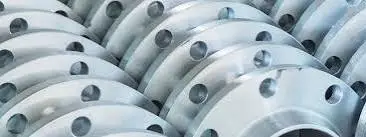
Understanding Carbon Steel-Forged Steel Flange Standards
In refineries, chemical plants, power plants, and offshore platforms, carbon steel and forged steel flanges are the most important connection points in piping systems. Unlike cast alternatives, forged flanges go through a high-pressure mechanical forming process that smooths out the internal grain structure of ASTM A105 or A350 LF2 material. This method gets rid of any internal voids and makes the material stronger so it can withstand pressure surges of over 2,500 psi and thermal cycles from cryogenic temperatures to 800°F.
We at JS Fittings make forged flanges that are compatible with global supply chains by following internationally recognized dimensional standards. These standards include exact measurements for bolt hole dimensions, hub profiles, and gasket seating surfaces. When procurement managers ask for an "ASME B16.5 Class 300 Weld Neck Flange in A105 material," they are referring to a full set of dimensional tolerances and pressure-temperature ratings that ensure safe, leak-free performance.
Primary Standards Governing Flange Dimensions
In the Americas and many Middle Eastern markets, ASME/ANSI B16.5 is still the most popular specification. It covers pipe sizes from NPS ½ to NPS 24 and lists seven pressure classes: 150, 300, 400, 600, 900, 1500, and 2500. Each class corresponds to the highest working pressures that can be safely maintained at a certain temperature. For example, a Class 300 flange made of A105 material can safely hold approximately 740 psi of internal pressure while staying at 100°F.
ASME B16.47 adds dimensional control to large-diameter applications. Series A (formerly MSS SP-44) and Series B (based on dimensions previously associated with API 605) offer two different dimensional frameworks for flanges ranging from 26" to 60". When working on pipeline projects, procurement teams need to check which series their existing infrastructure uses because Series A and B flanges can't be switched out even though they have the same nominal size.
In European projects, the harmonized EN 1092-1 standard is commonly used, while DIN 2527 is mainly referenced in older systems. This standard uses metric measurements and pressure number (PN) ratings instead of ASME class names. For example, a PN40 flange is roughly equivalent to an ASME Class 300 flange, but a direct equivalency would need a careful engineering review. The EN standard also uses numerical codes instead of descriptive names to describe the different types of flanges, such as Type 11 (similar to slip-on), Type 01 (plate flange), and 05 (blind flange).
Material Specifications and Their Size Implications
Forgings made of carbon steel for piping parts must follow the ASTM A105 specification. This material has controlled amounts of carbon (0.35% maximum), manganese (typically controlled within the range specified by ASTM A105/A105M), and trace elements that give it a minimum tensile strength of 70,000 psi and a yield strength of 36,000 psi. These mechanical properties let manufacturers keep thinner flange profiles while meeting pressure containment requirements, which lowers the weight of the system and the cost of the materials.
When the temperature drops below -20°F, ASTM A350 LF2 is the best material grade to use. This normalized carbon steel retains exceptional impact toughness at low temperatures, achieved through carefully controlled chemistry and heat treatment. Because LF2 material expands and contracts slightly differently than standard A105, the dimensions of the flanges must take these differences into account to keep the gasket from losing its shape during thermal cycling.
Choosing the right material has a direct effect on the size of the carbon steel-forged steel flange because different grades have different strength-to-weight ratios. For example, a Class 600 flange made of A105 material needs to be a certain thickness to hold approximately 1440 psi at 100°F. Using a higher-strength alloy steel could theoretically make that thickness thinner, but standardization means that manufacturers have to keep the same sizes even if the strength of the material changes.
Key Dimensions That Define Carbon Steel Forged Flange Sizes
By knowing the measurements that determine which carbon steel or forged steel flanges to use, procurement teams can accurately specify parts and avoid making expensive changes in the field. Each measurement has a specific engineering purpose related to load distribution, sealing effectiveness, or ease of installation.
Critical Dimensional Parameters
Outside diameter (OD) determines the flange's overall size and the amount of space needed for installation. ASME B16.5 lists specific OD measurements for each nominal pipe size and pressure class. For example, a 6" Class 150 flange has an OD of 11", but the same nominal size in Class 300 grows to an OD of 12.5" to accommodate higher bolt loads and thicker material.
Bolt circle diameter (BCD) tells you exactly how far apart the bolt holes are from the center of the flange. This dimension has a direct effect on the uniformity of gasket compression. The gasket may fail under pressure if the bolt holes are too close to the bore. If you put them too far outward, the flange rim will become heavier without closing better. Through decades of field performance data and finite element analysis, ASME standards find the best places for BCDs to be placed.
The flange thickness gives the structure the stiffness it needs to keep the gasket compressed under pressure from the inside and bolt loading from the outside. The thickness changes depending on both the pressure class and the type of joint. Weld neck flanges have a thick hub and a smaller ring around the outside. This spreads the stress along the butt-weld joint. Slip-on flanges keep the width more even, but they put more stress on the fillet weld. Because of these changes in shape, weld neck designs are needed for Class 600 and higher uses, where stress clusters could cause fatigue cracks.
How Pressure Classes Affect Flange Dimensions?
Pressure class numbers show the highest pressure that a flange can handle at certain temperatures, taking into account both the material's strength and its size. When the pressure class goes up, the flange dimensions increase significantly so that it can fit bigger bolts and wider pieces of material.
Take a look at a 10" nominal-diameter flange in different pressure classes. The Class 150 version has an outside diameter of 15.25" and eight 7/8" diameter bolt holes. The Class 300 version has an outside diameter of 17.5" and twelve 1" bolt holes. The Class 600 version has an outside diameter of 20.5" and twelve 1-1/8" bolt holes. The Class 900 version has an outside diameter of 23" and twelve 1-3/8" bolt holes. This gradual increase in size makes sure that the bolt clamping force and material thickness are sufficient to handle higher internal pressures without yielding or gasket failure.
Raised- and Ring-Type Joint Configurations
The configuration of the flange face has a big effect on the overall size and way the seal is made. Raised Face (RF) flanges have a 1/16" or 1/4" raised rim around the bore opening. This raised surface concentrates gasket compression over a smaller area, increasing unit pressure on the gasket and making the seal more effective. The raised face dimension is standard; a 1/16" raised face is common for Classes 150 and 300, and 1/4" raised faces are common on Classes 400 and higher.
Ring Type Joint (RTJ) flanges have a precisely machined groove that fits metal ring gaskets, which are usually made of soft iron, stainless steel, or Monel alloy. The depth and width of the groove are carefully controlled to make sure the metal ring fits correctly and deforms under bolt load to create a metal-to-metal seal. RTJ configurations are commonly selected for high-pressure hydrogen service, sour gas applications, and other critical systems where gasket blowout risk must be minimized, and any system where a gasket blowout could have disastrous safety consequences, especially when used with an ASTM steel flange.
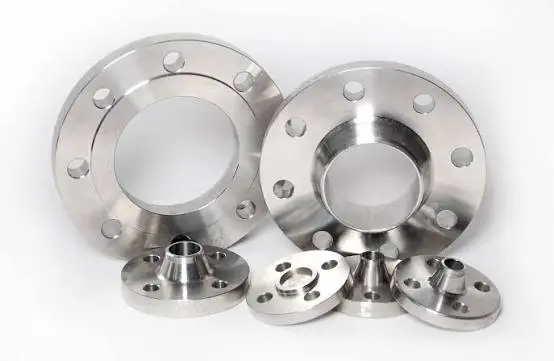
Comparing Carbon Steel Forged Flange Standards Globally
Different areas have very different carbon steel- and forged steel flange standards, which procurement professionals in charge of multinational projects need to be aware of so they don't make specification mistakes that cause parts to be incompatible with the project, delays, and cost overruns.
ASME Versus EN Standards: Key Distinctions
ASME standards use nominal pipe sizes based on inches and pressure classes that are given in pounds per square inch. For example, a "6-inch Class 300" designation tells North American engineers right away that the pipe is compatible and what the pressure rating is. EN standards use nominal diameters based on millimeters and pressure numbers. The equivalent specification would be "DN150 PN40," where DN stands for nominal diameter in millimeters, and PN stands for pressure rating in bar.
It's not possible to directly convert between these measurement systems. For example, a DN150 flange has a 168.3mm bore that fits European metric pipe with a 168.3mm OD, while an ASME 6" flange has a 154.1mm bore that fits North American 6.625" OD pipe (Schedule 40). Putting an EN flange on an ASME pipe causes a measurement mismatch that needs to be fixed with custom machining or adapter flanges.
The number and size of bolt holes are also different. For example, ASME B16.5 says that a 6" Class 300 flange needs eight holes, while EN 1092-1 says that a DN150 PN40 Type 01 flange needs eight holes. Even though the number of holes in each standard is the same, the bolt circle lengths and hole sizes are different by several millimeters. This means that the two standards can't be bolted together.
API 6A for Oil and Gas Applications
The American Petroleum Institute made API 6A especially for wellhead and Christmas tree equipment that has to work in harsh conditions with high pressures and corrosion. When it comes to API flanges, pressure ratings are given in pounds per square inch (psi) instead of ASME class numbers. These commonly range from 2,000 to 20,000 psi, with some API 6A equipment available up to 30,000 psi. The dimensional profiles have thicker hubs and special sealing surfaces that are made to be put together and taken apart many times during well repair operations.
In addition to the normal ASTM A105 requirements, API 6A flanges also need certain types of materials and heat treatments. Sulfide stress cracking resistance testing, hardness control, and applicable low-temperature impact requirements ensure that materials perform properly in sour service. Additional evaluations, such as NACE TM0284 for hydrogen-induced cracking (HIC) resistance, may be required to ensure material suitability for sour gas service. These extra requirements change the lead times and prices for purchasing, which makes API flanges much more expensive than ASME B16.5 components that do the same thing.
Verification Through Third-Party Certification
For international jobs, flanges must be supplied with written proof that they meet certain standards. Third-party testing companies like Bureau Veritas, TÜV, Lloyd's Register, and SGS check the size, chemical make-up, mechanical qualities, and production methods without being involved in the process. When the project is audited, these certifications are very important, and they protect you legally if a part fails.
JS Fittings has many international certifications, such as ISO 9001 for quality management, CE marking for European conformity, and GOST-R for markets in the Russian Federation. We have passed strict facility audits and product testing programs to become approved suppliers for the National Iranian Oil Company, the Abu Dhabi National Oil Company, and Petrobras. Our ability to meet the strictest global standards for ASTM steel flanges is shown by these awards.
Conclusion
The rules for the sizes of carbon steel forged flanges make sure that pipe systems around the world are safe and effective. In North America, ASME B16.5 and B16.47 are the most common standards. In Europe, EN 1092-1 is used, and API 6A is used for specific oil and gas needs. When procurement professionals understand these standards' dimensional frameworks, pressure class systems, and material specifications, they can choose compatible parts that lower project risk and support long-term operational performance. The supplied flanges meet the needs of the project after they are checked for dimensions, tested for materials, and certified by a third party. Strategic buying from qualified makers like JS Fittings, which has decades of experience, complete quality systems, and international certifications, will make sure you get well-made flanges that fit correctly and work reliably for as long as they are used.
FAQ
1. What is the main difference between ASME B16.5 and ASME B16.47 flanges?
ASME B16.5 talks about flanges with a nominal diameter of ½" to 24", and ASME B16.47 talks about flanges with a nominal diameter of 26" to 60". Series A and Series B are two series in B16.47. They have different dimensional shapes and can't be switched out, even if their stated sizes are the same.
2. Can I use EN 1092-1 flanges with ASME pipe?
Comparing EN metric flanges to ASME flanges, you can see that they have different bore sizes, bolt shapes, and pressure values. Dimensional mismatches happen when you use direct replacement. If you want to mix standards within the same system, you may need adapter flanges or custom machining.
3. How do I verify the flange pressure class in the field?
Markings for the pressure class are permanently stamped on the face or outer diameter of the flange. "150," "300," "600," and other numbers are written on ASME flanges. On EN flanges, it says "PN16," "PN40," and so on. When marks are damaged or unclear, material test results and mill certificates are the only ways to be sure of the identification.
Partner With a Trusted Carbon Steel-Forged Steel Flange Manufacturer
Through our ISO-certified manufacturing methods and strict quality control routines, JS Fittings makes carbon steel forged steel flanges and forged flanges that are precise and meet ASME, EN, DIN, and API standards. We bring 43 years of manufacturing expertise and are an approved supplier for the National Iranian Oil Company, the Abu Dhabi National Oil Company, and Petrobras. This shows that we can handle tough industry jobs. We keep a large stock of standard configurations and can also make products to order for specific needs. Every month, we ship over 90 containers to customers all over the world. When you ask a question, our technical team answers it within an hour, and every shipment comes with full material certifications, dimensional inspection reports, and third-party testing documentation. Email us at admin@jsfittings.com to talk about your flange needs with experienced application engineers who know how to help you get what you need and how much time you have for the job.
References
1. American Society of Mechanical Engineers. "ASME B16.5: Pipe Flanges and Flanged Fittings NPS 1/2 through NPS 24 Metric/Inch Standard." ASME International, 2020.
2. American Society of Mechanical Engineers. "ASME B16.47: Large Diameter Steel Flanges NPS 26 Through NPS 60 Metric/Inch Standard." ASME International, 2020.
3. European Committee for Standardization. EN 1092-1: Flanges and Their Joints—Circular Flanges for Pipes, Valves, Fittings and Accessories, PN Designated—Part 1: Steel Flanges." CEN, 2018.
4. ASTM International. "ASTM A105/A105M: Standard Specification for Carbon Steel Forgings for Piping Applications." ASTM International, 2019.
5. American Petroleum Institute. API Specification 6A: Wellhead and Christmas Tree Equipment. "API Publishing Services, 2018.
6. ASTM International. "ASTM A350/A350M: Standard Specification for Carbon and Low-Alloy Steel Forgings, Requiring Notch Toughness Testing for Piping Components." ASTM International, 2019.
Send Inquiry
You may like
Related Industry Knowledge
- How to Inspect Buttweld Elbow Quality Before Installation?
- ASTM A234 WPB Buttweld Tee Material Properties Overview
- What is the material of A53 ERW Pipe?
- What Are Slip-On Flanges?
- Slip-On Flange Uses and Applications
- Internal Burr Removed ASTM A53 ERW Pipe for Precision Applications
- What is carbon steel pipe made of?
- Buttweld Bend vs Elbow: Key Differences Explained
- What is the difference between seamless and welded pipe?
- Where can I buy carbon steel pipe?