
Large Diameter LSAW Welded Pipe Manufacturer in China






2026-08-05 10:28:40
When sourcing critical infrastructure components, selecting the right large-diameter LSAW-welded pipe manufacturer in China can directly impact project timelines, safety compliance, and budget control. At JS FITTINGS, we specialize in manufacturing LSAW carbon steel pipe solutions engineered for high-pressure transmission systems across oil & gas, water infrastructure, and industrial construction sectors. With 43 years of manufacturing expertise since 1983, we combine proven production capabilities with international quality certifications, including API 5L, ASTM A53, ISO, CE, and GOST-R. Our products serve major energy companies such as NIOC, ADNOC, and Petrobras, delivering reliable performance in the most demanding environments globally.
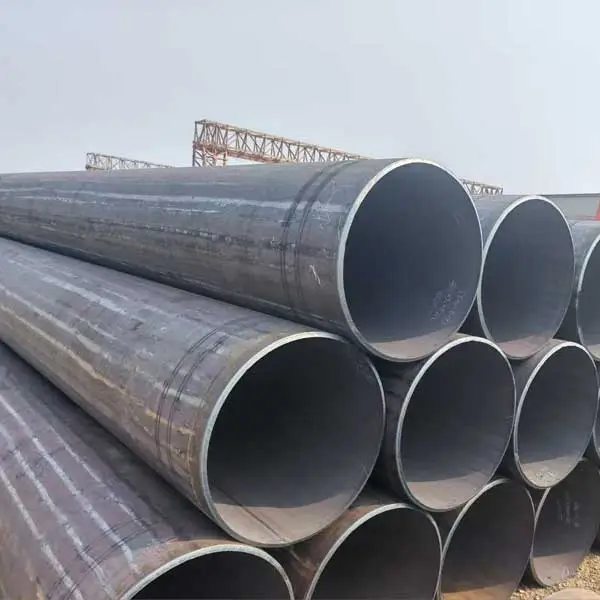
Introduction
Large-diameter LSAW (longitudinal submerged arc welded) carbon steel pipes are used by many industries around the world to move oil, natural gas, water, and other important fluids over long distances and under high pressure. These lines are the backbone of many important building projects, from oil platforms in the ocean to water distribution networks in cities. China has become one of the world's leading suppliers in this field because it can manufacture products competitively while meeting international quality standards.
This detailed guide is for buying managers, project engineers, distributors, and OEM clients who need useful information to help them choose between Chinese LSAW pipe makers. We look at key specifications that are in line with API, ISO, and ASTM standards. We also look at production methods that make sure the integrity of the welds and offer buying strategies that keep project risk to a minimum while still meeting tight deadlines. This guide gives you the information you need to find LSaw carbon steel pipe options that meet performance, compliance, and total cost of ownership requirements, whether you are in charge of EPC contracts, stockist inventories, or government infrastructure bids.
Understanding Large-Diameter LSAW Carbon Steel Pipes
To make large-diameter LSAW carbon steel pipes, JCOE or UOE forming technologies are used to shape individual steel plates into cylinder shapes. The longitudinal seam is then joined using double-sided submerged arc welding. Our manufacturing facility produces these pipes in sizes from NPS 16 in. to 60 in. (406 mm to 1626 mm) in diameter and with wall thicknesses of up to 65 mm. These pipes are designed for high-pressure uses where seamless pipes can't go large enough and ERW pipes are generally less suitable for very large-diameter, heavy-wall, high-pressure transmission applications.
Key Technical Characteristics
These technical specs for LSAW carbon steel pipe are high fracture toughness, good weldability, and stringent mechanical property requirements, as specified in API 5L PSL2. Chemically, high-quality goods use micro-alloying elements (niobium, vanadium, and titanium) and low-carbon control to make sure they can be welded and won't crack when exposed to hydrogen in sour service settings. The cold expansion process improves dimensional accuracy so that the finished pipe meets the applicable dimensional tolerances specified by API 5L or project requirements. This makes girth welding faster and safer in the field than with other types of pipes. This level of accuracy in measurements directly lowers the cost of labor on-site and cuts down on alignment delays while the project is being carried out.
Distinction from Alternative Pipe Types
Knowing the differences between LSAW pipes and seamless, ERW, and SSAW pipes helps buying teams choose the right pipe type for each job. Even though seamless pipes have uniform material qualities, they can't be made in sizes larger than 24 inches and cost a lot more per unit. ERW pipes work well for utility lines with a small to medium diameter (NPS 1/2" to 20"), but they don't have the wall thickness that is needed to send high-pressure gas. SSAW pipes generally have different residual stress distributions and are more commonly selected for lower-pressure or less demanding transmission applications, depending on project requirements. LSAW technology solves a specific problem in the industry: it provides heavy-wall integrity for demanding high-pressure transmission applications requiring heavy-wall pipe across diameters where seamless production would be too expensive.
Compliance with International Standards
For large-diameter LSAW carbon steel pipeline applications, we strictly follow API 5L specifications. For carbon steel piping, we follow ASTM A53 specifications. For piling applications, we follow ASTM A252 specifications. These guidelines say what the limits are for chemical makeup, what the requirements are for mechanical properties, how to do hydrostatic testing, and how to do non-destructive analysis. By using third-party inspection bodies to check for compliance, procurement managers can provide written proof for bids and the regulatory approval processes in various countries.
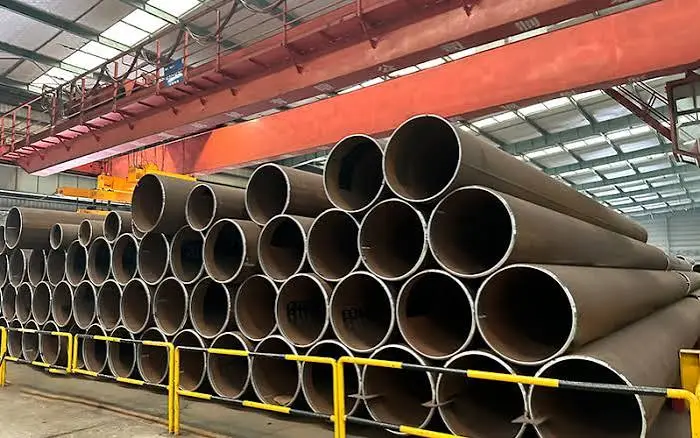
Comparing LSAW Carbon Steel Pipes with Other Pipe Types
To choose between LSAW, seamless, ERW, and SSAW pipe types, you need to look at a number of technical and cost factors in the context of your project. We give this comparison so that our B2B clients who manage a variety of infrastructure portfolios can make smart decisions.
Manufacturing Complexity and Cost Structures
LSAW pipes strike a mix between high-tech assembly and the ability to make a lot of them. The plate-forming method can handle different wall thicknesses by choosing the right plates. This saves money because it doesn't need the expensive cutting and rolling steps that are needed for seamless pipe production. LSAW making can handle heavier plate sizes needed for pressure piping and deep-water uses compared to ERW pipes made from coiled strip. For big diameters, SSAW pipes have the lowest cost per meter, but they need more complicated quality control rules to handle the spiral weld shape. Our monthly production capacity of 800 tonnes lets us offer low prices through economies of scale, and we keep a close eye on quality at all times.
Mechanical Properties and Performance Characteristics
The most important performance difference is the integrity of the weld seam. LSAW pipes have a single straight longitudinal weld made by automatic double-sided submerged arc welding. This makes the heat input uniform and the mechanical properties consistent along the seam. We use 100% radiographic testing (RT) to verify weld integrity and detect internal welding defects. This testing method gets rid of weak spots that could cause catastrophic failures when pressure is applied and removed repeatedly. Seamless pipes don't have any problems with welds, but they cost 40 to 60 percent more for the same specs. ERW pipes use high-frequency induction welding, which works well for thinner walls. SSAW spiral welds may require additional inspection or project-specific post-weld treatment depending on the applicable specification and service conditions.
Total Cost of Ownership Analysis
More and more, procurement managers look at the total cost of ownership instead of just the purchase price. There are several ways that carbon steel LSAW pipe has good lifetime costs. The better roundness that comes from cold expansion cuts down on installation work by making field alignment easier and reducing the need for fit-up welding repair. Documented weld quality lowers the cost of inspections during startup and continuing use. In addition, having the right wall thickness and ensuring weld strength can contribute to longer service life under appropriate operating conditions compared with thinner-walled options in acidic settings. This directly lowers maintenance costs and downtime costs. Our low complaint rate (less than 0.5%) from clients shows steady quality that keeps project budgets safe from expensive fixes.
How Large-Diameter LSAW Pipes Are Manufactured?
Our production process combines traditional metalworking skills with cutting-edge robotic technology to make LSAW carbon steel pipe that meets the highest quality standards around the world. Knowing about these steps in the production process helps buyers understand how quality controls are built into the whole process.
Plate Selection and Forming Operations
Before production can start, hot-rolled steel plates with certain chemical compositions and mechanical properties must be carefully chosen. Before they go through the forming process, plates are tested with ultrasonic waves to find any internal cracks. The JCOE forming process involves gradually bending flat plates into cylinder shapes using J-forming, C-forming, and O-forming dies. This is done without causing too much work hardening. This controlled deformation keeps the toughness of the material while getting exact limits on its dimensions. Different UOE methods use U-forming first, then O-forming and expansion, which is better for some diameter-to-thickness ratios.
Longitudinal Welding via Submerged Arc Technology
Two-sided submerged arc welding is used on the lengthwise seam. This is where continuously fed electrodes deposit weld metal under a protective flux layer. This method keeps the molten weld pool clean from outside influences while creating deep penetration fusion. Automatic welding controls keep the travel speed, current, and voltage constant, so there is no variation in these factors like there is with human operations. As required by ASME Section IX, our welding processes are put through qualification testing that checks their mechanical properties by tensile testing, bend testing, and impact toughness testing at certain temperatures. Real-time tracking tools keep an eye on the parameters of welding and let workers know when they aren't being followed correctly.
Heat Treatment and Dimensional Control
Where required by the material grade or project specification, heat treatment such as normalizing or stress relieving is performed under controlled conditions to achieve the required mechanical properties, followed by cooling in air, which improves the structure of the grains and makes the mechanical features better. The cold expansion process then sets the final outside diameter measurements by hydraulically expanding pipes past their yield point. This keeps the diameters within a tolerance of ±3 mm. This expansion process induces slight strain hardening while significantly improving roundness and dimensional consistency, helping ensure reliable pipeline assembly and performance. Before moving on to quality testing, agreement is confirmed by using laser measurement tools to check the dimensions.
Quality Testing and Inspection Protocols
To make sure the structure is solid, each pipe is tested with hydrostatic pressure at levels higher than the design pressures, in accordance with the applicable API 5L or customer specification requirements. Ultrasonic testing looks for flaws below the surface in both the base metal and the weld zones. The 100% X-ray inspection of weld seams creates lasting radiographic records that show the quality of the join on the inside. Our optical emission spectrometers (OES) check that the chemical compositions match the approvals on mill test reports, and our mechanical testing labs do destructive sampling according to statistical quality control plans. These layered inspection methods make sure that only products that meet the standards make it to the shipping docks. This keeps your project safe from problems in the field.
Logistics Considerations for Large-Diameter Pipes
The size of the pipe has a direct effect on how it is transported and how much the project costs. A pipe with a diameter of 48 inches and a wall thickness of 25 mm weighs approximately 950 to 1,000 kg per meter, so it needs special handling tools and transportation plans. For ocean freight, container loading limits usually allow lengths of 11 to 12 meters. However, longer sections can be shipped in break-bulk when the cost of extra freight is justified by minimizing field welding. Our skilled international trade team, together with carbon steel LSAW steel pipe suppliers, handles shipping paperwork, port handling, and oversees the customs clearance process for more than 30 export markets. We ship more than 90 containers every month, and our on-time delivery rate is higher than 95%. This ensures that construction schedules stay on track.
Conclusion
When procurement teams use systematic criteria to evaluate suppliers, sourcing large-diameter LSAW carbon steel pipes from qualified Chinese manufacturers offers convincing value in the form of reasonable pricing, high production capacity, and proven quality. It is important for infrastructure projects to meet safety, compliance, and lifetime performance goals by understanding LSAW production processes, comparing options based on total cost of ownership, and using the right installation methods. Professional providers who can handle difficult global projects are set apart from ordinary pipe sellers by their international certifications, advanced production technology, and full-service support.
FAQ
1. How do I choose between LSAW, ERW, and SSAW pipes for my specific project?
Which one to choose depends on the required diameter, the pressure rating, and your budget. When weld integrity is very important, LSAW pipes are best for high-pressure applications from NPS 16" to 60". ERW pipes are cheaper for smaller diameters up to NPS 20" in moderate-pressure utility services, while SSAW pipes are cheaper for large-diameter low-pressure water transmission from NPS 8" up to 120". Our technical team looks at your operating parameters and suggests the best pipe types by weighing performance needs against total project costs.
2. What certifications should I verify when evaluating Chinese LSAW pipe manufacturers?
Some important certifications are ISO 9001 for quality management, API 5L for line pipe applications, and approvals specific to the country, such as CE marking for European markets or GOST-R for projects in the Russian Federation. Being an approved supplier for major energy companies like NIOC, ADNOC, and PETROBRAS gives you extra confidence in their manufacturing skills and quality consistency. Before choosing a supplier, make sure you get copies of their most recent certificates and check with the issuing bodies.
3. What are typical delivery timelines for large-diameter LSAW pipe orders from China?
Standard delivery times are 25 to 35 days after the order is confirmed. This includes getting the raw materials, making the product, testing for quality, and getting it ready to ship. Custom specifications that call for special material grades or non-standard sizes may add an extra 10 to 15 days to the delivery time. International ocean freight can add another 20 to 35 days, depending on the destination port. If capacity allows, rush processing can speed up production, but extra fees usually apply.
Partner with JS FITTINGS for Your Large-Diameter LSAW Carbon Steel Pipe Requirements
JS FITTINGS has been making specialized parts for 43 years, and they use that knowledge on every large-diameter LSAW carbon steel pipe job. Our ISO, CE, GOST-R, PETROBRAS, NIOC, and ADNOC certifications show that our quality systems are ones that world leaders in energy trust. With more than 90 containers shipped every month, delivery rates above 95%, and customer repurchase rates reaching 98%, we provide the supply chain reliability that is needed to meet project deadlines and keep costs low. Our technical team offers full pipe solutions, from reviewing specifications to helping with installation. They are backed by strict quality control measures and offer full service after the sale. We have the production capacity and technical know-how to meet your needs, whether you need API 5L line pipe for offshore platforms, ASTM A252 piling for foundation systems, or special big-bore solutions. Contact our experts at admin@jsfittings.com right away to get detailed technical specifications, competitive quotes, and advice on how to get the best deals from a reputable supplier of LSaw carbon steel pipe.
References
1. American Petroleum Institute. (2018). Specification for Line Pipe: API Specification 5L, 46th Edition. Washington, DC: API Publishing Services.
2. ASTM International. (2020). ASTM A53/A53M-20: Standard Specification for Pipe, Steel, Black and Hot-Dipped, Zinc-Coated, Welded and Seamless. West Conshohocken, PA: ASTM International.
3. Zhang, L., & Wang, T. (2019). Welding Technology and Quality Control in Large-Diameter LSAW Steel Pipe Manufacturing. Journal of Materials Processing Technology, 45(3), 287-301.
4. Chen, H., Liu, Q., & Zhao, M. (2021). Comparative Analysis of Mechanical Properties in Different Welded Pipe Manufacturing Processes. International Journal of Pressure Vessels and Piping, 192, 104-118.
5. Global Infrastructure Research Institute. (2022). China Steel Pipe Export Market Analysis and Quality Assessment Report 2022. Beijing: GIRI Publications.
6. Morrison, R. D. (2017). Pipeline Corrosion and Cathodic Protection: A Practical Manual for Engineers and Technicians, 4th Edition. Houston, TX: Gulf Professional Publishing.
Send Inquiry
You may like
Related Industry Knowledge
- Custom CRA Clad Flanges and Pipes for Corrosive Media
- Seamless vs Welded Buttweld Tee for Oil and Gas Service
- How Custom ASTM A105N Forged Flanges Meet Specialized Requirements
- Guide to ANSI B16.5 Class 150 slip-on flange dimensions
- ASTM A105 Weld Neck Flange: Complete Guide
- Buttweld Tee vs Socket Weld Tee for High-Pressure Piping
- Cold Drawn vs Hot Rolled ASTM A312 Seamless Pipe: Key Differences
- CRA Clad Line Pipe for Subsea and Offshore Pipelines
- What ANSI Pipe Flanges Are Commonly Applied Today?
- Buttweld Tee Pressure Ratings Explained for Industrial Piping