
Guide to ANSI B16.5 Class 150 slip-on flange dimensions






2026-07-15 11:01:18
It is very important to know the exact sizes of slip-on flanges when planning industrial plumbing projects. The ASME B16.5 class 150 flange and ANSI B16.5 class 150 flange are the most common pressure-rated connections in low- to medium-pressure systems. It has standard bolt patterns and measurements for connecting pipes to valves, pumps, and tanks in oil, gas, and water systems. Slip-on flanges make installation easier because the pipe can slide into the flange bore before welding. This makes them very useful in situations where saving money and time are important.
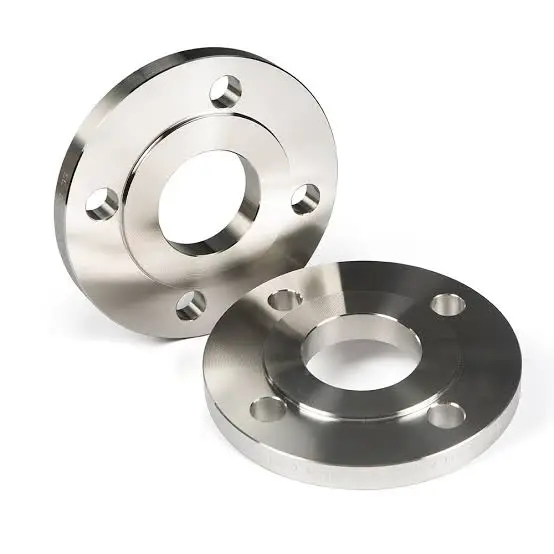
Understanding ANSI B16.5 Class 150 Slip-On Flanges
As a realistic option within the ASME B16.5 standard family, slip-on flanges are made for situations where ease of fitting is more important than maximum structural strength. Slip-on flanges are easier to put together than weld-neck flanges, which need to be precisely beveled. This means that they can be installed faster and with less labor.
Structure and Design Features
The slip-on flange has a hole that is a little bigger than the pipe's outside diameter. The pipe can slide inside the flange hub because of this design. There are two fillet welds, one inside and one outside, that hold the connection in place. The Raised Face (RF) is machined with standard concentric or spiral serrations, ensuring the gasket compress perfectly for a good seal. This dual-weld configuration performs reliably for utility lines, cooling water systems, and low-cycle service conditions, but it doesn't have the fatigue resistance of weld-neck designs.
Material Specifications and Standards Compliance
To make these parts, strict material standards must be followed, which guarantee performance under certain conditions. Carbon steel types like ASTM A105 are used most often because they are easy to weld and don't cost much for service at room temperature. Different types of stainless steel, especially 304 and 316L, can handle the corrosive conditions found in chemical plants and offshore platforms. The ASME B16.5 standard sets the rules for limits in size, pressure-temperature values, and facing finishes. This makes sure that parts can be swapped out in global supply lines. There are heat identification marks on each flange that lead back to mill test records that list the chemical composition, mechanical qualities, and heat treatment steps. Because of this, problems with material substitution that could put safety at risk in important applications are avoided.
Key Dimensions of ANSI B16.5 Class 150 Slip-On Flanges
With accurate dimensional knowledge, you can avoid expensive changes to the field and delays in the project. The specification covers nominal pipe sizes from NPS 1/2 through NPS 24. For each size, the outside diameter, bolt circle diameter, and thickness are all measured in the same way.
Critical Dimensional Parameters
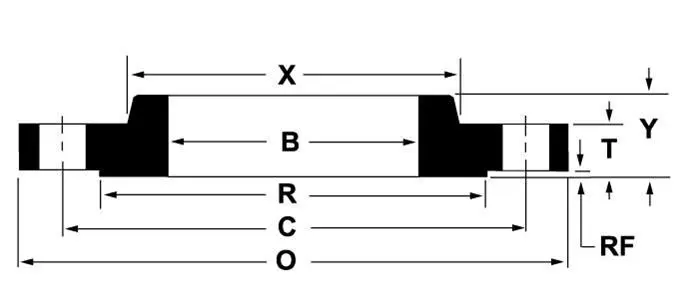
As the pipe size goes up, so does the outside diameter. A 2-inch flange has an outside diameter of about 6 inches, and a 12-inch flange has an outside diameter of about 19 inches. The thickness varies by nominal size, ranging from smaller dimensions for NPS 1/2 sizes to approximately 1.12 inches for NPS 24 flanges. The thickness directly affects how well the part can handle bolt loads without warping. Bolt holes are spaced out in exact patterns: Bolt hole numbers vary according to nominal size, with smaller sizes typically using fewer holes and larger sizes requiring more bolt holes according to ASME B16.5 dimensional tables. The bolt circle diameter, which is the circle's centerline of bolt holes, makes sure that everything fits together correctly when it's being put together. One example is a 6-inch flange that has eight ¾-inch holes and a bolt circle that is 11 inches across.
Pressure and Temperature Ratings
In spite of the "150" number, the allowable pressure for carbon steel Class 150 flanges is approximately 285 psi at room temperature, depending on the material specification. As the working temperature goes up, this number goes down. At 400°F, the capacity drops to about 180 psi, and it drops even more, to 95 psi near 750°F. Knowing this relationship between pressure and temperature keeps you from over-specifying and spending money you don't need to. By choosing class 150 flanges instead of class 300 flanges, municipal water systems that work at 100 psi and room temperature can save a lot of money. On the other hand, steam lines that are working at high temperatures need to be carefully checked against the derating curves in the ASME B16.5 Appendix tables.
Verification Methods for Quality Assurance
Verifying ANSI B16.5 class 150 flange dimensions keeps procurement teams from getting products that don't meet standards, which could compromise the integrity of the project. Using standardized tools to measure the outside diameter, bolt circle diameter, and thickness shows that the measurements are in line with published tables. To make sure the gasket compresses properly, the raised face height must be within the tolerance, which is usually 0.06 inches. Using comparator plates to measure the surface finish confirms that the roughness stays within the 125–250 microinch Ra range needed for good sealing. The chemical composition can be confirmed by comparing the identification stamps to the material test reports. This is especially important for making sure that the percentages of carbon, manganese, and alloying elements are the same as the certified values.
Comparing ANSI B16.5 Class 150 Flanges with Other Standards
When choosing a strategic component, it's important to know how the performance qualities and economic factors of different rating classes and foreign standards compare.
Class 150 Versus Higher Pressure Classes
It is possible for class 300 and 600 flanges to handle much higher pressures—class 300 carbon steel flanges made from ASTM A105 can handle about 740 psi at room temperature—but this comes with heavier materials, bigger bolts, and higher unit costs. The ANSI B16.5 class 150 slip-on flange is a lot lighter than its class 300 counterpart, which saves money on both materials and labor. Specifying class 150 parts keeps costs low while maintaining safety margins in situations where system pressures stay below 200 psi, and temperatures stay moderate. Specifying Class 150 flanges instead of over-designed Class 300 alternatives for water treatment facilities can reduce procurement costs by 30 to 40 percent.
ANSI Versus International Standards
Both ANSI B16.5 and ASME B16.5 refer to the same set of standards. The American Society of Mechanical Engineers took over from the American National Standards Institute, but both names are still commonly used. When comparing to DIN (German) standards, there are differences in size that make direct interchangeability impossible. For example, a DN 100 DIN flange will not bolt directly to a 4-inch ANSI flange, even though the pipe sizes are the same. There are also different grades of materials. For example, EN P245GH carbon steel has similar applications to ASTM A105, but their chemical compositions and mechanical requirements are different, and their exact chemical makeups are different. To avoid problems with alignment during building, international projects need to have a clear description of the governing standard.
Procurement Considerations for ANSI B16.5 Class 150 Slip-On Flanges
Achieving good sourcing balances making sure of quality, lowering costs, and making sure deliveries happen on time. By choosing qualified providers, you can avoid getting low-quality goods that pose long-term operating risks.
Supplier Qualification and Certification
Manufacturers you can trust keep ISO 9001 quality systems that keep records of how they control materials, make products, and check them. Asking for proof of third-party approvals, like CE marking, GOST-R approval for Russian markets, or qualification by major energy companies, proves that the company can make the product. Our products meet strict international standards because they have certifications from groups like PETROBRAS, the National Iranian Oil Company (NIOC), and the Abu Dhabi National Oil Company (ADNOC). Looking at a supplier's testing tools shows how committed they are to quality. Spectral analyzers check the chemistry of the material, ultrasonic testing finds flaws inside, and dimensional inspection tools make sure that the tolerances are met.
Cost Optimization Strategies
Ordering Class 150 Slip-On flanges in full container loads lowers the cost per unit through manufacturing economies of scale, which means that buying in bulk saves you a lot of money. Talking about yearly needs helps suppliers make the best production schedules, which they then pass on to customers through lower prices. Custom manufacturing can meet the specific needs of a project, such as non-standard facing finishes or special material grades. However, these changes take longer to make and need to be reviewed by an engineer. Slip-on flanges for class 150 usually ship in two to four weeks, but custom orders can take up to six or eight weeks, based on how complicated they are. Project delays can be avoided by keeping realistic expectations about delivery dates. When building plans are seriously behind, emergency situations can sometimes make it worth the extra cost of air freight.
Documentation and Traceability
Material test reports (MTRs) are official records that show what chemicals are used, how the material works, and how it was heated for each output lot. During regulatory inspections or incident investigations, these reports are very important because they show that the specifications were met. Compliance certificates show that the manufacturing process followed the relevant standards, such as ASME B16.5 rules for dimensions, ASTM material specifications, and methods for pressure testing. Having the right paperwork helps with warranty claims, planning upkeep, and meeting insurance standards. Our international trade team provides full material traceability and makes sure that every shipment comes with full certification packages that meet the rules of the destination country.
Applications and Best Practices for Using ANSI B16.5 Class 150 Slip-On Flanges
Installations in the real world show how flexible these parts are across a wide range of industries, each with its own set of operational challenges.
Industry-Specific Applications
Slip-on flanges with ASME B16.5 Class 150 dimensions are extensively used in municipal water distribution networks to connect pump stations, place valves, and connect pipeline pieces that need to be accessed from time to time. When connecting steel flanges to cast iron equipment, which is common in waterworks facilities, the flat face type keeps the equipment from breaking. Slip-on flanges are used in low-pressure crude transmission lines for oil and gas gathering systems. These lines have normal temperatures and pressures (below 285 psi). Because they are less expensive than weld neck options, they are a good choice for large pipeline networks that go for thousands of feet. For utility systems like cooling water, instrument air, and low-pressure steam, chemical processing plants choose slip-on flanges made of stainless steel because they are more corrosion-resistant than carbon steel. These flanges are used a lot in industrial HVAC systems to connect chilled water lines, heating circuits, and condensate returns, where pressures rarely go above 150 psi.
Installation Guidelines for Optimal Performance
When things are installed correctly, they don't break down too soon and last as long as they're supposed to. Making sure that the outer diameter of the pipe fits the hole of the flange stops large gaps that weaken fillet welds. When you align flanges within a 1/16-inch range of each other, the bolt holes stay in place. This keeps assembly problems and uneven gasket loading from happening. When you apply the right amount of force to the bolts, you do it in a star pattern, gradually tightening the bolts that aren't touching each other. This makes the compression spread evenly across the gasket surface. When torque is too low, leaks may occur because gasket compression is insufficient. Excessive torque can crush the gasket, deform the flange face, and permanently stretch the bolts, creating a high risk of subsequent leakage.
The type of gasket you choose affects how well the seal works. Compressed non-asbestos fiber gaskets work well for water and air service, spiral-wound metal gaskets work well for steam service, and PTFE types don't react with chemicals. By matching the seal material to the service fluid and the conditions of use, fit problems that lead to leaks can be avoided. Joint integrity is checked by hydrostatic pressure tests done before commissioning. When systems are pressed to 1.5 times their design pressure for the required hold times, any problems with the workmanship are found before they are put into service.
Maintenance and Inspection Practices
Setting regular inspection intervals based on the level of service stretches the life of parts and stops them from shutting down without warning. Visual inspections find problems like surface corrosion, gasket breakdown, and bolt loosening that need to be fixed. By looking for fluid leakage around flange joints, you can find small leaks before they become big problems. Using calibrated torque wrenches to check the tension of bolts makes up for the relaxation that happens due to vibration and changing temperatures. By writing down what was found during an inspection, you can create a maintenance history that helps you decide what to replace and find problems that keep happening. It is much cheaper to replace corroded bolts, worn gaskets, and damaged flange faces during planned downtime than to do emergency repairs when something goes wrong without warning for ANSI B16.5 Class 150 Slip On Flange (SORF) Dimensions.
Conclusion
When procurement workers understand the slip-on flange measurements in the ANSI B16.5 class 150 standard, they can make choices that meet technical needs while also staying within budget and meeting delivery dates. These parts work well and don't cost a lot of money for low- to medium-pressure pipe systems used in HVAC, water treatment, oil and gas, and chemical processing. Specification mistakes and low-quality products can be avoided by understanding dimensional parameters, pressure-temperature ratings, and quality verification methods. Strategic buying from approved sources with proven certifications protects the integrity of parts throughout the lifecycle of a project.
FAQ
1. What pressure can Class 150 slip-on flanges actually handle?
ANSI B16.5 class 150 flanges made of carbon steel can handle about 285 psi at room temperature (-20°F to 100°F), which is more than the 150 psi that the name suggests. This rating goes down as the working temperature goes up. See the pressure-temperature charts in ASME B16.5 for exact values that go down at high temperatures. For proper application, these public scores must be matched with the real system conditions.
2. Can slip-on flanges replace weld neck flanges in all applications?
Slip-on flanges work well for utility lines that aren't very important, uses with few cycles, and cases where choosing the cheapest part is the most important thing. They exhibit lower fatigue resistance and do not distribute bending stresses as effectively as weld-neck designs, so they can't be used in high-pressure systems, places where loads change a lot, or places where temperatures change a lot. Check the technical specs to find out what kind of flanges will work best for your service conditions.
3. How do I verify my supplier provides genuine ANSI B16.5 flanges?
Ask for test results on the material that show its chemical make-up and mechanical qualities. Check that the dimensions are correct by comparing the outside diameter, bolt circle diameter, thickness, and raised face height to lists that have already been released. Look at identification stampings to find heat numbers, material grade markings, and the name of the manufacturer. Legitimate sellers give full paperwork to show that they meet specifications and that materials can be tracked back to their source.
Partner with JS FITTINGS for Certified ANSI B16.5 Class 150 Slip-On Flanges
JS FITTINGS has been making slip-on flanges for over 40 years and has a reputation for producing high-quality products that are used in industry markets around the world. Major energy companies around the world have certified us as an ANSI B16.5 class 150 flange maker. We keep strict quality control through ISO 9001 systems and advanced testing tools like spectral analysis and ultrasonic inspection. We can make more than 700 tonnes of flanges every month, and we can help with projects with standard or custom needs ranging from DN15 to DN2000. Our full material tracking, foreign certifications (ISO, CE, GOST-R, PETROBRAS, NIOC, and ADNOC), and on-time delivery of over 95% are all good for procurement managers, engineers, and wholesalers. Email our experienced team at admin@jsfittings.com to talk about your project needs and get full technical specs that keep costs low and risks to a minimum.
References
1. American Society of Mechanical Engineers. (2021). ASME B16.5: Pipe Flanges and Flanged Fittings, NPS 1/2 through NPS 24 Metric/Inch Standard. ASME Press.
2. Becht, C. (2018). Process Piping: The Complete Guide to ASME B31.3, Fourth Edition. ASME Press.
3. Nayyar, M. L. (2019). Piping Handbook, Eighth Edition. McGraw-Hill Education.
4. American Society for Testing and Materials. (2020). ASTM A105/A105M: Standard Specification for Carbon Steel Forgings for Piping Applications. ASTM International.
5. Ellenberger, J. P. (2016). Piping and Pipeline Calculations Manual: Construction, Design Fabrication and Examination, Second Edition. Butterworth-Heinemann.
6. Smith, P. R. & Zappe, R. W. (2017). Valve Selection Handbook: Engineering Fundamentals for Selecting the Right Valve Design, Sixth Edition. Gulf Professional Publishing.
Send Inquiry
You may like
Related Industry Knowledge
- How Is a Buttweld Bend Tested to ASME Standards?
- Buttweld Bend Dimensions: LR, SR & Custom Radius Guide
- What is the material of A53 ERW Pipe?
- Slip-On Flanges: Types, Uses, and Installation Guide
- How to Select a Buttweld Reducer for Process Piping?
- Lap Joint Pipe Flanges: Everything You Need to Know
- What is a buttweld elbow?
- Buttweld Tee Manufacturing Guide: Seamless or Welded?
- Seamless vs Welded Buttweld Tee: Which Performs Better?
- What is the difference between seamless and welded pipe?