
What is a buttweld elbow?






2026-06-02 10:29:44
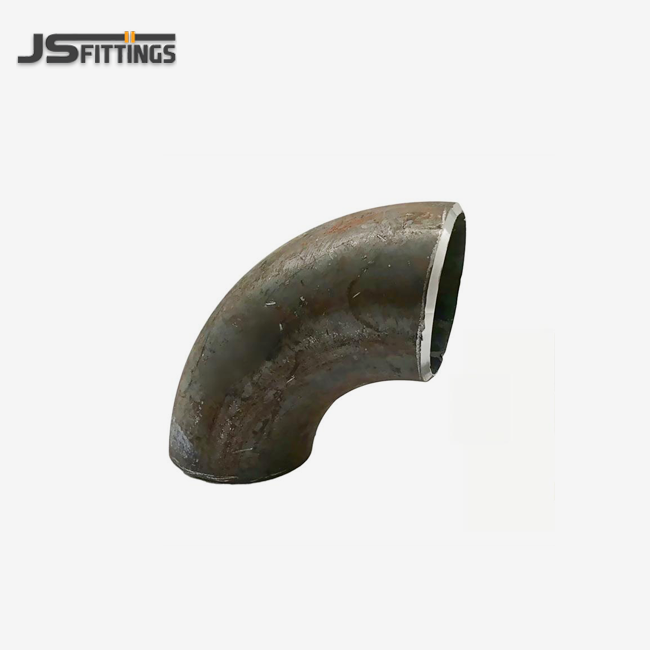
To meet the requirements of ASME B16.9, a buttweld elbow is a carefully designed pipe fitting. In a pipe system, its job is to change the flow direction of gases or liquids, most commonly at angles of 45°, 90°, or 180°. Because the ends of this fitting are bevelled, the pipe can achieve full-penetration welds directly to the fitting. This is different from threaded or socket-weld connections. This makes a strong joint that won't leak and can handle high temperatures and pressures.
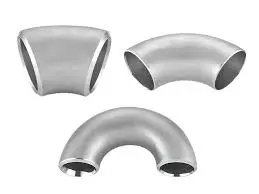
Why Do Buttweld Elbows Exist: Solving Real Industrial Challenges?
An industrial pipe system is made up of different parts that all work together to solve a certain problem. Buttweld elbows solve a number of important problems that project engineers and procurement managers face every day.
Even though threaded joints are easy to set up, they can let water out when the temperature changes. Even though socket-weld joints are suitable for smaller pipe sizes, they can create crevice areas that may increase the risk of crevice corrosion over time. Because it is designed to be a smooth change that becomes part of the continuous pipe structure, the buttweld elbow gets rid of these weaknesses.
Take a look at a processing unit in an oil plant that is running at 600°F and 1,500 PSI. For this application, a threaded joint would pose an unacceptable risk. When temperature changes and vibrations happen, the mechanical link gets weaker. When properly welded and heat-treated, a precision-manufactured buttweld elbow evenly distributes stress across the entire joint, maintaining absolute structural integrity for decades of severe-duty use.
The smooth internal hole change keeps the pressure drop and noise to a minimum. This is very important in devices that move a lot of liquids. When an elbow isn't built well, it makes eddy currents that speed up erosion, especially in slurry or abrasive service. The buttweld elbow pipe fitting design keeps the smooth flow features, which lowers the frequency of upkeep and increases the system's life.
Another big benefit is that it can be used for radiographic analysis. Quality control teams can use X-rays or ultrasound to check the strength of the weld because the buttweld joint allows full weld penetration and complete inspection access. This tracking meets the strict paperwork needs of big EPC companies and meets the compliance requirements for government building projects.
Understanding Core Features: What Makes a Quality Buttweld Elbow
The manufacturing precision behind a quality buttweld elbow 90-degree fitting reveals why specification matters so much to project outcomes.
- The bevelled end preparation follows ANSI B16.25 standards, typically machined to a 37.5° angle with a small flat section called the "land" or "root face". This seemingly minor detail prevents burn-through during root pass welding, ensuring your field welders can create consistent, quality joints even under challenging site conditions. We've seen projects delayed by weeks because poorly bevelled fittings required extensive rework.
- Wall thickness uniformity matters more than most buyers realise. The back of the elbow—where the pipe bends—experiences the highest stress concentration. Inferior manufacturing processes create thin spots at this critical location. At JS FITTINGS, our hot-mandrel forming process maintains consistent wall thickness throughout the bend radius, verified through ultrasonic thickness testing at multiple points. This attention to detail directly translates to your system's pressure rating reliability.
- Material traceability starts at the mill. We source exclusively from Tier-1 steel producers like Baosteel and Tsingshan, ensuring that every single component—from our standard carbon steel buttweld elbows to our specialized alloy fittings—is fully traceable and accompanied by an EN 10204 3.1 Mill Test Certificate. This documentation provides complete chemical composition and mechanical property verification, satisfying both your quality assurance team and regulatory auditors.
- The radius classification—long radius versus short radius—impacts both performance and cost. Long radius elbows feature a centre-to-face dimension of 1.5 times the nominal pipe size, creating gentler flow redirection with lower pressure drop. Short radius designs, at 1.0 times NPS, fit into space-constrained installations but generate higher turbulence. Most specifications default to long radius unless physical constraints dictate otherwise.
- Surface treatment extends service life in corrosive environments. Carbon steel fittings receive black oxide coating or hot-dip galvanising for atmospheric corrosion protection. Stainless steel undergoes pickling and passivation to restore the chromium oxide layer disrupted during forming and welding. These protective measures aren't cosmetic—they're insurance against premature failure that could shut down your operation.
Technical Foundation: Manufacturing Methods That Impact Performance
The manufacturing approach fundamentally determines a buttweld elbow's reliability under service conditions.
- Seamless elbows start with seamless pipe sections, heated to temperatures appropriate for the material grade and forming process, then formed over a mandrel while maintaining the original pipe's grain structure integrity. This process works well for sizes from 1/2" through 24" and preserves the material's mechanical properties throughout the bend. The absence of a longitudinal weld seam eliminates a potential weak point, making seamless construction the preferred choice for high-consequence applications like hydrogen service or high-pressure steam systems.
- Welded elbows, manufactured from welded pipe such as ERW, EFW, or SAW pipe, serve larger diameter applications where seamless production becomes economically impractical. The longitudinal weld receives 100% radiographic inspection and undergoes the same heat treatment as the base material, ensuring equivalent strength characteristics. For most commercial and industrial applications operating within ASME code allowable stress values, welded construction can provide comparable performance at a lower cost point for many industrial applications.
- Heat treatment requirements vary by material grade and forming method. Carbon steel buttweld elbow schedule 40 fittings typically undergo normalising heat treatment, which refines the grain structure and relieves residual stresses introduced during cold or hot forming. Stainless steel grades like 304L and 316L require solution annealing to restore corrosion resistance and prevent sensitisation that could lead to intergranular attack.
- Non-destructive testing catches defects before they reach your jobsite. Ultrasonic testing detects internal laminations or inclusions invisible to visual inspection. Magnetic particle inspection reveals surface cracks that might propagate under cyclic loading. These quality control measures add cost, but they prevent catastrophic failures that could endanger personnel and halt production.
Key Advantages: Why Procurement Managers Specify Buttweld Elbows
When I discuss specifications with purchasing decision-makers, certain advantages consistently drive their preference for buttweld connections over alternatives.
- The full-penetration weld creates a joint with strength comparable to the parent pipe material when properly executed. This eliminates the weak-link concern that keeps safety managers awake at night. A threaded connection might hold 3,000 PSI on the test bench but fails prematurely under thermal cycling and vibration. The buttweld joint performs predictably across the system's entire design life.
- Inspection and documentation capabilities satisfy increasingly stringent regulatory requirements. Government infrastructure projects demand complete traceability from raw material through final installation. For global procurement teams, the guaranteed dimensional accuracy and verified material properties of our buttweld elbows—fully supported by MTCs and comprehensive NDT reports—provide the bulletproof documentation trail required to pass stringent audits and eliminate liability concerns.
- Long-term cost of ownership favours buttweld construction despite higher initial installation costs. The permanent, maintenance-free joint eliminates the periodic retightening and seal replacement that mechanical connections require. Over a 30-year facility lifespan, this translates to significant savings in maintenance labour and unplanned downtime.
- System pressure drop impacts operating costs more than many realise. A 45-degree butt-weld elbow fitting with smooth internal transitions reduces pumping energy requirements compared to sharp-angled alternatives. Across large facility networks, this efficiency gain compounds into measurable utility cost reduction.
The aesthetic and cleanliness advantages matter particularly in food processing, pharmaceutical manufacturing, and semiconductor fabrication. The smooth external profile eliminates crevices where contaminants could accumulate, simplifying cleaning protocols and supporting sanitary certification requirements.
Buttweld Elbows vs. Alternative Connection Methods
Understanding when to specify buttweld versus other connection types prevents costly specification errors.
- Socket-weld elbows cost less and install faster for small-bore applications (typically 2" and under). The fillet weld requires less skilled labour than full-penetration butt welding. However, the socket creates a crevice susceptible to corrosion, particularly in corrosive or high-purity service. The internal shoulder disrupts flow, creating a pressure drop penalty. For critical process lines or high-pressure applications, the buttweld elbow's superior performance justifies the additional cost.
- Threaded elbows offer the quickest installation with no welding required, making them attractive for maintenance applications and non-critical systems. The mechanical connection, however, loosens under vibration and thermal cycling. The threads create stress concentration points prone to fatigue failure. Fugitive emissions from threaded joints in volatile organic compound service create environmental compliance headaches. Threaded construction rarely appears in specifications above Class 300 pressure ratings.
- Grooved mechanical couplings provide a middle ground—faster installation than welding, with better performance than threaded connections. They work well for fire protection systems and applications requiring periodic disassembly. The external coupling, however, adds weight and space requirements. The gasket represents a maintenance item requiring periodic replacement. For permanent installations in critical service, the buttweld elbow's low-maintenance characteristics often provide better lifecycle cost performance.
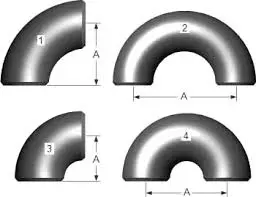
Ideal Applications and Target Customers
Different customer segments rely on buttweld elbows to address their specific operational challenges.
- EPC contractors managing multi-million dollar refinery or petrochemical projects depend on buttweld elbow manufacturing quality to meet aggressive schedules. A single failed fitting inspection can cascade into costly rework, delaying commissioning milestones that trigger contract penalties. Our CNC-bevelled ends and verified wall thickness measurements enable first-time weld acceptance, keeping critical path activities on schedule.
- Distributors and stockists serving regional markets need reliable inventory they can confidently recommend to varied end-users. Our heat-number marking system and organised packaging simplify your warehouse management. The comprehensive MTC documentation travels with each fitting, enabling you to provide the technical support your customers expect without maintaining deep engineering resources in-house.
- Small and medium engineering firms balancing project budgets appreciate the total cost equation, including those choosing a China butt weld elbow wholesaler. While premium buttweld elbow weight specifications might increase initial material costs slightly, the elimination of field rework and long-term maintenance requirements delivers superior value. Your reputation depends on installations that perform reliably—our quality control systems protect that reputation.
- Government and infrastructure projects operate under intense scrutiny regarding compliance and safety. The complete documentation package—mill certificates, NDT reports, dimension verification, and heat treatment records—provides the audit trail procurement regulations demand. Our certifications from NIOC, ADNOC, and Petrobras demonstrate our capability to meet the most stringent international quality standards.
Industrial end-users managing operating facilities prioritise reliability and uptime. An unplanned shutdown for piping failure costs thousands per hour in lost production. The buttweld elbow radius precision and material integrity we guarantee minimise failure risk, protecting your production schedule and safety record.
Conclusion
The buttweld elbow represents more than a directional change in your piping system—it's a critical component whose quality directly impacts safety, reliability, and operating costs. Understanding the manufacturing details, material considerations, and proper specifications enables informed decisions that protect your project outcomes. Whether you're managing a multi-phase refinery expansion, stocking inventory for regional markets, or maintaining an operating facility, partnering with a manufacturer committed to quality and documentation provides the foundation for long-term success. The industrial piping landscape continues evolving with more stringent environmental regulations and higher performance demands, making the selection of proven, certified components increasingly critical to project success and operational excellence.
FAQ
1. Can I mix different schedules when installing buttweld elbows in my piping system?
Mixing schedules creates internal diameter mismatches that cause turbulence, erosion, and stress concentration. The resulting "step" accelerates wear at the transition point and complicates radiographic interpretation. Proper engineering practice requires matching the elbow schedule to the pipe schedule throughout each continuous run, ensuring smooth bore transitions that maintain hydraulic efficiency and structural integrity.
2. What's the real difference between seamless and welded construction for buttweld elbows?
Seamless elbows, formed from seamless pipe without longitudinal welds, eliminate a potential weak point and often require less weld-related inspection. They're often preferred for certain high-consequence services like hydrogen or high-pressure steam. Welded elbows, manufactured from ERW or EFW pipe, serve larger diameters economically while delivering reliable performance for many industrial applications when the longitudinal weld receives proper inspection and heat treatment. For most commercial applications within code stress limits, either construction type performs satisfactorily.
3. How do I verify I'm receiving quality buttweld elbows from a supplier?
Demand comprehensive mill test certificates showing chemical composition and mechanical properties traceable to the steel mill. Require dimensional inspection reports verifying wall thickness, outside diameter, and centre-to-face measurements against ASME B16.9 dimensional tolerances. Request NDT reports documenting ultrasonic or radiographic examination results. Inspect bevel angles and surface finish upon receipt. Reputable suppliers provide this documentation routinely—reluctance to furnish complete traceability signals quality concerns.
4. Why does heat treatment matter for buttweld elbows?
Forming processes—whether hot or cold—alter the material's grain structure and introduce residual stresses that compromise performance. Heat treatment restores the specified mechanical properties and relieves internal stresses that could cause distortion or cracking during welding. Carbon steel normalizing refines the grain structure and improves toughness and ductility. Stainless steel solution annealing prevents sensitisation that leads to intergranular corrosion. Skipping specified heat treatment saves costs initially but risks premature failure under service conditions.
Partner with JS FITTINGS: Your Trusted Buttweld Elbow Manufacturer
Finding a reliable buttweld elbow supplier shouldn't involve compromise between quality, delivery performance, and technical support. JS FITTINGS brings 43 years of manufacturing experience to your most demanding piping projects. Our advanced CNC machining delivers the precision beveling that enables first-time weld acceptance, keeping your schedule on track. We maintain extensive inventory across schedules from 10S through XXS in carbon steel, stainless steel, and alloy grades, supporting your need for responsive delivery. When you're ready to discuss your specific requirements, contact our technical team at admin@jsfittings.com.
References
1. American Society of Mechanical Engineers (2020). ASME B16.9: Factory-Made Wrought Buttwelding Fittings. ASME International, New York.
2. American Society for Testing and Materials (2021). ASTM A234/A234M: Standard Specification for Piping Fittings of Wrought Carbon Steel and Alloy Steel for Moderate and High Temperature Service. ASTM International, West Conshohocken.
3. Nayyar, M.L. (2019). Piping Handbook, 8th Edition. McGraw-Hill Education, New York.
4. Gajdos, L. and Sperl, M. (2018). "Manufacturing Technology and Quality Control of Butt-Welded Pipe Fittings." Journal of Materials Processing Technology, Volume 254, pp. 236-245.
5. Parisher, R.A. and Rhea, R.A. (2021). Pipe Drafting and Design, 4th Edition. Gulf Professional Publishing, Houston.
6. Mohitpour, M., Golshan, H., and Murray, A. (2007). Pipeline Design and Construction: A Practical Approach, 3rd Edition. ASME Press, New York.
Send Inquiry
_1775029549981.webp "Buttweld Tee")
Related Industry Knowledge
- What is the service life of an ASME B16.5 carbon steel flange?
- Buttweld Elbow Dimensions Guide for ASTM A234 WPB Fittings
- Buttweld Bend Dimensions: LR, SR & Custom Radius Guide
- ASME B16.9 Buttweld Reducer Dimensions and Weight Guide
- What is CRA clad pipe?
- A105 Carbon Steel Forged Steel Flange for Refinery Piping
- Carbon Steel Forged Steel Flange Supply: China Factory Wholesale
- Carbon Steel Forged Steel Flange: Class 150 to 2500 Guide
- Buttweld Tee Manufacturing Guide: Seamless or Welded?
- How to Choose the Right Buttweld Elbow for High-Pressure Piping